Posts Tagged ‘un’
Ban Ki-moon Kashmiris are not asking for the Moon : An Open Letter to Mr. Ban Ki-moon Secretary General of the UNO
 August 13th, 2013 |
  Author:
 Excellency Mr. Ban Ki-moon
Greetings.
Pakistan is extremely grateful for your visit, particularly for being the chief guest at our Independence Day celebrations, on 14th August 2013.
As it may be already very well in your knowledge that UN has described the 8,00,000 Rohingya Muslims in Myanmar, as one of the most persecuted minorities in the world, being tortured, displaced, faced travel and trade limitations, murders, now Rohingya Muslims face child-limitation policies as well.
Similarly, over 10 million Kashmiri Muslim population living since 1947 under Indian occupation forces, are the most persecuted MAJORITY in the world. The list of humanly unimaginable atrocities perpetrated for the last almost seven decades, is so long that its compilation will be more voluminous, than the final print edition of 2010 of 32-volume set of Encyclopaedia Britannica.
However, just to refresh the serious human rights violations committed by the Indian military, para military and other forces on the Kashmiri Muslim unarmed children, ladies and men, a very concise but an eye opening report compiled from the wikipedia is submitted as below:
“This article is about Human rights abuses in Indian-administered portion of Kashmir.
Human rights abuses
Human rights abuses in Jammu and Kashmir, a disputed territory administered by India, are an ongoing issue. The abuses range from mass killings, forced disappearances, torture, rape and sexual abuse to political repression and suppression offreedom of speech. The Indian central reserve police force, border security personnel and various militant groups have been accused and held accountable for committing severe human rights abuses against Kashmiri civilians. A WikiLeaks issue accused India of systemic human rights abuses, it stated that US diplomats possessed evidence of the apparent wide spread use of torture by Indian police and security forces.
A US state government finding reports that the Indian army in Jammu and Kashmir, has carried out extrajudicial killings of innocent civilians.
In 2010, statistics presented to the Indian government’s Cabinet Committee on Security showed that for the first time since the 1980s, the number of civilian deaths attributed to the Indian forces was higher than those attributed to terrorist actions.
Thousands of Kashmiris have reported to be killed by Indian security forces in custody, extradjudicial executions and enforced disappearances and these human right violations are said to be carried out by Indian security forces under total impunity. Civilians including women and children have been killed in “reprisal” attacks by Indian security forces and as a “collective punishment” villages and neighbourhoods have been burn down and women raped.
International NGO’s as well as the US State Department have documented human rights abuses including disappearances, torture and arbitrary executions carried out during India’s counter terrorism operations. United Nations has expressed serious concerns over large number of killings by Indian security forces.
Human Rights groups have also accused the Indian security forces of using child soldiers, although the Indian government denies this allegation. Torture, widely used by Indian security, the severity described as beyond comprehension by amnesty international has been responsible for the huge number of deaths in custody.
The Telegraph, citing a WikiLeaks report quotes the International Committee of the Red Cross (ICRC) that Indian security forces were physically abusing detainees by beatings, electrocutions and sexual interference. These detainees weren’t Islamic insurgents or Pakistani-backed insurgents but civilians, in contrast to India’s continual allegations of Pakistani involvement. The detainees were “connected to or believed to have information about the insurgents”. According to ICRC, 681 of the 1296 detainees whom it interviewed claimed torture.
US officials have been quoted reporting “terrorism investigations and court cases tend to rely upon confessions, many of which are obtained under duress if not beatings, threats, or in some cases torture.
Amnesty International accused security forces of exploiting the Armed Forces Special Powers Act that enables them to “hold prisoners without trial”. The group argues that the law, which allows security to detain individuals for as many as two years “without presenting charges, violating prisoners’ human rights”.
Indian Army
The soldiers of the 4th Rajputana Rifles of the Indian Army on 23 February 1991 launched a search operation in a village Kunan Poshpora, in the Kupwara district of Jammu and Kashmir and allegedly gang raped 53 women of all ages. Human Rights organizations including Human Rights Watch have reported that the number of raped women could be as high as 100. The Indian Army is also accused of many massacres such as Bomai Killing, 2009, Gawakadal massacre,2006 Kulgam massacre, Zakoora And Tengpora Massacre, 1990, Sopore massacre. They also didn‘t spared the health care system of the valley. The major hospitals witnessed the crackdowns and army men even entered the operation theatres in search of terrorist patients.
Border Security Force
On 22 October 1993, the 13th Battalion of the Border Security Forces was accused of arbitrarily firing on a crowd and killing 37 civilians in Bijbehara. The number of reported dead and wounded vary by source. Amnesty International reported that at least 51 people died and 200 were wounded on that day.
The Indian government conducted two official enquiries and the National Human Rights Commission of India (NHRC) conducted a third. In March 1994 the government indicted the Border Security Force (BSF) for firing into the crowd “without provocation” and charged 13 BSF officers with murder. In another incident which took place at Handwara on 25 January 1990, 9 protesters where killed by the same unit.
Central Reserve Police Force
During the Amarnath land transfer controversy more than 40 unarmed protesters were killed by the personnels of Central Reserve Police Force. At least 300 were detained under Public Safety Act, including teenagers. The same practice was again repeated by the personnels of the Central Reserve Police Force, during the 2010 Kashmir Unrest, which resulted in 112 deaths, including many teenager protesters at various incidents.
Special Operations Group
The Special Operations Group was raised in 1994 for counter terrorism. A volunteer force, mainly came for promotions and cash rewards, comprising police officers and policemen from the Jammu and Kashmir Police. The group is accused of torture and custodial killings. A Senior Superintendent of this group and his deputy are among the 11 personnels, who were convicted for a fake encounter, which killed a local carpenter, and was labelled as a millitant to get the promotions and rewards.
Armed Forces (Special Powers) Act, 1958
Main article: Armed Forces (Special Powers) Act, 1958
In July 1990 Indian Armed Forces were given special powers under the Armed Forces (Special Powers) Act, 1958 (AFSPA) that gives protection to Indian Armed Forces personnel from being prosecuted. The law provides them a shield, when committing human rights violations and has been criticised by Human Rights Watch as being wrongly used by the forces. This law is widely condemned by human rights groups. United Nations High Commissioner for Human Rights Navanethem Pillay has urged India to repeal AFSPA and to investigate the disappearances in Kashmir.
“All three special laws in force in the state assist the government in shielding the perpetrators of human rights violations from prosecution, and encourage them to act with impunity. Provisions of the Armed Forces (Jammu and Kashmir) Special Powers Act clearly contravene international human rights standards laid down in the International Covenant on Civil and Political Rights, as members of the UN Human Rights Committee have pointed out. One Committee member felt that provisions of the act – including imunity from prosecution – were highly dangerous and encouraged violations of the right to life“.
—A clipping from a report published by the Amnesty International, 1995.
According to the Armed Forces Special Powers Act (AFSPA), in an area that is proclaimed as “disturbed”, an officer of the armed forces has powers to:
Fire upon or use other kinds of force even if it causes death, against the person who is acting against law or order in the disturbed area for the maintenance of public order, after giving such due warning.
Destroy any arms dump, prepared or fortified position or shelter or training camp from which armed attacks are made by the armed volunteers or armed gangs or absconders wanted for any offence
To arrest without a warrant anyone who has committed cognizable offences or is reasonably suspected of having done so and may use force if needed for the arrest.
To enter and search any premise in order to make such arrests, or to recover any person wrongfully restrained or any arms, ammunition or explosive substances and seize it.
Stop and search any vehicle or vessel reasonably suspected to be carrying such person or weapons.
Any person arrested and taken into custody under this Act shall be made over to the officer in charge of the nearest police station with the least possible delay, together with a report of the circumstances occasioning the arrest.
Army officers have legal immunity for their actions. There can be no prosecution, suit or any other legal proceeding against anyone acting under that law. Nor is the government’s judgment on why an area is found to be disturbed subject to judicial review.
Protection of persons acting in good faith under this Act from prosecution, suit or other legal proceedings, except with the sanction of the Central Government, in exercise of the powers conferred by this Act.
Fake encounters
According to the Srinagar-based Association of Parents of Displaced Persons (APDP), a minimum of 8,000 people have disappeared since the insurgency began. In February 2003, the government of India-administered Kashmir, led by Mufti Mohammad Sayeed, told the state legislative assembly that 3,744 people were missing.
Hundreds of civilian’s including women and children have been reported to be extrajudicially executed by Indian security forces and killings concealed as fake encounters. Despite government denial, Indian security officials have reportedly confessed to human right watch of widespread occurrence of fake encounters and its encouragement for awards and promotions. According to a BBC interview with an anonymous security person, ‘fake encounter’ killings are those in which security personnel kill someone in cold blood while claiming that the casualty occurred in a gun battle. It also asserts that the security personnel are Kashmiris and “even surrendered militants”.
In 2010 three men were reported missing proceeding these missing reports 3 men claimed to be militants were killed in a staged gun battle the army also claimed they had found Pakistani currency among the dead. The major was subsequently suspended and a senior soldier transferred from his post. In 2011, a Special Police Officer and an Indian Army Jawan were charged by the Kashmir police for murder of a civilian whom the duo had killed in an encounter claiming that he was a top Lashkar-e-Taiba militant.
Disappearances
Indian security forces have been implicated in many reports for enforced disappearances of thousands of Kashmiris where the security forces deny having their information and/or custody. This is often in association with torture or extrajudicial killing. The number of men disappeared have been so many to have a new term “half-widows” for their wives who end up impoverished. Human right activists estimate the number of disappeared over eight thousand, last seen in government detention.These are believed to be dumped in thousands of mass graves across Kashmir.
Mass graves
Mass graves have been identified all over Kashmir by human right activists believed to contain bodies of thousands of Kashmiris of enforced disappearances. A state human rights commission inquiry confirmed there are thousands of bullet-ridden bodies buried in unmarked graves in Jammu and Kashmir. Of the 2730 bodies uncovered in 4 of the 14 districts, 574 bodies were identified as missing locals in contrast to the Indian governments insistence that all the graves belong to foreign militants. According to a new deposition submitted by Parvez Imroz and his field workers asserted that the total number of unmarked graves were about 6,000. The British parliament commented on the recent discovery and expressed its sadness and regret of over 6,000 unmarked graves. Christof Heyns, a special rapporteur on extrajudicial executions, has warned India that “all of these draconian laws had no place in a functioning democracy and should be scrapped.”
Extrajudicial killings by security personnel
In a 1994 report, Human Rights Watch described summary executions of detainees as a “hallmark” of counter-insurgency operations by Indian security forces in Kashmir. The report further stated that such extrajudicial killings were often administered within hours of arrest, and were carried out not as aberrations but as a “matter of policy”. In a 1995 report, Amnesty International stated that hundred of civilians had been victims of such killings, which were often claimed by officers as occurring during “encounters” or “cross-fire”. A 2010 US state department report cited extrajudicial killings by security forces in areas of conflict such as Kashmir as a major human rights problem in India.
Suicide
According to a report, 17,000 people mostly women have committed suicide during the last 20 years in the Valley. According to a study by the Medecins Sans Frontieres,
“Women in Kashmir have suffered enormously since the separatist struggle became violent in 1989–90. Like the women in other conflict zones, they have been raped, tortured, maimed and killed. A few of them were even jailed for years together. Kashmiri women are among the worst sufferers of sexual violence in the world. ‘Sexual violence has been routinely perpetrated on Kashmiri women, with 11.6% of respondents saying they were victims of sexual abuse’,”
At the beginning of the insurgency there were 1200 patients in the valley‘s sole mental hospital. The hospital is now overcrowded with more than 100,000 patients.”
Mr. Secretary General, in view of the above extracts compiled by the International organisations, governments and the UNO, there is no doubt that the entire freedom loving world is witnessing a perpetual worst ever human rights violations (never witnessed by the humanity on this planet on a majority population of an specific area) by the Indian forces facilitated by the Indian government with the Armed Forces Special Powers Act (AFSPA), about which the United Nations High Commissioner for Human Rights Navanethem Pillay has urged India to repeal AFSPA and to investigate the disappearances in Kashmir.
In view of the foregoing your Excellency is urgently requested to advise Indian government to immediately implement United Nations Security Council Resolution 47, adopted on April 21, 1948 and instructed the UN Commission to go to the subcontinent and help the governments of India and Pakistan restore peace and order to the region and prepare for a plebiscite to decide the fate of Kashmir.
As a first step India must withdraw over 7,00,000 forces personnel from occupied Kashmir. Remember, nowhere in the world repeat nowhere in the world so much troops are posted for just about 12.5 million population.
However, if the Indian government declines your request, the UN must come to the rescue of the most persecuted majority population of an specific area on this planet Earth; and initiate war crimes proceedings, on the pattern of Nuremberg war crimes tribunal, against all the Indian civil, military and other forces personnel, about whom all the crimes of GENOCIDE on Kashmiri people are very well documented in the archives of International Human Rights Organisations, world governments and the United Nations.
YOUR EXCELLENCY, LET NOT THE POSTERITY DOCUMENT THAT YOU SIDED WITH THE HOLOCAUST OFFENDERS OF INDIA AND FAILED TO USE YOUR INFLUENCE TO STOP GENOCIDE OF INNOCENT KIDS, WOMEN AND MEN DEMANDING THEIR LEGAL AND MORAL RIGHT OF SELF DETERMINATION.
REMEMBER KASHMIRI PEOPLE ARE NOT ASKING FOR THE MOON.
Best regards,
Syed Nayyar Uddin Ahmad
+92-3219402157
Lahore – Pakistan
nayyar51@hotmail.com
www.snayyar.com
Twitter: @nayyarahmad
Sent from my iPad3 4G LTE
An Open Letter to Bill Gates & Melinda for Urgent Assistance on Very Serious Humanitarian Catastrophe
Dear Melinda and Bill Gates,
Greetings.
This is to profoundly thank you for your generous help extended to Pakistan in 2010 floods, for its 20 million suffers.
We also understand that your 50$ million assistance was the single largest aid to the flood affected people of Pakistan. However, you will be extremely sad to know that even now the malnutrition in the affected areas has exceeded the Sub-Saharan Africa conditions, as reported by the daily “DAWN” dated 16 February 2012.
In this regard, it is once again appealed to you to kindly come forward in helping this very serious humanitarian issue in Pakistan, at your earliest, as time is the essence in this problem.
May Allah bless you for your all the monumental services to the humanity.
Thank you.
Syed Nayyar Uddin Ahmad
+92-321-940217
Lahore – Pakistan
DAWN news dated 16 February 2012 is reproduced as below.
Malnutrition in flood victims, far worse than in Sub-Saharan Africa. At least 2.5 million people are still without food, water, shelter, sanitation and healthcare.
ISLAMABAD: A feeble international response to Pakistan’s second major flooding crisis in two years has left millions of people at serious risk of malnutrition and disease, aid groups warned Thursday.
The Pakistan Humanitarian Forum (PHF), a network of the 41 largest international charities in the country, called on the international community and Pakistan to take urgent steps with the next monsoon season months away.
“With funds drying up, millions will find it extremely hard to make it through the next few months. Donors and the government of Pakistan must step up their response immediately,” said Oxfam’s country director Neva Khan.
At least 2.5 million people are still without food, water, shelter, sanitation and healthcare, putting them at serious risk of malnutrition, disease and deepening poverty, said the coalition of international charities.
“The floods have exposed and deepened a food crisis in Sindh that has resulted in malnutrition rates far worse than those in Sub-Saharan Africa, “said David Wright, country director for Save the Children.
Around 43 per cent of affected people are severely short of food and malnutrition levels were already well above the emergency threshold in the provinces of Sindh and Baluchistan before the floods struck.
Last September, the United Nations launched an appeal for $357 million, but it has been less than 50 per cent funded, the groups said.
“Six months on, the crisis seems to have been forgotten by the international community,” said Naseer Memon, chief executive of the Strengthening Participatory Organization.
“The needs of the communities affected by the floods are still enormous with women, children, the elderly and disabled particularly vulnerable,” said Aine Fay, chair of the Pakistan Humanitarian Forum.
Tens of thousands of people are still displaced in flood-affected areas, while others have returned home to little or nothing.
The floods have devastated agriculture and hundreds of thousands of farmers are struggling to recover. A quarter of farmers missed the planting season late last year, because their land was flooded or they did not receive help in time.
Pakistani Shahzadi Is Iconic Figure

Pakistani police officer Shahzadi Gulfam, serving in a UN peace operation, has received the 2011 International Female Police Peacekeeper Award. Shahzadi holds the rank of Deputy Superintendent of Police and is the first Pakistani female officer to receive this award. She is deployed in the UN Mission in Timor-Leste as the UN Police (UNPOL) Team Leader in the Timor-Leste National Police Vulnerable Persons Unit in Dili.
Link:- http://www.pakistantoday.com.pk/2011/08/pakistani-female-cop-gets-award/
A Golden Chance to Retrieve Ill gotten Wealth of Pakistan From Abroad – A Request To The Chief Justice of Pakistan

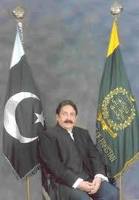
A.O.A.
Respected Sir,
Firstly, I will beg excuse for taking your valuable time, for inviting your kind attention, towards the subject matter. The moment I read a news on Friday, 08 April 2011 titled “India to get Swiss bank info for cases dating from Jan 2011” on Times of India Website, my mind immediately went towards your honors’ pain staking efforts, in getting back all the looted money of Pakistan, from corrupt persons whether, in Pakistan or abroad.
Sir, although, getting rid country of corruption, is the duty of every Pakistani and more so of the ruling elite yet, the prevailing atmosphere is such, that whenever, there is a news on a corruption scandal, whether big or small, the general public only pins its hope towards the judiciary. In fact, the present judiciary under your ‘DYNAMITE’ leadership is the only and last hope for the survival of the Pakistani nationhood. However, there is no denying the fact, that this situation has unimaginably burdened the judiciary, beyond its resources. I firmly believe that our judiciary will not be tired down, by this enormous task lying before it. I am also of firm belief, that the battle of survival of Pakistan, will only be fought and won, in the superior courts and nowhere else.
Under the circumstances, if your honor deems it appropriate, it is earnestly requested that some kind of government to government protocol may be initiated by Pakistan, under the watchful eyes of the Supreme Court, with not only Switzerland but all other such countries & Islands, where our looted money is stashed by the corrupt people, whom I consider traitors, as well.
Sir, the economic situation of Pakistan cannot be sustained, by just increasing the taxes on those classes who are already, honestly paying taxes (particularly the salaried and middle income group) or constantly increasing POL, electricity and gas charges etc. The gravity of the economic misery can be easily gauged from the ever increasing suicide incidences in Pakistan. Now, the time has come, when business as usual cannot be run, any further.
Sir, corruption is the biggest danger to the survial of Pakistan.
Sir, there is a saying of Hazrat Ali RA, that a system of ‘Kufr’ can sustain but not a system of ‘Zulm’. And in my opinion, the biggest Zulm with the poor after injustice is corruption. In fact, injustice stems from corruption. The monumental increase in corruption has tremendously increased poverty which in turn is now breeding terrorism.
Hoping to be excused for this trouble.
Regards,
Syed Nayyar Uddin Ahmad