Archive for May, 2026
Urgent Open Letter to Marco Rubio
 May 24th, 2026 |
  Author:
 Your Excellency Secretary Marco Rubio,
As you visit India at a historic moment when the United States prepares to commemorate the 250th anniversary of its Independence, the world is once again reminded of the enduring American ideals of freedom, liberty, democracy, equality, self-governance, the rule of law, and the pursuit of human dignity.
It is in the spirit of these universal values that I respectfully draw your urgent attention to the grave and worsening human rights situation in India. The concerns I raise are detailed extensively in my earlier appeal titled “An Urgent Humanitarian Appeal to the US President,” available at:
The continued persecution and violence against minorities — particularly Muslims in Kashmir and across India, Christians, Sikhs, and the people of Manipur — have become matters of deep international concern. Reports of mob lynchings, religious intolerance, suppression of dissent, and targeted communal violence continue to emerge with alarming regularity. Distinguished genocide scholar Professor Gregory Stanton has also publicly expressed serious concern regarding these developments and predicted very high chances of happening of genocide in India.
Your Excellency, it is instructive to recall that when a Sikh U.S. citizen felt personally threatened from Indian plans to eliminate him, the Excellency Donald Trump President of the United States, wrote directly on 24 July 2025 to reassure him that his safety was a paramount concern of the State. This precedent underscores the moral and political strength conveyed when a head of state speaks plainly in defense of their citizens. The voice of the American Secretary of State, backed by its global stature, would carry enough weight in deterring aggression of transnational killings and almost daily lynching of minorities inside India.
In view of this humanitarian crisis, I respectfully urge you to raise these issues at the highest level with the Indian leadership during your visit. I also request attention to growing international concerns regarding allegations of transnational repression and targeted actions attributed to Indian state-linked actors in countries including Pakistan, Canada, the United Kingdom, and the United States.
I further wish to state that I personally received a written death threat allegedly linked to India’s intelligence agency, R&AW, which has caused serious concern for my safety and well-being. In this context, the protection of fundamental human rights, civil liberties, and religious freedoms must remain central to international democratic engagement.
I further urge the United States government to seriously consider the recommendations made by the United States Commission on International Religious Freedom (USCIRF), including the designation of India as a “Country of Particular Concern” (CPC) for severe violations of religious freedom. Strong and principled measures, including targeted diplomatic and policy actions, may become necessary to ensure accountability and to safeguard vulnerable minority communities.
At this critical juncture, millions of minorities in India look toward the international community, and particularly the United States, with hope that democratic values and humanitarian principles will prevail over hatred, intolerance, and fear.
I sincerely hope your visit will contribute toward meaningful dialogue, justice, and the protection of human rights for all communities in India.
Thank you for your attention to this urgent humanitarian matter.
Respectfully and sincerely,
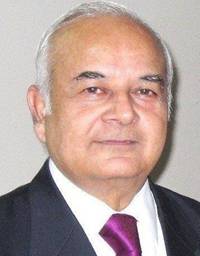
Syed Nayyar Uddin Ahmad
Lahore – Pakistan
+92 321 9402157
24th May, 2026
nayyarahmad51@gmail.com The writer is a senior corporate leader and strategic analyst. His thought-provoking visionary insights have reshaped global discourse, capturing the attention of world leaders. His writings have not only resonated with heads of state and governments but have also influenced the foreign policies of the United States and other major powers.
Man of War, Man of Peace
History occasionally gifts nations with extraordinary men; leaders whose courage in war is equaled only by their wisdom in peace. Some men command armies; rare men command the course of history. In Field Marshal CDS Syed Asim Munir, Pakistan found such a man: a soldier of unshakable resolve, strategic brilliance, and statesmanship of the highest order.
During the defining four-day war with India, Field Marshal Asim Munir stood as the calm center of a storm that captured the attention of the world. Under immense pressure and extraordinary circumstances, he displayed exceptional military leadership, operational mastery, and unwavering composure. His command inspired confidence throughout the armed forces and reassured an entire nation that Pakistan stood secure, united, disciplined, and prepared.
In moments when lesser leaders may have faltered, he demonstrated clarity, restraint, and strategic foresight. The world witnessed not merely the conduct of a military commander, but the emergence of a leader shaped by courage, intellect, and destiny.
Yet true greatness is not measured only by victory in war. The highest form of leadership is the ability to transform conflict into opportunity, tension into dialogue, and fear into hope.
When the flames of instability threatened the Gulf and fears of wider confrontation loomed between America and Iran, Field Marshal Asim Munir rose beyond the traditional role of a soldier. Through tireless diplomatic engagement, wise counsel, and visionary leadership, he played a remarkable role in encouraging restraint, facilitating ceasefire efforts, and helping create an atmosphere where dialogue could prevail over destruction.
He emerged from the crucible of conflict not merely as Pakistan’s defender, but as a statesman whose voice carried weight in the councils of nations. At a time when the world desperately searched for responsible leadership, Pakistan offered a soldier who understood both the necessity of strength and the supremacy of peace.
Today, Field Marshal Asim Munir stands at the center stage of world affairs as a symbol of resilience, wisdom, and statesmanship; truly a Man of War, Man of Peace. To millions, he has become the “Man of Steel,” a leader whose discipline in battle and commitment to humanity elevated Pakistan’s stature on the global stage.
Equal recognition and appreciation must also be accorded to Prime Minister Shehbaz Sharif, whose foresight and decisive leadership proved instrumental during this historic chapter. By immediately recognizing the extraordinary talent, capability, and strategic vision of his Army Chief, Prime Minister Shehbaz Sharif demonstrated statesmanship of the highest caliber. His confidence in Field Marshal Asim Munir reflected not only political wisdom, but an unwavering commitment to the strength and stability of Pakistan.
For this, Prime Minister Shehbaz Sharif and his dedicated team deserve full kudos and the gratitude of the nation. Together, their leadership projected Pakistan not merely as a strong nation, but as a responsible force for peace, balance, and humanity at the pinnacle of world affairs.
The people of Pakistan can take immense pride in witnessing their nation contribute not only through military strength, but through diplomacy, restraint, and visionary leadership. In an era overshadowed by uncertainty and division, Pakistan produced a leader whose understanding of war was matched by his devotion to peace.
May history remembers this chapter as a defining moment when courage defended a nation, wisdom steadied a region, and leadership sought to heal a troubled world.
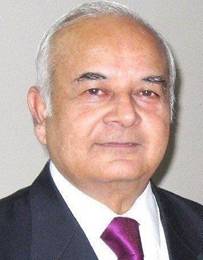
Syed Nayyar Uddin Ahmad
Lahore – Pakistan
+92 321 9402157
7th May, 2026
nayyarahmad51@gmail.com The writer is a senior corporate leader and strategic analyst. His thought-provoking visionary insights have reshaped global discourse, capturing the attention of world leaders. His writings have not only resonated with heads of state and governments but have also influenced the foreign policies of the United States and other major powers.
Time for Pakistan–India Détente: A Strategic Opportunity for Peace
Exactly one year ago, South Asia witnessed a brief but transformative four-day confrontation between Pakistan and India. The clash triggered a reversal of roles that few could have predicted: India’s military and diplomatic posture was exposed as vulnerable, while Pakistan’s measured and effective response elevated its standing across the global strategic community.
Emerging from that crisis, Pakistan demonstrated not just military resilience but diplomatic maturity, reinforcing its image as a responsible and capable security actor. Across the vast arc from the Mediterranean to the Indian ocean, Pakistan is increasingly viewed as a stabilizing force—second only to China in terms of regional strategic weight. Yet with power comes responsibility, and Pakistan’s elevated status demands leadership rooted in peace, vision, and principle.
The Burden of Leadership
South Asia, home to more than 1.5 billion people, cannot indefinitely sustain hostility between two nuclear-armed nations. For the sake of regional stability and global security, it is now time to convert military advantage into diplomatic momentum. Pakistan is uniquely positioned to lead a credible initiative for sustainable peace with India; one grounded in international law and reinforced by moral clarity.
A proactive peace initiative, undertaken under the aegis of the United Nations Security Council and in consultation with key global and regional players, can help set the stage for normalization.
A Forward-Looking Framework for Détente
A durable peace cannot rest merely on goodwill; it must be structured through clear principles and phased engagement. A possible roadmap could include:
International Investigation of the Pahalgam Incident
To avert future crises, a neutral inquiry; comprising members from the UN Security Council’s permanent five, the Organisation of Islamic Cooperation (OIC), and BRICS—should establish the factual record surrounding the incident.
Commitment to the Indus Waters Treaty
India must reaffirm its obligations under this vital agreement in both letter and spirit, ensuring that water remains a shared lifeline rather than a weapon.
Cessation of Hostilities
A declaration by India to halt all offensive military operations against Pakistan would open the door to genuine de-escalation.
Restoration of Diplomatic Relations
Reinstating full diplomatic engagement is essential to ensure continuous communication and crisis management.
Reopening Airspace and Civilian Links
Lifting airspace restrictions and reviving people-to-people exchanges would serve as tangible confidence-building measures.
Cultural and Media Normalization
Resuming sports, cultural events, and media collaborations would humanize bilateral ties that have long been defined by animosity.
Comprehensive Dialogue on All Disputes
Talks must encompass all outstanding issues—Jammu and Kashmir, Siachen Glacier, Junagadh, Manavadar, and Sir Creek.
– Junagadh and Manavadar formally acceded to Pakistan in 1947 through signed Instruments of Accession, though India rejected these on demographic and geographic grounds.
– Sir Creek, governed by differing interpretations of a 1914 resolution, remains an unresolved maritime boundary question; Pakistan maintains the border lies along the eastern bank (“Green Line”), while India insists on the mid-channel line.
Addressing these issues alongside trade and economic cooperation can lay the groundwork for a peaceful, interdependent future.
Ending Destabilizing Activities
India must cease opposition to the China–Pakistan Economic Corridor (CPEC) and end any actions, direct or indirect, aimed at undermining Pakistan’s security or stability.
Kashmir: The Core of the Dispute
The issue of Jammu and Kashmir remains the central and most emotive point of contention. It cannot be wished away—it must be resolved in accordance with international law and the will of the Kashmiri people.
The UN Charter explicitly upholds the principle of self-determination:
- Article 1(2) affirms this as a fundamental goal of the United Nations.
- Article 55 reiterates that self-determination is essential for international peace.
Subsequent UN General Assembly resolutions—including 1514 (1960), 2625 (1970), 3070 (1973), 3314 (1974), and 37/43 (1982)—reinforce the legitimacy of struggles against foreign occupation. Notably, Resolution 37/43 reaffirms “the legitimacy of the struggle of peoples under colonial and foreign domination… by all available means, including armed struggle.”
This framework challenges simplistic narratives that equate all forms of armed resistance with terrorism. Where a people possess a recognized right to self-determination, and where foreign occupation is alleged, the legitimacy of their struggle must be weighed within international law—not dismissed by rhetorical convenience.
Hence, India and Israel now can not kill Kashmiris and Palestinians and call them terrorists.
Now this matter must be internationally raised that these killings are War Crimes and Crimes against Humanity.
UN Security Council resolutions, particularly Resolutions 47 (1948) and 80 (1950); have long emphasized the need for a plebiscite to reflect the will of the Kashmiri people. This remains an unfulfilled obligation on the global conscience.
Pathways Toward Reconciliation in Kashmir
As immediate steps towards normalization:
- Restore cross–Line of Control (LoC) travel and trade.
- Facilitate humanitarian contacts and family reunifications.
- Encourage joint economic initiatives within the region.
Such humanitarian and economic engagements are not merely symbolic; they are the first steps toward restoring dignity, trust, and mutual recognition.
Choosing Peace Over Perpetual Conflict
Pakistan stands today at a moment of immense strategic opportunity coupled with profound responsibility. Its enhanced stature must now be translated into leadership for peace. By advancing a principled, forward-looking initiative, Pakistan can not only reshape South Asia’s geopolitical trajectory but also reaffirm its commitment to international norms and justice.
For India, this moment offers an equal opportunity; to rise above entrenched narratives and seize the possibility of genuine dialogue.
The future of South Asia must not be defined by suspicion and hostility but by the moral courage to pursue peace grounded in justice, law, and mutual respect. A Pakistan-led initiative for détente is not a concession; it is a vision, one that could transform this region from a theatre of conflict into a cradle of stability and cooperation.
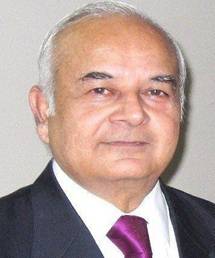
Syed Nayyar Uddin Ahmad
Lahore – Pakistan
+92 321 9402157
6th May, 2026
nayyarahmad51@gmail.com The writer is a senior corporate leader and strategic analyst. His thought-provoking visionary insights have reshaped global discourse, capturing the attention of world leaders. His writings have not only resonated with heads of state and governments but have also influenced the foreign policies of the United States and other major powers.