Archive for June, 2026
Pakistan: The Peace Dividend the World Owes
 June 15th, 2026 |
  Author:
 Heartfelt congratulations are due to Prime Minister Shehbaz Sharif, Field Marshal and the CDF Syed Asim Munir, Deputy Prime Minister and Foreign Minister Muhammad Ishaq Dar, Interior Minister Syed Mohsin Naqvi, Foreign Secretary Ms Amna Baloch, all members of the government of Pakistan’s team, and above all, the resilient people of Pakistan for their sterling contributions in helping defuse a regional crisis that was perilously moving toward a much wider global confrontation.
At a time when the world stood on the edge of heightened conflict, Pakistan demonstrated maturity, restraint, diplomacy, and statesmanship in promoting peace and stability. The nation’s constructive role in safeguarding regional and global peace deserves recognition and appreciation from the international community.
As a minimum gesture of gratitude, the people of Pakistan deserve IMMEDIATE economic relief, including the revision of petroleum prices to their pre-28 February levels. Furthermore, the international community; being a direct and indirect beneficiary of a more peaceful world order, should consider meaningful economic support measures, including substantial debt relief and the eventual writing off of Pakistan’s domestic and external financial liabilities.
In recognition of Pakistan’s growing role as a force for peace and stability, the United Nations should immediately accord Pakistan the status of a quasi-permanent sixth member of the Security Council until comprehensive UN reforms are finalized and formally adopted in the future.
Likewise, Iran and the Gulf countries may consider establishing a special consortium to provide Pakistan with concessional or free oil and gas supplies for the next twenty years, acknowledging the country’s invaluable contribution toward regional stability and global peace.
Having demonstrated its capacity for constructive diplomacy and conflict de-escalation, Pakistan is also well positioned to assist international efforts aimed at resolving other major conflicts around the world. The United Nations may find in Pakistan a valuable partner in advancing dialogue and promoting peaceful solutions, including in the ongoing Russia–Ukraine conflict.
May this moment mark the beginning of a new era of peace, cooperation, mutual respect, and shared prosperity for all humanity.
Syed Nayyar Uddin Ahmad
Lahore.
nayyarahmad51@gmail.com
+92 321 9402157
Budget 2026–27: A Poverty Reduction Plan, Not a Poverty Enhancement Plan
Dos and Don’ts for the Government of Pakistan Before Presenting Budget 2026–27
As Pakistan prepares to unveil Budget 2026–27, policymakers face a defining challenge: whether the budget will serve as an instrument for economic relief, engine for growth and poverty reduction or become yet another exercise in revenue extraction from an already burdened population.
A national budget must ultimately be judged not by the amount of taxes collected but by its impact on the lives of ordinary citizens. If government revenues continue to increase while poverty, unemployment, inflation, and economic insecurity simultaneously worsen, then the nation must honestly question the effectiveness of its fiscal policies.
If poverty continues to expand despite higher taxation and increasing government receipts, future budgets may be remembered not as development plans but as a “Poverty Enhancement Plan (PEP).”
The Economic Reality Facing Pakistan
Pakistan’s economy has endured several years of extraordinary stress. High inflation has eroded purchasing power, economic growth has remained insufficient to absorb new entrants into the labour market, and millions of households have witnessed a steady decline in their standard of living.
Recent assessments by international institutions, including the IMF and the World Bank, have highlighted the challenges facing the country. The World Bank has reported a significant increase in poverty levels, warning that millions of Pakistanis have fallen below the poverty line due to economic instability, inflation, and inadequate job creation.
Food prices, utility charges, transportation costs, healthcare expenses, educational expenditures, and housing rents have increased dramatically over recent years. For many households, salaries have failed to keep pace with the rising cost of living.
The consequences are visible across the country:
- Rising poverty;
- Growing unemployment and underemployment;
- Shrinking middle-class purchasing power;
- Increased dependence on borrowing and informal support systems;
- Reduced household spending on health and education.
The Fundamental Question
A simple but important question must be asked:
If poverty is increasing despite higher tax collections and repeated taxation measures, what has been the justification for imposing such high tax burdens on citizens?
Taxation is not an end in itself. Taxes are collected to improve public welfare, create economic opportunities, reduce inequality, and strengthen national development.
When tax collections rise while poverty also rises, policymakers must reconsider whether the burden is being distributed fairly and whether the existing tax structure is producing the desired outcomes.
The Most Taxed Segment: Salaried Pakistanis
Among all segments of society, salaried individuals remain the most visible and compliant taxpayers.
Their taxes are deducted at source before salaries are received. They have limited opportunities for tax avoidance and bear the full impact of every increase in tax rates.
Meanwhile, significant parts of the economy continue to remain outside the effective tax net or contribute less than their potential:
- Large sections of retail trade;
- Wholesale businesses;
- Informal commercial activities;
- Large agricultural operations;
- Various sectors benefiting from exemptions, concessions, or preferential tax treatments.
The result is a widespread perception that the tax burden is disproportionately concentrated on those who are already documented and compliant.
A fair tax system should ensure that taxpayers with comparable incomes contribute equitably, regardless of the source of their earnings.
What the Government Must Do
DO #1: Provide Substantial Tax Relief to Salaried Individuals
The government should substantially reduce the income tax burden on salaried persons.
Inflation has significantly reduced the real value of incomes. A salary that once provided financial security now often struggles to meet basic household expenses.
The government should seriously consider revising the income tax structure for salaried individuals as follows:
Monthly salaries up to Rs. 300,000 — Tax-free
Monthly salaries above Rs. 300,000 and up to Rs. 1,000,000 — 5% tax
Monthly salaries above Rs. 1,000,000 and up to Rs. 1,500,000 — 10% tax
Monthly salaries above Rs. 1,500,000 and up to Rs. 2,000,000 — 15% tax
Monthly salaries above Rs. 2,000,000 and up to Rs. 5,000,000 — 20% tax
Monthly salaries above Rs. 5,000,000 — 30% tax
All civil and security related personnel posted in the provinces of Baluchistan, KPK and GB must be allowed tax free salaries. Moreover, Polio Eradication Field Staff performing duties all over the country must be given tax free salaries with three times immediate raise in their salaries.
Such a structure would provide meaningful relief to middle-income earners while ensuring that higher-income groups continue to contribute a fair share toward national development.
Such measures would:
- Increase disposable income;
- Stimulate domestic demand and enhance economic growth;
- Encourage voluntary tax compliance;
- Strengthen the middle class;
- Improve economic confidence.
DO #2: Broaden the Tax Base Instead of Increasing Tax Rates
Pakistan’s challenge is not merely low revenue collection but a narrow tax base.
The focus should be on expanding the tax base by bringing untaxed and undertaxed sectors into the formal tax system, rather than repeatedly imposing higher taxes (by just sitting in the comfort of the air-conditioned offices) on those who are already compliant taxpayers.
Meaningful documentation and taxation of retail, wholesale, agricultural, and informal sectors would create a more equitable and sustainable fiscal framework.
DO #3: Review Preferential Tax Treatments
The International Monetary Fund, in its 2024 Article IV Consultation and Extended Fund Facility Staff Report on Pakistan, has clearly underscored a structural distortion in the country’s fiscal system: a tax regime heavily weakened by extensive exemptions and preferential treatments embedded in the Second Schedule of the Income Tax Ordinance. In essence, these so-called concessions function as a parallel system of reliefs that continuously erode the tax base and shift the burden onto compliant taxpayers. The IMF estimates that these tax expenditures amount to around 4–4.5 percent of GDP annually, translating into a staggering $15–21 billion (approximately PKR 4–6 trillion) in lost revenue every year. This is not a marginal inefficiency; it is a massive fiscal leakage that undermines the state’s ability to invest in development, infrastructure, and social services. The Fund has repeatedly stressed that without aggressively rationalizing these exemptions and broadening the tax net, Pakistan will remain trapped in a cycle of repeated tax hikes on existing filers while large segments of the economy continue to operate under protected, undertaxed regimes.
In view of the foregoing, Prime Minister Shehbaz Sharif should urgently direct the relevant authorities to undertake a comprehensive review of tax exemptions, concessions, and preferential tax arrangements. The objective should be to restructure fiscal policy in a way that enables the Budget 2026–2027 to deliver meaningful relief to the public, particularly the downtrodden segments of society that are struggling under the burden of rising prices of petroleum products and other essential commodities. This pressure has been further intensified by ongoing geopolitical tensions in the region. A well-designed reform of the tax system is essential to create fiscal space for a more equitable and relief-oriented budget.
Citizens expect a tax system based on fairness, transparency, and equal treatment.
A credible review would improve public confidence and strengthen perceptions of tax justice.
DO #4: Prioritize Employment Generation
No country can successfully reduce poverty without creating jobs.
Budget allocations should focus on:
- Small and medium enterprises;
- Labour-intensive industries;
- Agriculture modernization;
- Information technology;
- Skills development programs;
- Export diversification;
- Infrastructure projects with high employment potential.
A person with dignified employment is far less likely to depend on state assistance.
DO #5: Protect Essential Consumption
Indirect taxation on essential goods disproportionately affects lower- and middle-income households.
Food, medicines, education, healthcare, and public transportation should remain affordable.
Fiscal policy should protect essential consumption rather than make survival increasingly expensive.
DO #6: Establish an Essential Cost Protection Framework
One of the most effective anti-poverty measures would be to protect citizens from excessive increases in essential living costs.
The government should establish a comprehensive framework aimed at controlling unreasonable increases in:
- Essential food items;
- School fees;
- School stationery;
- School uniforms and shoes;
- Essential healthcare services;
- Residential rents;
- Utility charges affecting low-income households.
Education must never become unaffordable because of escalating ancillary costs.
Similarly, housing should remain accessible to working families. Excessive rent increases have become one of the largest contributors to declining living standards in urban Pakistan.
The government should therefore consider:
- Limits on annual school fee increases;
- Monitoring of compulsory educational expenses;
- Tenant protection measures;
- Reasonable rent regulation mechanisms;
- Anti-profiteering initiatives in essential markets.
DO #7: Measure Budget Success Through Poverty Reduction
The success of Budget 2026–27 should be measured through:
- Poverty reduction;
- Employment creation;
- Growth in real incomes;
- Improved access to education;
- Better healthcare outcomes;
- Enhanced social mobility.
Revenue collection should be viewed as a means to achieve these objectives rather than an objective in itself.
What the Government Must Not Do
DON’T #1: Continue Treating Salaried Taxpayers as the Easiest Revenue Source
Repeatedly increasing taxes on compliant taxpayers discourages productivity, savings, investment, and economic optimism.
The salaried class cannot indefinitely shoulder a disproportionate share of the nation’s tax burden.
DON’T #2: Increase Indirect Taxes on Essential Goods
Indirect taxes often affect the poor more severely than the wealthy.
Any additional burden on food, utilities, transportation, education, and healthcare directly contributes to poverty.
DON’T #3: Ignore the Link Between Inflation and Poverty
Inflation is not merely a statistical indicator.
For millions of families, inflation determines whether they can afford food, medicine, education, and shelter.
Budgetary decisions must therefore prioritize controlling living costs.
DON’T #4: Protect Privileged Exemptions at the Expense of Ordinary Citizens
Fiscal justice requires that all sectors contribute according to their capacity.
Special privileges that shift the burden onto compliant taxpayers should be reviewed and rationalized.
DON’T #5: Confuse Revenue Growth with Economic Success
A government may collect record revenues while citizens become poorer.
True economic success is reflected in:
- Reduced poverty;
- Higher employment;
- Greater purchasing power;
- Improved living standards;
- Increased social and economic opportunity.
Conclusion
Budget 2026–27 presents an opportunity to redefine Pakistan’s economic priorities.
The central objective should not merely be to satisfy revenue targets or achieve short-term fiscal gains. It should be to protect citizens, reduce poverty, create employment, and restore confidence in the future.
A budget that broadens the tax base, reduces the burden on salaried individuals, protects families from rising living costs, ensures fair taxation across sectors, and prioritizes employment generation can become a genuine instrument of national development.
However, if taxes continue to rise while poverty continues to increase, if education and housing become increasingly unaffordable, and if compliant taxpayers continue to bear a disproportionate burden, then serious questions will inevitably arise about the direction of public policy.
The people of Pakistan do not need a Poverty Enhancement Plan.
They need a Poverty Reduction Plan.
Budget 2026–27 should be remembered as the moment when economic policy shifted from extracting more from struggling citizens to creating opportunities for them to prosper.
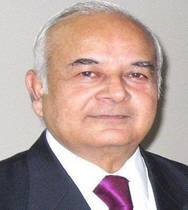
Syed Nayyar Uddin Ahmad
Lahore – Pakistan
+92 321 9402157
4st June, 2026
nayyarahmad51@gmail.com The writer is a senior corporate leader and strategic analyst. His thought-provoking visionary insights have reshaped global discourse, capturing the attention of world leaders. His writings have not only resonated with heads of state and governments but have also influenced the foreign policies of the United States and other major powers.
Victory Without Prosperity: Why Pakistan Must Convert Strategic Success into Economic Emancipation
Diplomatic Triumphs Mean Little If the Common Citizen Remains Poor
Pakistan today stands at a historic crossroads.
The nation has demonstrated resilience in the face of enormous regional challenges and has succeeded in enhancing its strategic and diplomatic profile. Yet despite these achievements, the economic condition of millions of Pakistanis remains deeply troubling.
This stark contradiction raises a fundamental national question:
Why have diplomatic gains, strategic successes, and enhanced international stature failed to translate into economic prosperity for the people of Pakistan?
History repeatedly teaches that military achievements and diplomatic victories can strengthen a nation’s standing in the world, but they do not automatically generate jobs, reduce poverty, attract investment, or improve living standards.
Prosperity is created not on battlefields or in diplomatic receptions but in factories, farms, markets, technology parks, export industries, and productive enterprises.
The real measure of national success is not merely how a nation is perceived abroad but how its citizens live at home.
Today, that remains Pakistan’s greatest challenge.
The Economic Paradox
Pakistan’s strategic significance has never been greater. The country’s geopolitical relevance, military capabilities, and diplomatic engagements continue to command international attention.
Yet the economy tells a different story.
Inflation has eroded purchasing power. Businesses struggle under rising costs. Investment levels remain inadequate. Youth unemployment continues to rise. Poverty remains widespread, and many middle-class families are finding it increasingly difficult to maintain their standard of living.
This is the central paradox confronting Pakistan:
How can a nation increase its diplomatic stature while its economic foundations remain fragile?
The answer lies in a long-standing failure to convert strategic capital into economic capital.
Diplomatic goodwill creates opportunities.
Economic reforms create prosperity.
The former cannot substitute for the latter.
The Burden of Excessive Taxation
One of the most serious obstacles to economic growth is the excessive burden placed upon the documented and productive sectors of the economy.
Businesses, manufacturers, exporters, professionals, and salaried individuals often find themselves carrying a disproportionate share of the tax burden.
When governments continuously increase taxes rather than expand the tax base, several damaging consequences emerge:
- Investment declines.
- Business expansion slows.
- Job creation suffers.
- Capital seeks safer destinations.
- Informal economic activity expands.
- Economic growth weakens.
A shrinking productive sector can never generate sustainable prosperity.
The objective of taxation should be to encourage growth, not suffocate it.
Pakistan urgently requires a transition from a taxation-driven economy to a growth-driven economy.
Why Investors Remain Cautious
Investors, whether domestic or foreign, seek three essentials:
- Predictability.
- Stability.
- Profitability.
Even the strongest diplomatic relationships cannot compel investors to risk capital where policy uncertainty, regulatory complexity, excessive taxation, bureaucratic delays, and inconsistent economic planning persist.
Investment follows confidence.
Confidence follows reforms.
Without structural improvements in governance and economic management, diplomatic successes will continue to yield only limited economic dividends.
Poverty and Unemployment: The Real National Emergency
No issue deserves greater attention than the economic struggles of ordinary citizens. Moreover, poverty and joblessness breads lawlessness and terrorism.
Every year, hundreds of thousands of young Pakistanis enter the labor market seeking meaningful employment.
Too many find limited opportunities.
The consequences are visible:
* Rising poverty.
* Growing inequality.
- Brain drain.
- Social frustration.
- Reduced economic mobility
- An Increase in suicide rates driven by hunger, worsening law and order, and the growing threat of terrorism
The greatest national security challenge facing Pakistan today may not be external threats but internal economic stagnation.
A nation cannot achieve lasting greatness if its youth are deprived of opportunity.
The Case for Radical Tax Reform
Pakistan must adopt a bold and comprehensive economic strategy centered on growth, entrepreneurship, and wealth creation.
At the heart of this strategy should be radical tax reform.
Lower Tax Rates
Lower tax rates on productive sectors would encourage investment, expansion, and economic activity.
Simplify the Tax Structure
A simpler tax system increases compliance, reduces corruption, and encourages documentation of the economy.
Broaden the Tax Base
The focus should shift from taxing existing taxpayers more heavily to bringing previously untaxed sectors into the formal economy.
Support Small and Medium Enterprises
SMEs are the lifeline and backbone of employment creation. They require incentives, access to credit, and regulatory relief.
Promote Export-Led Growth
Export industries should receive targeted support to improve competitiveness and increase foreign exchange earnings.
Beyond Taxation: Structural Reforms
Tax reductions alone cannot solve Pakistan’s economic challenges.
The nation also requires:
- Energy sector modernization.
- Public sector reforms.
- Agricultural productivity enhancement.
- Technology-driven industrialization.
- Educational transformation.
- Skills development programs.
- Export diversification and value addition.
- Digitization of governance.
- Transparent regulatory systems.
- Widespread adoption of 3D printing skills
Only a comprehensive reform programme can unlock Pakistan’s enormous economic potential.
A Bold Proposal for Economic Emancipation
Pakistan’s economic crisis has reached a point where conventional approaches may no longer be sufficient.
The nation requires extraordinary leadership, extraordinary expertise, and extraordinary urgency.
A proposal worthy of serious national consideration is the immediate appointment of Dr. Ikram ul Haq, a world-renowned expert in tax and economic affairs with a global perspective, as Deputy Prime Minister for Economic Emancipation, vested with full constitutional and administrative authority.
This proposal is not about personalities alone.
It is about recognizing that Pakistan’s economic challenges are interconnected and therefore require unified leadership capable of coordinating reforms across all major sectors of the economy.
Under such a framework, the Deputy Prime Minister would be entrusted with comprehensive constitutional, legislative, and administrative authority—subject to parliamentary oversight and constitutional safeguards—to lead a national economic transformation programme.
The mandate would be clear:
To place Pakistan firmly on the path of sustainable growth, employment generation, poverty reduction, fiscal stability, and investment expansion within a maximum period of 36 months.
A National Economic Emancipation Programme
The programme could focus on six strategic pillars.
1. Radical Tax Rationalization
- Significant reduction in tax rates.
- Expansion of the tax base.
- Simplification of tax laws.
- Elimination of anti-growth distortions and unconstitutional taxation.
2. Investment Revolution
- Fast-track investment approvals under one window operations.
- Strong investor protection.
- Long-term policy consistency.
- Competitive incentives for domestic and foreign investors.
3. Employment Generation
- Massive support for SMEs.
- Industrial expansion programmes.
- Entrepreneurship incentives.
- Vocational and technical training initiatives.
4. Export Transformation
- Technology-based manufacturing.
- Export diversification.
- Strategic trade partnerships.
- Increased global market access.
5. Government Efficiency
- Reduction in wasteful expenditure.
- Digitization of public services.
- Performance-based accountability.
- Rationalization of loss-making entities.
- Introduction of Lateral Entry System of recruiting domain experts, private sector professionals and specialists in government service cadres to fill mid or senior level-administrative roles.
6. Poverty Reduction
- Economic opportunity programmes.
- Rural development initiatives.
- Affordable housing support.
- Job creation as the primary anti-poverty strategy.
- Pro-poor public social spending.
investment in the poorest segments of society unlocks broader economic growth. When a government allocates 20% of its budget directly to the 20% of the population (the poorest quintile) through targeted funding, it triggers an economic chain known as Inclusive Growth.
A 36-Month National Challenge
Pakistan has never lacked economic diagnoses.
What it has lacked is sustained implementation.
Successive governments have produced reports, committees, strategies, and reform plans. Yet meaningful transformation has remained elusive because authority has been fragmented and execution inconsistent.
A dedicated Economic Emancipation Mission operating under clearly defined targets and timelines could provide the urgency and focus that the situation demands.
The nation requires measurable outcomes:
- Higher growth.
- Lower poverty.
- Greater investment.
- Expanded exports.
- Increased employment.
- Improved living standards.
- Innovative Strategy for Debt Clearance.
Government can devise out of box solutions for direct adjustment with foreign debtors of Pakistan’s external debt with undeclared foreign assets or a debt payment amnesty scheme on undeclared assets in foreign countries and Pakistan.
Nothing less should satisfy policymakers or citizens.
The Ultimate Test of Leadership
Diplomatic prestige is valuable.
Strategic success is important.
International recognition is welcome.
Yet none of these achievements can substitute for economic prosperity.
The true measure of national leadership is the ability to improve the lives of ordinary citizens.
Pakistan’s future will not be determined solely by its geopolitical achievements but by its ability to create jobs, attract investment, reward enterprise, reduce poverty, and build a dynamic modern economy.
The challenge before the nation is clear.
The opportunity is historic.
The need for action is immediate.
Pakistan must now convert strategic success into economic emancipation.
Only then will diplomatic victories be transformed into lasting prosperity for generations to come.
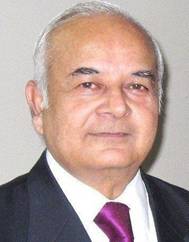
Syed Nayyar Uddin Ahmad
Lahore – Pakistan
+92 321 9402157
1st June, 2026
nayyarahmad51@gmail.com The writer is a senior corporate leader and strategic analyst. His thought-provoking visionary insights have reshaped global discourse, capturing the attention of world leaders. His writings have not only resonated with heads of state and governments but have also influenced the foreign policies of the United States and other major powers.