Archive for August, 2026
Pakistan Cricket’s Great Unravelling: Fix the Factory Before Blaming the Product
 August 29th, 2026 |
  Author:
 Pakistan cricket is not merely going through a bad patch.
Bad patches are part and parcel of sport. Great teams lose matches, gifted batsmen go through prolonged slumps, bowlers have off days, and even the most astute captains get their tactics spectacularly wrong. But what Pakistan is enduring against England can no longer be dismissed as a bad run of form, a string of unlucky results, or an occasional lapse in execution. It is beginning to look like something far more disturbing: a complete collapse of the system.
The machinery that is supposed to identify talent, nurture it, prepare players for the demands of international cricket, and transform potential into sustained performance appears to have broken down at almost every level. Pakistan is not merely losing matches; it is losing the ability to consistently produce cricketers who can withstand pressure, adapt to conditions, and perform when it matters most. The problem, therefore, is not simply what is happening on the field against England. The deeper crisis lies in everything that happens before a player ever walks onto it.
A cricketing structure that once produced world-class talent with remarkable regularity now appears incapable of converting promise into consistency. The conveyor belt has stalled, the safeguards have failed, and the very foundations of Pakistan cricket seem to have been blown to smithereens. What we are witnessing may not be a temporary crisis of form at all, but the unmistakable symptoms of a system that has forgotten how to build an international cricket team.
The numbers from the opening two Tests of the current England series are stark.
At Headingley, Pakistan was dismissed for 171 in 48.1 overs and then for 135 in 37.3 overs, losing by an innings and 103 runs. At the ongoing Test match at Lord’s, Pakistan was dismissed for 110 in 37.2 overs, conceding England a first-innings advantage of 180 runs.
These are not merely disappointing totals. They are evidence of a batting unit repeatedly failing to withstand the demands of Test cricket.
Yet the batting collapse is only the most visible symptom.
The more important question is: How did Pakistan cricket arrive at this point?
This Is Bigger Than One Bad Series
The temptation in Pakistan is always to search for an immediate culprit.
Change the captain.
Drop three batsmen.
Bring in two new bowlers.
Replace the coach.
Shuffle the selectors.
Announce another “major restructuring”.
Then wait for the next series.
This cycle has been repeated so often that it has become almost a governing philosophy.
But replacing individuals without repairing the system that develops and selects those individuals is unlikely to produce lasting change.
The present England series should therefore be treated not simply as a cricketing embarrassment but as an institutional stress test.
And the results are deeply troubling.
At Headingley, England’s Ollie Robinson and Josh Tongue each took five wickets as Pakistan collapsed twice. At Lord’s, Robinson took another four wickets for just 11 runs, while Jofra Archer and Tongue completed the destruction of Pakistan’s batting.
Pakistan’s young opener Azan Awais showed courage with 46 at Lord’s but then gifted his wicket via a loose shot, while Mohammad Abbas demonstrated that disciplined, intelligent bowling can still trouble England’s best batsmen. Indeed, Abbas took four wickets in England’s first innings and reached the milestone of 900 first-class wickets.
These individual performances are important because they disprove the idea that Pakistan simply has no talent.
The talent exists. The system is failing to convert enough of it into sustained international excellence.
From Cricketing Powerhouse to Permanent Reconstruction Project
There was a time when Pakistan cricket possessed something the world’s strongest teams respected and feared.
Pakistan produced fast bowlers of extraordinary pace and skill. It developed batsmen capable of playing long, technically demanding innings. It produced wicketkeepers, spinners, all-rounders and natural athletes who could change matches.
Above all, Pakistan produced cricketers with character.
The country’s cricketing identity was built around flair, competitiveness, unpredictability and an almost instinctive belief that a match could be turned around from any position.
That identity was suddenly weakened and almost completely demolished by the decision of the then government to close departmental teams and adopt the Australian cricketing model for Pakistan; despite Australia having a population of just over 25 million, compared with Pakistan’s population of more than 250 million.
The problem is not that Pakistan has suddenly forgotten how to play cricket. The problem is that modern international cricket has become an extraordinarily sophisticated professional enterprise, while Pakistan has too often attempted to manage it through administrative improvisation.
The modern game demands much more than eleven talented players.
Building a sustainable high-performance cricket system requires far more than simply restructuring domestic teams. It demands a comprehensive, evidence-based framework for identifying, nurturing, and developing elite talent. This must encompass scientific fitness and conditioning programmes, biomechanics, advanced data analytics, specialist coaching, sports psychology and mental conditioning, nutrition, workload management, and sophisticated tactical preparation.
Equally critical is the development of a strong and competitive cricketing ecosystem at every level; from schools, colleges, universities, and clubs to regional and domestic cricket. This ecosystem must be supported by quality playing surfaces, robust competitions, effective talent identification, and a clearly defined, merit-based pathway through which promising young cricketers can progress systematically from junior cricket to the highest level of the domestic game and, ultimately, the international stage.
The objective should be to build an integrated high-performance structure in which talent is not merely discovered, but systematically developed, monitored, challenged, and prepared for international cricket.
The countries that consistently succeed understand this.
Pakistan must understand it too.
The PCB Is the Factory
There is a simple analogy that deserves to become central to the national conversation about Pakistan cricket:
The PCB is the factory. The cricketer is the product.
If a factory repeatedly produces defective products, the responsible response is not simply to blame the products.
You inspect the factory.
You examine the machinery.
You assess the raw material.
You investigate the production process.
You review quality control.
You evaluate management.
You determine whether the people running the factory possess the necessary expertise.
And, most importantly, you identify where the production chain is breaking down.
Pakistan cricket requires exactly such an examination.
The PCB’s own current structure demonstrates how extensive and expansive the organisation has become, with dedicated functions covering high performance, domestic cricket, women’s cricket, commercial operations, finance, security, administration and PSL management.
That is why accountability cannot stop with the national team’s playing XI.
If the final product repeatedly fails and that too consistently, the institution responsible for producing that product must be prepared to examine itself.
The PCB Cannot Claim That Nothing Is Being Done
To be fair, it would also be inaccurate to suggest that the PCB has done nothing.
The Board has undertaken several initiatives that, on paper, move in the right direction. For the 2026–27 domestic season, the PCB has expanded the domestic programme, increased the number of regional teams in major competitions, introduced more red-ball opportunities for under-19 players and expanded its school talent-hunt programme from 450 schools in 39 districts to 1,200 schools across 100 districts.
The Board has also increased the domestic cricket budget by PKR 1 billion, taking it from PKR 3 billion to PKR 4 billion for 2026–27.
A formal domestic fitness policy has also been introduced, with structured testing for regional, departmental and age-group players and repeat testing designed to measure improvement.
These are welcome developments.
But announcements are not results.
The ultimate test of any cricket administration is whether its structures produce better cricketers and a better national team.
That is where the PCB must now provide convincing evidence.
The Domestic Game Is the Real Laboratory
Domestic players do not suddenly become Test cricketers when they enter the national dressing room.
They are produced over years of guidance, trainings, foreign tours and performance.
A batsman who has not spent enough time constructing 150-run domestic innings cannot suddenly be expected to survive world-class Test attacks.
A fast bowler who has not developed accuracy, stamina and tactical intelligence over long spells cannot suddenly become an international strike bowler.
A young fielder cannot be transformed into an elite athlete through a few weeks of national-team training.
The domestic system is therefore not a side issue.
It is the laboratory in which Pakistan’s future Test team is manufactured.
The PCB itself has recognised this principle by placing greater emphasis on first-class cricket, departmental competitions, regional pathways and age-group red-ball cricket. The 2026–27 calendar includes multiple first-class and three-day competitions, while under-19 players are being given dedicated red-ball opportunities.
The question now is one of quality.
Are these competitions producing the intensity, technical demands and competitive pressure necessary to prepare players for England, Australia, South Africa and other elite Test environments?
If not, the structure must be improved again.
There should be no attachment to any domestic model simply because it exists.
The only sacred principle should be performance.
Pakistan Must Stop Confusing Activity with Progress
One of the greatest dangers in sports administration is confusing movement with progress.
A new committee is activity.
A new tournament is activity.
A new contract is activity.
A new coaching appointment is activity.
A new press conference is activity.
Progress is different.
Progress means that a 19-year-old batsman becomes a substantially better 21-year-old batsman.
Progress means that a promising fast bowler develops the control to bowl 20-over spells.
Progress means that fielding standards improve measurably.
Progress means fewer technical collapses under pressure.
Progress means Pakistan’s Test team becomes harder to beat.
That is the scoreboard that ultimately matters.
The Leadership Question
In cricket, the importance of a captain leading from the front cannot be overstated. History has repeatedly demonstrated that astute and inspirational leadership can transform the fortunes of an otherwise weaker side, enabling it to outthink, outmanoeuvre, and ultimately defeat teams that may be superior on paper.
Leadership is another area that deserves serious examination.
A captain cannot manufacture runs for his batsmen. He cannot personally take every wicket. He cannot prevent every dropped catch. However, he must be a pro-active personality.
But he can create clarity.
He can establish standards.
He can make players understand their roles.
He can respond intelligently when circumstances change.
He can project belief.
Most importantly, he can make the team feel that it has a plan.
Pakistan’s leadership structures have too often appeared unstable, reactive and short-term. Frequent changes in captaincy, coaching and selection create an environment in which nobody knows whether the next poor series will result in another wholesale change.
That is not a healthy high-performance environment.
Leadership should be developed deliberately rather than improvised.
A national captain should be supported by a professional high-performance team capable of providing tactical, analytical, physical and psychological support.
A true captain always leads from the front, by example, through commitment, courage, and determination. His responsibility is not only to guide the team but to bring out the very best in every player and inspire each individual to give 100% for the team.
A great captain also builds and protects a strong team culture based on trust, unity, discipline, and mutual respect. Every player must understand that the team comes before the individual, and that success is achieved together. The guiding principle should always be “one for all and all for one.”
When players believe in one another, stand together in difficult moments, and fight for each other, the team becomes stronger than the sum of its individual parts. That is the true mark of a great captain and a winning team.
He should not be expected to compensate for weaknesses throughout the institution.
The Pace-Bowling Question
For decades, Pakistan’s greatest competitive advantage was fast bowling.
The names are legendary.
That heritage created an expectation that every generation would produce another extraordinary pace attack.
Modern cricket, however, cannot be built on reputation.
Pace matters, but so do accuracy, movement, workload capacity, fitness, tactical intelligence and the ability to maintain pressure.
The present England series has produced a striking contrast.
England’s attack has repeatedly been able to create sustained pressure with disciplined seam bowling. At Lord’s, Robinson, Archer and Tongue reduced Pakistan to 110, which was not even a decent T20 innings total. Whereas, Pakistan’s own attack had earlier shown that it too could be effective when Abbas, Mohammad Ali and Khurram Shahzad maintained discipline.
This is important.
Pakistan does not need to manufacture bowlers who simply bowl faster.
It needs to develop complete bowlers.
Speed without control is expensive.
Control without penetration is insufficient.
The objective should be a bowling ecosystem that can produce different types of international-quality bowlers for different conditions.
Fielding Can No Longer Be Treated as an Optional Skill
The modern international game has transformed fielding from a supporting discipline into a decisive competitive advantage.
A dropped catch is not simply a missed opportunity. It can alter an entire Test match.
At Lord’s, Azan Awais was dropped on eight before going on to make 46. Pakistan also had fielding lapses earlier in the innings, although the side produced an outstanding substitute-fielding catch through Salman Ali Agha to dismiss Jordan Cox.
The lesson is straightforward:
Pakistan possesses the capacity to field brilliantly.
It must make brilliant fielding routine rather than occasional.
Fitness, catching technique, anticipation and throwing accuracy should be measurable components of player selection and retention.
The Chairman Must Order an Institutional Audit
This is where the responsibility of the PCB Chairman becomes unavoidable.
The answer is not necessarily to dismiss 100 per cent of the existing workforce overnight. That would itself be another emotional rather than professional response.
The Chairman should instead commission an independent, transparent and internationally benchmarked performance audit of the entire PCB cricketing structure.
Every major department should be assessed.
Every senior appointment should have defined responsibilities.
Every department should have measurable performance indicators.
Every major programme should be evaluated against outcomes.
And every senior executive should ultimately answer a simple question:
What measurable improvement has occurred under your responsibility?
Those who have performed should stay.
Those who have failed should be replaced.
Those who lack the necessary expertise should make way for professionals who possess it.
And those who are competent but trapped by poor systems should be empowered to reform them.
That is how serious institutions are rebuilt.
Do Not Destroy Everything—Rebuild What Does Not Work
Pakistan cricket does not need anarchy.
It needs architecture.
The PCB should establish a long-term high-performance strategy covering perhaps eight to ten years, with clearly defined stages from school cricket to international Test cricket.
The strategy should include:
Elite talent identification;
Specialist batting and bowling academies;
World-class strength and conditioning;
Sports psychology;
Biomechanics and injury prevention;
Advanced performance analytics;
High-quality domestic pitches;
A stronger first-class structure;
Specialised Test preparation camps;
Leadership development;
Professional fielding programmes;
Independent selection oversight;
Transparent performance benchmarks; and
Regular external review.
Pakistan already has many of the ingredients.
What it lacks is sufficient evidence that all these ingredients are being integrated into one coherent production system.
The National Team Is the Final Audit
The national team ultimately tells us whether the system is working.
At Headingley, Pakistan was beaten by an innings and 103 runs.
At Lord’s, after England made 290, Pakistan was dismissed for 110 and faced a huge first-innings deficit of 180.
Whatever the final result of the Lord’s Test, these performances cannot simply be filed under “bad luck”.
Nor should the players alone carry the blame.
They must accept professional responsibility for their own performances. But the institution that selected, trained, prepared and sent them into battle must accept responsibility too.
That is what accountability means.
Pakistan Cricket Still Has Time
The situation is serious, but it is not hopeless.
Pakistan remains a country of extraordinary cricketing potential.
The PSL has demonstrated that Pakistan can operate a commercially successful professional competition. The PCB’s expanded domestic programme demonstrates that the infrastructure for reform can be developed. The country’s young players continue to emerge.
What is needed now is consistency of vision.
Pakistan must stop rebuilding its cricket structure every time the latest result becomes embarrassing.
It must build something that can survive changes of chairman, captain, coach and government.
That requires institutional memory.
It requires professional governance.
And it requires the courage to make decisions based on evidence rather than personalities.
The Final Responsibility
The Chairman PCB now has an opportunity to do something much more important than rescue one Test series.
He can initiate the most comprehensive professional review of Pakistan cricket in a generation.
He can ask independent experts to determine why a country with Pakistan’s enormous cricketing talent is struggling to produce a consistently competitive Test side.
He can examine the entire chain; from school cricket to district cricket, from regional cricket to first-class cricket, from first-class cricket to the national academy, and from the academy to the national team.
And he can establish a culture in which every appointment is based on competence, every programme is judged by results and every failure produces accountability.
That would be genuine reform.
Because the fundamental lesson of the present crisis is simple:
Do not waste all your energy trying to repair the product while ignoring the factory.
Pakistan’s cricketers are the product.
The Pakistan Cricket Board is the factory.
If the factory is not producing players capable of consistently competing at the highest level, then the factory must be examined from the foundations upward.
Not with slogans.
Not with another temporary reshuffle.
Not with another cycle of blame.
But with professionalism, evidence, accountability and courage.
Pakistan cricket has fallen far enough for cosmetic solutions to be indefensible.
The country does not merely need a better XI.
It needs a better system for producing that XI.
And that is the challenge now confronting the Pakistan Cricket Board.
Fix the factory; and the product will finally have a chance to become world-class.
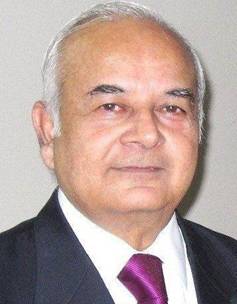
Syed Nayyar Uddin Ahmad
Lahore
nayyarahmad51@gmail.com
The writer is a senior corporate leader and strategic analyst with over five decades of experience. His thought-provoking visionary insights have reshaped global discourse, capturing the attention of world leaders. His writings have not only resonated with heads of state and governments but have also influenced the foreign policies of the United States and other major powers.
Soaring Petroleum Prices, Rising Poverty and Unemployment: An Urgent National Call for Solutions
I wish to invite the urgent and immediate attention of the entire leadership of Pakistan, both inside and outside Parliament, as well as the Establishment of Pakistan, to the grave and rapidly deteriorating situation arising from the daily increase in the rates of Petroleum and Oil Products (POL), particularly petrol and diesel, together with the additional and unnecessary burden of taxes and levies imposed upon these essential fuels.
The people of Pakistan are being subjected to a double jeopardy: first, through the continuously increasing basic prices of POL, and second, through the unnecessary and uncalled-for recovery of additional taxes and levies on petrol and diesel. This combined burden has practically and effectively broken the back of the ordinary citizen of Pakistan, particularly the millions belonging to the lower- and middle-income segments of society.
The situation is especially alarming when viewed against Pakistan’s extremely low-income levels. Pakistan is categorized by the World Bank as a lower-middle-income country, with a poverty-line benchmark of $4.20 per day, and this affects 44.7% of the population. This means that approximately 116.22 million people are living on less than roughly Rs. 1,200 per day, out of the latest stated total population figure of 260 million, as cited by the Federal Health Minister on television yesterday.
How can a person just earning approximately Rs. 1,200 per day possibly withstand the continuous increases in petrol and diesel prices, while simultaneously meeting the rising costs of food, transportation, electricity, education, healthcare, housing and other basic necessities?
The answer is obvious: he or she simply cannot.
THE DEVASTATING MULTIPLIER EFFECT OF POL PRICES
The consequences of high POL prices do not end at the petrol pump.
Petrol and diesel are the lifeblood of the entire national economy. Every increase in their prices directly or indirectly increases the cost of transportation, agriculture, food, manufacturing, construction, electricity generation, logistics and virtually every other economic activity.
The present policy of imposing exorbitant taxes, levies and rates on POL is therefore not merely making travel more expensive. It is progressively nuking the businesses, industries and agriculture of Pakistan, while simultaneously increasing unemployment and destroying the purchasing power of ordinary citizens.
Businesses face higher transportation and production costs. Industries become increasingly uncompetitive. Farmers face rising costs for tractors, tube wells, transportation, harvesting and the movement of agricultural produce. Small businesses are squeezed from both sides, falling consumer purchasing power and rising operating costs.
The inevitable result is a vicious cycle:
Higher POL prices → higher costs → higher prices → lower purchasing power → lower demand → declining business activity → closures and reduced investment → unemployment → greater poverty → even lower purchasing power.
This vicious circle cannot be allowed to continue indefinitely.
THE DANGER OF ECONOMIC AND SOCIAL IMPLOSION
There are now alarming grounds for concern that continued economic hardship, unemployment, inflation and extremely poor governance and mismanagement could eventually produce an internal implosion.
A nation cannot continuously squeeze the purchasing power of its citizens, damage its productive sectors, increase unemployment and simultaneously expect social and economic stability to continue indefinitely.
The warning signs must be taken seriously before economic frustration develops into a much wider social crisis.
The purpose of this appeal is therefore not to create alarm, but precisely the opposite: to prevent an implosion by taking corrective action before the situation reaches a point from which recovery becomes vastly more difficult.
THE $21 BILLION QUESTION
There is also an obvious question that must be asked.
If the Government argues that reducing or eliminating taxes and levies on POL would result in a loss of government revenue, then the country must examine where its fiscal priorities actually lie.
According to the figures cited in the Economic Survey of Pakistan and widely discussed in relation to Pakistan’s tax expenditures, annual tax exemptions and concessions have reached approximately Rs. 5.8 trillion, equivalent to roughly $21 billion.
It is important to clarify that this $21 billion figure represents tax expenditures broadly and should not be described as exclusively a dole to the elite. However, economists and institutions such as the UN Development Programme (UNDP) have repeatedly highlighted the phenomenon of elite capture, under which significant benefits from exemptions, concessions and subsidies can accrue to powerful groups, including the corporate sector, large landowners and affluent industries.
The reported Rs. 5.8 trillion ($21 billion) in annual tax expenditures encompasses areas including:
- Sales-tax exemptions;
- Income-tax exemptions; and
- Customs-duty exemptions.
The major beneficiaries identified in discussions of elite capture include:
Corporate groups and large-scale manufacturing sectors;
Large agricultural landowners and feudal elites; and
Well-connected political and institutional figures.
It is particularly striking that the reported Rs. 5.8 trillion ($21 billion) in annual tax expenditures was stated to have surpassed Pakistan’s external debt repayment requirements for that year.
Therefore, if the Government genuinely fears losing revenue by reducing or removing taxes and levies on POL, then the revenue question should be addressed through a comprehensive review and appropriate management of these enormous concessions and exemptions, rather than continuing to place an unbearable burden on a population where 44.7% ; approximately 116.22 million people, are living on less than roughly Rs. 1,200 per day.
In other words, the poor and struggling citizens should not be made to finance the fiscal system through ever-increasing taxes on fuel while billions of dollars’ worth of tax expenditures and concessions remain available elsewhere in the system.
THE WAY OUT
The easiest, fastest and most direct way out of this vicious circle of increasing poverty, inflation and joblessness is for the Government to take immediate and extraordinary measures to reduce the POL burden on the people.
The Government should therefore urgently consider:
1. The immediate removal of the entire burden of government taxes and levies on petrol and diesel, particularly those that are unnecessarily increasing the retail price beyond the reach of ordinary citizens.
2. A complete and transparent review of the POL pricing mechanism, clearly identifying the international cost, government taxes, levies, duties, margins and every other component contributing to the final price paid by the consumer.
3. Immediate relief for agriculture, transport, industry and businesses, all of which are being severely damaged by escalating fuel costs.
4. A comprehensive review and appropriate restructuring of the approximately Rs. 5.8 trillion ($21 billion) in annual tax exemptions and concessions, so that any revenue forgone through the reduction or elimination of POL taxes can, where appropriate, be recovered through better fiscal management and the rationalisation of concessions benefiting powerful groups.
5. Serious consideration of NATIONALISATION of the POL business in Pakistan, wherever legally, economically and administratively feasible, with the objective of ensuring that petroleum products are made available to the people, agriculture, transport, businesses and industries at the minimum possible sustainable rates.
NATIONAL INTEREST MUST COME FIRST
The proposal for NATIONALISATION should not be treated merely as an ideological slogan. It should be examined strictly from the standpoint of Pakistan’s national interest, economic security, affordability, transparency and long-term energy security.
If the State can ensure that petroleum products are procured, managed, refined, distributed and supplied efficiently and transparently, while eliminating unnecessary layers of cost and preventing excessive profiteering, the ultimate objective should be to provide these essential products to the people and productive sectors of Pakistan at the lowest possible sustainable prices.
Any model adopted must, of course, be professionally managed, financially transparent and protected against political interference, corruption, inefficiency and mismanagement.
A FINAL APPEAL TO THE LEADERSHIP OF PAKISTAN
This is an urgent appeal to the entire political leadership of Pakistan, Parliament, the Government, opposition leadership and the Establishment to recognise the seriousness of the situation and act before it is too late.
The present combination of escalating POL prices, excessive taxation, inflation, unemployment and declining purchasing power is placing an intolerable burden on ordinary Pakistanis and progressively weakening the country’s productive economy.
When 44.7% of the population, approximately 116.22 million people; are living below the stated $4.20-per-day lower-middle-income poverty benchmark, while the total population is stated to be 260 million, there is very little room for further economic pressure on the people.
At the same time, the State must examine its own fiscal priorities. If approximately Rs. 5.8 trillion ($21 billion) is being forgone annually through tax exemptions and concessions, then the Government must have the courage to review those concessions before continuing to extract ever-greater amounts from ordinary citizens through fuel taxation.
The choice before Pakistan’s leadership is therefore clear: either continue along a path that is progressively impoverishing citizens and nuking the productive economy, or take bold corrective measures now to restore affordability, employment, investment and economic confidence.
The immediate priorities should be to:
reduce the unbearable burden of POL taxation and levies; rationalise the Rs. 5.8 trillion ($21 billion) tax-expenditure regime; protect the 116.22 million vulnerable citizens; revive agriculture, industry and businesses; safeguard employment; and seriously examine NATIONALISATION of the POL sector where it serves the national interest.
These measures are not merely desirable economic reforms. They are measures aimed at preventing a potentially dangerous economic and social implosion.
Pakistan cannot afford to wait until the crisis becomes irreversible. The time for decisive action is now.
The true responsibility of leadership is not merely to govern the present, but to ensure that every new day brings greater hope, opportunity, and progress than the day before.
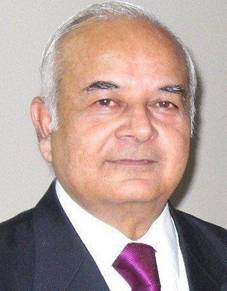
Syed Nayyar Uddin Ahmad
Lahore
nayyarahmad51@gmail.com
The writer is a senior corporate leader and strategic analyst with over five decades of experience. His thought-provoking visionary insights have reshaped global discourse, capturing the attention of world leaders. His writings have not only resonated with heads of state and governments but have also influenced the foreign policies of the United States and other major powers.
Breaking the Shackles of Elite Capture: A New Governance Model for Pakistan
Breaking the Shackles of Elite Capture: A New Governance Model for Pakistan
Put Development Before Politics, and Power Back into the Hands of Honest, Capable Citizens
The answers to Pakistan’s prolonged governance crisis and institutional failure are, in many ways, straightforward. We cannot move forward by putting the cart before the horse. Development must be the horse; the prime mover that pulls the entire nation forward. Yet, in Pakistan, we have repeatedly given disproportionate importance and authority to pseudo-politics, self-serving leadership, vested interests and powerful mafias. The result has been a deeply entrenched elite capture of the state.
For decades, political competition has too often revolved around the acquisition and preservation of power rather than around economic development, institutional reform, public service delivery and the welfare of ordinary citizens. Consequently, the machinery of government has become increasingly disconnected from the people it is supposed to serve.
Smaller Provinces Are Not the Answer
The solution to Pakistan’s governance crisis does not necessarily lie in creating more provinces or merely dividing existing provinces into smaller political power centers.
If geographical smallness alone were the answer, Islamabad should have been a shining example of efficient, corruption-free governance. Instead, its experience demonstrates that a smaller administrative area does not automatically produce better governance.
The fundamental question is not simply how large a governing unit is, but who governs it, how they are selected, whom they are accountable to, and what safeguards exist against corruption and abuse of authority.
The Islamabad experience is particularly revealing because even those responsible for supervising the capital’s administration have acknowledged the difficulties of getting routine matters accomplished without encountering the culture of palm greasing. This should serve as an eye-opener for anyone who believes that merely reducing the geographical size of a government will solve the problem.
The real problem is therefore not size alone. It is institutional design, accountability, competence and integrity.
Bureaucracy Must Administer—Not Rule
A modern state requires a competent, professional and politically neutral bureaucracy. But bureaucracy should not become a substitute for representative government.
The fundamental distinction is simple:
Elected representatives should decide what the government must achieve; professional public servants should determine how those objectives can best be implemented.
The bureaucracy’s legitimate and essential responsibilities include:
Policy implementation:
Turning laws, development priorities and political objectives into practical programmes and measurable results.
Public service delivery:
Managing schools, hospitals, transport, utilities, municipal services and other essential public institutions efficiently.
Professional expertise:
Providing elected leadership with reliable technical information, research, analysis and professional advice.
Continuity of government:
Ensuring that essential state functions continue smoothly despite changes in political leadership.
Regulation and enforcement:
Applying laws and regulations fairly, consistently and impartially.
But bureaucracy should not acquire unchecked political authority. Nor should politicians be permitted to manipulate professional administration for personal, partisan or financial interests.
A healthy state therefore requires strong elected leadership and an independent, professional and accountable civil service, with each operating within clearly defined constitutional and legal boundaries.
The Real Alternative: Empower the Citizen at the Local Level
Instead of creating additional provinces, Pakistan should seriously consider establishing much smaller, genuinely empowered units of local government, perhaps broadly corresponding to tehsil or district level.
But there is one crucial condition:
These units must not become the personal fiefdoms of political parties, entrenched local elites or unaccountable bureaucrats.
They should be governed through a system designed to place authority as close as possible to the citizen while simultaneously imposing strong safeguards against corruption, nepotism and abuse of power.
Local leadership should be entrusted to competent, experienced, professionally qualified and demonstrably honest citizens with clean records and no history of being member or association with any elite/Qabza group or IPP or loans write-off beneficiaries, NAB-Zada or links with property tycoons, sugar barons, banks or government defaulter etc., in any direct or indirect manner or with any past history of criminal, financial or ethical misconduct.
However, integrity cannot depend merely on personal reputation. The system itself must make corruption difficult and accountability unavoidable.
There should therefore be:
- Transparent selection and election procedures;
- Publicly available declarations of assets and interests;
- Independent financial and performance audits;
- Strict conflict-of-interest rules;
- Open procurement and contracting;
- Measurable service-delivery targets;
- Citizen complaint and oversight mechanisms;
- Strong penalties for corruption and abuse of authority; and
- Effective mechanisms for removing officials who fail the public trust.
Give Power to the People—Not to the Powerful
The objective should not be to create hundreds of new political positions or another layer of political patronage. The objective should be to transfer meaningful decision-making authority to the people while making those exercising that authority directly answerable to them.
A citizen should not have to travel through layers of provincial and federal bureaucracy to resolve a basic local problem.
If a road is broken, the responsible authority should be identifiable.
If a school is dysfunctional, someone should be accountable.
If a hospital fails to provide basic services, the responsible officials should be answerable.
If public funds disappear, the trail should be transparent and those responsible should face consequences.
This is what genuine decentralization means: not merely decentralizing offices, but decentralizing responsibility, authority and accountability.
Development Must Become Pakistan’s Prime Mover
Pakistan possesses enormous human and economic potential. Its population, strategic location, natural resources, agricultural capacity, entrepreneurial talent, industrial base and large overseas community provide the foundations for extraordinary national progress.
But potential alone produces nothing.
Development requires competent governance, predictable institutions, rule of law, economic freedom, investment, education, technological advancement and public accountability.
Politics must therefore become a means to achieve national development; not an end in itself.
The country cannot afford a system in which political energy is continuously consumed by the struggle for offices, patronage and personal advantage while ordinary citizens struggle with inadequate public services, unemployment, inflation, poor education and weak institutions.
A Daring Institutional Reset Is Needed
Pakistan now needs the courage to think beyond conventional political formulas.
The answer is not necessarily another province.
The answer is not another bureaucratic layer.
The answer is not simply another political party.
And it is certainly not the concentration of more power in the hands of a small ruling elite.
The real answer is to redesign governance around the citizen.
Authority should be decentralized to genuinely accountable local institutions. Political leadership should set direction and priorities. Professional administrators should implement those decisions. Independent institutions should monitor performance and corruption. Citizens should have the power to question, challenge and replace those who fail them.
In other words, Pakistan needs to replace elite capture with citizen ownership, bureaucratic domination with accountable administration, and political patronage with performance-based governance.
Pakistan’s Greatest Untapped Resource Is Its People
The most important reform Pakistan can undertake is to restore faith in the ability of its own citizens to govern themselves responsibly.
There are millions of honest, capable, educated and experienced Pakistanis who have no access to political power because they do not belong to established political families, patronage networks or powerful interest groups.
They should be given an opportunity to serve.
Pakistan does not lack talent. It lacks a system capable of identifying, empowering and holding its talent accountable.
The time has therefore come to take the reins of governance closer to the hands of capable and honest citizens; without political prejudice, without partisan considerations and without surrendering public institutions to vested interests.
If Pakistan can establish a governance model based on merit, integrity, decentralization, accountability, professional administration and relentless focus on development, it can unlock its enormous potential.
The transformation will not happen overnight, and no institutional reform can guarantee instant prosperity. But a serious beginning can be made by putting the horse before the cart:
First, build competent and accountable governance.
Then unleash development.
And let development become the prime mover of a stronger, fairer and more prosperous Pakistan.
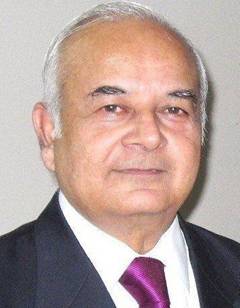
Syed Nayyar Uddin Ahmad
Lahore
nayyarahmad51@gmail.com
The writer is a senior corporate leader and strategic analyst with over five decades of experience. His thought-provoking visionary insights have reshaped global discourse, capturing the attention of world leaders. His writings have not only resonated with heads of state and governments but have also influenced the foreign policies of the United States and other major powers.