Archive for February, 2026
Pakistan Is Not Failing Because of Bad Leaders — It Is Failing Because of a Bad State
 February 22nd, 2026 |
  Author:
 Pakistan is sliding into an economic and social emergency. Real incomes are falling, food consumption is shrinking, and inequality is widening at levels unseen in decades. When households begin cutting back not only on meat but on wheat and rice, the crisis is no longer abstract, rather it is existential.
Credible assessments tell the same story. Economist Yousuf Nazar estimates that when vulnerability above the subsistence line is included, as much as 60–70 percent of Pakistan’s population may now be poor or at risk. Former finance minister Miftah Ismail has highlighted that real incomes and consumption have been declining for nearly a decade, while official survey data reported by journalist Shahbaz Rana show poverty and inequality at multi-decade highs.
Pakistan has had seven prime ministers and eleven finance ministers since 2014. If leadership change were the answer, recovery would have already begun. The problem is not who governs Pakistan, but it is how Pakistan is governed.
A State Designed to Spend, Not to Deliver
Pakistan’s constitutional and fiscal architecture rewards expansion of government rather than performance. Power and resources sit far from citizens, while accountability evaporates as responsibilities pass between federal, provincial, and district authorities.
Provinces receive large fiscal transfers but face little pressure to deliver education, health, or economic opportunity. Districts, where citizens actually encounter the state; remain underpowered and underfunded. The result is a large, expensive government that delivers remarkably little.
This is not a failure of intent. It is a failure by design of the elite capture.
What Pakistan Can Learn from South Korea, Malaysia and China;
countries that have successfully reduced poverty did not rely on slogans. They restructured incentives. China achieved historic poverty reduction through relentless focus on delivery and local accountability. Moreover, Switzerland demonstrates how decentralised, fiscally autonomous local governments can deliver prosperity without a bloated state.
Pakistan should adapt these lessons by transforming its districts into civil Cantons: political, fiscal, and administrative units with real authority over education, healthcare, local infrastructure, and taxation.
When governance moves closer to citizens, responsibility becomes visible; and so does failure.
Why Provincial Political Governments Must Give Way
Once districts are empowered as Cantons, the current provincial political superstructure becomes redundant. Governors, chief ministers, and oversized provincial cabinets add cost without improving service delivery.
Provinces should be retained only as lean coordinating bodies, responsible for inter-district infrastructure, standards, and dispute resolution: not day-to-day governance. This reform alone would significantly reduce public expenditure while improving accountability.
Decentralisation does not weaken the state. It makes it work.
Fiscal Discipline Without Austerity for the Poor
Economic recovery will require painful choices, but not for those already suffering.
Loss-making state-owned enterprises must be privatised or closed. Untargeted subsidies and elite privileges including free utilities/servants must end. Tax rates should fall, but exemptions; especially for powerful sectors such as agriculture, retail, and real estate; must disappear.
At the same time, social protection must expand. Cash transfers, nutrition programmes, and education vouchers for poor households are not charity; they are investments in stability.
The Real Choice Before Pakistan
Pakistan’s crisis is often described as cyclical. It is not. It is structural. Without a redesign of the state, growth will remain fragile, poverty will deepen, and inequality will harden into permanence.
These reforms will face resistance and harsh criticism because they threaten entrenched interests and patronage networks. But delaying them guarantees a harsher outcome: a poorer, more fragile country unable to provide opportunity for its citizens.
Pakistan does not need another change of government.
It needs a change in how the state works.
That choice cannot be postponed, because hunger, unemployment, and despair are not waiting.
Syed Nayyar Uddin Ahmad
Lahore.
+92 321 9402157
Air Chief Marshal (R) Mujahid Anwar Khan — A Visionary Leader for the Revival of Hockey in Pakistan
Excellency Shehbaz Sharif,
اسلام و علیکم
Honourable Sir,
Hockey is Pakistan’s national sport and a proud symbol of our sporting heritage. It is the game that brought immense glory to the nation, earning Pakistan eight Olympic medals — three gold, three silver and two bronze out of total 11 medals won — at the Olympic Games. Regrettably, our national hockey has suffered a prolonged decline, culminating in Pakistan’s failure to qualify for the last three Olympic Games.
As you have rightly and consistently emphasized, every challenge presents an opportunity.
Following the recent resignation of the President of the Pakistan Hockey Federation (PHF), we are faced with a critical leadership vacuum at a decisive moment.
With our national team scheduled to travel within few days on 24th February to Egypt for participation in the World Cup qualifiers scheduled from 01 – 07 March 2026, the situation calls for immediate, visionary, and result-oriented leadership.
In this context, I respectfully submit that Mujahid Anwar Khan, Air Chief Marshal (Retd.), stands out as an exceptional candidate to lead the PHF.
A proven leader with an uncompromising commitment to excellence, he has consistently demonstrated the ability to transform institutions through clarity of vision, strategic foresight, and decisive execution.
His tenure as Chief of Air Staff of the Pakistan Air Force is widely acknowledged—both nationally and internationally—as a benchmark of dynamic leadership. Of particular note is his foresight in establishing the Centre for Artificial Intelligence and Computing (CENTAIC) in 2020. The strategic significance of this initiative has even been acknowledged by Indian media. ZEE News, in a report dated 7 August 2025 titled “Operation Sindoor Fallout: What Is CENTAIC and Why India Can’t Ignore China-Pak AI War Network”, highlighted CENTAIC as a central pillar of Pakistan’s AI-driven military transformation. The opening paragraph of the report, in particular, stands as a remarkable tribute to Air Chief Marshal Mujahid Anwar Khan’s vision and strategic foresight.
(Reference link: https://www.google.com/amp/s/zeenews.india.com/world/operation-sindoor-fallout-what-is-centaic-and-why-india-can-t-ignore-china-pak-ai-war-network-2942864.html/amp)
At a time when Pakistan hockey urgently requires institutional reform, professional governance, and a renewed culture of excellence, Air Chief Marshal (R) Mujahid Anwar Khan’s leadership credentials make him uniquely suited to spearhead its revival. His appointment as President of the Pakistan Hockey Federation would send a strong and reassuring signal of seriousness, accountability, and ambition — qualities essential for restoring Pakistan hockey to its rightful place on the world stage.
I sincerely hope this submission will receive your kind consideration in the larger national interest.
With the highest respect,
Yours faithfully,
Syed Nayyar Uddin Ahmad
Lahore
+92 321 9402157
Deaths From Open Manholes Are 100% Preventable
Preventing deaths of children and adults in open manholes requires a mix of engineering fixes, governance, and community action. One layer alone isn’t enough.
1. Engineering & Infrastructure (most critical)
These prevent accidents even when humans fail.
- Lockable, tamper-proof manhole covers:
- Heavy, interlocking, or bolted covers that cannot be removed casually or stolen.
- Hinged or chained covers:
- So, a cover can’t be fully displaced and left open.
Raised or sealed rims:
Prevent waterlogging and accidental slips.
Load-bearing, standardized covers:
So temporary wooden/metal sheets are never used.
Smart sensors (where feasible):
Low-cost IoT sensors that alert authorities when a manhole is opened or displaced.
This is the single biggest life-saving step.
2. Visibility & Immediate Risk Reduction
When a manhole must be open:
- High-visibility barricades (not stones or branches)
- Reflective tape, cones, and warning signs
- Solar or battery-powered blinking lights at night
- Temporary steel grates that allow work but prevent falls
Open = Protected. No exceptions.
3. Maintenance & Accountability
Deaths often happen because “someone was supposed to close it.”
- Digital logging of maintenance work
- Open → work → close → photo proof → supervisor sign-off
- Time limits on openings (e.g., auto-alerts if open too long)
- Clear legal responsibility assigned to a named department or contractor
- Heavy penalties for negligence, not just inquiries after deaths
Accountability saves lives more than posters do.
4. Preventing Cover Theft
A huge hidden cause.
- Non-resale materials (fiber-reinforced plastic instead of iron)
- Serial-numbered covers
- Scrap-dealer regulation and audits
- Community reward systems for reporting stolen or missing covers
If it can’t be sold, it won’t be stolen.
5. Urban Design & Child Safety
Especially important near homes and schools.
- Manholes away from play areas
- Protective railings in high-risk zones
- School-area audits after monsoons
- Covered drainage systems instead of open designs
6. Public Reporting & Rapid Response
People often see danger but don’t know whom to tell.
- Single emergency helpline / app
- QR codes on poles nearby to report issues
- Guaranteed response time (e.g., barricade within 2 hours)
Fast action prevents the next death.
7. Education (supporting role, not the main solution)
Useful, but never a substitute for safety.
- Teaching children to avoid open drains
- Training workers on safe practices
- Public campaigns during rainy seasons
Education helps — infrastructure protects.
Bottom line:
Deaths from open manholes are 100% preventable.
When they happen, it’s not an accident — it’s a systems failure.
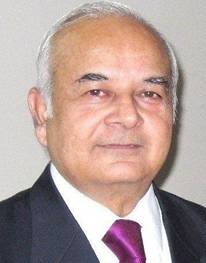
Syed Nayyar Uddin Ahmad
Lahore – Pakistan
+92 321 9402157
3rd February, 2026
nayyarahmad51@gmail.com The writer is a senior corporate leader and strategic analyst. His thought-provoking visionary insights have reshaped global discourse, capturing the attention of world leaders. His writings have not only resonated with heads of state and governments but have also influenced the foreign policies of the United States and other major powers.
Pakistan 2047: The Constitutional Reset That Can Create a $10 Trillion Economy
Pakistan today stands at a decisive crossroads. Persistent governance failures, absolute elite capture, economic fragility, institutional decay, corruption, uneven justice delivery, and widening social alienation have pushed the country into a prolonged state of crisis. Incremental reforms and short-term fixes have failed repeatedly. What Pakistan now requires is not another policy tweak, but a structural, constitutional reset.
The expected 28th Constitutional Amendment presents a rare, historic opportunity to fundamentally redesign governance in Pakistan. At stake is nothing less than the country’s unity, stability, and economic future.
Two bold reform pathways are under serious consideration; either of which could redefine Pakistan’s trajectory if executed with political will and national consensus.
Option A: Converting Districts/Divisions into Cantons/Autonomous Units – Governance Through Full Fledged Down Delegation
The first option proposes the conversion of all districts/divisions into autonomous Cantons/Units, governed under uniform, rules-based administrative frameworks. This model emphasizes:
- Strong local governance with clear accountability
- Swift delivery of justice and public services
- Zero tolerance for corruption and elite capture
- Direct citizen-state engagement at the grassroots
By shrinking the distance between decision-makers and citizens, Canton-based governance can neutralize inefficiency, restore public trust, and eliminate the administrative chaos that fuels discontent and lawlessness.
Option B: Federal Charter Cities – Engines of Growth and Stability
The second, more transformative option is the launch of Federal Charter Cities, beginning with five strategic urban centers by 2030:
Karachi, Faisalabad, Sialkot, Gwadar, and Rashakai/Hattar
These cities would operate under special constitutional charters, independent of provincial dysfunction, with globally competitive systems for:
- Law and order
- Commercial dispute resolution
- Taxation and regulation
- Urban planning and infrastructure
- Digital governance and merit-based administration
Charter Cities are not theoretical experiments. They have powered economic miracles in Shenzhen, Dubai, and Singapore. China’s expressed willingness to support Pakistan in this transformation adds geopolitical credibility and financial muscle to the plan.
A Phased National Transformation
The reform envisions a phased rollout:
- Phase I (2026–2030): Five Charter Cities launched
- Phase II (2030–2035): Five additional cities
- Phase III (2035–2047): Nationwide expansion
By Pakistan’s centenary in 2047, the country can realistically aspire to become a $10 trillion economy, ranking among the global top ten; not through slogans, but through systems.
Why This Is an Existential Need—not a Luxury
These reforms are no longer optional. They are essential to:
- End elite capture and systemic corruption
- Deliver fast-track justice and public services
- Create mass employment and reduce poverty
- Drain oxygen from insurgencies and proxy wars
- Heal alienation in neglected regions
Underdevelopment, injustice, and governance failure are the real enablers of extremism and foreign interference. Charter governance strikes at their roots.
A Choice Between Managed Decline and Strategic Rebirth
Pakistan’s challenge has never been a lack of talent, resources, or strategic importance, but it has been a failure of governance design. The 28th Constitutional Amendment offers a final chance to correct this foundational flaw.
History will not judge Pakistan by its intentions, but by its courage to act.
This is the moment to choose systems over slogans, institutions over individuals, and long-term national survival over short-term political comfort.
The window is narrow. The stakes are absolute.
Pakistan must decide about a reset now, or risk permanent decline.
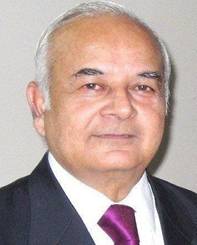
Syed Nayyar Uddin Ahmad
Lahore – Pakistan
+92 321 9402157
2nd February, 2026 nayyarahmad51@gmail.com The writer is a senior corporate leader and strategic analyst. His thought-provoking visionary insights have reshaped global discourse, capturing the attention of world leaders. His writings have not only resonated with heads of state and governments but have also influenced the foreign policies of the United States and other major powers.