Archive for April, 2025
An Appeal to the Conscience of the People of the Indian Sub-Continent – Peace or Perish: The Final Cry of a Civilization at the Brink
 April 30th, 2025 |
  Author:
 Dear Brothers and Sisters of India,
In the spirit of shared humanity and a common destiny, we reach out not as adversaries, but as neighbors, deeply concerned for the future of our peoples and the generations yet to come.
The prospect of a full-scale nuclear war between India and Pakistan is not merely a military issue—it is an existential threat, looming writ large. Such a catastrophe would not remain confined to the subcontinent. Its radioactive clouds would sweep across Asia, Europe, Africa, and beyond. Crops would fail. Skies would darken. Economies would collapse. The climate would plunge into chaos. And the survivors—if any—would be condemned to a life of agony, disease, hunger, and hopelessness, far worse than death itself.
We must never allow this to happen. There is no victory in nuclear war—only mutual and total annihilation.
We appeal to you, the people of India, to raise your voices—not in anger, but in wisdom. Urge your leaders to embrace sanity, diplomacy, and dialogue over destruction. Let them see that nationalism must never be stronger than humanity.
Both our nations must understand that we have to live in peace—or die together in war. There is no middle ground when nuclear weapons are involved. We owe it to our children and their children not to leave behind a legacy of radioactive wastelands and shattered civilizations.
Let us not become the authors of a history that will only be remembered as the beginning of the end. Let us instead become co-authors of a future that celebrates cooperation, shared prosperity, and peace.
Our true enemies are not each other—they are poverty, disease, illiteracy, and hatred. These are the battles worth fighting, and they can only be won together.
It is time we turn our shared border from a fault line of fear into a bridge of friendship. With joint patrolling, mutual respect, and open dialogue, we can ensure security while building trust.
India and Pakistan have no option but peace. We must resolve all differences through dialogue, not destruction. We must ensure our legacy is not one of nuclear horror, but of peace and progress.
We, the people of Pakistan and India, must now urge the leadership of both countries to immediately meet at a neutral location under the auspices of UN Secretary General António Guterres to begin a new era of peace. Let us work together toward a vision where both nations live like the borderless nations of Europe—sharing air, water, and hope instead of hostility. In the face of worsening climate change, which already threatens our rivers, fields, and skies, we cannot afford to turn on each other. We must unite to protect what we both call home.
I take this opportunity to call upon the shining leaders of civil societies in both India and Pakistan—namely Karan Thapar, Barkha Dutt, Pravin Sawhney, Suhasini Haider, Arundhati Roy, Shabana Azmi, Amitabh Bachchan, Sunil Gavaskar, Colin Gonsalves, Ram Jethmalani, Indra Jaising, Mushahid Hussain, Najam Aziz Sethi, Farzana Bari, Ali Ahmad Kurd, Imaan Mazari, Mushaal Hussain Malik, Dr. Sania Nishtar, Huzaima Bukhari, Arfa Sayeda Zehra, Nasim Zehra and Javed Jabbar—to take up this challenge of a peace initiative for the sake of the teeming billions of this planet Earth. Just imagine: if Kailash Satyarthi and Malala Yousafzai could win the Nobel Peace Prize together, why can’t these respected voices of reason join hands for an even greater Nobel cause—ensuring the survival and peace of two nations, and perhaps the world.
With hope, urgency, and unwavering solidarity,
A Voice for Peace from Across the Border

Syed Nayyar Uddin Ahmad
Lahore.
+92 321 9402157
30 April 2025
nayyarahmad51@gmail.com The writer is a senior corporate leader and strategic analyst. His thought-provoking visionary insights have reshaped global discourse, capturing the attention of world leaders. His writings have not only resonated with heads of state and governments but have also influenced the foreign policies of the United States and other major powers.
Struggle for Self Determination is Lawful, Not Terrorism
His Excellency António Guterres
Secretary-General
United Nations
New York, NY 10017
United States
Subject: URGENT APPEAL FOR UNITED NATIONS ACTION TO HALT THE ONGOING GENOCIDE
AND HUMANITARIAN CATASTROPHE IN INDIAN ILLEGALY OCCUPIED JAMMU & KASHMIR
(IIOJ&K)
Excellency,
I write this letter as a desperate, yet unwavering appeal to the conscience of the international community through your esteemed office to urgently take up, without any further delay or equivocation, the unfolding human tragedy and grave violations of international law in Indian Illegally Occupied Jammu & Kashmir (IIOJ&K). The continued inaction in the face of overwhelming evidence of war crimes and crimes against humanity risks eroding the very foundation upon which the United Nations stands.
Since 1947-48, the people of IIOJ&K have faced systematic persecution by the Indian State a repression which has escalated into what can only be termed as a slow-motion genocide. Over 900,000 Indian troops have militarized the region, turning it into the most densely occupied territory on Earth. More than two million Kashmiris have lost their lives or suffered brutal injuries, while countless others including women, children, and the elderly have been maimed, raped, blinded by banned pellet guns, or buried in mass graves.
India’s narrative of “counterterrorism” must no longer be accepted as a false shield for its systematic and premeditated state-sponsored terrorism against the indigenous Kashmiri population. Multiple UN Security Council resolutions have explicitly recognized the lawful right of the Kashmiri people to self-determination a right protected under international law and never to be criminalized or misrepresented. Yet, India has maliciously twisted global counterterrorism rhetoric to delegitimize this legitimate resistance and equate it with terrorism a deliberate distortion which itself constitutes a gross abuse of international norms and obligations.
We call upon the United Nations to strictly debar India from invoking the pretext of terrorism to justify atrocities, collective punishments, and demographic engineering in IIOJ&K. Instead, this sustained campaign of violence and repression must be rightly labeled as state-sponsored terrorism carried out by Indian authorities to suppress a people’s legally mandated struggle.
These atrocities, extensively documented by UN Human Rights bodies and credible international media, include:
– The deliberate and indiscriminate demolition of civilian homes (media reported on 28th April 2025 that four so-called terrorists had carried out so-called terror attacks at Pahalgam, but Indian security forces have blown up houses of 10 Kashmiris in the IIOJ&K) and orchards, economic strangulation of Kashmiri businesses, and arbitrary imprisonment of political and student leaders.
– Proven false flag operations used as pretexts for collective punishment, including massacres, house burnings, and mass arrests.
– The broadcast of torture victims’ cries over loudspeakers acts so vile they violate the very essence of humanity.
– Genocidal policies of starvation and siege, particularly during extended curfews, aimed at exterminating infants, the ill, and the elderly.
India has not only violated Article 1 of the UN Charter, but also its own international commitments, including numerous UN Security Council resolutions that reaffirm the Kashmiris’ right to self-determination a right now criminalized under the guise of counter-terrorism. This deliberate misuse of global anti-terrorism narratives has enabled impunity for India’s crimes, while silencing a people seeking the very justice and dignity the UN exists to protect.
Excellency, we hereby implore you to take immediate action by:
1. Urgently referring the matter to the UN Security Council for deliberation and resolution under Chapter VII of the UN Charter.
2. Requesting advisory proceedings at the International Court of Justice (ICJ) regarding the legality of India’s actions post-August 5, 2019, including its attempt to alter the demographic character of the disputed territory.
3. Initiating proceedings at the International Criminal Court (ICC) for war crimes, genocide, and crimes against humanity committed in IIOJ&K.
4. Immediately appointing a UN Special Representative on Kashmir to investigate and report on the current human rights and humanitarian situation.
5. Dispatching a UN fact-finding mission to IIOJ&K to assess the ground realities and propose mechanisms for accountability and reparations.
6. Calling for international sanctions against India until it ceases its atrocities, and demanding worldwide seizure of properties and assets of those responsible including posthumous confiscation to compensate the victims’ families.
7. Reaffirming in the strongest possible terms the inalienable right to self-determination for the people of Jammu & Kashmir, as enshrined in UN Security Council resolutions.
Excellency, this is not simply a matter of failed diplomacy this is a war on the soul of humanity. Every day that passes without UN intervention is another day soaked in the blood of innocent children, mothers, students, and elders. If the United Nations cannot stop genocide in a land where its own resolutions call for justice, then history will not judge India alone it will judge the silence of the world.
The eyes of a tormented nation look toward you. Do not let the cries from the mountains of IIOJ&K echo unheard in the halls of this world’s highest moral authority. Act now, or risk being remembered not as guardians of peace but as witnesses to a century’s greatest betrayal.
Yours faithfully,

Syed Nayyar Uddin Ahmad
Lahore.
+92 321 9402157
29 April 2025
nayyarahmad51@gmail.comThe writer is a senior corporate leader and strategic analyst. His thought-provoking visionary insights have reshaped global discourse, capturing the attention of world leaders. His writings have not only resonated with heads of state and governments but have also influenced the foreign policies of the United States and other major powers.
A Suggestion to the PCB – Players and Public Safety First
Subject: Request to Reschedule Start of PSL Match from 3 PM on May 1st to Midnight Timing Due to Extreme Heat
Syed Mohsin Naqvi
The Chairman,
Pakistan Cricket Board (PCB),
PSL Management,
Lahore, Pakistan.
Dear Sir,
I am writing to respectfully request that the Pakistan Super League (PSL) match between MS & KK teams scheduled for May 1st, 2025, at Gaddafi Stadium, Lahore, currently planned for a 3:00 PM start, be rescheduled to a later time — preferably starting at 11.30 PM.
Given the severe heatwave affecting Lahore and surrounding areas, with under the shade temperatures expected to exceed 40°C during the afternoon, I am genuinely concerned about the health and safety of the players, spectators and staff for the game starting under direct sunlight temperature which must be above 50 degree centigrade at 3 PM. Playing under such extreme conditions will definitely lead to heat exhaustion, dehydration, and other serious health risks.
I believe that shifting the match to a late-night start time would significantly reduce these risks, create a more comfortable environment for everyone involved, and maintain the high standards of competition that the PSL is known for.
I humbly appeal to the PCB and PSL management to kindly consider this suggestion in light of the exceptional weather conditions. Prioritizing the health and well-being of all participants would be greatly appreciated by cricket lovers like myself.
Thank you very much for your time and consideration.
Sincerely,
Syed Nayyar Uddin Ahmad
+92 321 9402157
Indian False Flag Exposed
Pakistan Exposes Fabricated Indian False Flag Operation: A Calculated Attempt to Defame Pakistan and Stoke Communal Hatred
Pakistan has assembled irrefutable evidence revealing that the recent tragic incident at Pahalgam inside Indian Illegally Occupied Jammu & Kashmir (IIOJ&K) was a stage-managed false flag operation, designed to falsely implicate Pakistan, incite communal discord, and manipulate public sentiment — a longstanding tactic employed by Indian authorities.
Key Evidence and Contradictions Include:
– FIR Timeline Impossibility: The First Information Report (FIR) confirms that firing continued until 2:20 PM, yet the FIR was astonishingly registered just 10 minutes later at 2:30 PM — at a police station located 6 kilometers from the incident site. This defies logic and exposes clear premeditation.
– Media Fabrications Exposed: Indian media prematurely declared an Indian Naval officer and his wife among the dead. However, in a stunning reversal, the officer’s wife appeared on Indian television confirming she was alive — starkly exposing the manufactured narrative.
– Absence of Ground Evidence: No credible footage or images showed any blood, bodies, or injured individuals at the supposed scene — a major red flag in an alleged mass shooting.
– Deliberate Security Withdrawal: Despite the presence of over 2,000 tourists, Indian security forces were inexplicably withdrawn (which was earlier provided for a private function) from the area before the attack — raising serious suspicions of state complicity or orchestration.
– Geographical Implausibility: The site of the alleged attack was over 400 kilometers from the Line of Control (LoC), making claims of cross-border infiltration by Pakistani elements logistically impossible.
False Religious Profiling Narrative Debunked:
1. Indian media claimed the attackers verified the religion of victims before opening fire. However, the FIR records the attack lasted just 30 minutes (1:50–2:20 PM). It is logistically impossible to identify the faith of 43 individuals (26 killed, 17 injured) under fire in such a short time of 30 minutes.
2. Moreover, Muslim names are also listed among the dead, clearly debunking the communal profiling narrative aggressively pushed by Indian media.
Historical Pattern of State-Engineered Violence:
India has a long and well-documented history of orchestrating false flag operations and minority-targeted massacres to deflect global scrutiny and generate domestic support for ultra-nationalist agendas.
One of the most glaring examples is the Chattisinghpora Massacre:
– On March 20, 2000, during the official visit of U.S. President Bill Clinton, 38 innocent Sikhs were gunned down in cold blood in the village of Chattisinghpora, Kashmir. While Indian authorities immediately blamed “Kashmiri militants,” multiple international voices and investigations pointed directly at Indian agencies.
– President Bill Clinton himself acknowledged this in a note reproduced in former U.S. Secretary of State Madeleine Albright’s memoir, ‘The Mighty and the Almighty’, where he stated:
“During my visit to India in 2000, some Hindu militants decided to vent their outrage by murdering 38 Sikhs in cold blood. If I hadn’t made the trip the victims would probably still be alive. If I hadn’t made the trip because I feared what militants might do, I couldn’t have done my job as President of the United States.”
– Furthermore, on June 6, 2006, Hon. Edolphus Towns, Member of the U.S. House of Representatives (New York), stated on the Congressional Record:
“President Clinton places the blame squarely on Hindu militants, not the so-called Kashmiri Muslims the Indian government tried to blame… In 2002, the Washington Times reported that the government finally admitted the evidence it used to pin the blame was false. Reporter Barry Bearak of the New York Times also placed the blame squarely on the Indian government.”
“The massacre was part of a pattern of repression of minorities that has brought about the murders of over 250,000 Sikhs, more than 300,000 Christians in Nagaland alone, over 90,000 Muslims in Kashmir, as well as tens of thousands of Assamese, Bodos, Dalits, Manipuris, Tamils, and other minorities.”
Background:
– On March 20, 2000, during U.S. President Bill Clinton’s visit to India, 38 Sikh men were massacred in Chattisinghpora village, in Indian-occupied Kashmir.
– The Indian government immediately blamed “Pakistani-backed militants”.
– However, serious doubts were raised internationally and domestically about India’s claim — especially because the killings happened right during Clinton’s visit, attracting global attention.
What the Indian Government Did Afterwards:
– Five men were killed by the Indian Army shortly after the massacre, claiming they were “the terrorists” responsible for the killings. This was the Pathribal encounter.
– Local villagers protested, saying the men were innocent civilians.
A demand grew for an investigation, especially after mass protests and the killing of several protestors by Indian forces at Barakpora.
Findings of the Indian Inquiry:
– DNA Tests were ordered to confirm the identity of the Pathribal victims.
– It was discovered that Indian authorities had tampered with the DNA samples to cover up the killings.
– The DNA samples of the killed men did not match their supposed relatives.
– The samples were *faked* using blood from women (relatives) instead of the dead men.
– Central Bureau of Investigation (CBI) Inquiry (2006):
– The CBI, India’s top investigative agency, concluded that the Pathribal encounter was “cold-blooded murder”.
– It charged five Indian Army officers with killing civilians and falsely framing them as militants.
Court Proceedings and Final Decision:
– However, in 2014, a military court (Army Court Martial) closed the case.
– The Army ruled that no one would be punished, claiming there was “no sufficient evidence” to proceed against the accused officers.
– Thus, no one was ever held accountable — neither for the massacre of Sikhs at Chattisinghpora nor for the fake encounter killings at Pathribal.
Key Points to Remember:
– No real investigation into who actually killed the Sikhs at Chattisinghpora.
– Indian Army officers, despite the CBI’s findings, were acquitted without trial.
– DNA tampering proved that Indian authorities tried to cover up the real killers.
– International observers, including human rights organizations, have repeatedly cited Chattisinghpora as an example of state-sponsored atrocities and false flag operations.
Summary:
| Incident | Finding | Outcome |
| Chattisinghpora Massacre (38 Sikhs killed) | No credible evidence of Pakistani involvement. Strong suspicion of Indian agencies’ role. | No investigation pursued seriously. |
| Pathribal Fake Encounter (5 civilians killed) | CBI confirmed it was cold-blooded murder and fake encounter. | Army closed the case. No punishment. |
Strategic Action Required:
In light of this extensive pattern and the newly uncovered evidence, Pakistan must immediately present a comprehensive dossier to all permanent and non-permanent members of the United Nations Security Council, as well as international human rights organizations, major media outlets, and global stakeholders.
This will not only preempt any further baseless Indian escalation, but also firmly expose India’s pattern of manufactured provocations and communal deceit before the international community.
Conclusion:
Pakistan remains committed to peace, regional stability, and truth. However, it will not allow fabricated incidents to be used as political weapons against its sovereignty. The world must not remain silent in the face of India’s dangerous strategy of deception, which has historically endangered regional peace, minority lives, and global credibility.
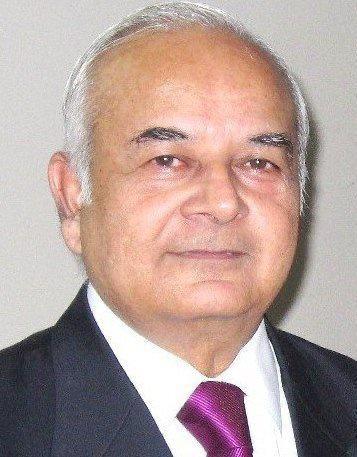
Syed Nayyar Uddin Ahmad
Lahore.
+92 321 9402157
26 April 2025
The writer is a senior corporate leader and strategic analyst. His thought-provoking visionary insights have reshaped global discourse, capturing the attention of world leaders. His writings have not only resonated with heads of state and governments but have also influenced the foreign policies of the United States and other major powers.
The Reality of the Pahalgam Attack
By Lt Gen Shafaat Ullah Shah (Retd)
The recent attack in Pahalgam, a popular tourist resort in Indian Illegally Occupied Jammu & Kashmir (IIOJ&K)—has once again sparked accusations and counter-narratives. The site of the incident is approximately 400 km from the Line of Control (LoC) between India and Pakistan, situated across treacherous terrain comprising gorges, high mountains and inhospitable landscapes. Given these factors, the claim that Lashkar-e-Taiba (LeT) was responsible appears highly questionable as they are incapable of mounting and sustaining a strike so deep.

Historically, Indian officials and media have often attributed such incidents to Pakistan albeit LeT, but these allegations lack credible support. The logistical challenges of operating so deep within IIOJ&K, especially through multiple layers of security enforced by over 700,000 personnel, raise doubts about the feasibility of such an operation by LeT. Furthermore, LeT’s operational focus has typically been directed at military targets—not civilians—aligning with their stated objective of “winning hearts and minds” of the Kashmiri population. The group’s past involvement in humanitarian efforts, such as during the 2005 earthquake, further weakens the narrative of its involvement in attacks targeting innocent tourists.
During the visits to India of so many American presidents, India has a set pattern of attributing proven false flag terror incidents or igniting riots against the Muslims and putting blame on Pakistan or Pakistan-based groups. This has occurred despite well-documented evidence of Indian intelligence agencies orchestrating or facilitating acts of terrorism both within and outside of India. Examples include the year 2000 Chittisinghpura massacre of Sikhs during President Clinton’s visit, Pulwama incident of February 2019 which preceded Indian general elections , Muslims massacre in Delhi riots during the visit of President Donald Trump in February 2020, Haryana genocide of Muslims where the Imam of a Mosque was thrown into burning fire just few weeks before the visit of President Joe Biden in September 2023 and now Pahalgam killings 400 KM’s away from the LOC of tourists during the ongoing visit of the Vice President JD Vance. Even prominent Indian figures—including Rajiv Gandhi, former governor and military officers—have pointed to internal orchestration in several such terrorist attacks.
( https://tribune.com.pk/story/1919095/reality-pulwama-incident )
Let us now turn to the specifics of the Pahalgam incident. The attack occurred at 3 PM on 22nd April 2025, in broad daylight, in the presence of over 2,000 tourists—yet there was reportedly no security coverage by India’s massive security apparatus. A grave failure of the intelligence if it was manifested by external elements? The attackers supposedly approached the site, carried out the act, and escaped without resistance. Strangely, within minutes, Indian social media accounts linked to RAW began blaming Pakistan. Even more unusual, despite reports of 26 deaths and over 20 injuries, there were no visible bloodstains, bullet marks, or credible video evidence from the scene or from hospitals.
Adding to the skepticism, Indian media narratives aligned perfectly with the Hindutva ideology promoted by Prime Minister Modi and the RSS, suggesting that the terrorists specifically targeted Hindus after verifying their religion. Such a detailed and deliberate segregation in the midst of a terror attack seems implausible, unless the attackers were extraordinarily confident of facing no resistance. This feeds into a broader pattern of communal polarization, evidenced by other government actions—from the Babri Mosque case and triple talaq law, to the controversial’ Waqf ‘Bill and demolition of religious sites.
Pakistan, as a state policy and in line with international norms and UN resolutions, has always condemned terrorism in all its manifestations and forms. It has suffered immensely from terrorism over the past four decades and cannot be simplistically portrayed as a perpetrator. The arrest of RAW operatives like Kulbhushan Jadhav, and Indian links to the Army Public School attack in Peshawar (2014) and the recent deadly attack on Jaffer Express, underscore the complex dynamics of regional terrorism. In its fight against terrorism, Pakistan has lost nearly hundred thousand lives and over $115 billion to this scourge, while consistently continuing to combat it.
There is compelling circumstantial evidence suggesting that the Pahalgam attack was staged to serve political ends. It came shortly after several geopolitical developments unfavorable to India e.g., warming ties between Pakistan and Afghanistan and Bangladesh, President Trump’s outreach to Islamabad, international interests in rare earth materials and minerals in Pakistan etc. Moreover, there was a history of India blaming Pakistan in any act of terrorism inside their territory, despite the involvement of Indian intelligence agencies in most acts of terrorism not only inside Pakistan, but also against Sikhs in Canada, USA and UK. All these past historical facts point the finger directly towards Indian mischief in Pahalgam false flag incident, so much deep inside in the IIOJ&K.
A grey area that merits attention is the potential involvement of IS-Khorasan (IS-K), reportedly a proxy of Indian intelligence in IIOJ&K. IS-K has perpetrated various acts of terrorism in the Valley and has links to breakaway factions of Tehreek-i-Taliban Pakistan (TTP). Their activities, supported by Indian agencies, are documented, and their timing aligns with recent signs of rapprochement between Pakistan and Afghanistan.
Given the nuclear capabilities of both India and Pakistan, restraint and clarity are essential in the aftermath of incidents like Pahalgam. India, in particular, must refrain from assigning blame in the absence of concrete evidence and clamoring for a kinetic response to eliminate Pakistan or block all flow of water down stream etc. Rash media narratives not only destabilize regional peace but also erode credibility.
Following the Jaffer Express attack, Indian media CELEBRATED what was a tragedy involving the death of innocent civilians. In contrast, Pakistan’s Foreign Office expressed concern at the loss of tourist’s lives in an attack in Anantnag district of IIOJ&K and extended condolences to the near and dear ones of the deceased and wished the injured a speedy recovery. Further, the Pakistani media expressed sympathy for the victims of the Pahalgam attack and showed restraint. This contrast highlights the need for responsible journalism and mature statecraft on both sides.
Ultimately, peace between India and Pakistan is imperative—not just to avoid conflict, but to lift millions of populaces out of poverty and deprivation. This can only be achieved through direct dialogue and mutual trust.
I had the privilege of attending bilateral dialogue between President Musharraf and two visionary Indian leaders—PM, Atal Bihari Vajpayee and Dr. Manmohan Singh—who genuinely sought lasting peace between the two neighbors.
One can only hope that their legacies are revived.
The writer can be reached at shaf53@gmail.com
#Executive #SummaryTitle: The #Canton #System: A #Revolutionary #Path to #Pakistan’s #Prosperity, #Governance, and #Counterterrorism
Pakistan faces multifaceted challenges, including economic instability, governance inefficiencies, and persistent terrorism. The proposed “Canton System” offers a transformative framework to address these issues by decentralizing governance, empowering local institutions, and integrating security with development.
Key Insights:
- Economic Prosperity:
- The Canton System advocates for localized economic zones (cantons) with tailored policies to boost industry, agriculture, and trade.
- By reducing bureaucratic hurdles and encouraging regional competitiveness, it aims to attract investment and spur job creation.
- Governance Reforms:
- Shifts from a centralized to a devolved governance model, granting cantons autonomy in administration, taxation, and public service delivery.
- Promotes accountability through direct community participation and elected local councils.
- Counterterrorism & Security:
- Integrates security with socio-economic development to undercut extremism. Cantons will have dedicated counterterrorism units trained to address local threats.
- Focuses on rehabilitation and deradicalization programs, targeting root causes of militancy.
- Implementation Strategy:
- Pilot cantons in high-potential regions (e.g., Karachi for commerce, Punjab for agriculture) to demonstrate efficacy.
- Phased rollout with federal oversight to ensure cohesion while preserving local innovation.
Conclusion:
The Canton System presents a bold, pragmatic solution to Pakistan’s systemic crises. By combining economic empowerment, participatory governance, and security integration, it charts a sustainable path toward stability and growth. Success hinges on political will, stakeholder buy-in, and adaptive execution—offering a replicable model for other areas, as well.
Link:-https://www.snayyar.com/
Syed Nayyar Uddin Ahmad