Archive for September, 2025
Tomorrow’s Glory Demands Today’s Courage: Rest the Captain for the Final
 September 27th, 2025 |
  Author:
 The upcoming Asia Cup Final against India on Sunday, 28th September 2025, is not just another cricket match. It is a battle of honor, prestige, and pride for Pakistan. At such a crucial juncture, it is imperative that every decision made by the team management reflects our highest commitment to victory and national glory.
As the great scientist Albert Einstein once said: “Insanity is doing the same thing over and over again and expecting different results.” For far too long, despite repeated setbacks, we have continued with the same leadership at the helm, hoping for a different outcome. With due respect to Salman Ali Agha, his leadership has not brought the clarity, inspiration, or performance that the nation expects at this level. To continue unchanged would be to risk the most important opportunity Pakistan cricket has had in years.
This is not a matter of individuals or personalities—it is a matter of Pakistan’s honor. As rightly stated by Mr. Mohsin Naqvi on 15th September 2025, “There is nothing more important than the honor and prestige of our country.” Winning tomorrow’s final against India is not only about lifting a trophy; it is about lifting the spirit of the entire nation. At such a defining moment, we cannot afford hesitation or compromise.
Therefore, with utmost respect and in the larger interest of Pakistan cricket, it is passionately urged that Salman Ali Agha be rested for the final match. Leadership must pass into the hands of a proven performer who can inspire by example—be it Shaheen Shah Afridi with his fearless aggression, Haris Rauf with his fiery determination, or Fakhar Zaman with his bold and fearless batting. Each of them embodies the fighting spirit that can ignite the team and rally the nation behind them.
Tomorrow, millions of Pakistanis will be watching with hope in their hearts. The players will fight on the ground, but the decision we make today will decide whether they fight with fire in their souls or uncertainty in their minds. Let us not allow one individual’s position to come in the way of our collective glory. Let us be bold, decisive, and courageous, just as we expect our team to be.
This is a heartfelt and urgent request to the Pakistan Cricket Board to make the necessary leadership change for the Asia Cup Final, so that Pakistan can walk onto the field united, inspired, and unstoppable. The stakes could not be higher, and the moment demands nothing less.
Pakistan Zindabad!
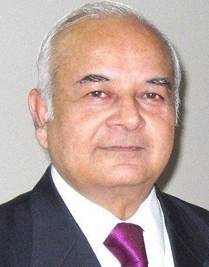
Syed Nayyar Uddin Ahmad
Lahore.
+92 321 9402157
The author is a senior corporate leader and strategic analyst. His thought-provoking visionary insights have reshaped global discourse, capturing the attention of world leaders. His writings have not only resonated with heads of state and governments but have also influenced the foreign policies of the United States and other major powers.
SMDA and Our Enhanced Responsibility
Mr. Mohsin Naqvi,
Pakistan has just earned immense prestige and respect through the Strategic Mutual Defence Agreement (SMDA) with the Kingdom of Saudi Arabia, a landmark achievement that has uplifted our nation’s image globally. This historic pact, a blessing from Allah (SWT), entrusts Pakistan with the sacred responsibility of defending the Holy Cities of Makkah and Madina. With this honour, our duty has multiplied: every decision and action must now safeguard not only Pakistan’s dignity but also the respect of our esteemed partner country. As a leading regional power, our standing in the comity of nations is now firmly bound with this trust.
In painful contrast, however, our cricket team, under your chairmanship of the PCB, is repeatedly damaging that very image, particularly through its dismal and unending streak of defeats against a specific opponent. This decline is not due to the superiority of others, but the result of repeated missteps and the PCB’s reluctance to make timely and bold corrective changes. We fully acknowledge your contributions, commitment, and hard work as Chairman PCB in revamping the cricket stadiums. However, under all circumstances the buck stops at the top, and honourable leaders are those who accept responsibility with dignity.
This situation on the international stage undermines the painstaking efforts of our hardworking Prime Minister, Muhammad Shahbaz Sharif, and our courageous and visionary COAS, Field Marshal Syed Asim Munir. Even more gravely, it diminishes the legacy of our martyrs, whose supreme sacrifices keep our flag flying with pride. Their sacred blood demands that every institution of Pakistan safeguard our national honour with all the resources at its disposal.
Sir, true leadership also means recognizing one’s limitations. If cricket administration is not your calling, then the most honourable course is to step aside and allow capable hands to restore our team’s performance and protect our nation’s image. We urge you to take this decision before the upcoming/remaining Asia Cup matches, as further damage to Pakistan’s dignity would be unbearable.
Pakistan has given us everything. In return, we owe it responsible action and protection of its honour. For the sake of our sacred homeland, its respected leadership, our partner nation, and above all our martyrs, we appeal to you to have mercy on our national image and make the right decision now. If need arises, we as a proud Pakistani must sacrifice without giving a second thought all our belongings including our ego at the altar for the sake of the image, reputation and dignity of our motherland.
In conclusion, the prayers of 240 million Pakistanis are with those who uphold our nation’s dignity. Do not let the sacrifices of our leaders, soldiers, and people go in vain. History remembers those who protect their country’s honour at defining moments, this is one such moment for you.
With best wishes,
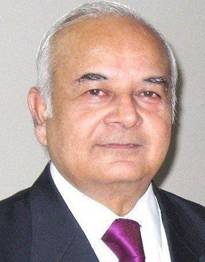
Syed Nayyar Uddin Ahmad
Lahore.
+92 321 9402157
The writer is a senior corporate leader and strategic analyst. His thought-provoking visionary insights have reshaped global discourse, capturing the attention of world leaders. His writings have not only resonated with heads of state and governments but have also influenced the foreign policies of the United States and other major powers.
Kashmir at the UN: Confronting War Crimes, Defending Human Rights
Subject: Kashmir at the UN: Confronting War Crimes, Defending Human Rights
Honourable Prime Minister,
I take the liberty of writing to you on the occasion of your forthcoming visit to New York to address the 80th Session of the United Nations General Assembly (UNGA) under the theme: “Better Together: 80 years and more for peace, development and human rights.” This historic platform and its extremely relevant theme of the 80th session offers Pakistan a vital opportunity to draw the world’s attention to the violations of the human rights of the people of the Indian Illegally Occupied Jammu & Kashmir (IIOJK) which was a great threat to the regional Peace and to reaffirm that India must be firmly restrained by the UN to call the Kashmiris as terrorists who are allowed to wage struggle for their Right of self-determination under the Charter and resolutions of the UN explained below.
India must not be allowed to camouflage its war crimes and crimes against humanity in IIOJ&K by misrepresenting Kashmiris as “terrorists.” The reality remains that the people of IIOJ&K are engaged in a legitimate struggle for their right to self-determination—a right enshrined in Articles 1 and 55 of the United Nations Charter and reaffirmed through landmark UN General Assembly resolutions 1514 (XV) (1960), 2625 (XXV) (1970), and 2649 (1970). Moreover, UN Security Council resolutions 47 (1948), 80 (1950), and 98 (1952) explicitly mandate an UN-supervised plebiscite to enable Kashmiris to determine their political future.
India’s claim that Kashmir is an “internal matter” also stands invalidated by the continuous presence of the United Nations Military Observer Group in India and Pakistan (UNMOGIP), as well as by official UN maps and documents which clearly record Kashmir as a disputed territory. This underscores the fact that the international community has neither accepted nor endorsed India’s unilateral claims.
The international community has already acknowledged the seriousness of this issue. The first-ever UN Human Rights report on Kashmir (2018), issued by the Office of the High Commissioner for Human Rights (OHCHR), called for an international inquiry into multiple violations committed in Kashmir.
Link: – https://www.ohchr.org/EN/NewsEvents/Pages/DisplayNews.aspx?NewsID=23198
This historic report underscores the urgency of addressing both past and ongoing abuses, in line with the earlier call by then-UN High Commissioner for Human Rights Zeid Ra’ad Al Hussein, who stressed the urgent need for justice for the Kashmiri people.
Furthermore, the international community has shown resolve in comparable situations. For instance, the UN recommended war crimes trials for Myanmar’s military leadership over atrocities against Rohingya Muslims, despite that crisis being considered an internal matter of Myanmar. By contrast, the situation in Kashmir, where, as per UN resolutions, mechanisms and observers are already deployed, demands even stronger and immediate action.
The Kashmir crisis has now evolved into a grave flashpoint between two nuclear-armed neighbours, threatening not only regional but also global peace and security. The systematic killings, mass detentions, disappearances, and denial of fundamental freedoms to over 10 million Kashmiri Muslims, making them the most persecuted majority population in the world, cannot remain ignored.
In this context, I respectfully suggest that your address at the 80th UNGA should:
1. Expose India’s misrepresentation of the Kashmiri freedom struggle as “terrorism.”
2. Reaffirm Kashmiris’ right to self-determination under the UN Charter and relevant UN resolutions.
3. Highlight the continuing war crimes and crimes against humanity in IIOJ&K, referencing the OHCHR’s 2018 report and calling for an independent international inquiry.
4. Call for the initiation of a war crimes tribunal against responsible Indian officials.
5. Remind the world that unresolved Kashmir threatens international peace, with the looming danger of a nuclear confrontation between Pakistan and India.
Honourable Prime Minister, the UNGA session provides a critical moment for Pakistan to renew the world’s conscience on Kashmir and to advocate for justice, peace, and human dignity.
With profound respect and prayers for your success,
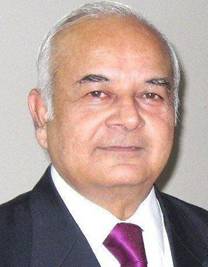
Syed Nayyar Uddin Ahmad
Lahore.
+92 321 9402157 nayyarahmad51@gmail.com The author is a senior corporate leader and strategic analyst. His thought-provoking visionary insights have reshaped global discourse, capturing the attention of world leaders. His writings have not only resonated with heads of state and governments but have also influenced the foreign policies of the United States and other major powers.
In Diplomacy, Silence is Never Neutral
From Bluster to Blind Spot: Did Pakistan Lose the Pahalgam Narrative?
When 26 civilians were killed in Pahalgam on April 22, 2025, India swiftly declared it a case of “cross-border terrorism.” Pakistan, however, flatly rejected this version and its National Security Committee announced on 24 April 2025 that “India should refrain from its reflexive blame game and cynical staged managed exploitation of incidents like Pahalgam to further its narrow political agenda”. Prime Minister Shehbaz Sharif declared the Pahalgam incident was a “false flag operation” [1]. Defence Minister Khawaja Asif told Al Jazeera that Islamabad “strongly suspect this attack was a false flag” [2]. Deputy Prime Minister and Foreign Minister Ishaq Dar strongly rejected India’s baseless propaganda [3], while the military’s DG ISPR, Lt Gen Ahmad Sharif Chaudhry, debunked India’s claim about the Pahalgam attack, accusing New Delhi of orchestrating a “religion-targeted” false-flag operation [4].
Pakistan even went a step further: Prime Minister Shahbaz Sharif addressing a passing-out parade at the Pakistan Military Academy at Kakul, said “The recent tragedy in Pahalgam is yet another example of this perpetual blame game, which must come to a grinding halt. Continuing with its role as a responsible country, Pakistan is open to participating in any neutral, transparent and credible investigation [5]. India rejected that offer for what Pakistan insists are “obvious reasons,” namely that such a probe would expose a staged operation.
Yet, when the world responded, Pakistan was missing in action.
On 29 August 2025, Japan and India issued a joint statement that “condemned in the strongest terms the terrorist attack in Pahalgam … and called for perpetrators, organisers and financiers to be brought to justice without any delay” [6].
On 6 July 2025, the BRICS Summit Declaration also “strongly condemned the terrorist attack in Pahalgam” [7].
On 2 July 2025, the Quad foreign ministers (India, US, Japan, Australia) said almost word-for-word the same [8].
In June 2025, Cyprus joined India in “strongly condemning the gruesome killing of civilians in the heinous terrorist attacks in Pahalgam” [9].
And most remarkably, Pakistan itself became a party to the September 1, 2025 SCO Tianjin Declaration of the Council of Heads of State which explicitly termed Pahalgam a terrorist attack [10]. In this regard, Prime Minister of Pakistan Shahbaz Sharif and all the functuries of the government of Pakistan which included the Deputy Prime Minister and the Foreign Minister Ishad Dar, the Foreign Secretary and the Spokesperson of the Pakistani foreign office were duly forewarned thru Most Immediate message via X (formerly Twitter) on 31 August 2025 quoted below:
Quote:
“Most Immediate for Prime Minister’s Attention
Mian Muhammad Shahbaz Sharif
Prime Minister of the Islamic Republic of Pakistan
Islamabad
Subject: Urgent Response to Expected Indian Allegations at SCO Summit
اسلام وعلیکم
Respected Prime Minister,
It is anticipated that during his address at the forthcoming Shanghai Cooperation Organization (SCO) summit, Indian Prime Minister Narendra Modi will once again attempt to malign Pakistan by invoking fabricated narratives such as the “Pahalgam incident” and allegations of so-called “cross-border terrorism.” These baseless charges are a continuation of India’s disinformation campaign aimed at deflecting international attention from its own record of war crimes, systematic human rights violations, and the genocide of minorities, particularly Muslims, in Indian Illegally Occupied Jammu & Kashmir (IIOJK) and across India.
In this context, it is imperative that Pakistan’s position be firmly articulated. Our response must emphasize the following points:
1. Pakistan categorically rejects false allegations and reiterates that it is itself a primary victim of Indian sponsored state terrorism. India has consistently sought to externalize its internal failures and divert global attention from its atrocities by projecting blame on Pakistan.
2. Pakistan calls for an independent and neutral international inquiry into the Pahalgam incident. This must include a transparent probe into:
- Documented cases of Indian cross-border killings inside Pakistan,
- Evidence of India’s sponsorship of banned terrorist organisations in Baluchistan, and
- The case of Commander Kulbhushan Jadhav, a serving Indian naval officer apprehended in Pakistan, who confessed to orchestrating sabotage, espionage, and terrorism under a false identity using a passport officially issued in a pseudo name. His presence and activities are irrefutable evidence of direct Indian state involvement in terrorism inside Pakistan.
3. India’s track record of state-sponsored terrorism is long and deliberate. Documented incidents include Jaffer Express train-jacking, subversive operations, and targeted killings engineered to destabilize Pakistan.
4. Of particular concern is India’s full-blast, openly admitted opposition to the China–Pakistan Economic Corridor (CPEC). This opposition has translated into repeated terror attacks against Chinese nationals and Pakistani citizens working on CPEC projects, resulting in deaths, injuries, and immense human suffering. Such actions represent nothing less than “India’s war of terror against Pakistan–China friendship of peace through cooperation of connectivity for development.” This is an affront not only to Pakistan and China but to the very principles of regional cooperation and economic development. Thus, the SCO must recognize the hypocrisy of a member state that, under the guise of partnership, engages in actions amounting to betrayal of two fellow members.
5. India cannot be allowed to camouflage its war crimes and crimes against humanity in IIOJK by misrepresenting Kashmiris as “terrorists.” The people of Jammu & Kashmir are engaged in a legitimate and internationally recognized struggle for their right to self-determination. This right is enshrined in Articles 1 and 55 of the United Nations Charter and reaffirmed by UN General Assembly resolutions 1514 (XV) (1960), 2625 (XXV) (1970), and 2649 (1970). Moreover, UN Security Council resolutions 47 (1948), 80 (1950), and 98 (1952) mandate a UN-supervised plebiscite to allow Kashmiris to freely determine their political future.
6. India’s actions constitute grave violations of international law. Support for terrorism in Pakistan, obstruction of regional connectivity projects like CPEC, and systemic human rights abuses in Kashmir together present a case of state-sponsored criminality that must be exposed at every multilateral platform, including the SCO.
Honourable Prime Minister, this is a crucial juncture for Pakistan to expose India’s duplicity, reject its false narratives, and place before the world irrefutable evidence of its sponsorship of terrorism and human rights violations. Pakistan must project its principled stance with clarity:
- We welcome transparency and independent verification through neutral inquiries.
- We stand by the lawful struggle of Kashmiris for self-determination.
- We demand accountability for India’s actions that endanger peace, stability, and security in the region.
Respectfully submitted for your kind consideration and necessary directions.
Yours sincerely,” Unquote.
As such, this contradiction is glaring. At home, Pakistan’s leaders told the public they had exposed a false flag. Abroad, its diplomats either quietly signed on to India’s framing or failed to register even a symbolic protest. The result is that India’s version of events has been etched into the official records of SCO, BRICS, Quad, Japan, and Cyprus.
Why does this matter? Because in diplomacy, silence is never neutral. Each unchallenged statement hardens India’s framing of Pahalgam, diminishing Pakistan’s credibility on the global stage. Worse still, this inconsistency undermines Islamabad’s wider stance on Kashmir and counter-terrorism: issues where narrative is as critical as reality.
In this world, nothing is impossible. This was proven through direct strategic communication with the Prime Minister of Japan, the President of the USA, the UK Prime Minister, the President of the European Commission, and the heads of government’s and state of Germany, France, Norway, Denmark, Belgium, Finland, and Iceland—turning the tide against entrenched Indian narratives. By challenging and dismantling the false propaganda that painted Pakistan as a sponsor of terrorism, a new diplomatic history was written.
Through persistent outreach and exceptional correspondence, this scribe corrected distorted perceptions, reshaped global policies, and fostered stronger, more balanced relationships with world powers. These unprecedented achievements of change of foreign policy of the major world powers in favour of Pakistan, which was earlier totally inclined towards the Indian narrative, was accomplished not by a career diplomat, but by the sheer commitment of an ordinary Pakistani, now stand as a testament to what dedicated communication can achieve. Indeed, they are milestones Dr. Henry Kissinger himself might have proudly endorsed [11].
In view of the foregoing, corrective steps are urgently needed. Pakistan’s Foreign Office must issue demarches to Japan, Quad members, Cyprus, and BRICS capitals, restating its position and highlighting that India refused a neutral investigation. Islamabad should also formally record reservations in future multilateral communiqués and publicise its offer for international inquiry. Most importantly, MOFA must establish an internal strategic communications cell to ensure that what is said in Islamabad is also defended abroad.
Otherwise, when history records the Pahalgam tragedy, the world will not remember Pakistan’s speeches: only its silence.
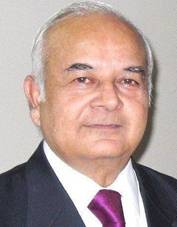
Syed Nayyar Uddin Ahmad
Lahore.
+92 321 9402157 nayyarahmad51@gmail.com The author is a senior corporate leader and strategic analyst. His thought-provoking visionary insights have reshaped global discourse, capturing the attention of world leaders. His writings have not only resonated with heads of state and governments but have also influenced the foreign policies of the United States and other major powers.
References:
[1]: https://ptv.com.pk/ptvworld/newsdetail/6917
[3]: https://radio.gov.pk/29-04-2025/dar-rejects-indias-baseless-propaganda-against-pakistan
[4]: https://www.brecorder.com/news/40360334