Archive for the ‘Uncategorized’ Category
A Pakistani’s Remarkable Diplomatic Intervention in Japan–India Relations
 September 18th, 2026 |
  Author:
 How One Citizen Challenged an Adverse Narrative About Pakistan on the International Stage
International diplomacy is usually associated with governments, ambassadors and foreign ministries.
But sometimes, an ordinary citizen can also make an extraordinary contribution to his country’s national cause.
With the blessings of Allah (SWT), I experienced such a moment in March 2022.
Over the years, I have written extensively on Pakistan’s national interests and international affairs and have offered advice and observations to Pakistani governments and leaders, as well as addressing international leaders on important issues.
One such intervention was my Open Letter to Indian Prime Minister Narendra Modi, which was also published in India:
👉 Open Letter to Prime Minister Modi
The Japan–India Joint Statement: March 19, 2022
On 19 March 2022, Japanese Prime Minister Fumio Kishida and Indian Prime Minister Narendra Modi issued their Japan–India Summit Joint Statement.
Its Paragraph 8 contained explicit references to Pakistan in the context of terrorism. It called upon Pakistan to take “resolute and irreversible action” against terrorist networks operating from its territory and referred to Pakistan’s international commitments, including FATF.
The official Japanese document can be examined here:
👉 Japan–India Summit Joint Statement — 19 March 2022
I considered this language deeply objectionable from Pakistan’s perspective.
Therefore, the very next day, 20 March 2022, I addressed a detailed letter to Japanese Prime Minister Fumio Kishida, challenging the inclusion of this Pakistan-specific highly objectional language and presenting Pakistan’s perspective.
👉 My letter to Japanese Prime Minister Fumio Kishida
🔎 What Happened Next?
Approximately six months later came a development that I found particularly significant.
On 8 September 2022, Japan and India held their Second Japan–India 2+2 Foreign and Defence Ministerial Meeting in Tokyo.
The subsequent Joint Statement contained no reference to Pakistan.
👉 Japan–India 2+2 Joint Statement — 8 September 2022
The contrast between the two official documents is striking:
19 March 2022: Pakistan specifically named in the terrorism-related paragraph.
8 September 2022: Absolutely no mention of Pakistan in the subsequent Japan–India 2+2 Joint Statement.
Why This Matters to Me
My point is very specific and documentary:
I responded immediately to an adverse Pakistan-specific formulation in an official Japan–India statement, placed Pakistan’s perspective directly before the Japanese Prime Minister, and subsequently observed that the Pakistan-specific language was absent from the later Japan–India 2+2 Joint Statement.
The historical record speaks for itself.
For me, this episode represents a remarkable milestone in citizen-led diplomatic advocacy for Pakistan.
It reinforced my belief that:
National service is not confined to public office. Sometimes it begins with the courage to speak, the persistence to be heard, and the conviction to defend your country’s legitimate interests before the world.
I remain grateful to Allah (SWT) for giving me the opportunity to contribute, in my own humble capacity, to Pakistan’s cause in international affairs.
One citizen. One letter. One diplomatic intervention. A remarkable chapter in my journey of service to Pakistan.
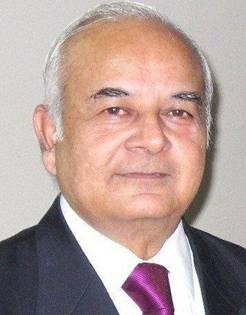
Syed Nayyar Uddin Ahmad
Lahore
18 September 2026
nayyarahmad51@gmail.com
The writer is a senior corporate leader and strategic analyst with over five decades of experience. His thought-provoking visionary insights have reshaped global discourse, capturing the attention of world leaders. His writings have not only resonated with heads of state and governments but have also influenced the foreign policies of the United States and other major powers.
AI Generated Solution of My Following Question:
Question:
“Pakistan’s IPP Crisis: Are Allegedly Excessive and Economically Killing Power Contracts Sustainable—and Could Renegotiation, Contract Termination or NATIONALISATION of IPPs Save Pakistan from a Deepening Financial Meltdown?”
Reply of AI:
Your concern goes to the heart of Pakistan’s energy-sector crisis. My short answer is: Pakistan could potentially nationalise or compulsorily acquire IPP assets, but simply declaring all IPP contracts “odious” and confiscating the companies without compensation would be legally and financially extremely risky. A much stronger approach would be contract-by-contract investigation, renegotiation, cancellation where illegality or fraud is proven, and selective compulsory acquisition where economically justified.
First: the factual claim needs careful verification
The figure of US$12 billion paid to IPPs in 11 months, and the assertion that all such payments represent subsidies or unjustified benefits, should be carefully broken down before drawing conclusions.
IPP-related payments can include very different things:
- Capacity payments;
- Electricity actually generated and supplied;
- Fuel costs passed through under contractual arrangements;
- Interest and debt servicing;
- Delayed-payment charges;
- Taxes and duties;
- Payments of old circular debt arrears.
These are not economically equivalent. A payment for actual electricity delivered is different from a capacity payment for unused capacity, and both are different from a government subsidy or tax concession.
Your comparison with IMF financing is nevertheless useful in illustrating the scale of Pakistan’s fiscal and energy-sector burden. Pakistan received about US$3 billion under the 2023 Stand-By Arrangement, while subsequent EFF/RSF arrangements have added further IMF financing. By May 2026, the IMF stated that cumulative disbursements under the current EFF and RSF arrangements had reached approximately US$4.8 billion.
So, the broader point is valid: Pakistan’s power-sector financial obligations can be enormous compared with external financing received from institutions such as the IMF.
Could Pakistan nationalise all IPPs?
Yes, as a matter of sovereign power—but not necessarily without a huge cost.
A sovereign state generally has the power to:
1. Nationalise or compulsorily acquire assets;
2. Terminate contracts under lawful grounds;
3. Regulate private utilities;
4. Investigate corruption, fraud and illegality;
5. Change future policy and taxation.
However, exercising that power does not automatically extinguish contractual and property rights.
If Pakistan simply announced:
> “All IPPs are nationalised. No compensation will be paid because their contracts were against the national interest.”
the likely consequences could include:
- International arbitration;
- Claims under bilateral investment treaties;
- Enforcement proceedings against Pakistani state assets abroad;
- Damage to Pakistan’s sovereign creditworthiness;
- Further reluctance of foreign investors and lenders;
- Pressure on the rupee and external financing;
- Increased difficulty financing future infrastructure.
Therefore, nationalisation is possible; uncompensated mass confiscation is the dangerous part.
Could the contracts be declared “odious”?
This is where an important legal distinction must be made.
The doctrine of “odious debt” is not a simple weapon for cancelling IPP contracts
The concept of odious debt is primarily discussed in relation to sovereign borrowing: debts incurred by illegitimate regimes or rulers without benefiting the population.
Applying the same label to private power contracts would be legally difficult.
Calling a contract:
Unfair,
Expensive,
Badly negotiated,
Politically motivated,
does not automatically make it legally void.
To invalidate an IPP agreement, Pakistan would need stronger legal grounds, such as:
1. Corruption or bribery
If an IPP contract was obtained through:
Bribery;
Kickbacks;
Corruption of public officials;
Fraudulent inducement;
that could provide a much stronger basis for challenging the contract.
2. Fraud or misrepresentation
For example:
False project costs;
Manipulated financial information;
Fraudulent fuel arrangements;
Concealed beneficial ownership.
3. Lack of legal authority
If government officials signed commitments beyond their lawful authority, constitutional or statutory requirements were violated, or mandatory approvals were absent, there might be grounds for challenge.
4. Collusion
If private parties and public officials deliberately structured contracts to produce unlawful private enrichment at public expense, that could potentially create both civil and criminal consequences.
5. Fundamental contractual breach
If an IPP failed to meet contractual obligations, Pakistan could potentially terminate or seek damages under the relevant agreement.
The strongest strategy would therefore not be “all IPPs are odious.” It would be: investigate every contract and prosecute or cancel those proven to be illegal, fraudulent or corrupt.
The real economic problem: Pakistan may have socialised risk and privatised returns.
This is, in my view, the most serious policy criticism of many power-sector arrangements.
A badly designed IPP system can create a situation where:
Private investors receive:
Guaranteed returns;
Capacity payments;
Exchange-rate protection;
Sovereign guarantees;
Protection against demand risk.
While Pakistani citizens bear:
Currency depreciation;
Rising tariffs;
Circular debt;
Taxation;
Government guarantees;
Reduced industrial competitiveness.
That structure can become economically disastrous.
The fundamental question is:
> Who bears the commercial risk?
In a normal competitive market, an investor who builds unnecessary capacity should bear some consequences of poor investment decisions.
But if contracts guarantee returns regardless of whether electricity is required, then the consumer and taxpayer can become the insurer of the investor’s business risk.
That is the structural problem Pakistan should address.
Would nationalisation actually solve the problem?
Not automatically.
Suppose Pakistan acquires an IPP.
The government would then inherit:
The power plant;
Its employees;
Maintenance obligations;
Fuel requirements;
Outstanding bank debt;
Foreign exchange liabilities;
Operational risks.
If the acquisition price is too high, Pakistan may simply convert:
> Expensive private obligations into expensive public obligations.
Therefore, the question should not be:
> “Private IPP or government ownership?”
The better question is:
> “What arrangement produces electricity at the lowest sustainable cost for Pakistan?”
What I believe would be a stronger national strategy
1. Establish a Supreme-Level IPP Contract Commission
Pakistan should conduct a comprehensive forensic audit of every major IPP contract.
The investigation should examine:
Original capital cost;
Actual capital cost;
Financing structure;
Equity returns;
Debt interest rates;
Related-party transactions;
Fuel contracts;
Sovereign guarantees;
Tax exemptions;
Capacity-payment formulas;
Foreign exchange indexation;
Beneficial ownership.
The results should be made public, subject only to legitimate commercial confidentiality.
Sunlight is essential.
2. Separate IPPs into categories
Not all IPPs should be treated identically.
Category A: Fraudulent or corrupt contracts
Where corruption or illegality is proven:
Prosecute responsible persons;
Seek rescission or cancellation;
Recover unlawful gains;
Challenge compensation claims.
Category B: Excessively expensive but legally valid contracts
These should primarily be:
Renegotiated;
Refinanced;
Bought out where economically advantageous.
Category C: Efficient and necessary plants
These should continue operating under revised arrangements where possible.
Category D: Old or inefficient plants
Pakistan should consider:
Retirement;
Conversion;
Acquisition and closure;
Negotiated termination.
This approach is much stronger than indiscriminate nationalisation.
3. Use compulsory acquisition selectively
Pakistan could consider a buyout programme.
For example:
> If an IPP has already recovered most of its investment and is receiving very large future capacity payments, the government could calculate whether purchasing the plant now is cheaper than continuing payments for another 10–15 years.
This requires a strict calculation:
Present value of future contractual payments
versus
Cost of acquisition + remaining debt + operating costs
If acquisition is cheaper, it could make economic sense.
This is essentially a financial restructuring exercise, not ideological nationalisation.
4. Convert guaranteed returns into competitive market arrangements
Pakistan should gradually move away from a system where investors are guaranteed returns regardless of utilisation.
Future power contracts should emphasise:
Competitive bidding;
Transparent auctions;
Realistic demand forecasting;
Reduced sovereign guarantees;
Local-currency financing where feasible;
Limited foreign exchange indexation;
Risk sharing between investors and consumers.
5. Investigate the tax issue separately
If particular IPPs are receiving:
Inappropriate tax exemptions;
Preferential treatment;
Special exemptions not justified by law,
those arrangements should be reviewed.
But again, a distinction is important:
A lawful tax exemption may be politically unwise but legally valid.
Pakistan can change tax policy prospectively, subject to contractual and constitutional constraints.
My strongest recommendation: don’t use the word “nationalisation” as the first weapon
I would recommend a policy called something like:
Pakistan Power Sector Sovereignty and Public Interest Recovery Programme
Its objectives would be:
Phase 1 — Transparency
Publish every major IPP contract and amendment.
Phase 2 — Forensic audit
Determine actual costs and profits.
Phase 3 — Legal review
Identify corruption, fraud, illegality and contractual breaches.
Phase 4 — Renegotiation
Reduce excessive returns and capacity charges.
Phase 5 — Selective buyouts
Acquire plants where the financial mathematics clearly favour Pakistan.
Phase 6 — Prosecution and recovery
Where corruption is proven, pursue individuals and recover assets.
Phase 7 — Market reform
Ensure Pakistan never again signs contracts that create unlimited public liabilities.
My overall conclusion
Yes, Pakistan has the sovereign capacity to nationalise IPPs.
But nationalising all IPPs on the blanket theory of “odious contracts” would probably expose Pakistan to enormous legal and financial risks unless illegality, corruption or other recognised grounds could be established for particular contracts.
The more powerful—and legally defensible—strategy would be:
> Audit everything. Publish everything. Prosecute corruption. Challenge illegal contracts. Renegotiate unfair but valid contracts. Buy out plants where economically cheaper. Retire inefficient capacity.
The tragedy, if the underlying allegations are substantiated, is not merely that Pakistan signed expensive power contracts. It is that a state facing chronic fiscal weakness may have committed future taxpayers and consumers to long-term obligations without adequately protecting the public interest.
That is precisely why the solution should be forensic, legal, economic and evidence-based—not merely political.
—————————————————————————————-
An Urgent Open Letter to PM Shahbaz Sharif
The Honourable Prime Minister of the Islamic Republic of Pakistan
Islamabad, Pakistan
Subject: An Urgent Appeal to Raise the Question of Jammu and Kashmir and Grave Human Rights Concerns at the BRICS Summit in India
Honourable Prime Minister,
With the highest respect, I wish to submit that the forthcoming BRICS gathering in India scheduled for 12–13 September 2026 present an opportune and exceptionally important occasion for Pakistan to bring renewed international attention to the unresolved question of Jammu and Kashmir and the resultant prolonged genocide of Kashmiris by the Indian forces in the cover up of false terrorism mantra which was a music for selected audiences.
As such, in view of the recent enhanced profile of Pakistan in the realm of its international incredible military and diplomatic achievements, it was right time to launch a diplomatic offensive against Indian acts of ongoing daily genocide and persecution against the Indian Muslims community with particular reference to highest level Human Rights violations of IIOJ&K Muslims.
The BRICS forum offer Pakistan an important opportunity to engage strongly with friendly countries and influential members of the international community, including China, Saudi Arabia (both our staunch friends), the United Arab Emirates, Iran, Egypt, Ethiopia and Indonesia, so as to impress upon the world the urgency of addressing the continuing dispute, the human rights concerns reported from Indian Illegally Occupied Jammu and Kashmir (IIOJK), and the serious consequences of leaving this long-standing conflict unresolved.
Kashmir: A Question of International Peace, Human Rights and the UN Charter
The question of Jammu and Kashmir cannot simply be dismissed as an internal matter. It remains a matter that has historically been considered by the United Nations Security Council and is associated with a series of UN resolutions and mechanisms.
The right of an occupied or colonized population to struggle for self-determination is rooted in the UN Charter and has been explicitly elaborated through multiple UN General Assembly (UNGA) resolutions.
1. The United Nations Charter establishes the foundational legal bedrock for self-determination: Article 1(2): Outlines the primary purpose of the UN to develop friendly relations among nations based on “respect for the principle of equal rights and self-determination of peoples. “Article 55: Reiterates that peaceful and friendly relations among nations are based on respect for the principle of equal rights and self-determination.
2. The UN General Assembly over the decades passed several landmark resolutions that progressively defined the right of peoples under foreign occupation, alien domination, or colonial rule to resist and struggle for liberation by all available means, including armed struggle. “UNGA Resolution 1514 (1960): Known as the Declaration on the Granting of Independence to Colonial Countries and Peoples. It declares that alien subjugation and exploitation constitute a denial of fundamental human rights.
(https://www.jmcc.org/en/Article/259/United-Nations-General-Assembly-Resolution-1514),
UNGA Resolution 2625 (1970): The Declaration on Principles of International Law concerning Friendly Relations. It states that peoples resisting forcible actions that deprive them of their right to self-determination “are entitled to seek and to receive support in accordance with the purposes and principles of the Charter.” UNGA Resolution 3314 (1974): The Definition of Aggression. Article 7 explicitly protects the right of peoples forcibly deprived of self-determination; particularly those under colonial, racist, or alien regimes “to struggle to that end and to seek and receive support.”
(https://www.aljazeera.com/opinions/2017/7/20/palestinians-have-a-legal-right-to-armed-struggle),
(https://www.cjpme.org/fs_236)
UNGA Resolution 37/43 (1982)
This is the most direct and legally explicit resolution on the matter. Section 2 explicitly: “…Reaffirms the legitimacy of the struggle of peoples for their independence, territorial integrity, national unity and liberation from colonial domination, apartheid and foreign occupation by all available means, including armed struggle.”
Pakistan should continue to emphasize that the people of Jammu and Kashmir possess the right to determine their political future in accordance with the relevant principles of the United Nations Charter and applicable UN resolutions, “including armed struggle” which under no circumstances repeat no circumstance can be called as TERRORISM.
The principles of self-determination are reflected, among other provisions, in Articles 1 and 55 of the UN Charter and were subsequently reaffirmed in important General Assembly resolutions, including Resolution 1514 (XV) of 1960, Resolution 2625 (XXV) of 1970 and other relevant international instruments.
Furthermore, Security Council resolutions concerning Jammu and Kashmir, including Resolutions 47 (1948), 80 (1950) and 98 (1952); form an important part of the international history and legal framework surrounding the dispute.
Pakistan should therefore firmly reject attempts to erase the international character and historical UN dimension of the Kashmir dispute.
The continuing presence and relevance of the United Nations Military Observer Group in India and Pakistan (UNMOGIP), together with the longstanding treatment of the dispute in UN records and documentation, should be highlighted as evidence that the international dimensions of the Kashmir question cannot simply be wished away through unilateral assertions.
The Mischaracterisation of the Kashmiri Struggle
Honourable Prime Minister, Pakistan should clearly and consistently challenge the attempt to portray every expression of Kashmiri resistance, political aspiration and demand for self-determination as “terrorism.” Yes the usurpation of Right of self-determination is TERRORISM.
There must be a clear distinction between terrorism, which must be condemned in all its forms and manifestations, and the internationally recognised principle that peoples are entitled to pursue their political rights and aspirations in accordance with international law.
Pakistan must urge the international community not to permit the language of counter-terrorism to be misused as a means of silencing legitimate political grievances, suppressing peaceful dissent, or preventing international scrutiny of alleged human rights violations.
India must not be permitted to use the label of “terrorism” as a blanket shield against legitimate questions concerning the treatment of the people of IIOJK.
The Need for International Scrutiny of Human Rights Violations
The seriousness of human rights concerns in Kashmir has already attracted international attention.
The reports issued by the Office of the United Nations High Commissioner for Human Rights, including its landmark 2018 report on Kashmir, raised serious concerns and called for further investigation into alleged violations and abuses.
The international community has already acknowledged the seriousness of this issue. The first-ever UN Human Rights report on Kashmir (2018), issued by the Office of the High Commissioner for Human Rights (OHCHR), called for an international inquiry into multiple violations committed in Kashmir.
Link: – https://www.ohchr.org/EN/NewsEvents/Pages/DisplayNews.aspx?NewsID=23198
This should be a central element of Pakistan’s diplomatic presentation.
Pakistan should call upon the international community to ensure that allegations of unlawful killings, arbitrary detention, enforced disappearances, restrictions on fundamental freedoms and other serious violations are independently and impartially examined.
No country, regardless of its size, influence or strategic importance, should be beyond accountability where credible allegations of grave violations of international human rights or humanitarian law arise.
The international community has, in other situations, established investigative mechanisms and accountability processes in response to serious allegations of atrocities. The principle must therefore be applied consistently and without selectivity.
Pakistan should accordingly call for:
- an independent, impartial and internationally credible investigation into serious allegations of human rights violations in IIOJK;
- meaningful access for relevant UN human rights mechanisms and international observers;
- accountability for individuals found responsible through due process of law;
- and, where the evidence and applicable international law warrant it, consideration of appropriate international accountability mechanisms.
The principle must be simple and universal: there can be no double standards in the application of international law, human rights and accountability.
A Challenge to the World: No Double Standards on Terrorism or Human Rights
Honourable Prime Minister, recent statements by Indian Prime Minister Narendra Modi regarding terrorism provide Pakistan with an important opportunity to challenge the international community, and India itself, on the principle of consistency.
Prime Minister Modi has repeatedly argued that terrorism must be condemned as a matter of principle rather than convenience and that there should be no double standards in combating terrorism.
Pakistan should respond by emphasizing that there must likewise be no double standards in the protection of human rights, the application of international law, or the pursuit of accountability for serious violations.
If the world must speak with one voice against terrorism, it must also speak with one voice against:
- unlawful killings;
- arbitrary detention;
- enforced disappearances;
- collective punishment;
- restrictions on fundamental freedoms;
- and the suppression of the legitimate political rights of peoples.
The fight against terrorism cannot become a justification for ignoring credible allegations of grave violations of human rights.
Nor should accusations of terrorism be used selectively for political purposes.
Pakistan should therefore call upon India to demonstrate the same commitment to transparency and accountability that it demands from others.
The Pahalgam Incident and Pakistan’s Call for an Independent Investigation
Pakistan should also publicly reiterate the position expressed by Prime Minister Shehbaz Sharif regarding the tragic Pahalgam incident of April 2025.
Pakistan’s willingness to participate in a neutral, transparent and credible international investigation should be repeatedly placed before the international community.
As the Prime Minister stated:
“The recent tragedy in Pahalgam is yet another example of this perpetual blame game, which must come to a grinding halt. Continuing with its role as a responsible country, Pakistan is open to participating in any neutral, transparent and credible investigation.”
Pakistan should therefore challenge India openly and unequivocally:
If India is confident in its allegations, why should it fear a neutral, transparent and internationally credible investigation?
The principle of accountability cannot be applied selectively.
A country that calls for international unity against terrorism should itself be prepared to support credible and impartial mechanisms for establishing facts.
Truth should never be feared.
Kashmir and the Threat to International Peace
The unresolved Kashmir dispute is not merely a bilateral political disagreement.
It remains a dangerous flashpoint between two nuclear-armed states.
Any serious escalation between Pakistan and India carries consequences far beyond South Asia. Continued instability, military confrontation and the absence of a durable political settlement threaten regional, and potentially international, peace and security.
For this reason alone, the international community cannot afford indifference.
The world must recognize that a just and peaceful settlement of the Jammu and Kashmir dispute is essential not only for the people of Kashmir but also for lasting peace and stability throughout South Asia.
Pakistan should impress upon world leaders that silence and inaction do not resolve conflicts, they merely allow them to deepen.
Suggested Diplomatic Objectives
In light of the above, I respectfully submit that Pakistan should use the forthcoming international platforms to pursue the following objectives:
1. Expose the misuse of the term “terrorism” to delegitimise legitimate political grievances and the Kashmiri demand for self-determination.
2. Reaffirm the right of the people of Jammu and Kashmir to self-determination in accordance with the relevant principles of the UN Charter and applicable UN resolutions.
3. Highlight the serious human rights concerns in IIOJK, including the concerns documented by international human rights mechanisms, and call for independent international scrutiny.
4. Demand accountability for grave violations and support appropriate international legal mechanisms wherever evidence and international law justify such action.
5. Call for unrestricted and credible international investigation into serious allegations of human rights abuses.
6. Challenge double standards in the global application of counter-terrorism principles, insisting that terrorism must be condemned everywhere, but that human rights violations must also be condemned everywhere. Moreover, False Flag operations are the biggest manifestations of war crimes.
7. Reiterate Pakistan’s offer to participate in a neutral, transparent and credible investigation into the Pahalgam incident, and call upon India to accept impartial fact-finding rather than relying on accusation and counter-accusation.
8. Warn the international community of the dangers posed by the unresolved Kashmir dispute, particularly the risk of escalation between two nuclear-armed neighbours.
A Historic Diplomatic Opportunity
Honourable Prime Minister, the forthcoming BRICS engagement and the diplomatic opportunities associated with the 81st Session starting on September 8, 2026 of the United Nations General Assembly provide Pakistan with a critical opportunity to renew the world’s conscience on Kashmir.
Pakistan must speak clearly, confidently and courageously.
The message should be that Pakistan seeks neither confrontation for its own sake nor political rhetoric without purpose. Pakistan seeks justice, peace, accountability, human dignity and a durable settlement in accordance with international law and the aspirations of the people concerned.
The international community must be reminded that principles cannot be selective.
There can be no double standards:
- No double standards on terrorism.
- No double standards on human rights.
- No double standards on international law.
- No double standards on accountability.
- No double standards on the right of peoples to determine their future.
Pakistan should use every available diplomatic forum to ensure that the question of Kashmir is not forgotten and that the voices and rights of the Kashmiri people continue to be heard internationally.
It is respectfully hoped that Your Excellency will seize this important moment to present Pakistan’s position with clarity and moral force and to call upon the international community to act consistently in defence of peace, justice and human dignity.
Respectfully submitted,
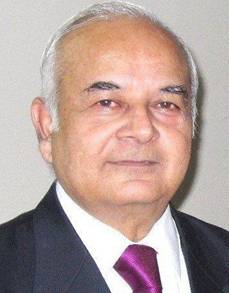
Syed Nayyar Uddin Ahmad
Lahore
7 September 2026
nayyarahmad51@gmail.com
The writer is a senior corporate leader and strategic analyst with over five decades of experience. His thought-provoking visionary insights have reshaped global discourse, capturing the attention of world leaders. His writings have not only resonated with heads of state and governments but have also influenced the foreign policies of the United States and other major powers.
Pakistan Cricket’s Great Unravelling: Fix the Factory Before Blaming the Product
Pakistan cricket is not merely going through a bad patch.
Bad patches are part and parcel of sport. Great teams lose matches, gifted batsmen go through prolonged slumps, bowlers have off days, and even the most astute captains get their tactics spectacularly wrong. But what Pakistan is enduring against England can no longer be dismissed as a bad run of form, a string of unlucky results, or an occasional lapse in execution. It is beginning to look like something far more disturbing: a complete collapse of the system.
The machinery that is supposed to identify talent, nurture it, prepare players for the demands of international cricket, and transform potential into sustained performance appears to have broken down at almost every level. Pakistan is not merely losing matches; it is losing the ability to consistently produce cricketers who can withstand pressure, adapt to conditions, and perform when it matters most. The problem, therefore, is not simply what is happening on the field against England. The deeper crisis lies in everything that happens before a player ever walks onto it.
A cricketing structure that once produced world-class talent with remarkable regularity now appears incapable of converting promise into consistency. The conveyor belt has stalled, the safeguards have failed, and the very foundations of Pakistan cricket seem to have been blown to smithereens. What we are witnessing may not be a temporary crisis of form at all, but the unmistakable symptoms of a system that has forgotten how to build an international cricket team.
The numbers from the opening two Tests of the current England series are stark.
At Headingley, Pakistan was dismissed for 171 in 48.1 overs and then for 135 in 37.3 overs, losing by an innings and 103 runs. At the ongoing Test match at Lord’s, Pakistan was dismissed for 110 in 37.2 overs, conceding England a first-innings advantage of 180 runs.
These are not merely disappointing totals. They are evidence of a batting unit repeatedly failing to withstand the demands of Test cricket.
Yet the batting collapse is only the most visible symptom.
The more important question is: How did Pakistan cricket arrive at this point?
This Is Bigger Than One Bad Series
The temptation in Pakistan is always to search for an immediate culprit.
Change the captain.
Drop three batsmen.
Bring in two new bowlers.
Replace the coach.
Shuffle the selectors.
Announce another “major restructuring”.
Then wait for the next series.
This cycle has been repeated so often that it has become almost a governing philosophy.
But replacing individuals without repairing the system that develops and selects those individuals is unlikely to produce lasting change.
The present England series should therefore be treated not simply as a cricketing embarrassment but as an institutional stress test.
And the results are deeply troubling.
At Headingley, England’s Ollie Robinson and Josh Tongue each took five wickets as Pakistan collapsed twice. At Lord’s, Robinson took another four wickets for just 11 runs, while Jofra Archer and Tongue completed the destruction of Pakistan’s batting.
Pakistan’s young opener Azan Awais showed courage with 46 at Lord’s but then gifted his wicket via a loose shot, while Mohammad Abbas demonstrated that disciplined, intelligent bowling can still trouble England’s best batsmen. Indeed, Abbas took four wickets in England’s first innings and reached the milestone of 900 first-class wickets.
These individual performances are important because they disprove the idea that Pakistan simply has no talent.
The talent exists. The system is failing to convert enough of it into sustained international excellence.
From Cricketing Powerhouse to Permanent Reconstruction Project
There was a time when Pakistan cricket possessed something the world’s strongest teams respected and feared.
Pakistan produced fast bowlers of extraordinary pace and skill. It developed batsmen capable of playing long, technically demanding innings. It produced wicketkeepers, spinners, all-rounders and natural athletes who could change matches.
Above all, Pakistan produced cricketers with character.
The country’s cricketing identity was built around flair, competitiveness, unpredictability and an almost instinctive belief that a match could be turned around from any position.
That identity was suddenly weakened and almost completely demolished by the decision of the then government to close departmental teams and adopt the Australian cricketing model for Pakistan; despite Australia having a population of just over 25 million, compared with Pakistan’s population of more than 250 million.
The problem is not that Pakistan has suddenly forgotten how to play cricket. The problem is that modern international cricket has become an extraordinarily sophisticated professional enterprise, while Pakistan has too often attempted to manage it through administrative improvisation.
The modern game demands much more than eleven talented players.
Building a sustainable high-performance cricket system requires far more than simply restructuring domestic teams. It demands a comprehensive, evidence-based framework for identifying, nurturing, and developing elite talent. This must encompass scientific fitness and conditioning programmes, biomechanics, advanced data analytics, specialist coaching, sports psychology and mental conditioning, nutrition, workload management, and sophisticated tactical preparation.
Equally critical is the development of a strong and competitive cricketing ecosystem at every level; from schools, colleges, universities, and clubs to regional and domestic cricket. This ecosystem must be supported by quality playing surfaces, robust competitions, effective talent identification, and a clearly defined, merit-based pathway through which promising young cricketers can progress systematically from junior cricket to the highest level of the domestic game and, ultimately, the international stage.
The objective should be to build an integrated high-performance structure in which talent is not merely discovered, but systematically developed, monitored, challenged, and prepared for international cricket.
The countries that consistently succeed understand this.
Pakistan must understand it too.
The PCB Is the Factory
There is a simple analogy that deserves to become central to the national conversation about Pakistan cricket:
The PCB is the factory. The cricketer is the product.
If a factory repeatedly produces defective products, the responsible response is not simply to blame the products.
You inspect the factory.
You examine the machinery.
You assess the raw material.
You investigate the production process.
You review quality control.
You evaluate management.
You determine whether the people running the factory possess the necessary expertise.
And, most importantly, you identify where the production chain is breaking down.
Pakistan cricket requires exactly such an examination.
The PCB’s own current structure demonstrates how extensive and expansive the organisation has become, with dedicated functions covering high performance, domestic cricket, women’s cricket, commercial operations, finance, security, administration and PSL management.
That is why accountability cannot stop with the national team’s playing XI.
If the final product repeatedly fails and that too consistently, the institution responsible for producing that product must be prepared to examine itself.
The PCB Cannot Claim That Nothing Is Being Done
To be fair, it would also be inaccurate to suggest that the PCB has done nothing.
The Board has undertaken several initiatives that, on paper, move in the right direction. For the 2026–27 domestic season, the PCB has expanded the domestic programme, increased the number of regional teams in major competitions, introduced more red-ball opportunities for under-19 players and expanded its school talent-hunt programme from 450 schools in 39 districts to 1,200 schools across 100 districts.
The Board has also increased the domestic cricket budget by PKR 1 billion, taking it from PKR 3 billion to PKR 4 billion for 2026–27.
A formal domestic fitness policy has also been introduced, with structured testing for regional, departmental and age-group players and repeat testing designed to measure improvement.
These are welcome developments.
But announcements are not results.
The ultimate test of any cricket administration is whether its structures produce better cricketers and a better national team.
That is where the PCB must now provide convincing evidence.
The Domestic Game Is the Real Laboratory
Domestic players do not suddenly become Test cricketers when they enter the national dressing room.
They are produced over years of guidance, trainings, foreign tours and performance.
A batsman who has not spent enough time constructing 150-run domestic innings cannot suddenly be expected to survive world-class Test attacks.
A fast bowler who has not developed accuracy, stamina and tactical intelligence over long spells cannot suddenly become an international strike bowler.
A young fielder cannot be transformed into an elite athlete through a few weeks of national-team training.
The domestic system is therefore not a side issue.
It is the laboratory in which Pakistan’s future Test team is manufactured.
The PCB itself has recognised this principle by placing greater emphasis on first-class cricket, departmental competitions, regional pathways and age-group red-ball cricket. The 2026–27 calendar includes multiple first-class and three-day competitions, while under-19 players are being given dedicated red-ball opportunities.
The question now is one of quality.
Are these competitions producing the intensity, technical demands and competitive pressure necessary to prepare players for England, Australia, South Africa and other elite Test environments?
If not, the structure must be improved again.
There should be no attachment to any domestic model simply because it exists.
The only sacred principle should be performance.
Pakistan Must Stop Confusing Activity with Progress
One of the greatest dangers in sports administration is confusing movement with progress.
A new committee is activity.
A new tournament is activity.
A new contract is activity.
A new coaching appointment is activity.
A new press conference is activity.
Progress is different.
Progress means that a 19-year-old batsman becomes a substantially better 21-year-old batsman.
Progress means that a promising fast bowler develops the control to bowl 20-over spells.
Progress means that fielding standards improve measurably.
Progress means fewer technical collapses under pressure.
Progress means Pakistan’s Test team becomes harder to beat.
That is the scoreboard that ultimately matters.
The Leadership Question
In cricket, the importance of a captain leading from the front cannot be overstated. History has repeatedly demonstrated that astute and inspirational leadership can transform the fortunes of an otherwise weaker side, enabling it to outthink, outmanoeuvre, and ultimately defeat teams that may be superior on paper.
Leadership is another area that deserves serious examination.
A captain cannot manufacture runs for his batsmen. He cannot personally take every wicket. He cannot prevent every dropped catch. However, he must be a pro-active personality.
But he can create clarity.
He can establish standards.
He can make players understand their roles.
He can respond intelligently when circumstances change.
He can project belief.
Most importantly, he can make the team feel that it has a plan.
Pakistan’s leadership structures have too often appeared unstable, reactive and short-term. Frequent changes in captaincy, coaching and selection create an environment in which nobody knows whether the next poor series will result in another wholesale change.
That is not a healthy high-performance environment.
Leadership should be developed deliberately rather than improvised.
A national captain should be supported by a professional high-performance team capable of providing tactical, analytical, physical and psychological support.
A true captain always leads from the front, by example, through commitment, courage, and determination. His responsibility is not only to guide the team but to bring out the very best in every player and inspire each individual to give 100% for the team.
A great captain also builds and protects a strong team culture based on trust, unity, discipline, and mutual respect. Every player must understand that the team comes before the individual, and that success is achieved together. The guiding principle should always be “one for all and all for one.”
When players believe in one another, stand together in difficult moments, and fight for each other, the team becomes stronger than the sum of its individual parts. That is the true mark of a great captain and a winning team.
He should not be expected to compensate for weaknesses throughout the institution.
The Pace-Bowling Question
For decades, Pakistan’s greatest competitive advantage was fast bowling.
The names are legendary.
That heritage created an expectation that every generation would produce another extraordinary pace attack.
Modern cricket, however, cannot be built on reputation.
Pace matters, but so do accuracy, movement, workload capacity, fitness, tactical intelligence and the ability to maintain pressure.
The present England series has produced a striking contrast.
England’s attack has repeatedly been able to create sustained pressure with disciplined seam bowling. At Lord’s, Robinson, Archer and Tongue reduced Pakistan to 110, which was not even a decent T20 innings total. Whereas, Pakistan’s own attack had earlier shown that it too could be effective when Abbas, Mohammad Ali and Khurram Shahzad maintained discipline.
This is important.
Pakistan does not need to manufacture bowlers who simply bowl faster.
It needs to develop complete bowlers.
Speed without control is expensive.
Control without penetration is insufficient.
The objective should be a bowling ecosystem that can produce different types of international-quality bowlers for different conditions.
Fielding Can No Longer Be Treated as an Optional Skill
The modern international game has transformed fielding from a supporting discipline into a decisive competitive advantage.
A dropped catch is not simply a missed opportunity. It can alter an entire Test match.
At Lord’s, Azan Awais was dropped on eight before going on to make 46. Pakistan also had fielding lapses earlier in the innings, although the side produced an outstanding substitute-fielding catch through Salman Ali Agha to dismiss Jordan Cox.
The lesson is straightforward:
Pakistan possesses the capacity to field brilliantly.
It must make brilliant fielding routine rather than occasional.
Fitness, catching technique, anticipation and throwing accuracy should be measurable components of player selection and retention.
The Chairman Must Order an Institutional Audit
This is where the responsibility of the PCB Chairman becomes unavoidable.
The answer is not necessarily to dismiss 100 per cent of the existing workforce overnight. That would itself be another emotional rather than professional response.
The Chairman should instead commission an independent, transparent and internationally benchmarked performance audit of the entire PCB cricketing structure.
Every major department should be assessed.
Every senior appointment should have defined responsibilities.
Every department should have measurable performance indicators.
Every major programme should be evaluated against outcomes.
And every senior executive should ultimately answer a simple question:
What measurable improvement has occurred under your responsibility?
Those who have performed should stay.
Those who have failed should be replaced.
Those who lack the necessary expertise should make way for professionals who possess it.
And those who are competent but trapped by poor systems should be empowered to reform them.
That is how serious institutions are rebuilt.
Do Not Destroy Everything—Rebuild What Does Not Work
Pakistan cricket does not need anarchy.
It needs architecture.
The PCB should establish a long-term high-performance strategy covering perhaps eight to ten years, with clearly defined stages from school cricket to international Test cricket.
The strategy should include:
Elite talent identification;
Specialist batting and bowling academies;
World-class strength and conditioning;
Sports psychology;
Biomechanics and injury prevention;
Advanced performance analytics;
High-quality domestic pitches;
A stronger first-class structure;
Specialised Test preparation camps;
Leadership development;
Professional fielding programmes;
Independent selection oversight;
Transparent performance benchmarks; and
Regular external review.
Pakistan already has many of the ingredients.
What it lacks is sufficient evidence that all these ingredients are being integrated into one coherent production system.
The National Team Is the Final Audit
The national team ultimately tells us whether the system is working.
At Headingley, Pakistan was beaten by an innings and 103 runs.
At Lord’s, after England made 290, Pakistan was dismissed for 110 and faced a huge first-innings deficit of 180.
Whatever the final result of the Lord’s Test, these performances cannot simply be filed under “bad luck”.
Nor should the players alone carry the blame.
They must accept professional responsibility for their own performances. But the institution that selected, trained, prepared and sent them into battle must accept responsibility too.
That is what accountability means.
Pakistan Cricket Still Has Time
The situation is serious, but it is not hopeless.
Pakistan remains a country of extraordinary cricketing potential.
The PSL has demonstrated that Pakistan can operate a commercially successful professional competition. The PCB’s expanded domestic programme demonstrates that the infrastructure for reform can be developed. The country’s young players continue to emerge.
What is needed now is consistency of vision.
Pakistan must stop rebuilding its cricket structure every time the latest result becomes embarrassing.
It must build something that can survive changes of chairman, captain, coach and government.
That requires institutional memory.
It requires professional governance.
And it requires the courage to make decisions based on evidence rather than personalities.
The Final Responsibility
The Chairman PCB now has an opportunity to do something much more important than rescue one Test series.
He can initiate the most comprehensive professional review of Pakistan cricket in a generation.
He can ask independent experts to determine why a country with Pakistan’s enormous cricketing talent is struggling to produce a consistently competitive Test side.
He can examine the entire chain; from school cricket to district cricket, from regional cricket to first-class cricket, from first-class cricket to the national academy, and from the academy to the national team.
And he can establish a culture in which every appointment is based on competence, every programme is judged by results and every failure produces accountability.
That would be genuine reform.
Because the fundamental lesson of the present crisis is simple:
Do not waste all your energy trying to repair the product while ignoring the factory.
Pakistan’s cricketers are the product.
The Pakistan Cricket Board is the factory.
If the factory is not producing players capable of consistently competing at the highest level, then the factory must be examined from the foundations upward.
Not with slogans.
Not with another temporary reshuffle.
Not with another cycle of blame.
But with professionalism, evidence, accountability and courage.
Pakistan cricket has fallen far enough for cosmetic solutions to be indefensible.
The country does not merely need a better XI.
It needs a better system for producing that XI.
And that is the challenge now confronting the Pakistan Cricket Board.
Fix the factory; and the product will finally have a chance to become world-class.
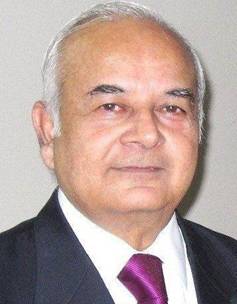
Syed Nayyar Uddin Ahmad
Lahore
nayyarahmad51@gmail.com
The writer is a senior corporate leader and strategic analyst with over five decades of experience. His thought-provoking visionary insights have reshaped global discourse, capturing the attention of world leaders. His writings have not only resonated with heads of state and governments but have also influenced the foreign policies of the United States and other major powers.
Soaring Petroleum Prices, Rising Poverty and Unemployment: An Urgent National Call for Solutions
I wish to invite the urgent and immediate attention of the entire leadership of Pakistan, both inside and outside Parliament, as well as the Establishment of Pakistan, to the grave and rapidly deteriorating situation arising from the daily increase in the rates of Petroleum and Oil Products (POL), particularly petrol and diesel, together with the additional and unnecessary burden of taxes and levies imposed upon these essential fuels.
The people of Pakistan are being subjected to a double jeopardy: first, through the continuously increasing basic prices of POL, and second, through the unnecessary and uncalled-for recovery of additional taxes and levies on petrol and diesel. This combined burden has practically and effectively broken the back of the ordinary citizen of Pakistan, particularly the millions belonging to the lower- and middle-income segments of society.
The situation is especially alarming when viewed against Pakistan’s extremely low-income levels. Pakistan is categorized by the World Bank as a lower-middle-income country, with a poverty-line benchmark of $4.20 per day, and this affects 44.7% of the population. This means that approximately 116.22 million people are living on less than roughly Rs. 1,200 per day, out of the latest stated total population figure of 260 million, as cited by the Federal Health Minister on television yesterday.
How can a person just earning approximately Rs. 1,200 per day possibly withstand the continuous increases in petrol and diesel prices, while simultaneously meeting the rising costs of food, transportation, electricity, education, healthcare, housing and other basic necessities?
The answer is obvious: he or she simply cannot.
THE DEVASTATING MULTIPLIER EFFECT OF POL PRICES
The consequences of high POL prices do not end at the petrol pump.
Petrol and diesel are the lifeblood of the entire national economy. Every increase in their prices directly or indirectly increases the cost of transportation, agriculture, food, manufacturing, construction, electricity generation, logistics and virtually every other economic activity.
The present policy of imposing exorbitant taxes, levies and rates on POL is therefore not merely making travel more expensive. It is progressively nuking the businesses, industries and agriculture of Pakistan, while simultaneously increasing unemployment and destroying the purchasing power of ordinary citizens.
Businesses face higher transportation and production costs. Industries become increasingly uncompetitive. Farmers face rising costs for tractors, tube wells, transportation, harvesting and the movement of agricultural produce. Small businesses are squeezed from both sides, falling consumer purchasing power and rising operating costs.
The inevitable result is a vicious cycle:
Higher POL prices → higher costs → higher prices → lower purchasing power → lower demand → declining business activity → closures and reduced investment → unemployment → greater poverty → even lower purchasing power.
This vicious circle cannot be allowed to continue indefinitely.
THE DANGER OF ECONOMIC AND SOCIAL IMPLOSION
There are now alarming grounds for concern that continued economic hardship, unemployment, inflation and extremely poor governance and mismanagement could eventually produce an internal implosion.
A nation cannot continuously squeeze the purchasing power of its citizens, damage its productive sectors, increase unemployment and simultaneously expect social and economic stability to continue indefinitely.
The warning signs must be taken seriously before economic frustration develops into a much wider social crisis.
The purpose of this appeal is therefore not to create alarm, but precisely the opposite: to prevent an implosion by taking corrective action before the situation reaches a point from which recovery becomes vastly more difficult.
THE $21 BILLION QUESTION
There is also an obvious question that must be asked.
If the Government argues that reducing or eliminating taxes and levies on POL would result in a loss of government revenue, then the country must examine where its fiscal priorities actually lie.
According to the figures cited in the Economic Survey of Pakistan and widely discussed in relation to Pakistan’s tax expenditures, annual tax exemptions and concessions have reached approximately Rs. 5.8 trillion, equivalent to roughly $21 billion.
It is important to clarify that this $21 billion figure represents tax expenditures broadly and should not be described as exclusively a dole to the elite. However, economists and institutions such as the UN Development Programme (UNDP) have repeatedly highlighted the phenomenon of elite capture, under which significant benefits from exemptions, concessions and subsidies can accrue to powerful groups, including the corporate sector, large landowners and affluent industries.
The reported Rs. 5.8 trillion ($21 billion) in annual tax expenditures encompasses areas including:
- Sales-tax exemptions;
- Income-tax exemptions; and
- Customs-duty exemptions.
The major beneficiaries identified in discussions of elite capture include:
Corporate groups and large-scale manufacturing sectors;
Large agricultural landowners and feudal elites; and
Well-connected political and institutional figures.
It is particularly striking that the reported Rs. 5.8 trillion ($21 billion) in annual tax expenditures was stated to have surpassed Pakistan’s external debt repayment requirements for that year.
Therefore, if the Government genuinely fears losing revenue by reducing or removing taxes and levies on POL, then the revenue question should be addressed through a comprehensive review and appropriate management of these enormous concessions and exemptions, rather than continuing to place an unbearable burden on a population where 44.7% ; approximately 116.22 million people, are living on less than roughly Rs. 1,200 per day.
In other words, the poor and struggling citizens should not be made to finance the fiscal system through ever-increasing taxes on fuel while billions of dollars’ worth of tax expenditures and concessions remain available elsewhere in the system.
THE WAY OUT
The easiest, fastest and most direct way out of this vicious circle of increasing poverty, inflation and joblessness is for the Government to take immediate and extraordinary measures to reduce the POL burden on the people.
The Government should therefore urgently consider:
1. The immediate removal of the entire burden of government taxes and levies on petrol and diesel, particularly those that are unnecessarily increasing the retail price beyond the reach of ordinary citizens.
2. A complete and transparent review of the POL pricing mechanism, clearly identifying the international cost, government taxes, levies, duties, margins and every other component contributing to the final price paid by the consumer.
3. Immediate relief for agriculture, transport, industry and businesses, all of which are being severely damaged by escalating fuel costs.
4. A comprehensive review and appropriate restructuring of the approximately Rs. 5.8 trillion ($21 billion) in annual tax exemptions and concessions, so that any revenue forgone through the reduction or elimination of POL taxes can, where appropriate, be recovered through better fiscal management and the rationalisation of concessions benefiting powerful groups.
5. Serious consideration of NATIONALISATION of the POL business in Pakistan, wherever legally, economically and administratively feasible, with the objective of ensuring that petroleum products are made available to the people, agriculture, transport, businesses and industries at the minimum possible sustainable rates.
NATIONAL INTEREST MUST COME FIRST
The proposal for NATIONALISATION should not be treated merely as an ideological slogan. It should be examined strictly from the standpoint of Pakistan’s national interest, economic security, affordability, transparency and long-term energy security.
If the State can ensure that petroleum products are procured, managed, refined, distributed and supplied efficiently and transparently, while eliminating unnecessary layers of cost and preventing excessive profiteering, the ultimate objective should be to provide these essential products to the people and productive sectors of Pakistan at the lowest possible sustainable prices.
Any model adopted must, of course, be professionally managed, financially transparent and protected against political interference, corruption, inefficiency and mismanagement.
A FINAL APPEAL TO THE LEADERSHIP OF PAKISTAN
This is an urgent appeal to the entire political leadership of Pakistan, Parliament, the Government, opposition leadership and the Establishment to recognise the seriousness of the situation and act before it is too late.
The present combination of escalating POL prices, excessive taxation, inflation, unemployment and declining purchasing power is placing an intolerable burden on ordinary Pakistanis and progressively weakening the country’s productive economy.
When 44.7% of the population, approximately 116.22 million people; are living below the stated $4.20-per-day lower-middle-income poverty benchmark, while the total population is stated to be 260 million, there is very little room for further economic pressure on the people.
At the same time, the State must examine its own fiscal priorities. If approximately Rs. 5.8 trillion ($21 billion) is being forgone annually through tax exemptions and concessions, then the Government must have the courage to review those concessions before continuing to extract ever-greater amounts from ordinary citizens through fuel taxation.
The choice before Pakistan’s leadership is therefore clear: either continue along a path that is progressively impoverishing citizens and nuking the productive economy, or take bold corrective measures now to restore affordability, employment, investment and economic confidence.
The immediate priorities should be to:
reduce the unbearable burden of POL taxation and levies; rationalise the Rs. 5.8 trillion ($21 billion) tax-expenditure regime; protect the 116.22 million vulnerable citizens; revive agriculture, industry and businesses; safeguard employment; and seriously examine NATIONALISATION of the POL sector where it serves the national interest.
These measures are not merely desirable economic reforms. They are measures aimed at preventing a potentially dangerous economic and social implosion.
Pakistan cannot afford to wait until the crisis becomes irreversible. The time for decisive action is now.
The true responsibility of leadership is not merely to govern the present, but to ensure that every new day brings greater hope, opportunity, and progress than the day before.
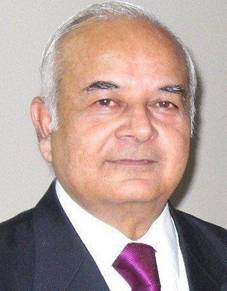
Syed Nayyar Uddin Ahmad
Lahore
nayyarahmad51@gmail.com
The writer is a senior corporate leader and strategic analyst with over five decades of experience. His thought-provoking visionary insights have reshaped global discourse, capturing the attention of world leaders. His writings have not only resonated with heads of state and governments but have also influenced the foreign policies of the United States and other major powers.
Breaking the Shackles of Elite Capture: A New Governance Model for Pakistan
Breaking the Shackles of Elite Capture: A New Governance Model for Pakistan
Put Development Before Politics, and Power Back into the Hands of Honest, Capable Citizens
The answers to Pakistan’s prolonged governance crisis and institutional failure are, in many ways, straightforward. We cannot move forward by putting the cart before the horse. Development must be the horse; the prime mover that pulls the entire nation forward. Yet, in Pakistan, we have repeatedly given disproportionate importance and authority to pseudo-politics, self-serving leadership, vested interests and powerful mafias. The result has been a deeply entrenched elite capture of the state.
For decades, political competition has too often revolved around the acquisition and preservation of power rather than around economic development, institutional reform, public service delivery and the welfare of ordinary citizens. Consequently, the machinery of government has become increasingly disconnected from the people it is supposed to serve.
Smaller Provinces Are Not the Answer
The solution to Pakistan’s governance crisis does not necessarily lie in creating more provinces or merely dividing existing provinces into smaller political power centers.
If geographical smallness alone were the answer, Islamabad should have been a shining example of efficient, corruption-free governance. Instead, its experience demonstrates that a smaller administrative area does not automatically produce better governance.
The fundamental question is not simply how large a governing unit is, but who governs it, how they are selected, whom they are accountable to, and what safeguards exist against corruption and abuse of authority.
The Islamabad experience is particularly revealing because even those responsible for supervising the capital’s administration have acknowledged the difficulties of getting routine matters accomplished without encountering the culture of palm greasing. This should serve as an eye-opener for anyone who believes that merely reducing the geographical size of a government will solve the problem.
The real problem is therefore not size alone. It is institutional design, accountability, competence and integrity.
Bureaucracy Must Administer—Not Rule
A modern state requires a competent, professional and politically neutral bureaucracy. But bureaucracy should not become a substitute for representative government.
The fundamental distinction is simple:
Elected representatives should decide what the government must achieve; professional public servants should determine how those objectives can best be implemented.
The bureaucracy’s legitimate and essential responsibilities include:
Policy implementation:
Turning laws, development priorities and political objectives into practical programmes and measurable results.
Public service delivery:
Managing schools, hospitals, transport, utilities, municipal services and other essential public institutions efficiently.
Professional expertise:
Providing elected leadership with reliable technical information, research, analysis and professional advice.
Continuity of government:
Ensuring that essential state functions continue smoothly despite changes in political leadership.
Regulation and enforcement:
Applying laws and regulations fairly, consistently and impartially.
But bureaucracy should not acquire unchecked political authority. Nor should politicians be permitted to manipulate professional administration for personal, partisan or financial interests.
A healthy state therefore requires strong elected leadership and an independent, professional and accountable civil service, with each operating within clearly defined constitutional and legal boundaries.
The Real Alternative: Empower the Citizen at the Local Level
Instead of creating additional provinces, Pakistan should seriously consider establishing much smaller, genuinely empowered units of local government, perhaps broadly corresponding to tehsil or district level.
But there is one crucial condition:
These units must not become the personal fiefdoms of political parties, entrenched local elites or unaccountable bureaucrats.
They should be governed through a system designed to place authority as close as possible to the citizen while simultaneously imposing strong safeguards against corruption, nepotism and abuse of power.
Local leadership should be entrusted to competent, experienced, professionally qualified and demonstrably honest citizens with clean records and no history of being member or association with any elite/Qabza group or IPP or loans write-off beneficiaries, NAB-Zada or links with property tycoons, sugar barons, banks or government defaulter etc., in any direct or indirect manner or with any past history of criminal, financial or ethical misconduct.
However, integrity cannot depend merely on personal reputation. The system itself must make corruption difficult and accountability unavoidable.
There should therefore be:
- Transparent selection and election procedures;
- Publicly available declarations of assets and interests;
- Independent financial and performance audits;
- Strict conflict-of-interest rules;
- Open procurement and contracting;
- Measurable service-delivery targets;
- Citizen complaint and oversight mechanisms;
- Strong penalties for corruption and abuse of authority; and
- Effective mechanisms for removing officials who fail the public trust.
Give Power to the People—Not to the Powerful
The objective should not be to create hundreds of new political positions or another layer of political patronage. The objective should be to transfer meaningful decision-making authority to the people while making those exercising that authority directly answerable to them.
A citizen should not have to travel through layers of provincial and federal bureaucracy to resolve a basic local problem.
If a road is broken, the responsible authority should be identifiable.
If a school is dysfunctional, someone should be accountable.
If a hospital fails to provide basic services, the responsible officials should be answerable.
If public funds disappear, the trail should be transparent and those responsible should face consequences.
This is what genuine decentralization means: not merely decentralizing offices, but decentralizing responsibility, authority and accountability.
Development Must Become Pakistan’s Prime Mover
Pakistan possesses enormous human and economic potential. Its population, strategic location, natural resources, agricultural capacity, entrepreneurial talent, industrial base and large overseas community provide the foundations for extraordinary national progress.
But potential alone produces nothing.
Development requires competent governance, predictable institutions, rule of law, economic freedom, investment, education, technological advancement and public accountability.
Politics must therefore become a means to achieve national development; not an end in itself.
The country cannot afford a system in which political energy is continuously consumed by the struggle for offices, patronage and personal advantage while ordinary citizens struggle with inadequate public services, unemployment, inflation, poor education and weak institutions.
A Daring Institutional Reset Is Needed
Pakistan now needs the courage to think beyond conventional political formulas.
The answer is not necessarily another province.
The answer is not another bureaucratic layer.
The answer is not simply another political party.
And it is certainly not the concentration of more power in the hands of a small ruling elite.
The real answer is to redesign governance around the citizen.
Authority should be decentralized to genuinely accountable local institutions. Political leadership should set direction and priorities. Professional administrators should implement those decisions. Independent institutions should monitor performance and corruption. Citizens should have the power to question, challenge and replace those who fail them.
In other words, Pakistan needs to replace elite capture with citizen ownership, bureaucratic domination with accountable administration, and political patronage with performance-based governance.
Pakistan’s Greatest Untapped Resource Is Its People
The most important reform Pakistan can undertake is to restore faith in the ability of its own citizens to govern themselves responsibly.
There are millions of honest, capable, educated and experienced Pakistanis who have no access to political power because they do not belong to established political families, patronage networks or powerful interest groups.
They should be given an opportunity to serve.
Pakistan does not lack talent. It lacks a system capable of identifying, empowering and holding its talent accountable.
The time has therefore come to take the reins of governance closer to the hands of capable and honest citizens; without political prejudice, without partisan considerations and without surrendering public institutions to vested interests.
If Pakistan can establish a governance model based on merit, integrity, decentralization, accountability, professional administration and relentless focus on development, it can unlock its enormous potential.
The transformation will not happen overnight, and no institutional reform can guarantee instant prosperity. But a serious beginning can be made by putting the horse before the cart:
First, build competent and accountable governance.
Then unleash development.
And let development become the prime mover of a stronger, fairer and more prosperous Pakistan.
Syed Nayyar Uddin Ahmad
Lahore
nayyarahmad51@gmail.com
The writer is a senior corporate leader and strategic analyst with over five decades of experience. His thought-provoking visionary insights have reshaped global discourse, capturing the attention of world leaders. His writings have not only resonated with heads of state and governments but have also influenced the foreign policies of the United States and other major powers.
Pakistan: The Peace Dividend the World Owes
Heartfelt congratulations are due to Prime Minister Shehbaz Sharif, Field Marshal and the CDF Syed Asim Munir, Deputy Prime Minister and Foreign Minister Muhammad Ishaq Dar, Interior Minister Syed Mohsin Naqvi, Foreign Secretary Ms Amna Baloch, all members of the government of Pakistan’s team, and above all, the resilient people of Pakistan for their sterling contributions in helping defuse a regional crisis that was perilously moving toward a much wider global confrontation.
At a time when the world stood on the edge of heightened conflict, Pakistan demonstrated maturity, restraint, diplomacy, and statesmanship in promoting peace and stability. The nation’s constructive role in safeguarding regional and global peace deserves recognition and appreciation from the international community.
As a minimum gesture of gratitude, the people of Pakistan deserve IMMEDIATE economic relief, including the revision of petroleum prices to their pre-28 February levels. Furthermore, the international community; being a direct and indirect beneficiary of a more peaceful world order, should consider meaningful economic support measures, including substantial debt relief and the eventual writing off of Pakistan’s domestic and external financial liabilities.
In recognition of Pakistan’s growing role as a force for peace and stability, the United Nations should immediately accord Pakistan the status of a quasi-permanent sixth member of the Security Council until comprehensive UN reforms are finalized and formally adopted in the future.
Likewise, Iran and the Gulf countries may consider establishing a special consortium to provide Pakistan with concessional or free oil and gas supplies for the next twenty years, acknowledging the country’s invaluable contribution toward regional stability and global peace.
Having demonstrated its capacity for constructive diplomacy and conflict de-escalation, Pakistan is also well positioned to assist international efforts aimed at resolving other major conflicts around the world. The United Nations may find in Pakistan a valuable partner in advancing dialogue and promoting peaceful solutions, including in the ongoing Russia–Ukraine conflict.
May this moment mark the beginning of a new era of peace, cooperation, mutual respect, and shared prosperity for all humanity.
Syed Nayyar Uddin Ahmad
Lahore.
nayyarahmad51@gmail.com
+92 321 9402157
Budget 2026–27: A Poverty Reduction Plan, Not a Poverty Enhancement Plan
Dos and Don’ts for the Government of Pakistan Before Presenting Budget 2026–27
As Pakistan prepares to unveil Budget 2026–27, policymakers face a defining challenge: whether the budget will serve as an instrument for economic relief, engine for growth and poverty reduction or become yet another exercise in revenue extraction from an already burdened population.
A national budget must ultimately be judged not by the amount of taxes collected but by its impact on the lives of ordinary citizens. If government revenues continue to increase while poverty, unemployment, inflation, and economic insecurity simultaneously worsen, then the nation must honestly question the effectiveness of its fiscal policies.
If poverty continues to expand despite higher taxation and increasing government receipts, future budgets may be remembered not as development plans but as a “Poverty Enhancement Plan (PEP).”
The Economic Reality Facing Pakistan
Pakistan’s economy has endured several years of extraordinary stress. High inflation has eroded purchasing power, economic growth has remained insufficient to absorb new entrants into the labour market, and millions of households have witnessed a steady decline in their standard of living.
Recent assessments by international institutions, including the IMF and the World Bank, have highlighted the challenges facing the country. The World Bank has reported a significant increase in poverty levels, warning that millions of Pakistanis have fallen below the poverty line due to economic instability, inflation, and inadequate job creation.
Food prices, utility charges, transportation costs, healthcare expenses, educational expenditures, and housing rents have increased dramatically over recent years. For many households, salaries have failed to keep pace with the rising cost of living.
The consequences are visible across the country:
- Rising poverty;
- Growing unemployment and underemployment;
- Shrinking middle-class purchasing power;
- Increased dependence on borrowing and informal support systems;
- Reduced household spending on health and education.
The Fundamental Question
A simple but important question must be asked:
If poverty is increasing despite higher tax collections and repeated taxation measures, what has been the justification for imposing such high tax burdens on citizens?
Taxation is not an end in itself. Taxes are collected to improve public welfare, create economic opportunities, reduce inequality, and strengthen national development.
When tax collections rise while poverty also rises, policymakers must reconsider whether the burden is being distributed fairly and whether the existing tax structure is producing the desired outcomes.
The Most Taxed Segment: Salaried Pakistanis
Among all segments of society, salaried individuals remain the most visible and compliant taxpayers.
Their taxes are deducted at source before salaries are received. They have limited opportunities for tax avoidance and bear the full impact of every increase in tax rates.
Meanwhile, significant parts of the economy continue to remain outside the effective tax net or contribute less than their potential:
- Large sections of retail trade;
- Wholesale businesses;
- Informal commercial activities;
- Large agricultural operations;
- Various sectors benefiting from exemptions, concessions, or preferential tax treatments.
The result is a widespread perception that the tax burden is disproportionately concentrated on those who are already documented and compliant.
A fair tax system should ensure that taxpayers with comparable incomes contribute equitably, regardless of the source of their earnings.
What the Government Must Do
DO #1: Provide Substantial Tax Relief to Salaried Individuals
The government should substantially reduce the income tax burden on salaried persons.
Inflation has significantly reduced the real value of incomes. A salary that once provided financial security now often struggles to meet basic household expenses.
The government should seriously consider revising the income tax structure for salaried individuals as follows:
Monthly salaries up to Rs. 300,000 — Tax-free
Monthly salaries above Rs. 300,000 and up to Rs. 1,000,000 — 5% tax
Monthly salaries above Rs. 1,000,000 and up to Rs. 1,500,000 — 10% tax
Monthly salaries above Rs. 1,500,000 and up to Rs. 2,000,000 — 15% tax
Monthly salaries above Rs. 2,000,000 and up to Rs. 5,000,000 — 20% tax
Monthly salaries above Rs. 5,000,000 — 30% tax
All civil and security related personnel posted in the provinces of Baluchistan, KPK and GB must be allowed tax free salaries. Moreover, Polio Eradication Field Staff performing duties all over the country must be given tax free salaries with three times immediate raise in their salaries.
Such a structure would provide meaningful relief to middle-income earners while ensuring that higher-income groups continue to contribute a fair share toward national development.
Such measures would:
- Increase disposable income;
- Stimulate domestic demand and enhance economic growth;
- Encourage voluntary tax compliance;
- Strengthen the middle class;
- Improve economic confidence.
DO #2: Broaden the Tax Base Instead of Increasing Tax Rates
Pakistan’s challenge is not merely low revenue collection but a narrow tax base.
The focus should be on expanding the tax base by bringing untaxed and undertaxed sectors into the formal tax system, rather than repeatedly imposing higher taxes (by just sitting in the comfort of the air-conditioned offices) on those who are already compliant taxpayers.
Meaningful documentation and taxation of retail, wholesale, agricultural, and informal sectors would create a more equitable and sustainable fiscal framework.
DO #3: Review Preferential Tax Treatments
The International Monetary Fund, in its 2024 Article IV Consultation and Extended Fund Facility Staff Report on Pakistan, has clearly underscored a structural distortion in the country’s fiscal system: a tax regime heavily weakened by extensive exemptions and preferential treatments embedded in the Second Schedule of the Income Tax Ordinance. In essence, these so-called concessions function as a parallel system of reliefs that continuously erode the tax base and shift the burden onto compliant taxpayers. The IMF estimates that these tax expenditures amount to around 4–4.5 percent of GDP annually, translating into a staggering $15–21 billion (approximately PKR 4–6 trillion) in lost revenue every year. This is not a marginal inefficiency; it is a massive fiscal leakage that undermines the state’s ability to invest in development, infrastructure, and social services. The Fund has repeatedly stressed that without aggressively rationalizing these exemptions and broadening the tax net, Pakistan will remain trapped in a cycle of repeated tax hikes on existing filers while large segments of the economy continue to operate under protected, undertaxed regimes.
In view of the foregoing, Prime Minister Shehbaz Sharif should urgently direct the relevant authorities to undertake a comprehensive review of tax exemptions, concessions, and preferential tax arrangements. The objective should be to restructure fiscal policy in a way that enables the Budget 2026–2027 to deliver meaningful relief to the public, particularly the downtrodden segments of society that are struggling under the burden of rising prices of petroleum products and other essential commodities. This pressure has been further intensified by ongoing geopolitical tensions in the region. A well-designed reform of the tax system is essential to create fiscal space for a more equitable and relief-oriented budget.
Citizens expect a tax system based on fairness, transparency, and equal treatment.
A credible review would improve public confidence and strengthen perceptions of tax justice.
DO #4: Prioritize Employment Generation
No country can successfully reduce poverty without creating jobs.
Budget allocations should focus on:
- Small and medium enterprises;
- Labour-intensive industries;
- Agriculture modernization;
- Information technology;
- Skills development programs;
- Export diversification;
- Infrastructure projects with high employment potential.
A person with dignified employment is far less likely to depend on state assistance.
DO #5: Protect Essential Consumption
Indirect taxation on essential goods disproportionately affects lower- and middle-income households.
Food, medicines, education, healthcare, and public transportation should remain affordable.
Fiscal policy should protect essential consumption rather than make survival increasingly expensive.
DO #6: Establish an Essential Cost Protection Framework
One of the most effective anti-poverty measures would be to protect citizens from excessive increases in essential living costs.
The government should establish a comprehensive framework aimed at controlling unreasonable increases in:
- Essential food items;
- School fees;
- School stationery;
- School uniforms and shoes;
- Essential healthcare services;
- Residential rents;
- Utility charges affecting low-income households.
Education must never become unaffordable because of escalating ancillary costs.
Similarly, housing should remain accessible to working families. Excessive rent increases have become one of the largest contributors to declining living standards in urban Pakistan.
The government should therefore consider:
- Limits on annual school fee increases;
- Monitoring of compulsory educational expenses;
- Tenant protection measures;
- Reasonable rent regulation mechanisms;
- Anti-profiteering initiatives in essential markets.
DO #7: Measure Budget Success Through Poverty Reduction
The success of Budget 2026–27 should be measured through:
- Poverty reduction;
- Employment creation;
- Growth in real incomes;
- Improved access to education;
- Better healthcare outcomes;
- Enhanced social mobility.
Revenue collection should be viewed as a means to achieve these objectives rather than an objective in itself.
What the Government Must Not Do
DON’T #1: Continue Treating Salaried Taxpayers as the Easiest Revenue Source
Repeatedly increasing taxes on compliant taxpayers discourages productivity, savings, investment, and economic optimism.
The salaried class cannot indefinitely shoulder a disproportionate share of the nation’s tax burden.
DON’T #2: Increase Indirect Taxes on Essential Goods
Indirect taxes often affect the poor more severely than the wealthy.
Any additional burden on food, utilities, transportation, education, and healthcare directly contributes to poverty.
DON’T #3: Ignore the Link Between Inflation and Poverty
Inflation is not merely a statistical indicator.
For millions of families, inflation determines whether they can afford food, medicine, education, and shelter.
Budgetary decisions must therefore prioritize controlling living costs.
DON’T #4: Protect Privileged Exemptions at the Expense of Ordinary Citizens
Fiscal justice requires that all sectors contribute according to their capacity.
Special privileges that shift the burden onto compliant taxpayers should be reviewed and rationalized.
DON’T #5: Confuse Revenue Growth with Economic Success
A government may collect record revenues while citizens become poorer.
True economic success is reflected in:
- Reduced poverty;
- Higher employment;
- Greater purchasing power;
- Improved living standards;
- Increased social and economic opportunity.
Conclusion
Budget 2026–27 presents an opportunity to redefine Pakistan’s economic priorities.
The central objective should not merely be to satisfy revenue targets or achieve short-term fiscal gains. It should be to protect citizens, reduce poverty, create employment, and restore confidence in the future.
A budget that broadens the tax base, reduces the burden on salaried individuals, protects families from rising living costs, ensures fair taxation across sectors, and prioritizes employment generation can become a genuine instrument of national development.
However, if taxes continue to rise while poverty continues to increase, if education and housing become increasingly unaffordable, and if compliant taxpayers continue to bear a disproportionate burden, then serious questions will inevitably arise about the direction of public policy.
The people of Pakistan do not need a Poverty Enhancement Plan.
They need a Poverty Reduction Plan.
Budget 2026–27 should be remembered as the moment when economic policy shifted from extracting more from struggling citizens to creating opportunities for them to prosper.
Syed Nayyar Uddin Ahmad
Lahore – Pakistan
+92 321 9402157
4st June, 2026
nayyarahmad51@gmail.com The writer is a senior corporate leader and strategic analyst. His thought-provoking visionary insights have reshaped global discourse, capturing the attention of world leaders. His writings have not only resonated with heads of state and governments but have also influenced the foreign policies of the United States and other major powers.
Victory Without Prosperity: Why Pakistan Must Convert Strategic Success into Economic Emancipation
Diplomatic Triumphs Mean Little If the Common Citizen Remains Poor
Pakistan today stands at a historic crossroads.
The nation has demonstrated resilience in the face of enormous regional challenges and has succeeded in enhancing its strategic and diplomatic profile. Yet despite these achievements, the economic condition of millions of Pakistanis remains deeply troubling.
This stark contradiction raises a fundamental national question:
Why have diplomatic gains, strategic successes, and enhanced international stature failed to translate into economic prosperity for the people of Pakistan?
History repeatedly teaches that military achievements and diplomatic victories can strengthen a nation’s standing in the world, but they do not automatically generate jobs, reduce poverty, attract investment, or improve living standards.
Prosperity is created not on battlefields or in diplomatic receptions but in factories, farms, markets, technology parks, export industries, and productive enterprises.
The real measure of national success is not merely how a nation is perceived abroad but how its citizens live at home.
Today, that remains Pakistan’s greatest challenge.
The Economic Paradox
Pakistan’s strategic significance has never been greater. The country’s geopolitical relevance, military capabilities, and diplomatic engagements continue to command international attention.
Yet the economy tells a different story.
Inflation has eroded purchasing power. Businesses struggle under rising costs. Investment levels remain inadequate. Youth unemployment continues to rise. Poverty remains widespread, and many middle-class families are finding it increasingly difficult to maintain their standard of living.
This is the central paradox confronting Pakistan:
How can a nation increase its diplomatic stature while its economic foundations remain fragile?
The answer lies in a long-standing failure to convert strategic capital into economic capital.
Diplomatic goodwill creates opportunities.
Economic reforms create prosperity.
The former cannot substitute for the latter.
The Burden of Excessive Taxation
One of the most serious obstacles to economic growth is the excessive burden placed upon the documented and productive sectors of the economy.
Businesses, manufacturers, exporters, professionals, and salaried individuals often find themselves carrying a disproportionate share of the tax burden.
When governments continuously increase taxes rather than expand the tax base, several damaging consequences emerge:
- Investment declines.
- Business expansion slows.
- Job creation suffers.
- Capital seeks safer destinations.
- Informal economic activity expands.
- Economic growth weakens.
A shrinking productive sector can never generate sustainable prosperity.
The objective of taxation should be to encourage growth, not suffocate it.
Pakistan urgently requires a transition from a taxation-driven economy to a growth-driven economy.
Why Investors Remain Cautious
Investors, whether domestic or foreign, seek three essentials:
- Predictability.
- Stability.
- Profitability.
Even the strongest diplomatic relationships cannot compel investors to risk capital where policy uncertainty, regulatory complexity, excessive taxation, bureaucratic delays, and inconsistent economic planning persist.
Investment follows confidence.
Confidence follows reforms.
Without structural improvements in governance and economic management, diplomatic successes will continue to yield only limited economic dividends.
Poverty and Unemployment: The Real National Emergency
No issue deserves greater attention than the economic struggles of ordinary citizens. Moreover, poverty and joblessness breads lawlessness and terrorism.
Every year, hundreds of thousands of young Pakistanis enter the labor market seeking meaningful employment.
Too many find limited opportunities.
The consequences are visible:
* Rising poverty.
* Growing inequality.
- Brain drain.
- Social frustration.
- Reduced economic mobility
- An Increase in suicide rates driven by hunger, worsening law and order, and the growing threat of terrorism
The greatest national security challenge facing Pakistan today may not be external threats but internal economic stagnation.
A nation cannot achieve lasting greatness if its youth are deprived of opportunity.
The Case for Radical Tax Reform
Pakistan must adopt a bold and comprehensive economic strategy centered on growth, entrepreneurship, and wealth creation.
At the heart of this strategy should be radical tax reform.
Lower Tax Rates
Lower tax rates on productive sectors would encourage investment, expansion, and economic activity.
Simplify the Tax Structure
A simpler tax system increases compliance, reduces corruption, and encourages documentation of the economy.
Broaden the Tax Base
The focus should shift from taxing existing taxpayers more heavily to bringing previously untaxed sectors into the formal economy.
Support Small and Medium Enterprises
SMEs are the lifeline and backbone of employment creation. They require incentives, access to credit, and regulatory relief.
Promote Export-Led Growth
Export industries should receive targeted support to improve competitiveness and increase foreign exchange earnings.
Beyond Taxation: Structural Reforms
Tax reductions alone cannot solve Pakistan’s economic challenges.
The nation also requires:
- Energy sector modernization.
- Public sector reforms.
- Agricultural productivity enhancement.
- Technology-driven industrialization.
- Educational transformation.
- Skills development programs.
- Export diversification and value addition.
- Digitization of governance.
- Transparent regulatory systems.
- Widespread adoption of 3D printing skills
Only a comprehensive reform programme can unlock Pakistan’s enormous economic potential.
A Bold Proposal for Economic Emancipation
Pakistan’s economic crisis has reached a point where conventional approaches may no longer be sufficient.
The nation requires extraordinary leadership, extraordinary expertise, and extraordinary urgency.
A proposal worthy of serious national consideration is the immediate appointment of Dr. Ikram ul Haq, a world-renowned expert in tax and economic affairs with a global perspective, as Deputy Prime Minister for Economic Emancipation, vested with full constitutional and administrative authority.
This proposal is not about personalities alone.
It is about recognizing that Pakistan’s economic challenges are interconnected and therefore require unified leadership capable of coordinating reforms across all major sectors of the economy.
Under such a framework, the Deputy Prime Minister would be entrusted with comprehensive constitutional, legislative, and administrative authority—subject to parliamentary oversight and constitutional safeguards—to lead a national economic transformation programme.
The mandate would be clear:
To place Pakistan firmly on the path of sustainable growth, employment generation, poverty reduction, fiscal stability, and investment expansion within a maximum period of 36 months.
A National Economic Emancipation Programme
The programme could focus on six strategic pillars.
1. Radical Tax Rationalization
- Significant reduction in tax rates.
- Expansion of the tax base.
- Simplification of tax laws.
- Elimination of anti-growth distortions and unconstitutional taxation.
2. Investment Revolution
- Fast-track investment approvals under one window operations.
- Strong investor protection.
- Long-term policy consistency.
- Competitive incentives for domestic and foreign investors.
3. Employment Generation
- Massive support for SMEs.
- Industrial expansion programmes.
- Entrepreneurship incentives.
- Vocational and technical training initiatives.
4. Export Transformation
- Technology-based manufacturing.
- Export diversification.
- Strategic trade partnerships.
- Increased global market access.
5. Government Efficiency
- Reduction in wasteful expenditure.
- Digitization of public services.
- Performance-based accountability.
- Rationalization of loss-making entities.
- Introduction of Lateral Entry System of recruiting domain experts, private sector professionals and specialists in government service cadres to fill mid or senior level-administrative roles.
6. Poverty Reduction
- Economic opportunity programmes.
- Rural development initiatives.
- Affordable housing support.
- Job creation as the primary anti-poverty strategy.
- Pro-poor public social spending.
investment in the poorest segments of society unlocks broader economic growth. When a government allocates 20% of its budget directly to the 20% of the population (the poorest quintile) through targeted funding, it triggers an economic chain known as Inclusive Growth.
A 36-Month National Challenge
Pakistan has never lacked economic diagnoses.
What it has lacked is sustained implementation.
Successive governments have produced reports, committees, strategies, and reform plans. Yet meaningful transformation has remained elusive because authority has been fragmented and execution inconsistent.
A dedicated Economic Emancipation Mission operating under clearly defined targets and timelines could provide the urgency and focus that the situation demands.
The nation requires measurable outcomes:
- Higher growth.
- Lower poverty.
- Greater investment.
- Expanded exports.
- Increased employment.
- Improved living standards.
- Innovative Strategy for Debt Clearance.
Government can devise out of box solutions for direct adjustment with foreign debtors of Pakistan’s external debt with undeclared foreign assets or a debt payment amnesty scheme on undeclared assets in foreign countries and Pakistan.
Nothing less should satisfy policymakers or citizens.
The Ultimate Test of Leadership
Diplomatic prestige is valuable.
Strategic success is important.
International recognition is welcome.
Yet none of these achievements can substitute for economic prosperity.
The true measure of national leadership is the ability to improve the lives of ordinary citizens.
Pakistan’s future will not be determined solely by its geopolitical achievements but by its ability to create jobs, attract investment, reward enterprise, reduce poverty, and build a dynamic modern economy.
The challenge before the nation is clear.
The opportunity is historic.
The need for action is immediate.
Pakistan must now convert strategic success into economic emancipation.
Only then will diplomatic victories be transformed into lasting prosperity for generations to come.
Syed Nayyar Uddin Ahmad
Lahore – Pakistan
+92 321 9402157
1st June, 2026
nayyarahmad51@gmail.com The writer is a senior corporate leader and strategic analyst. His thought-provoking visionary insights have reshaped global discourse, capturing the attention of world leaders. His writings have not only resonated with heads of state and governments but have also influenced the foreign policies of the United States and other major powers.
Urgent Open Letter to Marco Rubio
Your Excellency Secretary Marco Rubio,
As you visit India at a historic moment when the United States prepares to commemorate the 250th anniversary of its Independence, the world is once again reminded of the enduring American ideals of freedom, liberty, democracy, equality, self-governance, the rule of law, and the pursuit of human dignity.
It is in the spirit of these universal values that I respectfully draw your urgent attention to the grave and worsening human rights situation in India. The concerns I raise are detailed extensively in my earlier appeal titled “An Urgent Humanitarian Appeal to the US President,” available at:
The continued persecution and violence against minorities — particularly Muslims in Kashmir and across India, Christians, Sikhs, and the people of Manipur — have become matters of deep international concern. Reports of mob lynchings, religious intolerance, suppression of dissent, and targeted communal violence continue to emerge with alarming regularity. Distinguished genocide scholar Professor Gregory Stanton has also publicly expressed serious concern regarding these developments and predicted very high chances of happening of genocide in India.
Your Excellency, it is instructive to recall that when a Sikh U.S. citizen felt personally threatened from Indian plans to eliminate him, the Excellency Donald Trump President of the United States, wrote directly on 24 July 2025 to reassure him that his safety was a paramount concern of the State. This precedent underscores the moral and political strength conveyed when a head of state speaks plainly in defense of their citizens. The voice of the American Secretary of State, backed by its global stature, would carry enough weight in deterring aggression of transnational killings and almost daily lynching of minorities inside India.
In view of this humanitarian crisis, I respectfully urge you to raise these issues at the highest level with the Indian leadership during your visit. I also request attention to growing international concerns regarding allegations of transnational repression and targeted actions attributed to Indian state-linked actors in countries including Pakistan, Canada, the United Kingdom, and the United States.
I further wish to state that I personally received a written death threat allegedly linked to India’s intelligence agency, R&AW, which has caused serious concern for my safety and well-being. In this context, the protection of fundamental human rights, civil liberties, and religious freedoms must remain central to international democratic engagement.
I further urge the United States government to seriously consider the recommendations made by the United States Commission on International Religious Freedom (USCIRF), including the designation of India as a “Country of Particular Concern” (CPC) for severe violations of religious freedom. Strong and principled measures, including targeted diplomatic and policy actions, may become necessary to ensure accountability and to safeguard vulnerable minority communities.
At this critical juncture, millions of minorities in India look toward the international community, and particularly the United States, with hope that democratic values and humanitarian principles will prevail over hatred, intolerance, and fear.
I sincerely hope your visit will contribute toward meaningful dialogue, justice, and the protection of human rights for all communities in India.
Thank you for your attention to this urgent humanitarian matter.
Respectfully and sincerely,
Syed Nayyar Uddin Ahmad
Lahore – Pakistan
+92 321 9402157
24th May, 2026
nayyarahmad51@gmail.com The writer is a senior corporate leader and strategic analyst. His thought-provoking visionary insights have reshaped global discourse, capturing the attention of world leaders. His writings have not only resonated with heads of state and governments but have also influenced the foreign policies of the United States and other major powers.