A Comparison of Roshan Digital Account (RDA) With Proposed Shining Pakistan Account (SPA)
 September 30th, 2026 |
  Author:
 Point-by-Point Comparison and Proposed Financing of a Futuristic Very-High-Speed Passenger and Goods Railway System
Proposed National Corridor
Gwadar – Karachi – Multan – Faisalabad – Lahore – Islamabad/Rawalpindi – Peshawar – Khunjerab – China Border
PART I — POINT-BY-POINT COMPARISON OF RDA AND SPA
1. Basic Status
Roshan Digital Account (RDA)
RDA is an existing banking facility established by the State Bank of Pakistan for overseas Pakistanis and eligible non-resident customers. It provides banking, payment and investment facilities in Pakistan.
Shining Pakistan Account (SPA)
SPA is proposed as a new, dedicated development-oriented investment account or investment instrument designed to mobilise overseas Pakistani capital for nationally important, long-term projects.
The SPA would therefore require a separate regulatory, legal and institutional framework and should not be presented as an existing SBP product unless and until formally approved.
2. Primary Objective
RDA:
The primary purpose is to provide overseas Pakistanis with convenient access to banking, payments and approved investment opportunities in Pakistan.
SPA:
The primary purpose would be to mobilise long-term overseas Pakistani savings specifically for strategic national development projects.
3. Nature of the Product
RDA:
RDA is fundamentally a banking-account platform through which eligible non-residents can hold funds and access approved financial products and services.
SPA:
SPA could be structured as a dedicated investment account, bond-linked product, certificate, infrastructure investment vehicle, or another regulated instrument specifically connected with national development financing.
4. Use of Funds
RDA:
Funds can be used for permitted banking, payment and investment purposes under the applicable RDA framework.
SPA:
Funds would be specifically directed toward approved strategic development programmes, such as:
- National railway infrastructure
- Very-high-speed passenger rail
- High-speed freight and logistics corridors
- Ports and logistics infrastructure
- Energy infrastructure
- Digital infrastructure
- Industrial and export-oriented infrastructure
- Other nationally approved development projects
5. Direct Link with Infrastructure Development
RDA:
RDA provides access to investment opportunities but is not itself a dedicated infrastructure-financing vehicle.
SPA:
The defining feature of SPA would be its direct connection with long-term infrastructure development.
A substantial portion of SPA funds could therefore be ring-fenced for approved national infrastructure projects.
6. Investment Horizon
RDA:
The investment horizon depends on the particular banking or investment product selected by the account holder.
SPA:
SPA could be designed primarily for medium- and long-term investment, for example with 5-, 10-, 15- or 20-year investment options.
Longer maturities would be particularly appropriate for major railway infrastructure because such projects require substantial initial capital and generate economic benefits over decades.
7. Return to Investors
RDA:
Returns depend on the particular investment product selected by the RDA holder.
SPA:
SPA could provide a clearly defined return mechanism linked to the structure of the underlying investment.
Possible mechanisms could include:
- Fixed or predetermined returns
- Profit-sharing structures
- Infrastructure bonds
- Sukuk structures
- Revenue-linked instruments
- Foreign-currency investment certificates
- Hybrid investment structures
The final return would have to be determined through proper financial, legal and regulatory analysis.
8. Ring-Fencing of Funds
RDA:
RDA funds are not inherently ring-fenced for one national infrastructure project.
SPA:
A core principle of SPA could be ring-fencing.
For example, funds raised under a designated “SPA National Railway Investment Programme” could be legally and financially separated from unrelated government expenditure.
This would provide investors with greater transparency regarding the use of their capital.
9. Project Identification
RDA:
The account holder generally chooses from the investment and banking facilities available under the RDA framework.
SPA:
The government and relevant institutions would identify and approve specific national projects eligible for SPA financing.
Projects could be selected according to transparent criteria covering:
- Economic impact
- Export potential
- Employment creation
- Regional connectivity
- Financial viability
- Strategic importance
- Environmental sustainability
- Long-term national benefit
10. Transparency
RDA:
RDA operates within the regulatory and reporting framework applicable to banking and financial products.
SPA:
Because SPA would be specifically linked to development projects, it could incorporate enhanced project-level transparency.
Investors could receive periodic reports covering:
- Amount raised
- Amount invested
- Projects financed
- Construction progress
- Project expenditure
- Revenue generated
- Debt and financing obligations
- Expected and actual returns
11. Investor Protection
SPA should incorporate strong investor-protection mechanisms.
These could include:
- Independent project audits
- Independent financial audits
- Defined investment terms
- Clear disclosure requirements
- Separate project accounts
- Professional project management
- Independent oversight
- Periodic reporting to investors
- Appropriate sovereign or project-level guarantees where legally and financially feasible
12. Relationship Between RDA and SPA
RDA and SPA do not necessarily need to compete with each other.
A possible structure would be:
RDA = Banking and Financial Gateway
SPA = Dedicated National Development Investment Platform
Under such a model, an overseas Pakistani could use an RDA to transfer funds into Pakistan and then choose an approved SPA investment product, subject to the final regulatory structure.
PART II — EXECUTIVE SUMMARY
Pakistan has a large overseas Pakistani community capable of contributing significantly to long-term national development.
The existing Roshan Digital Account has established an important digital channel through which overseas Pakistanis can send money to Pakistan and access banking and investment facilities.
The proposed Shining Pakistan Account (SPA) would build on this concept by creating a dedicated long-term investment mechanism through which overseas Pakistanis could voluntarily invest in transformational national infrastructure.
One of the proposed uses of SPA funds would be the development of a futuristic high speed (+600 KMPH) national railway and logistics system connecting Gwadar with Karachi, Multan, Faisalabad, Lahore, Islamabad/Rawalpindi, Peshawar and ultimately Khunjerab at the China border.
The passenger component would be designed around next-generation very-high-speed trains capable of operating at speeds above 600 km/h, subject to future technological development, engineering feasibility, safety certification, route geometry and economic viability.
The freight component would consist of a separate high-capacity, high-speed logistics network designed to move containers, manufactured goods, agricultural products, minerals and other cargo efficiently across Pakistan.
The objective would not simply be to modernise existing railway infrastructure.
The objective would be to create a new-generation national transport system designed for the Pakistan of the future.
PART III — PROPOSED USE OF SPA FUNDS FOR A FUTURISTIC NATIONAL RAILWAY
1. National Vision
SPA funds could be utilised, subject to the necessary legal, regulatory, financial and project approvals, to finance a transformational national railway programme.
The long-term vision would be:
Gwadar → Karachi → Multan → Faisalabad → Lahore → Islamabad/Rawalpindi → Peshawar → Khunjerab → China Border
This corridor would connect:
- Arabian Sea access
- Major commercial cities
- Industrial centers
- Agricultural regions
- Major population centers
- The national capital region
- All the four provinces
- The China-Pakistan economic corridor
- The northern border and potential future Central Asian connections
PART IV — VERY-HIGH-SPEED PASSENGER RAIL
1. Above 600 km/h Future Train Technology
The passenger railway should be conceived as a future-generation very-high-speed railway, with an ultimate design objective of operating passenger trains at more than 600 km/h.
This should be treated as a long-term technological objective rather than a claim about the capabilities of Pakistan’s present railway network.
The system could incorporate technologies such as:
- Advanced electric propulsion
- Aerodynamic trainsets
- Dedicated high-speed alignments
- Advanced signaling
- Automatic train control
- Platform-screen safety systems
- Advanced telecommunications
- Predictive maintenance
- Artificial-intelligence-assisted railway operations
- Advanced braking systems
- High-capacity power systems
- Potential future magnetic-levitation or other next-generation propulsion technologies, subject to feasibility
The final technology should be selected only after detailed engineering, economic, safety and environmental studies.
2. Dedicated High-Speed Infrastructure
Passenger trains operating above 600 km/h would require infrastructure fundamentally different from conventional railway lines.
The system would require, among other things:
- Dedicated passenger tracks or guideways
- Very large-radius curves
- Carefully controlled gradients
- Grade separation
- No conventional level crossings
- Advanced signaling
- Secure railway corridors
- High-capacity electrical infrastructure
- Specially engineered bridges and tunnels
- Advanced maintenance facilities
The railway therefore should be planned as a new-generation infrastructure system rather than simply an upgrade of existing conventional tracks.
PART V — HIGH-SPEED GOODS AND FREIGHT RAILWAY
The national railway programme should include a dedicated freight and logistics component.
Passenger trains and freight trains have different operating requirements. Therefore, the freight system should be designed around high capacity, reliability, efficient loading and unloading, and competitive operating costs.
The freight network could transport:
- Rail-based mobile missiles launching systems for second strike enhanced capabilities
- Containers
- Industrial machinery
- Automobiles
- Agricultural commodities
- Minerals
- Textiles
- Manufactured products
- Energy-related equipment
- E-commerce shipments
- Imports and exports
- Gwadar port cargo
Strategic freight terminals could be developed near major industrial and commercial centers.
PART VI — GWADAR AS THE SOUTHERN GATEWAY
Gwadar could become the southern maritime gateway of the national railway system.
A modern railway connection from Gwadar through Karachi and onward to the major industrial and population centers could provide a direct land-based logistics route across Pakistan.
The long-term objective would be to integrate:
Gwadar Port → National Freight Railway → Industrial Centers → Peshawar → Khunjerab/China
This would create a continuous strategic logistics corridor extending from the Arabian Sea toward China’s border.
PART VII — MAJOR NATIONAL RAILWAY CORRIDOR
Gwadar
Maritime gateway, port logistics and international trade.
Karachi
Pakistan’s largest commercial and industrial center and a major national logistics hub.
Multan
Agricultural, industrial and commercial center connecting southern and central Pakistan.
Faisalabad
Major textile and industrial center requiring efficient passenger and freight connectivity.
Lahore
One of Pakistan’s principal economic, commercial, educational and population centers.
Islamabad/Rawalpindi
National capital region and major administrative, commercial and technological center.
Peshawar
Strategic gateway toward Khyber Pakhtunkhwa, Afghanistan and the northwestern region.
Khunjerab
Long-term northern terminus and strategic connection toward China.
PART VIII — PROPOSED SPA FINANCING MODEL
SPA could be structured as a dedicated investment platform for Pakistan’s overseas citizens.
For example, a future SPA programme could offer different investment categories:
SPA-5
Five-year investment option.
SPA-10
Ten-year infrastructure investment option.
SPA-15
Fifteen-year long-term national development investment option.
SPA-20
Twenty-year strategic infrastructure investment option.
These are illustrative structures and would require detailed financial modelling and regulatory approval.
PART IX — ILLUSTRATIVE $10 BILLION SPA RAILWAY PROGRAMME
If a future SPA programme were to mobilise US$10 billion, the funds could, for illustration, be allocated across major components such as:
| Component | Illustrative Allocation |
| Very-high-speed passenger infrastructure | US$3.0 billion |
| Freight and logistics railway | US$2.0 billion |
| Track/guideway and civil works | US$1.5 billion |
| Stations and multimodal terminals | US$1.0 billion |
| Signaling, communications and control systems | US$0.75 billion |
| Power and electrification | US$0.75 billion |
| Engineering, feasibility, land and project preparation | US$0.50 billion |
| Total | US$10.0 billion |
These figures are illustrative only and should not be interpreted as a completed project cost estimate.
A proper feasibility study would determine the actual capital requirement.
PART X — PHASED IMPLEMENTATION
The programme could be implemented in stages.
Phase 1 — National Feasibility and Technology Programme
- Route studies
- Geological investigations
- Demand analysis
- Engineering feasibility
- Environmental assessment
- Land and corridor assessment
- Technology evaluation
- Financial modelling
- International technology partnerships
Phase 2 — Priority Economic Corridors
Initial construction could focus on sections with high passenger and freight demand.
Potential priority sections could include:
Karachi–Lahore
Lahore–Islamabad/Rawalpindi
Islamabad/Rawalpindi–Peshawar
with subsequent expansion toward Gwadar and Khunjerab.
The exact sequencing should be determined by feasibility studies rather than predetermined political or administrative preferences.
Phase 3 — Northern Extension
Development toward Peshawar and subsequently the Khunjerab region could create the long-term northern component of the national system.
Phase 4 — Complete National Network
The ultimate objective would be an integrated national system connecting north with south.
PART XI — SPA GOVERNANCE STRUCTURE
To establish investor confidence, SPA should have an independent governance framework.
A proposed structure could include:
SPA Investment Authority
Responsible for overall investment management.
National Railway Development Company
Responsible for railway project development and implementation.
Independent Engineering Authority
Responsible for technical standards and safety.
Independent Financial Auditor
Responsible for auditing SPA funds.
Project Monitoring Unit
Responsible for monitoring construction progress and expenditure.
Investor Reporting System
Providing periodic financial and project-performance reports to SPA investors.
PART XII — POTENTIAL ECONOMIC BENEFITS
A successful futuristic railway system could potentially contribute to:
- Reduced domestic travel times
- Lower logistics costs
- Greater industrial connectivity
- Increased tourism
- Expansion of domestic commerce
- Improved agricultural market access
- Increased port utilisation
- Greater export competitiveness
- New industrial development around railway corridors
- Technology transfer
- Skilled employment
- Construction-sector activity
Integration of Pakistan’s major economic regions. The economic benefits should be quantified through formal cost-benefit and macroeconomic studies before investment decisions are made.
PART XIII — PAKISTAN’S FUTURE TRANSPORT MODEL
The proposed system should not be viewed merely as a railway project.
It could become a national unity, cohesiveness, mobility and logistics platform integrating:
Very-High-Speed Passenger Rail
High-Speed Freight Rail
Ports
Airports
Industrial Zones
Dry Ports
Warehouses
Logistics Parks
Urban Public Transport
Digital Freight Management
The objective would be to create an integrated national transportation ecosystem.
PART XIV — THE LONG-TERM VISION
Pakistan should plan beyond the limitations of today’s railway technology.
The ultimate vision would be a country where a passenger can travel between major Pakistani cities in a fraction of today’s journey times, while goods can move rapidly and reliably between ports, industrial centers and international borders.
A future passenger railway operating at more than 600 km/h could transform the geographical relationship between Pakistan’s major cities.
At the same time, a dedicated high-capacity freight railway could transform the movement of goods from Gwadar and Karachi toward the industrial centers of Punjab, Khyber Pakhtunkhwa and ultimately the Khunjerab border.
The combination of these two systems could form the backbone of a future national transportation network.
PART XV — CONCLUSION
The proposed Shining Pakistan Account (SPA) could complement the existing Roshan Digital Account by providing overseas Pakistanis with a dedicated opportunity to participate in a sort of Pakistan Development Fund in long-term national development financing.
Where RDA primarily provides a banking and investment gateway, SPA could be structured as a purpose-driven national development investment platform.
Subject to appropriate legislation, regulation, financial structuring and feasibility studies, SPA funds could be utilised for a transformational national railway programme extending length and breadth of the country.
The passenger component could ultimately target very-high-speed trains operating above 600 km/h, while a separate high-capacity freight system could provide rapid and efficient movement of goods across the country.
The result would be a long-term national infrastructure vision of historic scale; uniting Pakistan’s ports, cities, industrial centers, and international borders through a modern, technologically advanced transportation network. Financed through the Shining Pakistan Account, with the contributions and confidence of Pakistanis at home and abroad, this vision would transform infrastructure into a lasting foundation for economic growth, national integration, and opportunity. It would be an investment not merely in roads, railways, and connectivity, but in the future of the nation itself; building a stronger, more connected, more prosperous, and truly Future-Ready Pakistan for generations to come.
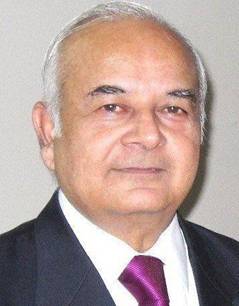
Syed Nayyar Uddin Ahmad
Lahore
30 September 2026
www.snayyar.com
The writer is a senior corporate leader and strategic analyst with over five decades of experience. His thought-provoking visionary insights have reshaped global discourse, capturing the attention of world leaders. His writings have not only resonated with heads of state and governments but have also influenced the foreign policies of the United States and other major powers.
Leave a Reply