Archive for June, 2011
Facts about the Glorious Qu’ran
 June 25th, 2011 |
  Author:
 Facts about the glorious Qu’ran
1) What is the meaning of the word “Qur’an” ?
A) That which is Read.
2) Where was the Qur’an revealed first ?
A) In the cave of Hira (Makkah)
3) On which night was the Qur’an first revealed ?
A) Lailatul-Qadr (Night of the Power)
4) Who revealed the Qur’an?
A) Allah revealed the Qur’an
5) Through whom was the Qur’an revealed?
A) Through Angel Jibraeel (Alaihis-Salaam)
6) To whom was the Qur’an revealed?
A) To the last Prophet, Muhammed (Sallahu Alaihi Wasallam)
7) Who took the responsibility of keeping the Qur’an safe?
A) Allah himself
8 ) What are the conditions for holding or touching the Qur’an?
A) One has to be clean and to be with wudhu (ablution)
9) Which is the book which is read most?
A) The Qur’an
10) What is the topic of the Qur’an?
A) Man
11) What are the other names of the Qur’an according to the Qur’an
itself?
A) A l-Furqaan, Al-Kitaab, Al-Zikr, Al-Noor,Al-Huda
12) How many Makki Surahs (chapters) are there in the Qur’an?
A) 86
13) How many Madani Surahs (chapters) are there in the Qur’an?
A) 28
14) How many Manzils (stages) are there in the Qur’an?
A) 7
15) How many Paara or Juz (parts) are there in the Qur’an?
A) 30
16) How many Surahs (chapters) are there in the Qur’an?
A) 114
17) How many Rukoo (paragraphs) are there in the Qur’an?
A) 540
18) How many Aayaath (verses) are there in the Qur’an?
A) 6666
19) How many times is the word ‘Allah’ repeated in the Qur’an?
A) 2698
20) How many different types of Aayaath (verses) are there in the
Qur’an?
A) 10
21) Who is the first ‘Haafiz’ of the Qur’an?
A) Prophet Muhammed (Sallalahu Alaihi Wasallam)
22) At the time of the death of Prophet Muhammed (Sallallahu Alaihi
Wasallam) how many Huffaz were there?
A) 22
23) How many Aayaath (verses) on Sajda (prostation) are there in the
Qur’an?
A) 14
24) In which Paara (part) and Surah (chapter) do you find the first
verse
about Sajda (prostation)?
A) 9th Paara, 7th Chapter-Surah-al-Araaf, Verse 206
25) How many times has the Qur’an stressed about Salaat or Namaaz
(prayer)?
A) 700 times
26) How many times has the Qur’an emphasized on alms or charity?
A) 150
27) How many times in the Qur’an, is the Prophet Muhammed (Sallallahu
Alaihi
Wasallam) addressed asYaa-Aiyu-Han-Nabi?
A) 11 times
28) Where in the Qur’an has Prophet Muhammed (Sallallahu Alaihi
Wasallam)
been named ‘Ahmed’?
A) Paara 28th, Surah Saff, Ayath 6th
29) How many times has the name of Rasool-ullah (Sallallahu Alaihi
Wasallam)
been mentioned in the Qur’an?
A) Muhammed (Sallallahu Alaihi Wasallam)-4times Ahmed (Sallallahu Alaihi
Wasallam)-1 time
30) Name the Prophet whose name is mentionedand discussed most in the
Qur’an?
A) Moosa (Alahis-Salaam)
39) Which is the first and the most ancient Mosque according to the
Qur’an?
A) Kaaba
40) In Qur’an mankind is divided into two groups.Which are those two
groups?
A) Believers and disbelievers
41) Who is the man about whom, Allah has said in the Qur’an that his
body is
kept as an admonishing example for future generations to come?
A) Fir’aun. (Pharaoh)
42) Besides the body of Pharaoh, what is that thing which is kept as an
admonishing example for future generations to come?
A) Noah’s Ark.
43) After the wreckage of Prophet Noah’s Ark, which is its place of rest
mentioned in theQur’an?
A) Cave of Judi.
46) In the Qur’an there is a mention of a Prophet who has been called by
his
mother’s name. Who was he?
A) Jesus [Prophet Isa (Alahis salaam)] is mentioned as bn Maryam.
47) Which was the agreement that was titled Fath-hum-Mubeen’ without
fighting a battle?
A) Treaty of Hudaibiya
48) What are the different names used for Satan or Devil in the Qur’an?
A) Iblees and Ash-Shaitaan.
49) Which category of creature does the Qur’an put ‘Iblees’ into?
A) Jinn.
50) What were those worships and prayers that were ordered by Allah to
the
community of Bani Israeel and which were continued by the Muslim Ummah
also?
A) Salaat and Zakaat. (Al-Baqarah:43)
51) The Qur’an repeatedly warns of a certain day.Can you say which day
it
is?
A) Youmal Qiyamah.(Doomsday)
52) Who were those people with whom Allah was pleased and they were
pleased
with Him, as mentioned in the Qur’an?
A) Companions of Prophet Muhammed.(Sallallahu Alaihi Wasallam)
53) In which Holy Book of Non-Muslims the Qur’an mentioned repeatedly?
A) In the Holy Book of Sikh Community-Granth Saheb.
54) In which year were the vowels inserted in the Qur’an?
A) 43 Hijri.
55) Who were the first serious students of the Qur’an?
A) As-haabus Suffah.
56) Which is the first Residential University where the faculty of the
Qur’an was established for the first time?
A) Masjid-e-Nabvi.[Mosque of the Prophet (Sallallahu Alaihi Wasallam)]
57) By what name did the Qur’an address those noble and pious people who
were selected by Allah to convey His message to mankind?
A) Nabi (Prophet) and Rasool (Messenger).
58) What type of a person does the Qur’an want to make?
A) Momin.
59) What is the scale or measure of one’s dignity according to the
Qur’an?
A) Thaqwa. (Piety)
60) What according to the Qur’an is the root cause of the evil?
A) Alcohol.
61) What are the two most important types of kinds of Aayaat
(Verses)found
in the Qur’an?
A) Muhakamaat and muthashabihaath.
62) Which is the longest Surah (Chapter) in the Qur’an?
A) Surah-al-Baqarah.
63) Which is the smallest Surah in the Qur’an?
A) Surah-al-Kausar.
64) What was the age of Prophet Muhammed (Sallallahu Alaihi Wasallam)
when
Qur’an was first revealed to him through Jibraeel (Alaihis-salaam)?
A) 40 Years.
65) How long did Prophet Muhammed (Sallallahu Alaihi Wasallam) receive
the
revelation of the Qur’an in Makkah?
A) 13 Years.
66) How long did Prophet Muhammed (Sallallahu Alaihi Wasallam) receive
the
revelation of the Qur’an in Madinah?
A) 10 Years.
67) Where was the first Surah revealed?
A) In Makkah.
68) Where was the last Surah revealed?
A) In Madinah.
69) How many years did it take for the complete revelation of the
Qur’an?
A) 22 years,5 months and 14 days.
70) Which Surah(Chapter) of the Qur’an is to be read compulsorily in
each
raka’at of the Salaat (Namaaz)?
A) Surah-al-Fatihah.
71) Which is the Surah, which Allah taught as a Du’a(Prayer)?
A) Surah-al-Fatihah.
72) What is the reason of keeping Surah-al-Fatihah in the beginning of
the
Qur’an?
A) It is the door to the Qur’an
73) What is the Surah (Chapter) revealed completely and found first
place in
the Qur’an?
A) Surah-al-Fatihah.
74) Who was the only lady whose personal name is found in the Qur’an?
A) Mariam(Alaihis-salaam).
75) In which Surah (Chapter) of the Qur’an do you find maximum
instructions?
A) Surah-al-Baqarah.
76) When and Where did the Prophet Muhammed Sallallahu Alaihi Wasallam)
and
Jibraeel (Alaihis-salaam) meet for the second time?
A) On Friday,18th Ramadan,in the Cave of Hira.
77) What was the interval between the first and the second revelation?
A) 2 years and six months.
78) Which is the Surah (Chapter) that does not start without Bismillah?
A) Surah-al-Taubah or Bara’ath.
79) In which Surah (Chapter) of the Qur’an Bismillah is repeated twice?
A) Surah-al Naml.
80) How many Surah (Chapter) in the Qur’an have the titles named after
different Prophets?
A) 6 Surahs (Chapters):
a) Surah-al-Yunus.
b)Surah-al-Hood.
c) Surah-al-Yusuf.
d) Surah-al-Ibraheem.
e)Surah-al-Nuh.
f) Surah-al-Muhammed.
81) In which part of the Qur’an do you find ‘Ayat-ul-Kursi'(Verse of the
Throne)?
A) In the beginning of the third Part .(Chapter2-55)
82) How many different names of Allah are mentioned in the Qur’an?
A) 99
85) Which is that only book which is completely memorized by millions of
people in the world?
A) Al-Qur’an.
86) What did the Jinns who heard a few Aayaath Verses) of the Qur’an say
to
each other?
A) We have heard a unique discourse which shows the right path, verily
we
believe in it.
88) Into how many languages of the world has the Holy Qur’an been
translated?
A) Nearly 103 languages.
90) What will be our condition on ‘The day of the Judgment’ according to
the
Qur’an?
A) Everybody will be in a state of anxiety.
91) Who was the Prophet mentioned in the Qur’an whose three generations
were
prophets?
A) Ibraheem (Alaihis-salaam).
92) What is that book which abolished all old rules and regulations?
A) Al-Qur’an.
93) What does the Qur’an say about property and wealth?
A) They are tests of one’s faith.
94) According to the Qur’an who is “khaatamun Nabiyyeen” (the last of
the
Prophets)?
A) Prophet Muhammed (Sallallahu Alaihi Wasallam)
95) What is the name of the book that tells us clearly about the reality
of
the beginning and the end of the world?
A) Al-Qur’an.
96) In the Qur’an what other name is given to the city of Makkah?
A) Bakkah and Baladul Ameen.
97) According to the Qur’an what other name is given to the city of
Madinah?
A) Yathrib.
98) Whose Generation is known as “Bani Israeel” according to the Qur’an?
A) The generation of Prophet Yaqoob(Alaihis salaam) who is also known as
Israeel.
99) Which are the mosques that are mentioned in the Qur’an
a) Masjid-ul-Haram.
b) Masjid-ul-Zirar.
c) Masjid-ul-Nabawi.
d) Masjid-u l-Aqsa.
e) Masjid Quba.
100) The name of which angels are mentioned in the Qur’an?
a) Jibraeel Ameen.Alaihis salaam)
b) Meekaeel.(Alaihis salaam)
c) Haroot.(Alaihis salaam)
d) Maroot.(Alaihis salaam)
Compiled by Ms Mahjabeenn
An Excellent Synopsis of Current Pakistan Malaise – Waiting for the Command Decision – By: General Mirza Aslam Beg
By: General Mirza Aslam Beg
Former Chief of Army Staff
On 17th August 1988, I didn’t consult any of my Corps Commanders or Principal Staff Officers (PSOs) and called-upon the Naval and Air Chiefs, discussed the matter briefly, and within three hours of General Ziaul Haq’s death, restored the Constitution and handed over power to Mr. Ghulam Ishaq Khan, It was an unprecedented decision in favour of democracy and rule of law. Similarly General Kiani, took the ‘command decision’ of keeping the army out of the election process of 18th February 2008, defeated Musharraf’s sinister design of repeat of 2002 elections and put democracy on the right course.
In May 1990, President Ghulam Ishaq Khan gave me a ‘non-paper’, listing serious lapses on part of the Prime Minister, Benazir Bhutto. I made the mistake of discussing this matter with the Corps Commanders and the PSOs. The ‘consensus decision’ was conveyed to the President, that “remaining within the constitutional limits, the President may take action as deemed necessary.” Benazir Bhutto’s government was soon dismissed and a care-taker government was formed to hold elections in 90 days, thus setting the bad precedence of ‘Presidential Coup’, during the period 1990-1998. In the retrospective, I regret having consulted the senior military commanders on such a vital issue. My ‘command decision’ would have been very different.
Similarly, General Kiani’s recent decision to consult the Corps Commanders and the PSOs, on the present critical national issues, and the declaration of 10th June 2011, carries all the weaknesses of a ‘consensus decision’ as it has failed to address the main issues, which matter to the people of Pakistan and the country, as highlighted in my recent article, titled “Our Wuthering Sovereignty” published on 15th May 2011. I said: “The Pakistani nation has had such high expectations from the democratic government to deliver a sovereign parliament, an independent judiciary and an above board accountability, which are the pillars of national sovereignty, but unfortunately these institutions have been so methodically suppressed to render them ineffective. In fact, our national sovereignty has been debased and humiliated by one and all who mattered in Pakistan.”
The GHQ Declaration of 10th June, 2011, has passed-on the entire responsibility of correcting the course, to the government, which itself is responsible for creating this calamity. This declaration won’t help establish the civilian supremacy over the military. Rather it shirks responsibility, to support the state institutions to perform. In fact, it is a repeat of General Jehangir Karamat’s action of 1997, who failed to respond to the call of the Supreme Court, that led to the assault on the Supreme Court and the political turmoil, thus paving the way for Musharraf’s take over. And if past declarations of this kind are any guide, this declaration also falls short of achieving the main objective, that is, establishing the supremacy of the civil authority over the military. Let us re-count a few episodes, preceding Gen Zia’s coup of 1977:
-
- In 1976, Prime Minister Bhutto was visiting Multan. The then Corps Commander Lt Gen Ziaul Haq called-on him and pledged loyalty to Mr. Bhutto, on the Holy Book. Mr. Bhutto was so impressed that he appointed General Zia, as his COAS.
- In 1977, Mr. Bhutto was visiting Murree. Commander 12 Division Maj Gen Akhtar Abdur Rahman lined-up his officers and their wives, on the reception-line and in an exclusive meeting he also pledged loyalty to Mr. Bhutto on the Holy Book, establishing the nexus with General Zia.
- In 1977, when the political agitation against Mr. Bhutto’s government had reached a dangerous level, the top military commanders, such as the Chairman JCSC and the three service Chiefs, pledged to the nation, their loyalty and unflinching support for the government, but, within days, Gen Zia struck and dismissed the government.
General Kiani has time to correct the course. Civilian supremacy over the military can be established only by a sovereign parliament and an independent judiciary as we witness today in Turkey – the example to follow. General Kiani should support the Parliament’s resolution demanding cessation of drone attacks, which the American flouted and the parliament was helpless, while the Pakistani armed forces have full capability to deter and defeat such violations of our sovereignty. The will to use this capability is ‘a function of command decision, of the person in authority’ as demonstrated in 1990, by the then Prime Minister, Benazir Bhutto. She sent the foreign minister to Delhi, with a strong message, and ordered a squadron of F-16s fully armed, ready to strike targets deep in the South of India. This bold command decision, deterred the enemy. Then, we had the F-16s and now we have the submarines, missiles and guns, which can engage targets upto a range of 30 KMs to 3000 KMs. Whereas we enjoy distinct superiority on ground, i.e., the men and missiles and the conventional weapons support. Our men belong to one of the best fighting machine of the world, supported by the hard core tribal fighters of our border regions. Based on Men and Missile, we can effectively deter and defeat aggression directed against Pakistan from Afghan territory. Let there be no ambiguity about it.
The Armed Forces must support the ‘Supreme Court of Pakistan, to ensure that the judgments passed by the apex court are implemented, which is the constitutional responsibility of the armed forces and there is no going back on it. The armed forces must also help re-establish, above board accountability, to punish the corrupt and the unscrupulous. The political parties also have the shared responsibility to help the military, establish the supremacy of the civilian rule and also have to remain mindful of the bloatings and blusterings of the opposition leaders, against the military, which is counter-productive. They better draw on the political wisdom of Mr. Erbogan of Turkey, who has achieved harmony between the seculars/liberals and the Islamists, has established the supremacy of the civilian rule over the military and has taken the country to unprecedented economic heights.
If the military high command remains content with the 10th June declaration, that would mean waiting for the collapse of the system and military take-over. It is the time now to act, remaining within the framework of the Constitution, and support the present government, to build a sovereign parliament, an independent judiciary and the institution to deliver above board accountability. This would be the greatest gift, the armed forces could offer to the nation – an unprecedented move, “to willingly accept the supremacy of the civilian rule.”
This is our rendezvous with history. And to make history, one has to rise above the level of the ordinary.
LINK:http://pakpotpourri2.wordpress.com/2011/06/18/waiting-for-the-command-decision/
Golden Words – Past Moments of Life
If we insist on staying longer than the necessary time, we lose the happiness and the meaning of the other stages we have to go through.One always has to know when a stage comes to an end.Closing cycles, shutting doors, ending chapters – whatever name we give it, what matters is to leave in the past the moments of life that have finished.
Compiled by Farah Wankadia
Pakistan – Skills of PAF Pilots Prevails Over the World
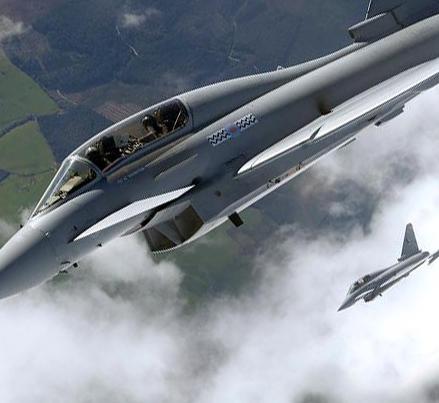
RAF Eurofighter Typhoons ‘beaten by Pakistani F-16s’
Q: Any memorable experiences that you would like to share?
A: On one occasion – in one of the international Anatolian Eagles – PAF pilots were pitted against RAF Typhoons, a formidable aircraft. There were three set-ups and in all three, we shot down the Typhoons. The RAF pilots were shocked.Q: Any particular reason for your success?A: NATO pilots are not that proficient in close-in air-to-air combat. They are trained for BVR [Beyond Visual Range] engagements and their tactics are based on BVR engagements. These were close-in air combat exercises and we had the upper hand because close-in air combat is drilled into every PAF pilot and this is something we are very good at.
Analysis
Health Matters – Clean Your Kidneys
CLEAN YOUR KIDNEYS IN
LESS THAN Rs 1.00
Years pass by and our kidneys are filtering the blood by removing salt, poison and any unwanted entering our body. With time, the salt accumulates and this needs to undergo cleaning treatments and how are we going to overcome this?
It is very easy, first take a bunch of parsley (MALLI Leaves) KOTHIMBIR (HARA DHANIYA)and wash it clean
Then cut it in small pieces and put it in a pot and pour clean water and boil it for ten minutes and let it cool down and then filter it and pour in a clean bottle and keep it inside refrigerator to cool.
Drink one glass daily and you will notice all salt and other accumulated poison coming out of your kidney by urination also you will be able to notice the difference which you never felt before.
Parsley is known as best cleaning treatment for kidneys and it is natural.
Compiled by Farah Wankadia
Golden Words – Kindness
| “How lovely to think that no one need wait a moment. We can start now, start slowly, changing the world. How lovely that everyone, great and small, can make a contribution toward introducing justice straightaway. And you can always, always give something, even if it is only kindness!” |
| Anne Frank (1929-1945);
diarist |
Amazing Website For Quran Shareef
Below mentioned is an amazing website for the Holy Quran. Just put the mouse on any line and you will find the translation of that line or you can click the translation in the top of the page in the left corner for the entire Surah. In the left side for this website you can choose Surah (from all 114 Surah). Moreover you can choose any Aayah, can search by the page number and also you can select the Qari whose recitation you want to listen.
Compiled by Farah Wankadia
Holy Prophet (PBUH) in dream asked Jinnah to lead Muslims
Quaid related his dream to Allama Usmani, Chaudry Fazl-e-Haque quotes Usmani
Islamabad—As against general impression that the Quaid-i-Azam Mohammad Ali Jinnah had returned to India from London in end 1934 on persuasion by prominent Muslim leaders, the new evidence proves that the Quaid decided to end his self exile after he dreamt of the Holy Prophet (PBUH) who asked him to go to India and lead the Muslims in their struggle for a separate homeland for the Muslims of South Asia.
During an exclusive interview with Pakistan Observer, former Interior Secretary, Chaudry Fazl-e-Haque, talked about some episodes relating to his meetings with Quaid-i-Azam and Allama Shabbir Ahmed Usmani who were kind to him for his devotion to the cause of Pakistan.
Chaudry Fazl-e-Haque, now in 90s, who had frequent chances to meet with Quaid-i-Azam and Quaid’s very close associate and confidant, Allama Shabbir Ahmed Usmani, said that Mr Jinnah had told Allama about his dream, in New Delhi when the Pakistan movement had been launched by the Quaid. The Quaid-i-Azam asked Allama Shabbir Ahmed Usmani not to mention the dream to anyone during his (Quaid’s) life time.
Chaudry Fazl-e-Haque as a great devotee of Quaid-i-Azam would visit him in New Delhi during 1940s when he was also there. The Quaid though living in Bombay visited the Indian Capital during assembly sessions, meetings with viceroy, party conferences and exchanges of views with Congress leaders. The Quaid was kind to him and met him briefly after his breakfast. It was there that he developed his relationship with Allama Shabbir Ahmed Usmani who also frequently visited the Quaid in the morning before Mr. Jinnah took up his day,s work.
After the emergence of Pakistan, Allama Shabbir Ahmed Usmani migrated to Karachi where he had the unique honour of unfurling national flag at the ceremony marking the Independence Day in the presence of the Founder of the State. After the demise of Quaid-i-Azam, Chaudry Fazl-e-Haque who was serving the police department in Karachi, had frequent meetings with Allama Shabbir Ahmed Usmani. During those meetings the main topic was naturally the personality of the Founder of Pakistan. As both the Allama and Chaudry were highly devoted to Quaid-i-Azam, they would fondly recall moments they had the privilege to have spent with him. During one such meeting between the two, the topic was Return of the Quaid to India in 1934 and his assumption of All India Muslim League’s leadership. When Chaudry Fazl-e-Haque talked about people who as common belief had been, motivated Mr. Jinnah to return to India and assume their leadership, Allama Shabbir Ahmed Usmani spontaneously reacted saying the reality was something else. And then he narrated an episode, that had never been mentioned by anyone. The Allama said that a couple of years before the emergence of Pakistan, he was discussing something with Mr. Jinnah and there was a reference to his return to India in 1934. When Allama Shabbir Ahmed Usmani mentioned names of the people who he believed had motivated the Quaid to end his exile, Mr. Jinnah said it was not the correct impression. He told Allama Shabbir Ahmed Usmani about his dream of Prophet Mohammad (PBUH) and said he had returned to India in 1934 on order by the Prophet (PBUH) he loved most.
Allama Shabbir Ahmed Usmani quoted the Quaid-i-Azam as saying:
“One evening, I was strolling in the lawn of my house in London when I smelt a unique fragrance. First I thought it was temporary phenomenon but the fragrance continued to prevail in the air. I could not understand as to what was the source of that fragrance. I decided to go to sleep. I could not sleep for quite some time. During sleep I saw a holy personality in my dream. The holy personality addressed me: ‘I am Prophet Mohammad (PBUH). I order you to go to India and lead the Muslims to their destiny. After the dream I awoke and started preparation for my return journey to India’.
Though Founder of Pakistan, Quaid-i-Azam Mohammad Ali Jinnah outwardly looked to be a Westernized man in terms of life-style, he had deep love for the Prophet (PBUH) and the Muslims of South Asia. That was the reason why he had devoted his life and all to the cause of the Muslims and fought relentlessly to attain rights they had been deprived of.
People who have studied various phases of the Pakistan Movement and political career of Mr. Jinnah or those who have had access to Quaid’s associates, are convinced that the Founder of Pakistan took guidance from the Holy Quran and life of the Holy Prophet (PBUH). This scribe has been meeting with such people including the President, Nazriya Pakistan Council (NPC) Trust to have a better understanding of the Pakistan Movement and personality of the man who had emerged as the Sole Spokesman of the Muslims of the sub-Continent. They all agree that the Quaid’s commitment to the cause of the Muslims had no bounds. This scribe came to know that a former senior bureaucrat Chaudry Fazl-e-Haque, during his youth had chances of meeting the Quaid-i-Azam in New Delhi and also Quaid’s close associate Allama Shabbir Ahmed Usmani.
The testimony given by Chaudry Fazl-e-Haque clearly shows two facts: One that Quaid-i-Azam took up his mission after he was asked to return to India by the Holy Prophet (PBUH) in dream. This also shows his devotion to the Holy Prophet (PBUH). Two: That Pakistan came into being with the blessing of the Holy Prophet (PBUH).
There are several events that indicate Quaid’s love for the Holy Prophet (PBUH). He had selected Lincoln Inn for his study of law in London when he was only a young boy. During the struggle for Pakistan, he on several occasions, stressed that the best role model for the Muslims in every respect is the Holy Prophet (PBUH). He always said that teachings of Islam as provided in the Holy Quran and exemplified by life of the Holy Prophet were relevant for all times and climes.
Link of Pakistan Observer :- http://pakobserver.net/detailnews.asp?id=97440