Archive for January, 2026
War and Cricket Cannot Coexist
 January 25th, 2026 |
  Author:
 Pakistan and Bangladesh together account for nearly half a billion people. If the International Cricket Council (ICC) thinks it can trample over the sentiments of this vast cricket-loving population to appease Indian political pressure, then it should abandon the illusion of neutrality altogether. Such conduct only hastens the ICC’s descent into an Indian Cricket Council, one that sacrifices fairness, inclusivity, and credibility for dominance, and in doing so signs its own death warrant.
From Pakistan’s standpoint, the hypocrisy is blatant. How is Pakistan expected to share a World Cup stage with India when Indian leaders openly declare that the May 25 war with Pakistan was never called off? This is not rhetoric; it is an admission of ongoing hostility. The situation becomes even more indefensible when India continues its acts of aggression by effectively suspending and violating the Indus Waters Treaty, using water as a weapon against millions of civilians.
You cannot preach peace through sport while waging undeclared war through words, policies, and treaties. Cricket cannot be used as a propaganda tool to whitewash continuous hostility. Forcing Pakistan to participate under these conditions is not “keeping politics out of sport”, it is enforcing political coercion through sport.
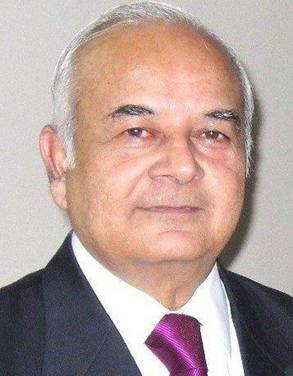
Syed Nayyar Uddin Ahmad
Lahore – Pakistan
+92 321 9402157
25th January, 2026
nayyarahmad51@gmail.com The writer is a senior corporate leader and strategic analyst. His thought-provoking visionary insights have reshaped global discourse, capturing the attention of world leaders. His writings have not only resonated with heads of state and governments but have also influenced the foreign policies of the United States and other major powers.
From Vision to Execution: Recommendations for the Prime Minister’s Civil Service Reform Drive
In a high-stakes move to reform the country’s entrenched bureaucracy, Prime Minister Shehbaz Sharif on Wednesday ordered the swift development of bold recommendations for a comprehensive system to evaluate the performance of federal secretaries, signalling a major overhaul of the civil service. Stressing the urgency of reform, he said that aligning the civil service with international standards was no longer optional but essential for improving governance, adding that these sweeping changes were crucial to bringing the country’s civil administration in line with global best practices.
In this connection, given below are practical, implementable recommendations for the Prime Minister of Pakistan to ensure that his vision for bold, forward-looking civil service reforms is anchored in an AI-enabled performance evaluation system for federal secretaries, one that is credible, bias-resistant, and genuinely transformative, rather than yet another bureaucratic formality.
Below are practical, implementable recommendations for the Prime Minister of Pakistan to ensure that his vision for bold, forward-looking civil service reforms is anchored in an AI-enabled performance evaluation system for federal secretaries, one that is credible, bias-resistant, and genuinely transformative, rather than yet another bureaucratic formality.
1. Establish a Clear, AI-Ready Performance Framework (Before Technology)
Why it matters: AI cannot fix a flawed evaluation design. It only scales what already exists.
Recommendations:
Define 5–7 core performance pillars common to all federal secretaries, such as:
- Policy delivery & outcomes
- Budget utilisation efficiency
- Inter-ministerial coordination
- Reform implementation speed
- Public service impact (citizen-facing results)
- Integrity & compliance
Each pillar should have quantifiable indicators (KPIs) rather than narrative assessments.
Limit discretionary scoring to no more than 15–20% of total evaluation.
👉 This ensures AI works on measurable facts, not personal opinions.
2. Use AI as an “Evaluator of Evidence,” Not an Arbitrator of Power
Key Principle: AI should analyze data, not replace human accountability.
How to apply AI:
Feed AI systems with:
Cabinet decisions implementation timelines
- PSDP project completion data
- Audit reports (PAC, Auditor General)
- Budget absorption rates
- Parliamentary question response times
- Citizen complaint portals (PMDU, Pakistan Citizen Portal)
AI should:
Detect patterns of delays, inefficiencies, or improvements
Flag inconsistencies between reported and actual performance
Compare performance across ministries and over time
👉 AI evaluates evidence, while final decisions remain with elected leadership.
3. Bias Elimination Through Algorithmic Safeguards
To prevent political, regional, or personal bias:
Mandatory safeguards:
Blind scoring: AI evaluates anonymised performance data (no name, cadre, province).
Peer benchmarking: Performance compared only with secretaries managing similar-sized ministries.
Time-series analysis: Focus on improvement trajectory, not one-off outcomes.
Outlier detection: AI flags unusually high or low scores for independent review.
👉 This protects competent officers from victimisation and exposes underperformance.
4. Introduce 360° Performance Signals, Without Turning It into a Popularity Contest
Balanced inputs should include:
- Ministerial objectives (structured, not open-ended)
- Subordinate feedback (weighted lightly, anonymised)
- Inter-ministerial collaboration scores
- Independent data sources (audits, project dashboards)
AI role:
- Filter emotional or retaliatory feedback
- Identify recurring issues mentioned across multiple sources
- Ignore single-source complaints unless corroborated
👉 This avoids politicisation while still capturing ground realities.
5. Real-Time Dashboards for the Prime Minister’s Office
What the PM should see:
- Live performance dashboards of all federal secretaries
- Red/amber/green status on reform delivery
- Early-warning alerts for delayed flagship initiatives
- Comparative performance trends (quarterly and annual)
Why this is game-changing:
- Moves PM oversight from reactive to predictive
- Reduces dependence on selective briefings
- Makes performance discussions fact-based
6. Link Evaluation Outcomes to Clear Consequences
Without consequences, even the best AI system will fail.
Recommended actions:
Top 20% performers:
- Accelerated promotions
- Prestigious postings
- International training opportunities
Bottom 20% (after due process):
- Mandatory performance improvement plans
- Reassignment to less critical roles
- Early retirement options (where legally possible)
👉 Merit must be visible, and underperformance must have costs.
7. Independent AI Governance & Oversight Body
To build trust within the civil service:
Create an Independent Performance Evaluation Unit reporting directly to the PM
Include:
- AI experts
- Governance specialists
- Retired senior civil servants with reform credibility
Mandate annual algorithm audits to ensure:
- No systemic bias
- Transparency in scoring logic
- Compliance with law and service rules
8. Start with a Pilot, Then Scale Fast
Suggested approach:
- Pilot the system in 5 key ministries (Finance, Planning, Energy, Health, Commerce)
- Run parallel evaluations (traditional + AI) for 6 months
- Refine indicators before nationwide rollout
👉 Speed with credibility is better than rushed failure.
9. Communicate Reform as Protection for the Honest Officer
For success, narrative matters.
PM’s messaging should emphasise:
- AI protects officers from arbitrary decisions
- Performance, not connections, will define careers
- Reform is about empowerment, not punishment
👉 This will reduce resistance and win buy-in from competent officers.
Final Strategic Insight
If implemented correctly, an AI-enabled, bias-resistant evaluation system can become:
- The most powerful civil service reform since independence
- A lasting institutional legacy beyond any single government
- A model for provincial and SOE reforms
The key is not technology alone, but disciplined leadership, clear rules, and unwavering political will.
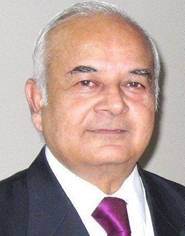
Syed Nayyar Uddin Ahmad
Lahore – Pakistan
+92 321 9402157
18th January, 2026
nayyarahmad51@gmail.com The writer is a senior corporate leader and strategic analyst. His thought-provoking visionary insights have reshaped global discourse, capturing the attention of world leaders. His writings have not only resonated with heads of state and governments but have also influenced the foreign policies of the United States and other major powers.
Proposal for Expediting the Placement of Skilled Pakistani Workforce in Gulf Countries and Other Developed Markets
Submitted for the kind consideration of the Prime Minister of Pakistan
Background
In line with the Prime Minister’s recent directives, as reported in the press, regarding the expedited placement of Pakistani manpower in Gulf countries, there is a compelling opportunity to fundamentally transform Pakistan’s economic outlook through a strategic shift from low-paid, unskilled labor export to high-value, certified skilled workforce export.
At present, millions of Pakistani expatriate workers are employed abroad at very low remuneration levels, primarily due to the lack of internationally recognized skills training and certification. This has constrained Pakistan’s remittance potential despite the large size of its overseas workforce.
Problem Statement
While Gulf and other developed countries have a severe shortage of skilled tradespeople, Pakistan exports predominantly low-skilled or semi-skilled labor, resulting in:
- Low wages for Pakistani workers abroad
- Underutilization of Pakistan’s young and capable workforce
- Missed opportunities for exponential growth in remittances
Highly paid and consistently in-demand trades abroad include:
- Culinary arts (chefs, bakers, food technologists)
- Plumbing and sanitary services
- Electrical and power technicians
- Nursing and allied healthcare services
- Automobile repair and diagnostics
- Hairdressing, beauty, and personal care services
These professions command multiple times higher salaries compared to general labor categories in Gulf countries, Europe, East Asia, and North America.
Strategic Opportunity
If Pakistan systematically trains and exports workers who are:
- Professionally skilled
- Certified by world-recognized institutions
- Aligned with international labor market requirements
then Pakistan can increase its annual remittances by more than USD 150 billion within the next three to four years, according to conservative projections based on wage differentials and demand trends.
Such an increase in remittances has the potential to:
- Stabilize foreign exchange reserves
- Reduce reliance on external borrowing
- Strengthen the Pakistani rupee
- Improve household incomes and poverty indicators
- Rapidly alter Pakistan’s economic landscape in a short timeframe
- Proposed Policy Measures
To achieve this objective, the following measures are proposed for immediate consideration and implementation:
1. National High-Value Skills Export Initiative
Launch a focused national program under NAVTTC/TEVTAs to prioritize highly paid international trades, particularly those in demand in Gulf countries.
2. International Certification Framework
Partner with world-recognized certification bodies (e.g., City & Guilds, Pearson, NVQs, international nursing councils, global hospitality institutes) to ensure Pakistani workers meet global standards.
3. Fast-Track Digital Skill Mapping
Leverage complete digitization and online monitoring (as already directed by the Prime Minister) to:
- Map skilled workers in real time
- Match them with overseas demand
- Track placement, wages, and performance
4. Ministry-Led Overseas Placement Drive
Direct the Ministry of Overseas Pakistanis and the Ministry of Foreign Affairs to:
- Secure government-to-government labor agreements
- Negotiate skill-specific quotas with Gulf states
- Promote Pakistan as a reliable supplier of certified skilled manpower
5. Apprenticeship and Industry Linkages
Ensure strict implementation of the Apprenticeship Law by linking training institutes with:
- Hotels, hospitals, workshops, and construction firms
- Domestic and international employers
6. Youth-Focused Skill Transformation
Target Pakistani youth with structured pathways from training → certification → overseas employment, reducing unemployment while maximizing national returns.
Expected Outcomes
If implemented with urgency and coordination, this strategy will:
Shift Pakistan from low-wage labor export to high-income skill export
- Multiply remittance inflows within 3–4 years
- Enhance Pakistan’s reputation as a skilled manpower hub
- Deliver rapid and sustainable economic gains
Conclusion:
Pakistan’s young workforce is rich in potential but under-leveraged. By emphasizing the export of trained, certified, and globally competitive skills, the Government of Pakistan can unlock unprecedented economic benefits in a very short time.
This proposal fully aligns with the Prime Minister’s vision of modernizing vocational training, accelerating overseas employment, and maximizing the value of Pakistani human capital.
Submitted with utmost respect for kind consideration and necessary directions.
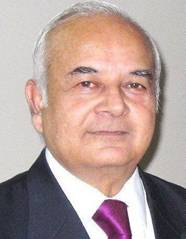
Syed Nayyar Uddin Ahmad
Lahore – Pakistan
+92 321 9402157
14th January, 2026
nayyarahmad51@gmail.com The writer is a senior corporate leader and strategic analyst. His thought-provoking visionary insights have reshaped global discourse, capturing the attention of world leaders. His writings have not only resonated with heads of state and governments but have also influenced the foreign policies of the United States and other major powers.
From Pakistan, With Love — To All Indians
New Year 2026 Greetings
As the new year 2026 unfolds, we extend our heartfelt wishes to the people of India for peace, stability, and prosperity. This message from Pakistan comes not as a gesture of weakness, nor as rhetoric, but as a confident appeal rooted in realism, dignity, and goodwill.
If friendship is to exist between our two nations, it must be sincere and meaningful, not symbolic, selective, or hypocritical. True friendship cannot flourish amid double standards, nor can peace endure where mistrust is cultivated as policy.
Pakistan today stands as a strong, resilient, and fully capable country, secure in its sovereignty and firm in its deterrence. This strength is not meant for aggression, but for stability. At the same time, the strategic reality of our region is undeniable: neither India nor Pakistan can conquer the other without inviting mutual destruction. Conflict between us promises no victor; only irreversible loss.
So why must we continue to exhaust our energies on imagined hatreds and inherited animosities? Why remain captives of a painful past when the future calls for wisdom, restraint, and vision?
Let this new year be a conscious moment of renewal.
Ring out the old, ring in the new,
Ring, happy bells, across the snow:
The year is going, let him go;
Ring out the false, ring in the true.
Let us choose genuine peace which must be grounded in mutual respect and strategic balance. Let fear give way to confidence, and provocation to dialogue. Let both nations feel secure enough to step back from perpetual confrontation and redirect their immense potential toward human progress.
Ring out the false pride of place and blood,
The civic slander and the spite;
Ring in the love of truth and right,
Ring in the common love of good.
Ring out old shapes of foul disease,
Ring out the narrowing lust of gold;
Ring out the thousand wars of old,
Ring in the thousand years of peace.
Let us fight the real enemies that plague our peoples with poverty, hunger, disease, ignorance, and inequality. Let us imagine a subcontinent known not as a nuclear flashpoint, but as a cradle of civilisation, commerce, culture, and compassion.
India and Pakistan need only a single uninterrupted decade of authentic and sustained peace to transform South Asia into one of the most powerful economic and cultural regions of the world. The condition is simple yet profound: peace must be genuine, consistent, and mutual; like the peace that binds today’s Europe.
Why should India and Pakistan continue to live like a divided Korea: eternally mobilised, mistrustful, and frozen in hostility? Why can we not live like a united Europe? Europe, once shattered by centuries of conflict and two world wars, chose reconciliation over revenge; and today reaps the dividends of peace, integration, and shared prosperity.
Both India and Pakistan are nuclear-armed states. War between us is not courage; it is collective suicide. Even the illusion of “limited war” is a dangerous fantasy. Any escalation risks destruction so vast that it would poison not only our lands, but the future of generations to come.
Peace, therefore, is not a concession. It is the highest form of strategic wisdom.
Disputes will remain; no neighbours are without differences. But civilisation advances when peace is given priority over provocation, and dialogue over dogma.
Let us make a new beginning with the simple and humane resolve:
Long live the friendship of the teeming millions of India and Pakistan.
With respect, confidence, and sincere hope for a peaceful and prosperous year ahead.
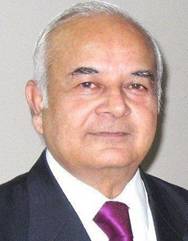
Syed Nayyar Uddin Ahmad
Lahore – Pakistan
+92 321 9402157
1st January, 2026
nayyarahmad51@gmail.com The writer is a senior corporate leader and strategic analyst. His thought-provoking visionary insights have reshaped global discourse, capturing the attention of world leaders. His writings have not only resonated with heads of state and governments but have also influenced the foreign policies of the United States and other major powers.