Archive for April, 2026
🌍 When Praise Becomes a Portal: Can Pakistan Turn Global Applause into a National Renaissance?
 April 27th, 2026 |
  Author:
 In the theater of international politics, where words are often measured, coded, and cautiously delivered, moments of unreserved praise stand out like comets across a guarded sky. Recently, such a moment arrived when the U.S. President Donald Trump openly lauded Pakistan, its leadership, and its potential role in shaping peace.
“I think Pakistan is terrific. The field marshal (Asim Munir) is fantastic. I think the prime minister of Pakistan (Shehbaz Sharif) is great… they would like to see something happen.”
These are not routine diplomatic pleasantries. They are signals, rare, potent, and brimming with possibility.
The question is not whether these words matter. The question is: will Pakistan act as if they do?
A Window That History Rarely Opens
Nations, much like individuals, are seldom handed moments of unambiguous goodwill, especially those burdened with complex histories, internal struggles, and external skepticism. For Pakistan, a country that has navigated nearly eight decades of turbulence, political instability, economic fragility, security challenges, this moment feels different.
It is not merely about praise from Washington. It is about a shift in tone, a softening of posture, and perhaps even a readiness for re-engagement at the highest levels of global influence.
Opportunities like this do not linger. They evaporate, quietly, decisively, if not seized with clarity and urgency.
From Symbolism to Substance
The real test of leadership begins now.
Warm words must be translated into tangible, hard outcomes, economic revitalization, diplomatic leverage, and structural reform. Pakistan’s leadership faces a defining choice: treat this as a fleeting headline or as a launchpad for transformation.
The stakes could not be higher. Millions of Pakistanis continue to grapple with inflation, unemployment, and systemic inequities. For them, geopolitical goodwill is not an abstract concept; it must become jobs, stability, and dignity.
This requires speed, coherence, and vision:
Re-engaging global investors with credible reforms
Leveraging strategic positioning for regional trade corridors
Strengthening governance frameworks to inspire trust, both domestic and international
Without these, praise risks becoming yet another echo in the chamber of missed opportunities.
A Blueprint Already on the Table
What makes this moment even more compelling is that the roadmap does not need to be invented from scratch. A comprehensive vision has already been articulated in “From Brinkmanship to Breakthrough: A Regional Compact Anchored in Pakistan.”
At its core, that framework imagines a Pakistan that moves beyond reactive geopolitics toward proactive regional leadership anchored in peace, equity, and justice. It calls for a pivot from survival mode to strategic growth, from isolation to connectivity, and from uncertainty to institutional strength.
In essence, it dares Pakistan to stop managing crises; and start shaping its destiny.
The Burden of Possibility
History is not kind to nations that fail to recognize their turning points. And make no mistake, this is one.
Global goodwill, especially from influential power centers, is not a guarantee of success. It is merely an invitation. Accepting it requires courage. Acting on it demands discipline.
Pakistan today stands at a rare intersection: acknowledged abroad, challenged at home, and poised; if it chooses, to redefine itself.
The applause has been given.
The spotlight is on.
Now comes the harder part: delivering a performance worthy of it.
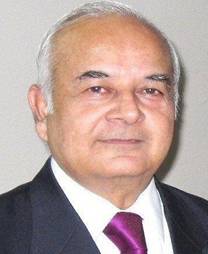
Syed Nayyar Uddin Ahmad
Lahore – Pakistan
+92 321 9402157
27th April, 2026
nayyarahmad51@gmail.com The writer is a senior corporate leader and strategic analyst. His thought-provoking visionary insights have reshaped global discourse, capturing the attention of world leaders. His writings have not only resonated with heads of state and governments but have also influenced the foreign policies of the United States and other major powers.
A Rare Independent Diplomatic Effort Shaping International Perceptions in Support of Pakistan
This brief presents verifiable evidence; drawn from official concerned government links, of letters authored by Syed Nayyar Uddin Ahmad to the leadership of 11 countries: Japan, the United States, the European Union, the United Kingdom, Germany, France, Norway, Denmark, Belgium, Finland, and Iceland.
These communications to eleven leaders are documented with proofs to have produced immediate and favorable outcomes for Pakistan, contributing to a shift in foreign policy perspectives. Notably, they countered and defeated India’s stated objective of diplomatically isolating Pakistan on allegations of terrorism sponsorship.
What makes this effort exceptional is that it was undertaken independently, outside formal diplomatic channels, an exceptionally uncommon phenomenon in international relations.
This initiative was pursued despite serious personal risks, including a written death threat routed via Russia ostensibly from the Indian secret agency RA&W and a high caliber bullet attack on the author’s residence.
Further details and supporting references are available here:
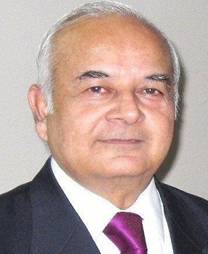
Syed Nayyar Uddin Ahmad
Lahore – Pakistan
+92 321 9402157
22nd April, 2026
nayyarahmad51@gmail.com The writer is a senior corporate leader and strategic analyst. His thought-provoking visionary insights have reshaped global discourse, capturing the attention of world leaders. His writings have not only resonated with heads of state and governments but have also influenced the foreign policies of the United States and other major powers.
From Brinkmanship to Breakthrough: A Regional Compact Anchored in Pakistan
At a moment when a fast-escalating, over six-week Gulf war between Iran, the United States plus Israel appeared to be hurtling toward a third world war, the decisive diplomatic intervention of Pakistan helped secure a ceasefire. Islamabad’s steady engagement, shuttle diplomacy, and credibility with multiple sides averted a catastrophic spiral. That sterling role in preserving world peace deserves more than polite acknowledgment; it calls for a strategic, forward-looking response that consolidates peace through shared prosperity.
The time is ripe to move from ad hoc crisis management to a long-term regional compact. A bold but structured proposal is the creation of a $2 trillion Pakistan Development Partnership Fund (PDPF) over 20 years; phased, performance-linked, and co-invested by Gulf states, the United States and other partners. This is not aid; it is strategic investment in a country that has demonstrated its credentials as a net security provider and credible diplomatic stabilizer, sitting at the crossroads of South Asia, Central Asia, and the Middle East.
In view of its demonstrated leadership in averting a major global conflict and its growing role as a stabilizing force, the international community must now move beyond symbolic acknowledgment. The United Nations and major world powers should immediately consider the immediate induction of Pakistan as the sixth permanent member of the UN Security Council. Such a step would not only recognize Pakistan’s proven military and diplomatic credentials at the world stage, as a top-tier security provider and harbinger of global peace, but would also make the Security Council more representative and effective in a rapidly evolving multipolar world. Moreover, it will be in the own interest and image of BRICS to approve Pakistan’s membership, sooner than later.
A durable framework must be inclusive. China should deepen its role, particularly considering its impressive $400 billion investment plan in Iran by expanding infrastructure into energy security corridors; notably oil and gas pipelines and high-capacity rail and transport links from Gwadar Port and Iran to western China via Gilgit-Baltistan, ensuring long-term energy security and reducing maritime vulnerabilities. Russia can contribute to regional energy systems, grid stabilization, and transit diplomacy. Central Asia, including Azerbaijan, Kazakhstan, Uzbekistan, and Turkmenistan, stands to benefit from southbound connectivity to warm-water ports and diversified trade routes. Iran and Turkey are indispensable partners in industrial, technological, and economic integration with Pakistan, linking energy, manufacturing, and innovation ecosystems across regions.
Stability in Afghanistan remains central to any regional design. A pragmatic approach, combining humanitarian stabilization, economic corridors, and conditional engagement; can transform Afghanistan from a persistent fault line into a connectivity bridge between Central Asia and the Arabian Sea.
No regional vision can succeed without sustainable peace between Pakistan and India; two nuclear powers that cannot afford another escalation. The unresolved issue of Kashmir remains the central impediment. A credible pathway lies in reactivating a process under the auspices of the United Nations, consistent with UN Security Council resolutions, to enable the right of self-determination for Kashmiris through a plebiscite. Moreover, Kashmir imbroglio is not a Pakistan-India bilateral but an international issue, which is evident from the presence of the United Nations Military Observer Group in India and Pakistan, which also provides an institutional foundation for ceasefire monitoring and confidence-building. Simply put, Indo-Pak peace is indispensable for global peace and no more a bilateral dispute of Pakistan and India, in which China is also an extremely important stake holder, as well.
As Gulf nations and Iran rebuild after the conflict, Pakistan is uniquely positioned to export up to ten million skilled and semi-skilled workers, accelerating reconstruction while generating employment and remittance inflows. This reconstruction dividend can be aligned with vocational training and certification frameworks under the broader development initiative.
The proposed $2 trillion fund should be deployed in phased tranches, tied to governance reforms and measurable outcomes with strict third-party oversight. Its core pillars would include the development of twenty futuristic, climate-resilient and AI-enabled cities to accommodate population growth; large-scale infrastructure and connectivity projects linking regional markets; energy transformation through renewables and integrated grids; and an industrial and technological leap focusing on advanced manufacturing, minerals, rare earth resources, and innovation partnerships.
Pakistan’s transformation must be broad-based and inclusive, spanning agriculture through precision farming and agro-industrial value chains; industry through export diversification and mineral development; services including finance, logistics, and healthcare; the AI and digital economy through nationwide connectivity and innovation ecosystems; education through technical training and research partnerships; and tourism through sustainable development of natural and cultural assets. To unlock such scale, credibility must be institutionalized through transparency, independent oversight, digital monitoring, and strict performance benchmarks, with structural reforms embedded into the financing framework.
It should not be necessary to remind the world, and the United States in particular, of the immense human, material, and opportunity costs Pakistan has borne, and continues to bear, for supporting the 49-nation coalition in the Afghanistan war as a principal frontline state throughout the two-decade War on Terror. Since 2001, Pakistan has suffered losses conservatively estimated at over one trillion dollars, alongside the sacrifice of more than one hundred thousand civilian and uniformed lives. These are not abstract figures; they represent a staggering national burden; an unfinished and largely unacknowledged legacy of the War on Terror.
The United States should assume a leading role in seizing this historic opportunity to help establish the proposed $2 trillion Pakistan Development Partnership Fund (PDPF). Such moments of convergence are exceedingly rare—defined by a narrowly averted global conflict, effective diplomacy, and a shared determination to prevent catastrophe. By grounding peace in economic interdependence and inclusive growth, the region can transform crisis into enduring opportunity. In the period ahead, the international community may once again look to Pakistan to play a constructive and stabilizing role in advancing efforts toward a just and lasting resolution of the Palestine crisis.
The ceasefire was the first step; a bold, cooperative development compact; centered on Pakistan but globally supported, can ensure it becomes the foundation of a more peaceful and prosperous world.
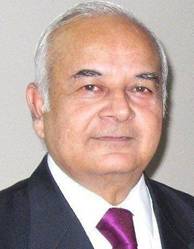
Syed Nayyar Uddin Ahmad
Lahore – Pakistan
+92 321 9402157
8th April, 2026
nayyarahmad51@gmail.com The writer is a senior corporate leader and strategic analyst. His thought-provoking visionary insights have reshaped global discourse, capturing the attention of world leaders. His writings have not only resonated with heads of state and governments but have also influenced the foreign policies of the United States and other major powers.
From Gulf Peace to Global Power: How Pakistan’s Diplomacy is Forging an Economic Renaissance
In an era marked by volatility and fractured alignments, Pakistan has emerged—not merely as a participant but, as a poised, principled, and profoundly consequential architect of restraint in the unfolding Gulf crisis. With a diplomatic agility that borders on the extraordinary, Islamabad has woven together channels of influence stretching from Tehran to Washington, from Riyadh to Beijing, demonstrating a rare capacity to be heard, trusted, and respected across deeply divided geopolitical fault lines. This is not routine diplomacy; it is strategic statecraft of the highest order; measured, credible, and quietly transformative.
Pakistan’s role stands out for its combination of moral clarity and pragmatic finesse. It has refused the temptations of rhetorical excess while simultaneously amplifying the urgency of de-escalation. In doing so, it has elevated itself into a stabilizing fulcrum; a state that speaks not for blocs, but for balance; not for escalation, but for equilibrium. Its voice carries weight precisely because it is anchored in consistency: respect for sovereignty, adherence to international law, and an unambiguous prioritization of peace over posturing.
Equally remarkable is the seamless strategic synchrony between Pakistan and China, two nations operating with disciplined coherence to inject sobriety into an overheated geopolitical theatre. Their joint posture is not reactive but anticipatory; not symbolic but substantive. It signals the emergence of a diplomatic axis that is both credible and constructive, capable of bridging divides that others have only deepened.
Five-Point Initiative of China and Pakistan for Restoring Peace and Stability in the Gulf and Middle East Region (Beijing, 31 March 2026)
Member of the Political Bureau of the CPC Central Committee and the Minister of Foreign Affairs of the People’s Republic of China H.E. Mr. Wang Yi and Deputy Prime Minister/Foreign Minister of the Islamic Republic of Pakistan, Senator Mohammad Ishaq Dar met in Beijing on 31 March 2026 to review the situation in the Gulf and Middle East Region.
The two sides put forward the following:
I. Immediate Cessation of Hostilities: China and Pakistan call for immediate cessation of hostilities and utmost efforts to prevent the conflict from spreading. Humanitarian assistance must be allowed to all war-affected areas.
II. Start of peace talks as soon as possible. Sovereignty, territorial integrity, national independence and security of Iran and the Gulf states should be safeguarded. Dialogue and diplomacy is the only viable option to resolve conflicts. China and Pakistan support the relevant parties in initiating talks, with all parties committing to peaceful resolution of disputes, and refraining from the use or the threat of use of force during peace talks.
III. Security of nonmilitary targets. The principle of protecting civilians in military conflict should be observed. China and Pakistan call on parties to the conflict to immediately stop attacks on civilians and nonmilitary targets, and fully adhere to International Humanitarian Law (IHL), and stop attacking important infrastructure, including energy, desalination and power facilities, and peaceful nuclear infrastructure, such as nuclear power plants.
IV. Security of shipping lanes. The Strait of Hormuz, together with its adjacent waters, is an important global shipping route for goods and energy. China and Pakistan call on the parties to protect the security of ships and crew members stranded in the Strait of Hormuz, allow the early and safe passage of civilian and commercial ships, and restore normal passage through the Strait as soon as possible.
V. Primacy of the United Nations Charter. China and Pakistan call for efforts to practice true multilateralism, to jointly strengthen the primacy of the U.N., and to support the conclusion of an agreement for establishing a comprehensive peace framework and realizing lasting peace based on the purposes and principles of the U.N. Charter and international law.
Islamabad
March 31,2026
85/2026
What emerges is a masterclass in calibrated diplomacy. Pakistan’s expansive and simultaneous engagement across rival capitals underscores its rising stature as a credible interlocutor, while China’s willingness to step forward as an “honest broker” signals a maturing global role. Together, they present not just a statement, but a pathway, one rooted in legitimacy, balance, and the quiet conviction that even the most tangled imbroglio can yield to principled, persistent diplomacy.
At this decisive moment, as the Gulf conflict edges toward a likely denouement in the coming days or weeks, potentially preceding a consequential visit by the President of the United States to China; Pakistan stands at the threshold of converting diplomatic prestige into enduring economic transformation. At its core, diplomacy finds its highest purpose not merely in managing crises, but in elevating a nation to become a focal point, indeed, the “apple of the eye”, of global economic growth and development. Nowhere is this opportunity more compelling than in the rise of Karachi: already one of the most sought-after harbor during the present Gulf crisis, its geostrategic relevance has been underscored by its reliability, connectivity, and capacity under pressure. Augmented by the deep-sea capabilities of Port Qasim, Karachi presents a dual-port advantage of rare distinction, an integrated maritime gateway capable of handling the expanding currents of regional and transregional trade.
With the forward thrust of CPEC Phase II and the collaborative engagement of friendly nations, the bold declaration of Karachi as a comprehensive Special Economic, tax-free zone could catalyze its evolution into a futuristic global economic hub; surpassing even the benchmarks set by Dubai, Singapore, and Hong Kong. In doing so, Karachi would not merely expand; it would transform, emerging as the harbinger and prime mover of Pakistan’s economic renaissance, and ensuring that the dividends of peace are anchored firmly within Pakistan’s shores.
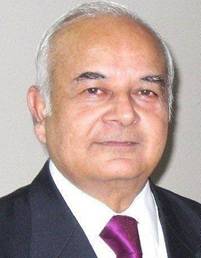
Syed Nayyar Uddin Ahmad
Lahore – Pakistan
+92 321 9402157
1st April, 2026
nayyarahmad51@gmail.com The writer is a senior corporate leader and strategic analyst. His thought-provoking visionary insights have reshaped global discourse, capturing the attention of world leaders. His writings have not only resonated with heads of state and governments but have also influenced the foreign policies of the United States and other major powers.