Archive for July, 2025
India’s False Flag Empire: How State-Sponsored Deception Risks a Nuclear Catastrophe
 July 21st, 2025 |
  Author:
 Following the Bombay High Court’s landmark decision on 20 July 2025, which acquitted 12 individuals (one of whom died during the trial) in the 2006 Mumbai train blasts case—an incident on 11 July 2006 where seven explosions on local trains along the Western Line killed 189 and injured 827 passengers, overturning convictions ranging from life imprisonment to the death penalty—the Government of India must now be recognized as the world champion of false flag operations, ruthlessly sacrificing its own citizens to advance political agendas. These acts are often orchestrated to falsely implicate Pakistan in particular, and Muslims in general, as perpetrators of terrorism.
In this context, it is noteworthy that even the Indian Supreme Court, in what remains an unprecedented collusion with the Indian government in the history of global jurisprudence, awarded the death penalty to Afzal Guru for the 2001 Indian Parliament attack, despite the court’s own admission that there was no direct evidence linking Guru to the planning or execution of the attack, and that he was not a member of any terrorist group. Shockingly, the court justified the sentence on the grounds that it would satisfy the “collective conscience of society.”
These state-sponsored false flag operations, when viewed alongside the 22 April 2025 Pahalgam killings, cast a disturbing light on India’s modus operandi. On 21 July 2025, the Indian National Congress President and Leader of the Opposition in the Rajya Sabha, Mr. Mallikarjun Kharge, fiercely criticized the Indian government over U.S. President Donald Trump’s claims of mediating a ceasefire between India and Pakistan, stating:
“I have given notice under Rule 267 on the Pahalgam terror attack and Operation Sindoor. Till today, the terrorists have not been caught or neutralized. All parties extended unconditional support to the government. The government should inform us about what has happened.”
It is crucial to highlight that Pakistani Prime Minister Shahbaz Sharif, immediately after the Pahalgam incident, condemned terrorism in all its forms, rejected baseless Indian accusations, and called for a transparent, neutral investigation into the attack. He also urged the United Nations to play its role in resolving the Jammu & Kashmir dispute in line with UNSC resolutions, affirming that Pakistan remains committed to peace but will defend its sovereignty with full force if challenged.
India’s pattern of false flag tactics is not new. A similar approach was followed in the 14 February 2019 Pulwama attack, where a suicide bomber killed 46 paramilitary personnel in Indian Illegally Occupied Jammu & Kashmir (IIOJ&K). Within hours of the attack, then Union Minister Arun Jaitley declared that India would take “all possible diplomatic steps” to isolate Pakistan from the international community. Pakistan, however, openly requested evidence and offered cooperation in the investigation—an offer that India ignored.
For nearly a decade, the BJP/RSS-led Modi government has pursued a policy of isolating Pakistan through fabricated terrorism narratives. In September 2016, Prime Minister Narendra Modi, during a speech in Kozhikode, openly vowed to launch a global campaign to isolate Pakistan.
Considering these facts, the statements of the Congress President and the Leader of the Opposition, as well as mountains of documented evidence from credible Indian and international sources regarding the genocide and war crimes committed by Indian forces in IIOJ&K, it is imperative for the entire world leadership—particularly the UN Secretary General and all G-20 leaders—to act. The testimony of Professor Gregory Stanton (Genocide Watch), warning of an impending genocide of 220 million Muslims in India, further underscores the urgency. It is a moral and legal duty to bring Indian officials and perpetrators to justice before the International War Crimes Tribunal at The Hague, and to expel India from the G-20 and all prestigious global forums. The world can no longer afford to sit alongside Prime Minister Narendra Damodar Das Modi, whose hands are stained with the blood of innocent Kashmiris and Indian Muslims.
Finally, it must be emphasized—with utmost concern—that twice (February 2019 and May 2025), the world was saved from the brink of a nuclear catastrophe between India and Pakistan only due to the intervention of U.S. President Donald Trump. Both incidents arose from Indian miscalculations and aggressive attacks against Pakistan, rooted in false flag narratives. Pakistan, despite having irrefutable evidence of India’s plans—including the 11 March 2025 Jaffer Express hijacking plot in Baluchistan—showed maximum restraint by responding proportionately and avoiding escalation.
It is, therefore, imperative for the global community—and President Trump in particular—to establish immediate control protocols to monitor India’s covert operations and military planning through a joint mechanism involving the P-5 nations. If this is not done, the world may not be fortunate enough to avoid a third and potentially uncontrollable nuclear Armageddon.
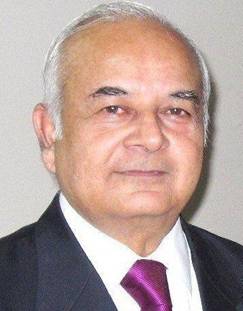
Syed Nayyar Uddin Ahmad
Lahore.
+92 321 9402157
nayyarahmad51@gmail.com The writer is a senior corporate leader and strategic analyst. His thought-provoking visionary insights have reshaped global discourse, capturing the attention of world leaders. His writings have not only resonated with heads of state and governments but have also influenced the foreign policies of the United States and other major powers.
India’s Double Game on Terrorism: From SCO Lectures to State-Sponsored Atrocities
At the recent Shanghai Cooperation Organization (SCO) summit in Tianjin, Indian External Affairs Minister S. Jaishankar made pointed remarks, emphasizing an “uncompromising position” against terrorism and warning that “nations who aid terror will pay a price.” These remarks, widely interpreted as veiled attacks on Pakistan and China, mirror a familiar Indian diplomatic playbook: project strength abroad while concealing complicity at home and beyond.
Yet, this rhetoric starkly contrasts with India’s own longstanding and systematic record of state-sponsored violence, especially in Indian-administered Kashmir, where the Indian state has been the principal actor in what many argue is one of the world’s most underreported and enduring human rights crises.
One Million Dead: Kashmir’s Long Night of Occupation
Since the first Kashmir war in 1947-48, Indian military occupation has resulted in the deaths of over one million Kashmiris, according to several rights groups and regional sources. The Indian military’s scorched-earth tactics have involved mass graves, rape used as a weapon of war, disappearances, and the maiming and blinding of thousands through indiscriminate use of pellet guns.
These atrocities are not isolated excesses—they are part of a systemic campaign of suppression against a people demanding their UN-sanctioned right to self-determination, as recognized under UN Charter Article 1(2) and Security Council Resolutions 47, 91, and 122.
False Flags and Foreign Guests: A Pattern of Manufactured Terror
Adding to the disturbing pattern is India’s alleged use of false flag operations timed around high-profile international visits. There is a documented historical trend where major terror incidents occur in India just before or during visits by U.S. Presidents or Vice Presidents, followed by an immediate campaign to pin blame externally—particularly on Pakistan—to gain diplomatic leverage and deflect scrutiny from domestic repression.
These orchestrated incidents raise grave concerns of war crimes and deliberate manipulation of both domestic and international audiences, essentially using civilian bloodshed as a diplomatic bargaining chip.
Admitted Assassinations: Indian State Terror Across Borders
Perhaps the most damning evidence of India’s double standards is the open admission by Indian leadership of its policy of extraterritorial assassinations. India has publicly declared it will “target and kill” individuals inside other sovereign countries—a practice not only illegal under international law, but a clear act of aggression.
In a chilling statement, India’s own National Security Advisor (NSA) Ajit Doval outlined the doctrine of “offensive defense,” openly admitting to using criminal networks and hired agents to carry out killings abroad. In Pakistan alone, over 20 assassinations have been traced back to Indian operatives, some of which have involved cross-border infiltration, targeted killings, and sabotage campaigns—all confirmed by credible investigations.
Kulbhushan Jadhav: The Smoking Gun of Indian Terror Operations
India’s covert activities came into global focus with the arrest of Kulbhushan Jadhav; a serving Indian naval officer caught deep inside Pakistan’s Baluchistan province. His confession—public and consistent—detailed his role in organizing terrorism and sabotage at the behest of Indian intelligence agencies. Moreover, his genuine Indian passport on pseudo name of Hussain Mubarak Patel doesn’t need any further proof of Indian government’s complicity in the whole episode of state sponsored terrorism of the government of India.
Despite India’s efforts to frame the case as a diplomatic incident, the sheer depth of his operational involvement, use of multiple fake identities, and connection to violence on Pakistani soil remain indisputable proof of Indian state terrorism.
Exporting Assassinations: From Kashmir to Canada and the U.S.
India’s reach has gone far beyond its borders. Investigations in Canada, the United States, and the United Kingdom have unearthed Indian-linked plots to assassinate Sikh dissidents and other political activists.
The murder of Hardeep Singh Nijjar in Canada and the foiled plots in the U.S. and UK reflect a dangerous normalization of extrajudicial killing as state policy—all while claiming to uphold democracy and the rule of law. These cases include wiretaps, payment trails, and agent networks, now confirmed by Western intelligence agencies and publicly acknowledged by leaders such as Canadian Prime Minister Justin Trudeau.
Conclusion: Exposing the Architects of Regional Destabilization
India’s repeated attempts to monopolize the counterterrorism narrative at platforms like the SCO must be viewed through the prism of its own extensive record of aggression, manipulation, and covert warfare. From Kashmir’s crushed hopes to international plots executed or planned against minorities, India has consistently blurred the line between national security and state terror.
The international community—especially the United Nations, OIC, and global human rights organizations—must now insist on accountability and independent investigations. Pakistan and other affected nations must continue to present these violations at every diplomatic forum until the true face of Indian policy is no longer obscured by hollow speeches or sanitized narratives.
If the world is to seriously address terrorism, it must begin by naming and confronting those states who commit it under the guise of preventing it. And in that list, India must stand at the top.
Syed Nayyar Uddin Ahmad
Lahore.
+92 321 9402157
nayyarahmad51@gmail.comThe writer is a senior corporate leader and strategic analyst. His thought-provoking visionary insights have reshaped global discourse, capturing the attention of world leaders. His writings have not only resonated with heads of state and governments but have also influenced the foreign policies of the United States and other major powers.
Field Marshal Asim Munir’s War of Clarity: Beyond Borders, Within Destiny
By the sheer Mercy of Allah (SWT), I state with unwavering conviction: Pakistan has more than avenged the deep scars of 1971 and the Siachen betrayal of 1984.
In the historic four-day war of May 25, our armed forces delivered a decisive response — striking with precision, resolve, and restraint. Over half a dozen Indian Air Force jets, including four confirmed Rafales, were brought down. Two highly vaunted S-400 air defense systems were reduced to ashes — and all this was accomplished without crossing our own borders.
This article of the The WIRE titled “Op Sindoor: Have We Trapped Ourselves in the Stunted Imagination of Our Rulers? Link:- ( https://m.thewire.in/article/world/diplomacy/op-sindoor-have-we-trapped-ourselves-in-the-stunted-imagination-of-our-rulers )
rightly offers resounding praise to the leadership of Field Marshal and Chief of Army Staff, Syed Asim Munir, whose strategic brilliance and unwavering faith inspired a national resurgence.
And as the following paragraphs reveal, the Indian leadership has been left in utter disarray — politically, militarily, and psychologically — their narratives shattered, their confidence visibly broken.
- What a colossal misreading of the enemy and his state of preparedness, worse even than Jawaharlal Nehru’s misjudgment about the Chinese intentions in 1962.
- On one side was a mean and lean general – mocked in our media as a jihadi – whose decision-making was guided by unsentimental, cold analysis, and unburdened with any “image.” On our side was an ageing leadership, frozen in its own self-exaltation and in thrall of violence irrespective of military wisdom. The “Rawalpindi” brass had sized up Modi correctly – that he would not be able to resist the clamour for “revenge” from his own constituency – and so the Pakistan Air Force was ready with a robust response.

Syed Nayyar Uddin Ahmad
Lahore.
+92 321 9402157
13th July 2025 nayyarahmad51@gmail.com The writer is a senior corporate leader and strategic analyst. His thought-provoking visionary insights have reshaped global discourse, capturing the attention of world leaders. His writings have not only resonated with heads of state and governments but have also influenced the foreign policies of the United States and other major powers.
Book Review: Pakistan in the 21st Century By Ambassador (R) Syed Hasan Javed
Book Review: Pakistan in the 21st Century
By Ambassador (R) Syed Hasan Javed
Published by: New Fakhari Printing Press, Karachi
ISBN: 978-969-7947-07-2
In Pakistan in the 21st Century, Ambassador (R) Syed Hasan Javed presents a compelling and multidimensional analysis of Pakistan’s trajectory in a rapidly evolving global order. With a distinguished diplomatic career and a prolific body of written work, Ambassador Javed brings a wealth of insight to bear on the challenges and opportunities facing Pakistan in this new century.
Drawing on decades of experience in foreign service — including extensive engagement with China, a nation that has formally recognized his contributions — the author offers an informed critique of Pakistan’s domestic dynamics, regional relations, and global positioning. His writing is characterized by clarity, intellectual rigor, and a deep-rooted sense of patriotic realism.
What sets this book apart is its forward-looking approach. Rather than offering a mere retrospective or a reiteration of familiar problems, Pakistan in the 21st Century actively explores strategic solutions for governance, education, economic reform, and foreign policy realignment. The author emphasizes the need for long-term thinking, institutional resilience, and cultural self-confidence — themes that resonate powerfully in today’s interconnected world.
Particularly notable is Ambassador Javed’s nuanced perspective on Pakistan-China relations. His insights into how Pakistan can learn from the Chinese model of development, innovation, and national cohesion are timely and thought-provoking. It is perhaps no surprise that the Chinese government has honored him in the past — his grasp of China’s rise and its implications for South Asia is both deep and pragmatic.
The book is also rich in historical context, helping readers understand Pakistan’s modern challenges against the backdrop of its past. It invites policy makers, academics, students, and engaged citizens alike to think critically about what the future could and should look like for Pakistan.
In summary, Pakistan in the 21st Century is an essential contribution to contemporary Pakistani thought. It is a work of vision, born from experience, and driven by a clear-eyed hope for a more stable, prosperous, and strategically aligned Pakistan. Ambassador (R) Syed Hasan Javed has once again proven himself to be not only a diplomat but also a statesman-scholar of rare insight.
Syed Nayyar Uddin Ahmad
5 July 2025
Lahore.
+92 321 9402157
One Letter – Two Brother PM’s
A 12 November 2014 letter to Mian Nawaz Sharif is still relevant for PM Mian Shahbaz Sharif.
Special Agenda for the PM..!
Honourable Mian Muhammad Nawaz Sharif,
AoA.
Sir,
Please note that it is the prime duty of the PM Pakistan to use all his abilities and resources at his disposal, to free Pakistan from the foreign debt, rather than allowing taking of more burden of loans, to pay off the old loans.
Already, the debt repayment situation has reached an extremely alarming level to the extent that almost more than 40% of the tax revenue goes into the debt repayment. In the coming years, the current high interest rate loan repayments may eat up almost the ENTIRE tax revenues
This grave situation may not only create unprecedented economic hardships but can badly ERODE OUR MILITARY CAPABILITIES, AS WELL; resulting in a virtual collapse of the economic and geographical sovereignty of Pakistan
Under the circumstances, no one else in the country but you, Mr. Prime Minister may take this challenge to utilise all your abilities and resources to arrange a 100% foreign debt write-off for Pakistan.
In this regard, as a first step, since you are visiting Germany from Monday, this issue may please be taken up with the German leadership, for garnering support for the write-off of the entire Pakistani foreign debt, in consideration for its services, in the War on Terror (WOT) plus the permission granted for the FREE use of Pakistan’s air space, to all the 49 nation coalition of NATO forces: which if had been charged during the last 15 years of WOT, would have amounted to earnings to Pakistan of about a trillion US dollars (1000 billion USD). Against which amount our entire foreign debt is much less than $100 billion.
Mr. Prime Minister, besides the German leadership, you should also take up this case individually, with all the 49 countries of the NATO’s alliance on WOT in Afghanistan.
Last but not least, most of the financial experts will advise you that this is a pipe dream and well neigh impossible. Sir, simply tell such advisors that in order to achieve the impossible, it is precisely the unthinkable which must be thought. Moreover, in the past as well, most of the people discouraged the Quaid-e-Azam by saying that carving an area for the creation of Pakistan from India was impossible. However, his sheer determination, unflinching conviction for his just cause and focus on solution instead of the problems, enabled him to achieve the once impossible looking task.
With best wishes and kind regards.
Syed Nayyar Uddin Ahmad
Lahore.
+92 321 9402157