Author Archive
Tomorrow’s Glory Demands Today’s Courage: Rest the Captain for the Final
 September 27th, 2025 |
  Author:
 The upcoming Asia Cup Final against India on Sunday, 28th September 2025, is not just another cricket match. It is a battle of honor, prestige, and pride for Pakistan. At such a crucial juncture, it is imperative that every decision made by the team management reflects our highest commitment to victory and national glory.
As the great scientist Albert Einstein once said: “Insanity is doing the same thing over and over again and expecting different results.” For far too long, despite repeated setbacks, we have continued with the same leadership at the helm, hoping for a different outcome. With due respect to Salman Ali Agha, his leadership has not brought the clarity, inspiration, or performance that the nation expects at this level. To continue unchanged would be to risk the most important opportunity Pakistan cricket has had in years.
This is not a matter of individuals or personalities—it is a matter of Pakistan’s honor. As rightly stated by Mr. Mohsin Naqvi on 15th September 2025, “There is nothing more important than the honor and prestige of our country.” Winning tomorrow’s final against India is not only about lifting a trophy; it is about lifting the spirit of the entire nation. At such a defining moment, we cannot afford hesitation or compromise.
Therefore, with utmost respect and in the larger interest of Pakistan cricket, it is passionately urged that Salman Ali Agha be rested for the final match. Leadership must pass into the hands of a proven performer who can inspire by example—be it Shaheen Shah Afridi with his fearless aggression, Haris Rauf with his fiery determination, or Fakhar Zaman with his bold and fearless batting. Each of them embodies the fighting spirit that can ignite the team and rally the nation behind them.
Tomorrow, millions of Pakistanis will be watching with hope in their hearts. The players will fight on the ground, but the decision we make today will decide whether they fight with fire in their souls or uncertainty in their minds. Let us not allow one individual’s position to come in the way of our collective glory. Let us be bold, decisive, and courageous, just as we expect our team to be.
This is a heartfelt and urgent request to the Pakistan Cricket Board to make the necessary leadership change for the Asia Cup Final, so that Pakistan can walk onto the field united, inspired, and unstoppable. The stakes could not be higher, and the moment demands nothing less.
Pakistan Zindabad!
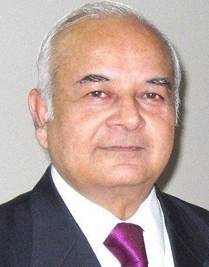
Syed Nayyar Uddin Ahmad
Lahore.
+92 321 9402157
The author is a senior corporate leader and strategic analyst. His thought-provoking visionary insights have reshaped global discourse, capturing the attention of world leaders. His writings have not only resonated with heads of state and governments but have also influenced the foreign policies of the United States and other major powers.
SMDA and Our Enhanced Responsibility
Mr. Mohsin Naqvi,
Pakistan has just earned immense prestige and respect through the Strategic Mutual Defence Agreement (SMDA) with the Kingdom of Saudi Arabia, a landmark achievement that has uplifted our nation’s image globally. This historic pact, a blessing from Allah (SWT), entrusts Pakistan with the sacred responsibility of defending the Holy Cities of Makkah and Madina. With this honour, our duty has multiplied: every decision and action must now safeguard not only Pakistan’s dignity but also the respect of our esteemed partner country. As a leading regional power, our standing in the comity of nations is now firmly bound with this trust.
In painful contrast, however, our cricket team, under your chairmanship of the PCB, is repeatedly damaging that very image, particularly through its dismal and unending streak of defeats against a specific opponent. This decline is not due to the superiority of others, but the result of repeated missteps and the PCB’s reluctance to make timely and bold corrective changes. We fully acknowledge your contributions, commitment, and hard work as Chairman PCB in revamping the cricket stadiums. However, under all circumstances the buck stops at the top, and honourable leaders are those who accept responsibility with dignity.
This situation on the international stage undermines the painstaking efforts of our hardworking Prime Minister, Muhammad Shahbaz Sharif, and our courageous and visionary COAS, Field Marshal Syed Asim Munir. Even more gravely, it diminishes the legacy of our martyrs, whose supreme sacrifices keep our flag flying with pride. Their sacred blood demands that every institution of Pakistan safeguard our national honour with all the resources at its disposal.
Sir, true leadership also means recognizing one’s limitations. If cricket administration is not your calling, then the most honourable course is to step aside and allow capable hands to restore our team’s performance and protect our nation’s image. We urge you to take this decision before the upcoming/remaining Asia Cup matches, as further damage to Pakistan’s dignity would be unbearable.
Pakistan has given us everything. In return, we owe it responsible action and protection of its honour. For the sake of our sacred homeland, its respected leadership, our partner nation, and above all our martyrs, we appeal to you to have mercy on our national image and make the right decision now. If need arises, we as a proud Pakistani must sacrifice without giving a second thought all our belongings including our ego at the altar for the sake of the image, reputation and dignity of our motherland.
In conclusion, the prayers of 240 million Pakistanis are with those who uphold our nation’s dignity. Do not let the sacrifices of our leaders, soldiers, and people go in vain. History remembers those who protect their country’s honour at defining moments, this is one such moment for you.
With best wishes,
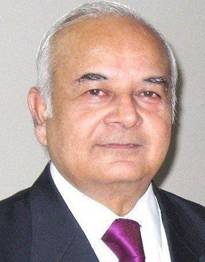
Syed Nayyar Uddin Ahmad
Lahore.
+92 321 9402157
The writer is a senior corporate leader and strategic analyst. His thought-provoking visionary insights have reshaped global discourse, capturing the attention of world leaders. His writings have not only resonated with heads of state and governments but have also influenced the foreign policies of the United States and other major powers.
Kashmir at the UN: Confronting War Crimes, Defending Human Rights
Subject: Kashmir at the UN: Confronting War Crimes, Defending Human Rights
Honourable Prime Minister,
I take the liberty of writing to you on the occasion of your forthcoming visit to New York to address the 80th Session of the United Nations General Assembly (UNGA) under the theme: “Better Together: 80 years and more for peace, development and human rights.” This historic platform and its extremely relevant theme of the 80th session offers Pakistan a vital opportunity to draw the world’s attention to the violations of the human rights of the people of the Indian Illegally Occupied Jammu & Kashmir (IIOJK) which was a great threat to the regional Peace and to reaffirm that India must be firmly restrained by the UN to call the Kashmiris as terrorists who are allowed to wage struggle for their Right of self-determination under the Charter and resolutions of the UN explained below.
India must not be allowed to camouflage its war crimes and crimes against humanity in IIOJ&K by misrepresenting Kashmiris as “terrorists.” The reality remains that the people of IIOJ&K are engaged in a legitimate struggle for their right to self-determination—a right enshrined in Articles 1 and 55 of the United Nations Charter and reaffirmed through landmark UN General Assembly resolutions 1514 (XV) (1960), 2625 (XXV) (1970), and 2649 (1970). Moreover, UN Security Council resolutions 47 (1948), 80 (1950), and 98 (1952) explicitly mandate an UN-supervised plebiscite to enable Kashmiris to determine their political future.
India’s claim that Kashmir is an “internal matter” also stands invalidated by the continuous presence of the United Nations Military Observer Group in India and Pakistan (UNMOGIP), as well as by official UN maps and documents which clearly record Kashmir as a disputed territory. This underscores the fact that the international community has neither accepted nor endorsed India’s unilateral claims.
The international community has already acknowledged the seriousness of this issue. The first-ever UN Human Rights report on Kashmir (2018), issued by the Office of the High Commissioner for Human Rights (OHCHR), called for an international inquiry into multiple violations committed in Kashmir.
Link: – https://www.ohchr.org/EN/NewsEvents/Pages/DisplayNews.aspx?NewsID=23198
This historic report underscores the urgency of addressing both past and ongoing abuses, in line with the earlier call by then-UN High Commissioner for Human Rights Zeid Ra’ad Al Hussein, who stressed the urgent need for justice for the Kashmiri people.
Furthermore, the international community has shown resolve in comparable situations. For instance, the UN recommended war crimes trials for Myanmar’s military leadership over atrocities against Rohingya Muslims, despite that crisis being considered an internal matter of Myanmar. By contrast, the situation in Kashmir, where, as per UN resolutions, mechanisms and observers are already deployed, demands even stronger and immediate action.
The Kashmir crisis has now evolved into a grave flashpoint between two nuclear-armed neighbours, threatening not only regional but also global peace and security. The systematic killings, mass detentions, disappearances, and denial of fundamental freedoms to over 10 million Kashmiri Muslims, making them the most persecuted majority population in the world, cannot remain ignored.
In this context, I respectfully suggest that your address at the 80th UNGA should:
1. Expose India’s misrepresentation of the Kashmiri freedom struggle as “terrorism.”
2. Reaffirm Kashmiris’ right to self-determination under the UN Charter and relevant UN resolutions.
3. Highlight the continuing war crimes and crimes against humanity in IIOJ&K, referencing the OHCHR’s 2018 report and calling for an independent international inquiry.
4. Call for the initiation of a war crimes tribunal against responsible Indian officials.
5. Remind the world that unresolved Kashmir threatens international peace, with the looming danger of a nuclear confrontation between Pakistan and India.
Honourable Prime Minister, the UNGA session provides a critical moment for Pakistan to renew the world’s conscience on Kashmir and to advocate for justice, peace, and human dignity.
With profound respect and prayers for your success,
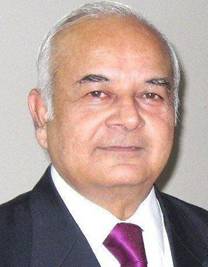
Syed Nayyar Uddin Ahmad
Lahore.
+92 321 9402157 nayyarahmad51@gmail.com The author is a senior corporate leader and strategic analyst. His thought-provoking visionary insights have reshaped global discourse, capturing the attention of world leaders. His writings have not only resonated with heads of state and governments but have also influenced the foreign policies of the United States and other major powers.
In Diplomacy, Silence is Never Neutral
From Bluster to Blind Spot: Did Pakistan Lose the Pahalgam Narrative?
When 26 civilians were killed in Pahalgam on April 22, 2025, India swiftly declared it a case of “cross-border terrorism.” Pakistan, however, flatly rejected this version and its National Security Committee announced on 24 April 2025 that “India should refrain from its reflexive blame game and cynical staged managed exploitation of incidents like Pahalgam to further its narrow political agenda”. Prime Minister Shehbaz Sharif declared the Pahalgam incident was a “false flag operation” [1]. Defence Minister Khawaja Asif told Al Jazeera that Islamabad “strongly suspect this attack was a false flag” [2]. Deputy Prime Minister and Foreign Minister Ishaq Dar strongly rejected India’s baseless propaganda [3], while the military’s DG ISPR, Lt Gen Ahmad Sharif Chaudhry, debunked India’s claim about the Pahalgam attack, accusing New Delhi of orchestrating a “religion-targeted” false-flag operation [4].
Pakistan even went a step further: Prime Minister Shahbaz Sharif addressing a passing-out parade at the Pakistan Military Academy at Kakul, said “The recent tragedy in Pahalgam is yet another example of this perpetual blame game, which must come to a grinding halt. Continuing with its role as a responsible country, Pakistan is open to participating in any neutral, transparent and credible investigation [5]. India rejected that offer for what Pakistan insists are “obvious reasons,” namely that such a probe would expose a staged operation.
Yet, when the world responded, Pakistan was missing in action.
On 29 August 2025, Japan and India issued a joint statement that “condemned in the strongest terms the terrorist attack in Pahalgam … and called for perpetrators, organisers and financiers to be brought to justice without any delay” [6].
On 6 July 2025, the BRICS Summit Declaration also “strongly condemned the terrorist attack in Pahalgam” [7].
On 2 July 2025, the Quad foreign ministers (India, US, Japan, Australia) said almost word-for-word the same [8].
In June 2025, Cyprus joined India in “strongly condemning the gruesome killing of civilians in the heinous terrorist attacks in Pahalgam” [9].
And most remarkably, Pakistan itself became a party to the September 1, 2025 SCO Tianjin Declaration of the Council of Heads of State which explicitly termed Pahalgam a terrorist attack [10]. In this regard, Prime Minister of Pakistan Shahbaz Sharif and all the functuries of the government of Pakistan which included the Deputy Prime Minister and the Foreign Minister Ishad Dar, the Foreign Secretary and the Spokesperson of the Pakistani foreign office were duly forewarned thru Most Immediate message via X (formerly Twitter) on 31 August 2025 quoted below:
Quote:
“Most Immediate for Prime Minister’s Attention
Mian Muhammad Shahbaz Sharif
Prime Minister of the Islamic Republic of Pakistan
Islamabad
Subject: Urgent Response to Expected Indian Allegations at SCO Summit
اسلام وعلیکم
Respected Prime Minister,
It is anticipated that during his address at the forthcoming Shanghai Cooperation Organization (SCO) summit, Indian Prime Minister Narendra Modi will once again attempt to malign Pakistan by invoking fabricated narratives such as the “Pahalgam incident” and allegations of so-called “cross-border terrorism.” These baseless charges are a continuation of India’s disinformation campaign aimed at deflecting international attention from its own record of war crimes, systematic human rights violations, and the genocide of minorities, particularly Muslims, in Indian Illegally Occupied Jammu & Kashmir (IIOJK) and across India.
In this context, it is imperative that Pakistan’s position be firmly articulated. Our response must emphasize the following points:
1. Pakistan categorically rejects false allegations and reiterates that it is itself a primary victim of Indian sponsored state terrorism. India has consistently sought to externalize its internal failures and divert global attention from its atrocities by projecting blame on Pakistan.
2. Pakistan calls for an independent and neutral international inquiry into the Pahalgam incident. This must include a transparent probe into:
- Documented cases of Indian cross-border killings inside Pakistan,
- Evidence of India’s sponsorship of banned terrorist organisations in Baluchistan, and
- The case of Commander Kulbhushan Jadhav, a serving Indian naval officer apprehended in Pakistan, who confessed to orchestrating sabotage, espionage, and terrorism under a false identity using a passport officially issued in a pseudo name. His presence and activities are irrefutable evidence of direct Indian state involvement in terrorism inside Pakistan.
3. India’s track record of state-sponsored terrorism is long and deliberate. Documented incidents include Jaffer Express train-jacking, subversive operations, and targeted killings engineered to destabilize Pakistan.
4. Of particular concern is India’s full-blast, openly admitted opposition to the China–Pakistan Economic Corridor (CPEC). This opposition has translated into repeated terror attacks against Chinese nationals and Pakistani citizens working on CPEC projects, resulting in deaths, injuries, and immense human suffering. Such actions represent nothing less than “India’s war of terror against Pakistan–China friendship of peace through cooperation of connectivity for development.” This is an affront not only to Pakistan and China but to the very principles of regional cooperation and economic development. Thus, the SCO must recognize the hypocrisy of a member state that, under the guise of partnership, engages in actions amounting to betrayal of two fellow members.
5. India cannot be allowed to camouflage its war crimes and crimes against humanity in IIOJK by misrepresenting Kashmiris as “terrorists.” The people of Jammu & Kashmir are engaged in a legitimate and internationally recognized struggle for their right to self-determination. This right is enshrined in Articles 1 and 55 of the United Nations Charter and reaffirmed by UN General Assembly resolutions 1514 (XV) (1960), 2625 (XXV) (1970), and 2649 (1970). Moreover, UN Security Council resolutions 47 (1948), 80 (1950), and 98 (1952) mandate a UN-supervised plebiscite to allow Kashmiris to freely determine their political future.
6. India’s actions constitute grave violations of international law. Support for terrorism in Pakistan, obstruction of regional connectivity projects like CPEC, and systemic human rights abuses in Kashmir together present a case of state-sponsored criminality that must be exposed at every multilateral platform, including the SCO.
Honourable Prime Minister, this is a crucial juncture for Pakistan to expose India’s duplicity, reject its false narratives, and place before the world irrefutable evidence of its sponsorship of terrorism and human rights violations. Pakistan must project its principled stance with clarity:
- We welcome transparency and independent verification through neutral inquiries.
- We stand by the lawful struggle of Kashmiris for self-determination.
- We demand accountability for India’s actions that endanger peace, stability, and security in the region.
Respectfully submitted for your kind consideration and necessary directions.
Yours sincerely,” Unquote.
As such, this contradiction is glaring. At home, Pakistan’s leaders told the public they had exposed a false flag. Abroad, its diplomats either quietly signed on to India’s framing or failed to register even a symbolic protest. The result is that India’s version of events has been etched into the official records of SCO, BRICS, Quad, Japan, and Cyprus.
Why does this matter? Because in diplomacy, silence is never neutral. Each unchallenged statement hardens India’s framing of Pahalgam, diminishing Pakistan’s credibility on the global stage. Worse still, this inconsistency undermines Islamabad’s wider stance on Kashmir and counter-terrorism: issues where narrative is as critical as reality.
In this world, nothing is impossible. This was proven through direct strategic communication with the Prime Minister of Japan, the President of the USA, the UK Prime Minister, the President of the European Commission, and the heads of government’s and state of Germany, France, Norway, Denmark, Belgium, Finland, and Iceland—turning the tide against entrenched Indian narratives. By challenging and dismantling the false propaganda that painted Pakistan as a sponsor of terrorism, a new diplomatic history was written.
Through persistent outreach and exceptional correspondence, this scribe corrected distorted perceptions, reshaped global policies, and fostered stronger, more balanced relationships with world powers. These unprecedented achievements of change of foreign policy of the major world powers in favour of Pakistan, which was earlier totally inclined towards the Indian narrative, was accomplished not by a career diplomat, but by the sheer commitment of an ordinary Pakistani, now stand as a testament to what dedicated communication can achieve. Indeed, they are milestones Dr. Henry Kissinger himself might have proudly endorsed [11].
In view of the foregoing, corrective steps are urgently needed. Pakistan’s Foreign Office must issue demarches to Japan, Quad members, Cyprus, and BRICS capitals, restating its position and highlighting that India refused a neutral investigation. Islamabad should also formally record reservations in future multilateral communiqués and publicise its offer for international inquiry. Most importantly, MOFA must establish an internal strategic communications cell to ensure that what is said in Islamabad is also defended abroad.
Otherwise, when history records the Pahalgam tragedy, the world will not remember Pakistan’s speeches: only its silence.
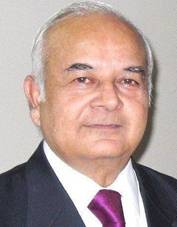
Syed Nayyar Uddin Ahmad
Lahore.
+92 321 9402157 nayyarahmad51@gmail.com The author is a senior corporate leader and strategic analyst. His thought-provoking visionary insights have reshaped global discourse, capturing the attention of world leaders. His writings have not only resonated with heads of state and governments but have also influenced the foreign policies of the United States and other major powers.
References:
[1]: https://ptv.com.pk/ptvworld/newsdetail/6917
[3]: https://radio.gov.pk/29-04-2025/dar-rejects-indias-baseless-propaganda-against-pakistan
[4]: https://www.brecorder.com/news/40360334
Urgent Response to Expected Indian Allegations at SCO Summit
Most Immediate for Prime Minister’s Attention
Mian Muhammad Shahbaz Sharif
Prime Minister of the Islamic Republic of Pakistan
Islamabad
Subject: Urgent Response to Expected Indian Allegations at SCO Summit
اسلام وعلیکم
Respected Prime Minister,
It is anticipated that during his address at the forthcoming Shanghai Cooperation Organization (SCO) summit, Indian Prime Minister Narendra Modi will once again attempt to malign Pakistan by invoking fabricated narratives such as the “Pahalgam incident” and allegations of so-called “cross-border terrorism.” These baseless charges are a continuation of India’s disinformation campaign aimed at deflecting international attention from its own record of war crimes, systematic human rights violations, and the genocide of minorities, particularly Muslims, in Indian Illegally Occupied Jammu & Kashmir (IIOJK) and across India.
In this context, it is imperative that Pakistan’s position be firmly articulated. Our response must emphasize the following points:
1. Pakistan categorically rejects false allegations and reiterates that it is itself a primary victim of Indian sponsored state terrorism. India has consistently sought to externalize its internal failures and divert global attention from its atrocities by projecting blame on Pakistan.
2. Pakistan calls for an independent and neutral international inquiry into the Pahalgam incident. This must include a transparent probe into:
- Documented cases of Indian cross-border killings inside Pakistan,
- Evidence of India’s sponsorship of banned terrorist organisations in Baluchistan, and
- The case of Commander Kulbhushan Jadhav, a serving Indian naval officer apprehended in Pakistan, who confessed to orchestrating sabotage, espionage, and terrorism under a false identity using a passport officially issued in a pseudo name. His presence and activities are irrefutable evidence of direct Indian state involvement in terrorism inside Pakistan.
3. India’s track record of state-sponsored terrorism is long and deliberate. Documented incidents include Jaffer Express train-jacking, subversive operations, and targeted killings engineered to destabilize Pakistan.
4. Of particular concern is India’s full-blast, openly admitted opposition to the China–Pakistan Economic Corridor (CPEC). This opposition has translated into repeated terror attacks against Chinese nationals and Pakistani citizens working on CPEC projects, resulting in deaths, injuries, and immense human suffering. Such actions represent nothing less than “India’s war of terror against Pakistan–China friendship of peace through cooperation of connectivity for development.” This is an affront not only to Pakistan and China but to the very principles of regional cooperation and economic development. Thus, the SCO must recognize the hypocrisy of a member state that, under the guise of partnership, engages in actions amounting to betrayal of two fellow members.
5. India cannot be allowed to camouflage its war crimes and crimes against humanity in IIOJK by misrepresenting Kashmiris as “terrorists.” The people of Jammu & Kashmir are engaged in a legitimate and internationally recognized struggle for their right to self-determination. This right is enshrined in Articles 1 and 55 of the United Nations Charter and reaffirmed by UN General Assembly resolutions 1514 (XV) (1960), 2625 (XXV) (1970), and 2649 (1970). Moreover, UN Security Council resolutions 47 (1948), 80 (1950), and 98 (1952) mandate a UN-supervised plebiscite to allow Kashmiris to freely determine their political future.
6. India’s actions constitute grave violations of international law. Support for terrorism in Pakistan, obstruction of regional connectivity projects like CPEC, and systemic human rights abuses in Kashmir together present a case of state-sponsored criminality that must be exposed at every multilateral platform, including the SCO.
Honourable Prime Minister, this is a crucial juncture for Pakistan to expose India’s duplicity, reject its false narratives, and place before the world irrefutable evidence of its sponsorship of terrorism and human rights violations. Pakistan must project its principled stance with clarity:
- We welcome transparency and independent verification through neutral inquiries.
- We stand by the lawful struggle of Kashmiris for self-determination.
- We demand accountability for India’s actions that endanger peace, stability, and security in the region.
Respectfully submitted for your kind consideration and necessary directions.
Yours sincerely,
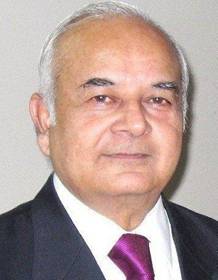
Syed Nayyar Uddin Ahmad
Lahore.
+92 321 9402157 nayyarahmad51@gmail.com The author is a senior corporate leader and strategic analyst. His thought-provoking visionary insights have reshaped global discourse, capturing the attention of world leaders. His writings have not only resonated with heads of state and governments but have also influenced the foreign policies of the United States and other major powers.
Breaking the Chains: A Governance Model for a Corruption-Free and People-Centered Pakistan
Pakistan today stands at a crossroads. Once richer than India and China at the time of independence, the country now finds itself sinking deeper into poverty, corruption, and terrorism. Almost half of Pakistan’s population—44.7% according to the World Bank’s June 2025 figures—lives below the poverty line, struggling to survive on less than $4.20 a day. This is not just an economic crisis; it is a failure of governance that has betrayed the people for decades.
The Root of the Problem: Elite Capture
Pakistan’s ruling elite—across political, bureaucratic, and feudal classes—has systematically drained the nation. While ordinary citizens pay taxes on the smallest items, even a matchbox, the privileged enjoy exemptions worth a staggering $20.8 billion annually. Instead of serving the people, successive governments have built layers of bureaucracy and politics that feed corruption, nepotism, and waste.
In fact, the governance of the last 78 years has been like putting the cart before the horse—with politics dragging ahead and development left behind. The horse, which should have been the driving force of progress, was shackled by the cart of endless politics. This upside-down governance not only wrecked Pakistan’s economy but also disillusioned the very masses who sacrificed everything to create a homeland that was supposed to be the citadel of a bright future for generations to come.
The Way Forward: Power to the People
As such, in view of the total and absolute failure of the all past and current governance systems, the most suitable and just solution is to return governance to the people themselves, allowing them to exercise self-rule so their future is firmly in their own hands.
Pakistan does not need more politics—it needs zero politics in development. Governance must be shifted out of the hands of elite rulers and given directly to the people through empowered local bodies. This means complete decentralization of authority with decision-making power and financial resources flowing directly to districts and communities.
The first step should be to release the PKR 5.8 trillion wasted annually in exemptions and redirect it to local governments. If this amount is entrusted to people-driven systems, every district in Pakistan can begin its journey toward real development.
A New Model of Governance: District Autonomy
The solution lies in restructuring governance around semi-autonomous districts, each led by self-elected mayors and sheriffs. These local leaders, directly accountable to their communities, would manage development, security, and services. This would eliminate the need for extravagant political assemblies and bloated bureaucracies that consume resources without delivering results.
Such a model ensures:
Direct accountability: Leaders answerable to their own communities, not distant capitals.
Efficient use of resources: Local priorities addressed without political middlemen.
Inclusive growth: Development reaching even the poorest households.
End to elite capture: Breaking the monopoly of the ruling class.
End to terrorism and street crimes: Improved and focused policing will drastically reduce crimes as the basic job of countering terrorism lies with Police.
Inspirational Leadership: A Guiding Light
Pakistan is fortunate today to have a civil and military leadership united in vision—capable, honest, and courageous—guided by true statesmanship and a profound sense of duty. Real leadership is about taking people from where they are to where they have never been, and Pakistan is now being led on that transformative journey toward development, peace, and enduring national strength.
Conclusion: A Last Chance for Pakistan
Pakistan cannot continue on its current trajectory of borrowing, wasting, and collapsing. Nearly 50% of its people are already trapped in poverty, and millions more risk falling into despair if bold reforms are not made now.
The answer is not more provinces, more governors, or more politics. The answer is radical decentralization—handing power, resources, and responsibility directly to the people. Only then can Pakistan escape the cycle of corruption and poverty, and finally fulfill the promise it carried at independence.
It is time to break the chains of elite rule and let Pakistan’s people govern themselves.
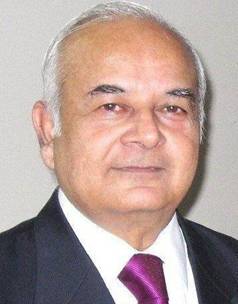
Syed Nayyar Uddin Ahmad
Lahore.
+92 321 9402157 nayyarahmad51@gmail.com The author is a senior corporate leader and strategic analyst. His thought-provoking visionary insights have reshaped global discourse, capturing the attention of world leaders. His writings have not only resonated with heads of state and governments but have also influenced the foreign policies of the United States and other major powers.
Grave Violation of Pakistan’s Sovereignty: Continuous release of Hazardous Chemical and Biological Attack through Indian Wastewater Discharge via Hudiara Drain
The Honorable Prime Minister of Pakistan, Islamabad
The Honorable Chief Minister, Government of Punjab, Lahore
Respected Sir/Madam
With the utmost urgency, I bring to your notice a national crisis of catastrophic proportions. Untreated industrial and municipal wastewater from Indian Punjab continues to enter Pakistan through the Hudiara Drain.
This transboundary pollution has been a long-neglected issue, devastating vast agricultural lands of Punjab, where crops are irrigated with toxic water, directly threatening human, livestock, and ecosystem health.
The untreated effluents are linked to serious diseases including gastrointestinal infections, skin disorders, cancers, respiratory illnesses, kidney and liver damage, and reproductive health complications. Animals consuming contaminated fodder suffer reduced productivity and mortality, worsening Pakistan’s food security. The pollutant ladened water recharges Ravi Basin near Lahore and the pollutants also seep into groundwater, endangering millions who depend on it.
1. An Environmental and Humanitarian Disaster
Independent monitoring confirms that the Hudiara drain carries deadly levels of toxic pollutants:
- Biological Oxygen Demand (BOD) and Chemical Oxygen Demand (COD): Exponentially above safe limits, creating oxygen-dead waters unfit for any life.
- Heavy Metals (Pb, Cd, Cr, Ni, Hg, Cu, Zn): Seeping into soils, crops, and aquifers, contaminating the national food chain.
- Pathogens and sewage: Carrying high microbial loads that cause widespread disease risk.
- Toxic solids and sulphides: Poisoning soils, livestock, and aquatic ecosystems.
2. Violation of Sovereignty: Environmental Terrorism and Hostile Action
This is not a mere case of pollution. It is a continuous and deliberate cross-border assault:
- It constitutes environmental terrorism, as toxic industrial sewage is weaponized against Pakistan.
- It is equivalent to a continuous chemical and biological attack upon our soil, water, and people — carried out under the cover of industrial discharge.
- It represents a grave violation of Pakistan’s sovereignty, territorial integrity, and right to security of life.
3. Urgent National and International Action Required
We urge immediate national and international intervention.
1. India must treat its wastewater at source or divert through safe alternate channels: India must be compelled under international environmental law, transboundary water agreements, and UN conventions to treat its wastewater at source or divert through safe alternate channels. Pakistan requires urgent technical, legal, and diplomatic support to stop this inflow, with monitoring by neutral international bodies (UNEP, WHO, ICJ, Indus Waters Treaty mediators).
2. Formal Notice to India: India must be given an ultimatum that this State-enabled ecological destruction must cease without delay.
3. Raise at the United Nations Security Council: Pakistan must formally present this issue to the UNSC as a case of cross-border environmental destruction, chemical and biological assault, and violation of international humanitarian and environmental law.
4. Assertion of Pakistan’s Right to Defense: Pakistan must declare that it reserves all rights under the UN Charter to defend its territory, citizens, and environment — including any measures necessary to neutralize this threat.
4. Conclusion
The continuation of this toxic inflow amounts to a sustained attack on Pakistan’s sovereignty and survival. India must be made to understand that Pakistan will no longer tolerate this aggression for a single day more. Moreover, India must pay reparations to Pakistan for all the above-mentioned damages.
We must act decisively, inform the international community, and safeguard our national interests. The lives, health, and dignity of our citizens demand nothing less.
With utmost urgency and respect,
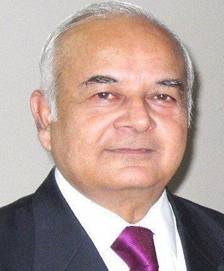
Syed Nayyar Uddin Ahmad
Lahore.
+92 321 9402157 nayyarahmad51@gmail.com The author is a senior corporate leader and strategic analyst. His thought-provoking visionary insights have reshaped global discourse, capturing the attention of world leaders. His writings have not only resonated with heads of state and governments but have also influenced the foreign policies of the United States and other major powers.
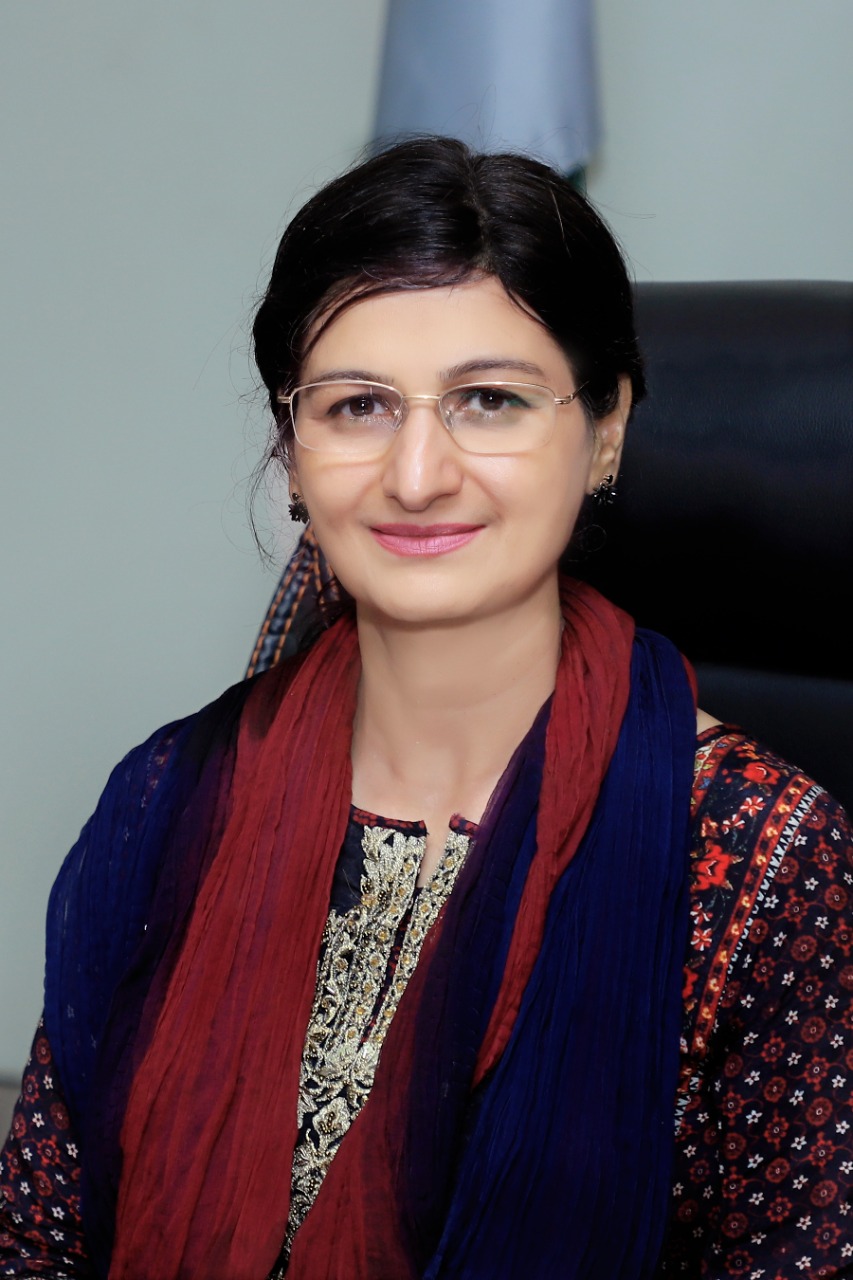
Prof. Dr. Robina Farooq (T.I.)
Vice Chancellor GC Women University Faisalabad (2019-2023)
+92-3009892344; drrobinafarooq@hotmail.com
The co-author is an environmental scientist and academician with 36 years of teaching and research, and governance across Pakistan, UK, China, and Sweden. With three patents, extensive publications, numerous research projects, 23 national / international awards, and key statutory roles for institutional development, she stands as a transformative leader in higher education of Pakistan.
🌍 Global Emergency Appeal Letter on Plastic Pollution
To:
Every Citizen of Earth 🌍
H.E. António Guterres, Secretary-General of the United Nations
H.E. President of the United Nations General Assembly
Heads of G20, G7, and SCO nations
Leaders of the African Union (AU) and Organization of Islamic Cooperation (OIC)
United Nations Environment Programme (UNEP)
World Health Organization (WHO)
UNESCO (United Nations Educational, Scientific and Cultural Organization)
World Bank and International Monetary Fund (IMF)
Global human rights and advocacy organizations: Human Rights Watch (HRW) and Amnesty International
World Economic Forum (Davos)
Nobel Prize Committee
Major international environmental NGOs (Greenpeace, WWF)
And all world leaders, parliaments, scientific communities, media organizations, and people of conscience everywhere
Subject: Global Emergency Appeal to Save Humanity from Plastic Poison Pollution
Excellencies, Esteemed Leaders, and Fellow Citizens of Earth,
I write to you with deep urgency on behalf of humanity and future generations. Our planet is facing a silent catastrophe more deadly than many wars and more enduring than any pandemic: the unchecked spread of plastic pollution.
Every human being, every animal, every ocean, every river is now contaminated with plastic poison. Scientific studies reveal that a single cup of tea brewed in a plastic-infused teabag releases up to 14 billion microplastic particles into the human body. Bottled water carries trillions of microplastics. These particles now exist in our lungs, blood, placenta, and even brains.
This is not waste alone — this is toxic infiltration of life itself, a slow march toward extinction.
Why Plastic Pollution is the “New Carbon Crisis”
Plastics are fossil fuel derivatives; their production fuels climate change.
Unlike CO₂, plastics do not dissolve or decay — they accumulate endlessly, poisoning food chains.
Microplastics in oceans now outnumber plankton which are the foundation of the marine food web and phytoplankton produce around 50% of the world’s oxygen and also help regulate the global carbon cycle by absorbing CO2, threatening the base of marine life.
Toxic additives in plastics are linked to cancers, infertility, hormonal disruption, and developmental disorders.
The poorest nations bear the heaviest burden, as plastic waste from the wealthy world is dumped upon them.
This is nothing less than an existential crisis for life on Earth.
Immediate Global Call to Action
I respectfully urge the United Nations, global leaders, and all citizens of Earth to adopt the following measures without delay:
1. Global Awareness
Every TV news bulletin, every newspaper front page, in every local language, must carry the daily warning:
“Plastic is deadly poison for every living being.”
International organizations should fund mass education campaigns equating plastic pollution with tobacco and asbestos.
2. Universal Labeling
All plastic products (including teabags, food packaging, and microplastic-containing cosmetics) must bear bold warning labels, similar to cigarette packs:
“This product contains deadly plastic that poisons humans and nature.”
3. Global Plastic Reduction Treaty
Negotiate a legally binding global treaty, modeled on the Paris Climate Agreement, with strict targets for reducing production of virgin plastics.
Impose global bans on the most harmful single-use plastics (EPS foam/thermopole, plastic straws, microbeads, non-recyclable sachets).
4. Plastic Credit System
Establish a Plastic Credit Mechanism, akin to carbon credits, where every kilogram of plastic removed from oceans, rivers, or landfills is certified and tradable.
Incentivize communities, especially in developing nations, to collect and recycle plastic waste, turning pollution into livelihood opportunities.
5. Innovation & Alternatives
Massive funding for research into biodegradable, plant-based packaging.
Tax incentives for industries shifting to circular economy models.
A global prize (like a “Nobel Prize for Earth Protection”) to honor individuals or institutions making groundbreaking contributions against plastic pollution.
6. Citizen Responsibility
Empower citizens to act:
- Avoid bottled water unless absolutely necessary.
- Replace plastic bags with cloth or biodegradable alternatives.
- Pressure companies and governments to act, as was done successfully with tobacco and ozone-depleting CFCs.
- Make it compulsory in the school curriculum to educate young children about the harmful effects of plastic pollution and practical ways to reduce or avoid its use in daily life.
Special Appeal to the Nobel Committee
I urge the Nobel Committee to create a Nobel Prize for Earth Protection, to honor pioneers working to save humanity from plastic poison. Such recognition would elevate this crisis to the moral and scientific urgency it demands.
Conclusion
Plastic pollution is not a future threat; it is a current mass poisoning event. If unchecked, it will render our planet uninhabitable long before climate change alone could do so.
This is a defining test for humanity: whether we act together to protect life itself or allow convenience and negligence to become our epitaph.
I appeal to your conscience, leadership, and responsibility toward future generations. Let us act today, together, decisively, and urgently, to rid our Earth of plastic poison.
With highest respect and deepest urgency,
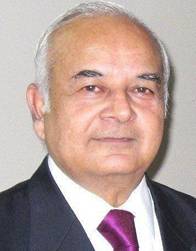
Syed Nayyar Uddin Ahmad
Citizen of Earth 🌍
Lahore – Pakistan
+92 321 9402157 nayyarahmad51@gmail.com The writer is a senior corporate leader and strategic analyst. His thought-provoking visionary insights have reshaped global discourse, capturing the attention of world leaders. His writings have not only resonated with heads of state and governments but have also influenced the foreign policies of the United States and other major powers.
Why Pakistani Cricket Has Hit Rock Bottom – and How to Revive Pakistan’s Sports Fast
Why Pakistani Cricket Has Hit Rock Bottom – and How to Revive Pakistan’s Sports Fast
Introduction
The Chief Patron of PCB, Prime Minister Shahbaz Sharif, and Chairman PCB, Mr. Mohsin Naqvi, must remember that the buck stops at the top. They cannot escape responsibility for the sorry state of Pakistan cricket. Years of mismanagement, policy flip-flops, weak accountability, and short-term fixes have dragged the national game to its lowest ebb. Once a powerhouse that produced legends feared around the world, Pakistan cricket today stands rudderless, inconsistent, and fragile. Unless those at the very top take ownership and drive genuine reforms, the decline will only deepen.
Reasons for the Decline
- Administrative Instability and Mismanagement
- Frequent changes in PCB leadership disrupt long-term planning.
- Political interference continues to damage decision-making. The board has too often been run by retired or serving government officials rather than professional sports administrators.
- Constant chopping and changing of captains, coaches, and selectors prevents stability and accountability.
2. Domestic Cricket Weakness
- Although departmental teams have been restored and are now operational again, the overall domestic structure still suffers from uneven quality and weak long-term planning.
- Poor umpiring standards undermine credibility, frustrate players, and fail to prepare cricketers for international competition.
- Facilities, pitches, and match promotion remain below par, limiting the competitiveness of domestic tournaments.
- Talent Drain and Grassroots Neglect
- The once-rich pipeline of talent is drying up due to lack of structured investment at the school, college, and club level.
- No robust nationwide system exists to consistently scout, groom, and polish young players.
- Junior cricket is not producing enough international-standard players.
4. Fitness and Professionalism Issues
- Pakistan continues to lag in fitness standards compared to international benchmarks.
- Poor diets, casual training culture, and lack of data-driven fitness programs lead to inconsistent performances.
- Unlike top-tier teams, Pakistan lacks centralized, year-round fitness monitoring.
5. Over-Reliance on PSL
- The PSL has been a commercial success but has also bred overdependence on T20 cricket.
- Players excelling in franchise leagues struggle to adapt to Test and ODI cricket due to limited exposure in longer formats.
6. Psychological Fragility
- Mental toughness and temperament remain major weak points.
- The absence of full-time sports psychologists leaves players vulnerable to pressure, especially in crunch games.
7. Global Isolation Post-2009
- The 2009 attack on the Sri Lankan team forced Pakistan to play “home” matches abroad for nearly a decade.
- This robbed the younger generation of home support, affected fan engagement, and disrupted financial and developmental systems.
Fast-Track Revival Strategy
1. Reform Governance and Ensure Meritocracy
- The PCB must be depoliticized and not run by retired or serving government officials. Instead, it should be managed by professional sports administrators with cricketing knowledge, business acumen and management expertise.
- Stability must be ensured in captaincy, coaching, and selection policies to allow long-term planning.
2. Strengthen Domestic Structure
- With departmental cricket now revived, the next step is to improve quality and consistency—better pitches, strong umpiring standards, and modern infrastructure.
- Introduce transparent performance-based contracts at the domestic level, which must be monitored with the help of AI.
- Broadcast and promote domestic competitions widely to raise prestige and competitiveness.
3. Introduce Strict Accountability for Players
Establish an AI based system of severe penalties for poor performances at both international and domestic levels.
- Heavy deductions from match fees and annual contracts for repeated failures.
- Compulsory participation in domestic tournaments for all players—no exemptions.
- Reward consistent domestic performers with fast-tracked promotion to the national side.
4. Revive Grassroots Competitions
- Urgently revive national-level tournaments for schools, clubs, colleges, and universities, which once produced some of Pakistan’s greatest cricketers.
- Build a structured inter-collegiate, university, clubs and inter-school league system, supported by PCB funding and media coverage.
- Make grassroots tournaments the first stage of national selection to ensure merit rises through the system.
5. Enhance Fitness & Professionalism
- Implement international-standard fitness benchmarks and regular assessments.
- Appoint dedicated fitness trainers, physiotherapists, and nutritionists for all squads.
- Enforce strict fines and suspensions for players failing to meet professional standards taking the help of AI.
6. Balance Formats and Global Exposure
- While leveraging the PSL, ensure young players get exposure to first-class cricket and overseas leagues.
- Rebuild the culture of Test cricket with strong domestic red-ball tournaments and “A” tours abroad.
7. Mental Strength and Sports Psychology
- Employ sports psychologists to build resilience, focus, and crisis-handling ability.
- Introduce captaincy and leadership training programs to strengthen decision-making under pressure.
8. Leverage Home Advantage and Fan Power
- With international cricket back in Pakistan, schedule frequent home series to rebuild confidence and fan support.
- Pakistan must strongly discourage less than five Test matches domestic series with the emphasis of maximum night cricket Tests, which can be played even in the hot season having the advantage of convenient overseas TV viewership timings. Night Test match cricket will also have much reduced traffic and other related security problems for the general public.
- Upgrade stadiums, improve fan facilities, and use cricket as a unifying national force.
Conclusion
Pakistan’s cricketing decline is not irreversible—but it demands courage and structural reforms. By freeing the PCB from political influence, strengthening domestic cricket with quality umpiring and world class infrastructure, enforcing strict player accountability, reviving grassroots tournaments in schools, clubs, colleges, and universities, and promoting professionalism with strict meritocracy across all levels, Pakistan can once again rise to the top tier of world cricket. The passion of the fans and the raw talent of players remain; what is missing is vision, discipline, and execution. With bold steps, Pakistan cricket can rediscover its glory.
But bold steps require bold leadership. The Prime Minister must consider looking beyond the PCB’s traditional boundaries and seek the assistance of proven leaders who understand modern strategy and innovation. One such figure is Air Chief Marshal (Retd.) Mujahid Anwar Khan, NI (C) NI (M) HI (M) SI (M) TI (M) former Chief of the Pakistan Air Force, who will forever be remembered for establishing CENTAIC (Centre of Artificial Intelligence and Computing). His expertise in deploying Artificial Intelligence for high-stakes, real-time decision-making can be harnessed to revamp the entire decadent sports structure in Pakistan, including cricket. The same strategic discipline, technological innovation, and performance culture that transformed PAF operations can help transform Pakistan’s sporting landscape.
If anyone doubts the power of sports to reshape nations, they should reflect on the timeless wisdom of Nelson Mandela, whose words—slightly adapted to today’s Pakistani reality—ring with even greater urgency:
Quote.
“Sports has the power to change Pakistan…it has the power to inspire. It has the power to UNITE Pakistani people in a way that little else does. It speaks to the Pakistani youth in a language they understand. Sports can create hope for the entire Pakistani nation, where once there was only despair, lawlessness, hunger, unemployment, poverty, drugs, and alarming increase of suicides due to the economic hardships. It is more powerful than government in breaking down the menace of drugs and terrorism which has held back Pakistan attaining its true potential.”
Unquote.
This is not just about cricket—it is about reviving national confidence, bringing discipline, healing a fragmented society, and giving Pakistan’s youth HOPE. The time for cosmetic changes is over. Only a comprehensive, professional, and visionary overhaul can lift Pakistani cricket in particular and other sports in general—and with it, the spirit of the nation—back to where it belongs.
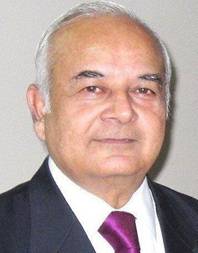
Syed Nayyar Uddin Ahmad
Lahore
+92 321 9402157 nayyarahmad51@gmail.com The writer is a senior corporate leader and strategic analyst. His thought-provoking visionary insights have reshaped global discourse, capturing the attention of world leaders. His writings have not only resonated with heads of state and governments but have also influenced the foreign policies of the United States and other major powers.
Strategic Vision for Pakistan’s Next Century
His Excellency Muhammad Shehbaz Sharif
Prime Minister of the Islamic Republic of Pakistan
Islamabad
السلام علیکم ورحمة الله وبرکاته
I wish to commend your principled decision to decline the national award recommended by the committee. This act of integrity and selflessness will be remembered in our national history as a shining example of propriety in public office.
Equally, I applaud your timely announcement regarding the formation of the Army Rocket Force, echoing my proposal of 29 June 2025. This bold step will be recorded alongside the historic decision of Mian Muhammad Nawaz Sharif to authorize the nuclear tests on 28 May 1998—both pivotal moments in Pakistan’s strategic history.
Given the prevailing regional dynamics and the clear trajectory of India’s military posture, the possibility of a major conflict is not merely speculative but increasingly INEVITABLE. In light of this, I respectfully reiterate my two additional proposals, also submitted on 29 June 2025:
1. Construction of Underground Shelters for general public equipped with medical and essential facilities.
2. Revival of the National Cadet Corps (NCC) on modern lines to enhance civilian preparedness and resilience.
Furthermore, I strongly recommend that Pakistan urgently initiate dialogue with Bangladesh for the creation of a strategic confederation—where both nations retain autonomous governance while aligning on defence, strategic, and mutually agreed matters.
Pakistan’s strategic stature now ranks second only to China in potency across the vast region stretching from New Zealand to Israel. It is therefore imperative to deepen strategic, economic, and people-to-people ties with all nations within this area of influence, including Myanmar, Nepal, Bhutan, Thailand, Singapore, Sri Lanka, Brunei, Mauritius, Malaysia, Indonesia, Vietnam, Cambodia, Australia, New Zealand, Japan, and Korea. This will require an immediate revitalization and revamping of the Foreign Affairs, Commerce, Industries, IT, and Agriculture ministries, which should be tasked with achieving USD 80 billion income in exports by 30 June 2027, to meet the challenges and opportunities of the coming century.
With prayers for Pakistan’s stability, unity, and enduring strength,
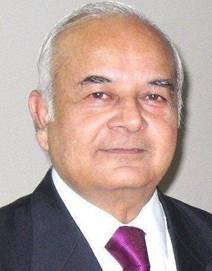
Syed Nayyar Uddin Ahmad
Lahore
+92 321 9402157 nayyarahmad51@gmail.comThe writer is a senior corporate leader and strategic analyst. His thought-provoking visionary insights have reshaped global discourse, capturing the attention of world leaders. His writings have not only resonated with heads of state and governments but have also influenced the foreign policies of the United States and other major powers.