Author Archive
From War to World Stage
 August 12th, 2025 |
  Author:
 Introduction: A Defining Moment
Pakistan stands at the most strategic inflection point since its founding. With relations with the United States at their strongest in decades, close cooperation with all other permanent members of the UN Security Council (UNSC), and unparalleled strategic depth following the decisive events of May 2025, Pakistan now possesses the leverage to advance peace in South Asia, secure overdue global recognition, and embark on a path to economic transformation.
1. Pakistan’s Historic Role in Global Diplomacy
Pakistan has not merely been a regional player; it has been a pivotal architect of global history.
- Opening US–China Relations: In the early 1970s, Pakistan acted as the crucial bridge enabling President Nixon’s historic outreach to Chairman Mao, a step that reshaped the Cold War and global trade architecture.
- Sacrifices During the Soviet–Afghan War: From 1979 to 1989, Pakistan bore the brunt of the struggle against Soviet occupation in Afghanistan, sheltering millions of refugees and sustaining enormous economic and social pressures.
- War on Terror: For over 20 years after 9/11, and particularly following the NATO withdrawal from Afghanistan in 2021, Pakistan fought terrorism largely alone, sustaining immeasurable losses in lives, infrastructure, and opportunity costs. The West, and the world at large, owe Pakistan not just gratitude but tangible recompense.
2. Post-May 2025: Strategic and Military Supremacy
- The clear and tangible victory of Pakistan in the four-day May 2025 war against India has fundamentally reshaped the military balance of Asia.
- Now, Pakistan stands as the second most powerful nuclear military force in the entire Asian continent, from the shores of New Zealand to the borders of Israel, second only to China.
- This unprecedented position provides Pakistan with the credibility, deterrence, and diplomatic leverage to push forward its security and peace agenda while reassuring the world of its responsible nuclear stewardship.
3. The Case for Comprehensive Debt Relief
Given Pakistan’s decades-long sacrifices for global security, the following measures are not favours, but overdue obligations:
- 100% Write-off of All International Loans owed by Pakistan to multilateral and bilateral creditors.
- Settlement of Domestic Debt through contributions from the world’s wealthiest economies, using international stabilization funds.
- Debt-for-Development Conversion: Direct investment of equivalent amounts into infrastructure, education, technology, and health to turn Pakistan into an economic powerhouse within a decade.
This would not only stabilize Pakistan’s economy but also ensure global security by removing the root causes of instability.
4. Renewed Push for Kashmir Peace and Plebiscite
Kashmir remains the unfinished agenda of the Indian partition from the post-colonial era and the most dangerous nuclear flashpoint in Asia. With Pakistan’s diplomatic standing at its peak:
- A new UNSC resolution should be sought to set a binding timetable for a UN-supervised plebiscite.
- The UN, OIC, and key permanent members must act as guarantors to ensure peace during the process.
- A UN Special Envoy for Kashmir should be appointed to monitor progress and report quarterly to the UNSC.
5. Economic and People-to-People Connectivity with the U
A revitalized Pakistan–US partnership must translate into tangible benefits:
- Immediate removal of restrictive US visa policies for Pakistani students, professionals, and businesspersons.
- Direct Pakistani Airlines flights to major US cities, promoting trade, tourism, and cultural exchange.
- Joint technology and manufacturing corridors to integrate Pakistan into US-led supply chains.
6. Strategic Recognition: Permanent UNSC Membership
Pakistan’s unique qualifications make it a natural candidate for UNSC reform:
- Only nuclear-armed member of the OIC, with proven strategic restraint.
- Second-strongest military in Asia, now proven on the battlefield, after China.
- Bridging role between the Islamic world, the West, and Asia.
7. Building a Peaceful and Prosperous South Asia
Lasting regional peace requires Pakistan’s leadership in:
- A South Asian Peace and Development Forum under UN auspices.
- Nuclear risk-reduction and military transparency mechanisms with regional neighbours.
- Regional connectivity projects linking Central Asia to global markets via Pakistan’s ports.
Conclusion: The Time for Action is Now
Pakistan’s role in shaping modern history from opening the door to US–China relations, to bearing the human and economic burden of wars that secured Western and global security, to achieving a decisive victory in May 2025, cannot be ignored any longer.
The world must now recognize Pakistan’s sacrifices with debt remission, economic investment, and political recognition. This is not charity; it is the repayment of a debt owed.
In return, Pakistan will use its strengthened position to resolve the Kashmir issue, stabilize South Asia and the Middle East, and become a driver of global peace and prosperity in the decades ahead.
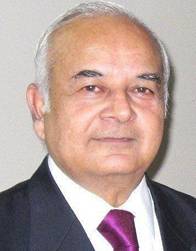
Syed Nayyar Uddin Ahmad
Lahore – Pakistan
+92 321 9402157
nayyarahmad51@gmail.comThe writer is a senior corporate leader and strategic analyst. His thought-provoking visionary insights have reshaped global discourse, capturing the attention of world leaders. His writings have not only resonated with heads of state and governments but have also influenced the foreign policies of the United States and other major powers.
An Open Letter To President Xi Jinping
His Excellency Mr. Xi Jinping
President of the People’s Republic of China
Zhongnanhai, Xicheng District, Beijing
People’s Republic of China
Subject: Heartfelt Birthday Greetings and Reflections on Regional Peace and Security
Your Excellency,
It is with the deepest respect and admiration that I extend to you my warmest wishes on the occasion of your birthday, which fell on 15 June 2025. May you be blessed with robust health, enduring strength, and many more years of wise leadership in service of your nation and the global community.
The world today stands at a critical crossroads. Amidst these complexities, China’s doctrine of all-inclusive peace through development — manifested through the Belt and Road Initiative (BRI) and the China–Pakistan Economic Corridor (CPEC) — shines as a beacon of hope. Your vision of mutual respect, shared prosperity, and unwavering support for the sovereignty of all nations, large and small alike, has inspired billions and reshaped the global dialogue on sustainable development.
The forthcoming SCO Heads of State Summit, to be held in Tianjin on 31 August and 1 September 2025, will once again place your leadership at the forefront of regional diplomacy. The presence of leaders from all SCO member states, including Indian Prime Minister Mr. Narendra Damodardas Modi, presents both an opportunity and a challenge: the opportunity to advance cooperative security, and the challenge of addressing actions that undermine it.
It is a matter of grave concern that, despite its membership in both BRICS and the SCO, India has repeatedly acted in ways that contradict the principles these bodies uphold. Its consistent hostility toward CPEC, sponsorship of anti-China elements within Pakistan, and the orchestration of attacks on Chinese nationals and projects in Pakistan require urgent and unequivocal response.
As I conveyed through my public communications to the PRC on 24 July 2025, strategic patience has its limits. I urged that Beijing inform India, in clear and unmistakable terms, that any future attack — direct or through proxies — on Chinese citizens or assets in Pakistan will result in swift, overwhelming, and disproportionate retaliation. Continued ambiguity risks emboldening those who would harm Chinese interests.
Your Excellency, it is instructive to recall that when a Sikh U.S. citizen felt personally threatened from Indian plans to eliminate him, the President of the United States, wrote directly on 24 July 2025 to reassure him that his safety was a paramount concern of the State. This precedent underscores the moral and political strength conveyed when a head of state speaks plainly in defense of their citizens. The PRC’s voice, backed by its global stature, would carry even greater weight in deterring aggression.
In this spirit, I respectfully submit that, before the Indian Prime Minister arrives in Tianjin, China should require that India:
1. Provide an ironclad guarantee ensuring the safety of all Chinese citizens and assets in Pakistan.
2. Pay reparations to the families of Chinese nationals killed or injured in attacks linked to Indian actions or proxies.
3. Clarify its increasingly hostile posture toward the PRC, including alignment with anti-China military groupings in the South China Sea (as recently documented in Zee News on 6 August 2025).
4. Publicly repudiate racist remarks by its leadership targeting the Chinese people.
5. Withdraw the Indian Home Minister’s 6 August 2019 parliamentary claim to Aksai Chin, which is an affront to Chinese sovereignty.
6. Cease killings after branding the indigenous Kashmiri resistance in IIOJ&K as “terrorism” in violation of the UN Charter, and end all acts amounting to genocide, war crimes, and human rights violations in the IIOJ&K, where PRC is also a major stake holder.
7. Submit to international accountability mechanisms, including the United Nations, for its actions in IIOJ&K.
Furthermore, in line with China’s Global Security Initiative (GSI) — anchored in mutual respect, non-interference, and peaceful coexistence — I propose that the SCO Summit’s joint statement call upon India to uphold these principles without reservation.
Finally, given India’s record of exporting terrorism and targeting citizens of China, Pakistan, Canada, and other nations, I humbly urge Your Excellency to reconsider any proposal to grant India the presidency of the next BRICS summit until these grave issues are satisfactorily resolved.
The time has come for principled nations to draw clear red lines against injustice, racism, terrorism, and hegemonic behavior — whether committed openly or through proxies. I am confident that under your wise leadership, China will continue to illuminate the path toward peace, equality, and shared prosperity for all.
Please accept, Your Excellency, the assurance of my highest consideration and unshakeable admiration.
With profound regards,
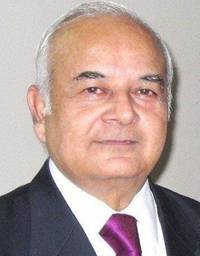
Syed Nayyar Uddin Ahmad
Lahore, Pakistan
+92 321 9402157
nayyarahmad51@gmail.com The writer is a senior corporate leader and strategic analyst. His thought-provoking visionary insights have reshaped global discourse, capturing the attention of world leaders. His writings have not only resonated with heads of state and governments but have also influenced the foreign policies of the United States and other major powers.
India’s False Flag Empire: How State-Sponsored Deception Risks a Nuclear Catastrophe
Following the Bombay High Court’s landmark decision on 20 July 2025, which acquitted 12 individuals (one of whom died during the trial) in the 2006 Mumbai train blasts case—an incident on 11 July 2006 where seven explosions on local trains along the Western Line killed 189 and injured 827 passengers, overturning convictions ranging from life imprisonment to the death penalty—the Government of India must now be recognized as the world champion of false flag operations, ruthlessly sacrificing its own citizens to advance political agendas. These acts are often orchestrated to falsely implicate Pakistan in particular, and Muslims in general, as perpetrators of terrorism.
In this context, it is noteworthy that even the Indian Supreme Court, in what remains an unprecedented collusion with the Indian government in the history of global jurisprudence, awarded the death penalty to Afzal Guru for the 2001 Indian Parliament attack, despite the court’s own admission that there was no direct evidence linking Guru to the planning or execution of the attack, and that he was not a member of any terrorist group. Shockingly, the court justified the sentence on the grounds that it would satisfy the “collective conscience of society.”
These state-sponsored false flag operations, when viewed alongside the 22 April 2025 Pahalgam killings, cast a disturbing light on India’s modus operandi. On 21 July 2025, the Indian National Congress President and Leader of the Opposition in the Rajya Sabha, Mr. Mallikarjun Kharge, fiercely criticized the Indian government over U.S. President Donald Trump’s claims of mediating a ceasefire between India and Pakistan, stating:
“I have given notice under Rule 267 on the Pahalgam terror attack and Operation Sindoor. Till today, the terrorists have not been caught or neutralized. All parties extended unconditional support to the government. The government should inform us about what has happened.”
It is crucial to highlight that Pakistani Prime Minister Shahbaz Sharif, immediately after the Pahalgam incident, condemned terrorism in all its forms, rejected baseless Indian accusations, and called for a transparent, neutral investigation into the attack. He also urged the United Nations to play its role in resolving the Jammu & Kashmir dispute in line with UNSC resolutions, affirming that Pakistan remains committed to peace but will defend its sovereignty with full force if challenged.
India’s pattern of false flag tactics is not new. A similar approach was followed in the 14 February 2019 Pulwama attack, where a suicide bomber killed 46 paramilitary personnel in Indian Illegally Occupied Jammu & Kashmir (IIOJ&K). Within hours of the attack, then Union Minister Arun Jaitley declared that India would take “all possible diplomatic steps” to isolate Pakistan from the international community. Pakistan, however, openly requested evidence and offered cooperation in the investigation—an offer that India ignored.
For nearly a decade, the BJP/RSS-led Modi government has pursued a policy of isolating Pakistan through fabricated terrorism narratives. In September 2016, Prime Minister Narendra Modi, during a speech in Kozhikode, openly vowed to launch a global campaign to isolate Pakistan.
Considering these facts, the statements of the Congress President and the Leader of the Opposition, as well as mountains of documented evidence from credible Indian and international sources regarding the genocide and war crimes committed by Indian forces in IIOJ&K, it is imperative for the entire world leadership—particularly the UN Secretary General and all G-20 leaders—to act. The testimony of Professor Gregory Stanton (Genocide Watch), warning of an impending genocide of 220 million Muslims in India, further underscores the urgency. It is a moral and legal duty to bring Indian officials and perpetrators to justice before the International War Crimes Tribunal at The Hague, and to expel India from the G-20 and all prestigious global forums. The world can no longer afford to sit alongside Prime Minister Narendra Damodar Das Modi, whose hands are stained with the blood of innocent Kashmiris and Indian Muslims.
Finally, it must be emphasized—with utmost concern—that twice (February 2019 and May 2025), the world was saved from the brink of a nuclear catastrophe between India and Pakistan only due to the intervention of U.S. President Donald Trump. Both incidents arose from Indian miscalculations and aggressive attacks against Pakistan, rooted in false flag narratives. Pakistan, despite having irrefutable evidence of India’s plans—including the 11 March 2025 Jaffer Express hijacking plot in Baluchistan—showed maximum restraint by responding proportionately and avoiding escalation.
It is, therefore, imperative for the global community—and President Trump in particular—to establish immediate control protocols to monitor India’s covert operations and military planning through a joint mechanism involving the P-5 nations. If this is not done, the world may not be fortunate enough to avoid a third and potentially uncontrollable nuclear Armageddon.
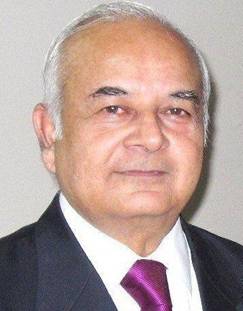
Syed Nayyar Uddin Ahmad
Lahore.
+92 321 9402157
nayyarahmad51@gmail.com The writer is a senior corporate leader and strategic analyst. His thought-provoking visionary insights have reshaped global discourse, capturing the attention of world leaders. His writings have not only resonated with heads of state and governments but have also influenced the foreign policies of the United States and other major powers.
India’s Double Game on Terrorism: From SCO Lectures to State-Sponsored Atrocities
At the recent Shanghai Cooperation Organization (SCO) summit in Tianjin, Indian External Affairs Minister S. Jaishankar made pointed remarks, emphasizing an “uncompromising position” against terrorism and warning that “nations who aid terror will pay a price.” These remarks, widely interpreted as veiled attacks on Pakistan and China, mirror a familiar Indian diplomatic playbook: project strength abroad while concealing complicity at home and beyond.
Yet, this rhetoric starkly contrasts with India’s own longstanding and systematic record of state-sponsored violence, especially in Indian-administered Kashmir, where the Indian state has been the principal actor in what many argue is one of the world’s most underreported and enduring human rights crises.
One Million Dead: Kashmir’s Long Night of Occupation
Since the first Kashmir war in 1947-48, Indian military occupation has resulted in the deaths of over one million Kashmiris, according to several rights groups and regional sources. The Indian military’s scorched-earth tactics have involved mass graves, rape used as a weapon of war, disappearances, and the maiming and blinding of thousands through indiscriminate use of pellet guns.
These atrocities are not isolated excesses—they are part of a systemic campaign of suppression against a people demanding their UN-sanctioned right to self-determination, as recognized under UN Charter Article 1(2) and Security Council Resolutions 47, 91, and 122.
False Flags and Foreign Guests: A Pattern of Manufactured Terror
Adding to the disturbing pattern is India’s alleged use of false flag operations timed around high-profile international visits. There is a documented historical trend where major terror incidents occur in India just before or during visits by U.S. Presidents or Vice Presidents, followed by an immediate campaign to pin blame externally—particularly on Pakistan—to gain diplomatic leverage and deflect scrutiny from domestic repression.
These orchestrated incidents raise grave concerns of war crimes and deliberate manipulation of both domestic and international audiences, essentially using civilian bloodshed as a diplomatic bargaining chip.
Admitted Assassinations: Indian State Terror Across Borders
Perhaps the most damning evidence of India’s double standards is the open admission by Indian leadership of its policy of extraterritorial assassinations. India has publicly declared it will “target and kill” individuals inside other sovereign countries—a practice not only illegal under international law, but a clear act of aggression.
In a chilling statement, India’s own National Security Advisor (NSA) Ajit Doval outlined the doctrine of “offensive defense,” openly admitting to using criminal networks and hired agents to carry out killings abroad. In Pakistan alone, over 20 assassinations have been traced back to Indian operatives, some of which have involved cross-border infiltration, targeted killings, and sabotage campaigns—all confirmed by credible investigations.
Kulbhushan Jadhav: The Smoking Gun of Indian Terror Operations
India’s covert activities came into global focus with the arrest of Kulbhushan Jadhav; a serving Indian naval officer caught deep inside Pakistan’s Baluchistan province. His confession—public and consistent—detailed his role in organizing terrorism and sabotage at the behest of Indian intelligence agencies. Moreover, his genuine Indian passport on pseudo name of Hussain Mubarak Patel doesn’t need any further proof of Indian government’s complicity in the whole episode of state sponsored terrorism of the government of India.
Despite India’s efforts to frame the case as a diplomatic incident, the sheer depth of his operational involvement, use of multiple fake identities, and connection to violence on Pakistani soil remain indisputable proof of Indian state terrorism.
Exporting Assassinations: From Kashmir to Canada and the U.S.
India’s reach has gone far beyond its borders. Investigations in Canada, the United States, and the United Kingdom have unearthed Indian-linked plots to assassinate Sikh dissidents and other political activists.
The murder of Hardeep Singh Nijjar in Canada and the foiled plots in the U.S. and UK reflect a dangerous normalization of extrajudicial killing as state policy—all while claiming to uphold democracy and the rule of law. These cases include wiretaps, payment trails, and agent networks, now confirmed by Western intelligence agencies and publicly acknowledged by leaders such as Canadian Prime Minister Justin Trudeau.
Conclusion: Exposing the Architects of Regional Destabilization
India’s repeated attempts to monopolize the counterterrorism narrative at platforms like the SCO must be viewed through the prism of its own extensive record of aggression, manipulation, and covert warfare. From Kashmir’s crushed hopes to international plots executed or planned against minorities, India has consistently blurred the line between national security and state terror.
The international community—especially the United Nations, OIC, and global human rights organizations—must now insist on accountability and independent investigations. Pakistan and other affected nations must continue to present these violations at every diplomatic forum until the true face of Indian policy is no longer obscured by hollow speeches or sanitized narratives.
If the world is to seriously address terrorism, it must begin by naming and confronting those states who commit it under the guise of preventing it. And in that list, India must stand at the top.
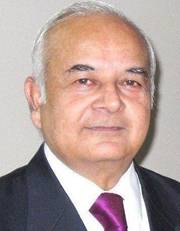
Syed Nayyar Uddin Ahmad
Lahore.
+92 321 9402157
nayyarahmad51@gmail.comThe writer is a senior corporate leader and strategic analyst. His thought-provoking visionary insights have reshaped global discourse, capturing the attention of world leaders. His writings have not only resonated with heads of state and governments but have also influenced the foreign policies of the United States and other major powers.
Field Marshal Asim Munir’s War of Clarity: Beyond Borders, Within Destiny
By the sheer Mercy of Allah (SWT), I state with unwavering conviction: Pakistan has more than avenged the deep scars of 1971 and the Siachen betrayal of 1984.
In the historic four-day war of May 25, our armed forces delivered a decisive response — striking with precision, resolve, and restraint. Over half a dozen Indian Air Force jets, including four confirmed Rafales, were brought down. Two highly vaunted S-400 air defense systems were reduced to ashes — and all this was accomplished without crossing our own borders.
This article of the The WIRE titled “Op Sindoor: Have We Trapped Ourselves in the Stunted Imagination of Our Rulers? Link:- ( https://m.thewire.in/article/world/diplomacy/op-sindoor-have-we-trapped-ourselves-in-the-stunted-imagination-of-our-rulers )
rightly offers resounding praise to the leadership of Field Marshal and Chief of Army Staff, Syed Asim Munir, whose strategic brilliance and unwavering faith inspired a national resurgence.
And as the following paragraphs reveal, the Indian leadership has been left in utter disarray — politically, militarily, and psychologically — their narratives shattered, their confidence visibly broken.
- What a colossal misreading of the enemy and his state of preparedness, worse even than Jawaharlal Nehru’s misjudgment about the Chinese intentions in 1962.
- On one side was a mean and lean general – mocked in our media as a jihadi – whose decision-making was guided by unsentimental, cold analysis, and unburdened with any “image.” On our side was an ageing leadership, frozen in its own self-exaltation and in thrall of violence irrespective of military wisdom. The “Rawalpindi” brass had sized up Modi correctly – that he would not be able to resist the clamour for “revenge” from his own constituency – and so the Pakistan Air Force was ready with a robust response.

Syed Nayyar Uddin Ahmad
Lahore.
+92 321 9402157
13th July 2025 nayyarahmad51@gmail.com The writer is a senior corporate leader and strategic analyst. His thought-provoking visionary insights have reshaped global discourse, capturing the attention of world leaders. His writings have not only resonated with heads of state and governments but have also influenced the foreign policies of the United States and other major powers.
Book Review: Pakistan in the 21st Century By Ambassador (R) Syed Hasan Javed
Book Review: Pakistan in the 21st Century
By Ambassador (R) Syed Hasan Javed
Published by: New Fakhari Printing Press, Karachi
ISBN: 978-969-7947-07-2
In Pakistan in the 21st Century, Ambassador (R) Syed Hasan Javed presents a compelling and multidimensional analysis of Pakistan’s trajectory in a rapidly evolving global order. With a distinguished diplomatic career and a prolific body of written work, Ambassador Javed brings a wealth of insight to bear on the challenges and opportunities facing Pakistan in this new century.
Drawing on decades of experience in foreign service — including extensive engagement with China, a nation that has formally recognized his contributions — the author offers an informed critique of Pakistan’s domestic dynamics, regional relations, and global positioning. His writing is characterized by clarity, intellectual rigor, and a deep-rooted sense of patriotic realism.
What sets this book apart is its forward-looking approach. Rather than offering a mere retrospective or a reiteration of familiar problems, Pakistan in the 21st Century actively explores strategic solutions for governance, education, economic reform, and foreign policy realignment. The author emphasizes the need for long-term thinking, institutional resilience, and cultural self-confidence — themes that resonate powerfully in today’s interconnected world.
Particularly notable is Ambassador Javed’s nuanced perspective on Pakistan-China relations. His insights into how Pakistan can learn from the Chinese model of development, innovation, and national cohesion are timely and thought-provoking. It is perhaps no surprise that the Chinese government has honored him in the past — his grasp of China’s rise and its implications for South Asia is both deep and pragmatic.
The book is also rich in historical context, helping readers understand Pakistan’s modern challenges against the backdrop of its past. It invites policy makers, academics, students, and engaged citizens alike to think critically about what the future could and should look like for Pakistan.
In summary, Pakistan in the 21st Century is an essential contribution to contemporary Pakistani thought. It is a work of vision, born from experience, and driven by a clear-eyed hope for a more stable, prosperous, and strategically aligned Pakistan. Ambassador (R) Syed Hasan Javed has once again proven himself to be not only a diplomat but also a statesman-scholar of rare insight.
Syed Nayyar Uddin Ahmad
5 July 2025
Lahore.
+92 321 9402157
One Letter – Two Brother PM’s
A 12 November 2014 letter to Mian Nawaz Sharif is still relevant for PM Mian Shahbaz Sharif.
Special Agenda for the PM..!
Honourable Mian Muhammad Nawaz Sharif,
AoA.
Sir,
Please note that it is the prime duty of the PM Pakistan to use all his abilities and resources at his disposal, to free Pakistan from the foreign debt, rather than allowing taking of more burden of loans, to pay off the old loans.
Already, the debt repayment situation has reached an extremely alarming level to the extent that almost more than 40% of the tax revenue goes into the debt repayment. In the coming years, the current high interest rate loan repayments may eat up almost the ENTIRE tax revenues
This grave situation may not only create unprecedented economic hardships but can badly ERODE OUR MILITARY CAPABILITIES, AS WELL; resulting in a virtual collapse of the economic and geographical sovereignty of Pakistan
Under the circumstances, no one else in the country but you, Mr. Prime Minister may take this challenge to utilise all your abilities and resources to arrange a 100% foreign debt write-off for Pakistan.
In this regard, as a first step, since you are visiting Germany from Monday, this issue may please be taken up with the German leadership, for garnering support for the write-off of the entire Pakistani foreign debt, in consideration for its services, in the War on Terror (WOT) plus the permission granted for the FREE use of Pakistan’s air space, to all the 49 nation coalition of NATO forces: which if had been charged during the last 15 years of WOT, would have amounted to earnings to Pakistan of about a trillion US dollars (1000 billion USD). Against which amount our entire foreign debt is much less than $100 billion.
Mr. Prime Minister, besides the German leadership, you should also take up this case individually, with all the 49 countries of the NATO’s alliance on WOT in Afghanistan.
Last but not least, most of the financial experts will advise you that this is a pipe dream and well neigh impossible. Sir, simply tell such advisors that in order to achieve the impossible, it is precisely the unthinkable which must be thought. Moreover, in the past as well, most of the people discouraged the Quaid-e-Azam by saying that carving an area for the creation of Pakistan from India was impossible. However, his sheer determination, unflinching conviction for his just cause and focus on solution instead of the problems, enabled him to achieve the once impossible looking task.
With best wishes and kind regards.
Syed Nayyar Uddin Ahmad
Lahore.
+92 321 9402157
Strategic Imperative: Establishing a Rocket Force Command and Strengthening National Defence Infrastructure
While nuclear weapons remain a foundational element of Pakistan’s national security doctrine, shifting geopolitical dynamics and the changing nature of warfare demand a comprehensive and forward-looking defence strategy. In light of this, the Government of Pakistan must urgently pursue the following key initiatives:
- Formation of a Dedicated Rocket Force Command
A specialized Rocket Force Command should be established, consisting of approximately 100,000 rockets with ranges of up to 5,000 kilometers. This capability would enable Pakistan to effectively deter and, if necessary, respond to strategic threats spanning from the Andaman and Nicobar Islands in the east to whole of Israel in West Asia,
The need for this force stems from the growing likelihood of future confrontations with adversaries such as India and Israel, both of whom have signaled intentions to target Pakistan’s critical infrastructure—including military bases, airports, industrial zones, dams, and communication networks.
- Construction of Civilian Underground Shelters
To minimize civilian casualties in the event of conflict, the government must immediately launch a national program to construct underground shelters in major urban and high-risk areas. In addition to enhancing civil defence, this initiative would generate substantial employment, stimulate local industry, and expand engineering and infrastructure capacity—all without requiring foreign exchange outflows.
- Revival and Modernization of the National Cadet Corps (NCC)
The National Cadet Corps (NCC) scheme should be revived and restructured to include training in modern domains of warfare such as cyber defense, drone operations, electronic warfare, information warfare, and disaster response. This would not only foster discipline and preparedness among the youth but also cultivate a skilled and aware civilian force that can support national defence efforts in times of crisis.
Conclusion
Contemporary warfare is increasingly characterized by non-nuclear, high-impact precision strikes aimed at crippling an opponent’s operational and economic capacities. With the notable exception of North Korea, future wars are likely to avoid nuclear escalation, placing greater emphasis on conventional capabilities and civil resilience. For Pakistan, this means building credible conventional deterrence, robust civilian protection systems, and a trained population—a holistic approach essential for safeguarding sovereignty and national stability in the years ahead.
Syed Nayyar Uddin Ahmad
nayyarahmad51@gmail.com
Setting the Record Straight: The May 25 Conflict and India’s Distorted Narrative
In the aftermath of the intense and consequential Four-Day War of May 25, a distorted narrative has emerged from Indian quarters, claiming that the conflict pitted India not just against Pakistan, but against the shadowy hand of Chinese military support. This portrayal is more than just misleading—it is a deliberate attempt to manipulate public perception and conceal uncomfortable truths. The reality is far more sobering: Pakistan stood its ground itself, fighting with indigenous systems and limited resources, against the resources of five technologically advanced powers that provided India with direct operational support.
The assertion of Chinese involvement is an exercise in strategic distraction. By invoking China as the invisible aggressor, India aims to rationalize to its domestic audience how a country many times smaller—Pakistan—could have held its own so effectively. The Indian public, fed for years on the rhetoric of regional dominance, finds it difficult to reconcile the notion of military defeat from Pakistan. To maintain the illusion of superiority, New Delhi has found it convenient to insert Beijing into the equation—not because of any substantiated battlefield role by China, but because blaming a global power is more palatable than acknowledging Pakistan’s outright victory through its resilience and capability.
Here, it will not be out of place to mention the relevant portion of General Sahir Shamshad Mirza’s interview to BBC published by the Express Tribune on June 03, 2025 as below:
“Chairman of the Joint Chiefs of Staff Committee, General Sahir Shamshad Mirza, told BBC that Pakistan fought the recent 96-hour conflict with India using only its own resources.
His remarks counter reports from Indian media claiming China’s military assistance to Pakistan during the clash between the two nuclear-armed neighbours last month.
General Mirza emphasised that Pakistan used equipment comparable to India’s and procured some military hardware from other countries.”
It is important to set the record straight. There was no confirmed deployment of Chinese troops, no battlefield engagement by the PLA. This rhetorical smokescreen serves to obscure the fact that it was Pakistan—relying primarily on its own domestically produced JF-17 Thunder fighter jets, Fateh-I and Fateh-II MLRS which in itself was the outcome of Pakistan’s efforts to shift the reliance of its armed forces from foreign arms to domestic weaponry. The Ministry of Defense Production had revealed a project initiated between 2015-2016 which it said was aimed to develop an “extended range MLRS” with teams from Global Industrial Defense Solutions leading the R&D program, homegrown operational doctrines, and national resolve—that stood in defense of its sovereignty.
What remains largely unspoken in mainstream discourse is the sheer scale of foreign military backing India enjoyed during the conflict. Far from being isolated or self-reliant, India drew strength from the direct and indirect support of five major powers—the United States, Israel, Russia, France, and Sweden—each contributing critical assets that tilted the balance of capability in India’s favor.
The United States played a pivotal role through the Basic Exchange and Cooperation Agreement (BECA), supplying real-time geospatial intelligence, surveillance, and reconnaissance data that significantly enhanced India’s situational awareness. This high-end support gave India a strategic advantage in anticipating and intercepting Pakistani movements.
Israel contributed through a combination of drone/UAV’s surveillance and attack, electronic warfare systems, and AI-enabled battlefield software. Reports also suggest the involvement of Israeli-trained personnel embedded within Indian operational units, amplifying the precision and effectiveness of India’s strikes.
The India-Israel military nexus, long in the making, appeared to reach a new peak during this conflict. Many observers noted that Israel may have viewed this as an opportunity to express gratitude to India for its political and logistical alignment during the Gaza conflict that erupted after October 7. Indian media and international reports carried images of armed Indian volunteers and individuals operating in Israeli combat zones—some reportedly involved in acts of violence against unarmed Palestinian civilians, including children. These images sparked global outrage and raised serious legal and ethical questions, particularly in the context of growing allegations of genocide and war crimes. India’s visible partnership with Israel during that period may well have influenced Tel Aviv’s enthusiastic support for New Delhi in the South Asian theatre.
Russia’s contribution was evident in the deployment of advanced platforms like the S-400 air defense system, Su-30MKI fighters, and MiG-29 aircraft, nuclear submarine and aircraft carrier. These assets extended India’s air denial and other military capabilities and added weight to its offensive power.
France provided its latest-generation Rafale jets, armed with Meteor air-to-air and SCALP cruise missiles, alongside the older but upgraded Mirage 2000s. These aircraft formed a core component of India’s deep-strike and air dominance strategy during the conflict.
To this list must be added Sweden, the fifth supporting power. While not directly engaged in operations, Sweden’s long-standing provision of Bofors artillery systems gave India critical firepower that played a significant role in the ground campaign.
In stark contrast, Pakistan fought without a support network. Its capabilities were based on self-reliance—JF-17 and few J-10C fighters, strategic restraint, and a united defense command structure. Despite overwhelming odds, Pakistan held firm, illustrating not just operational resilience but moral clarity in the face of aggressive coalition tactics.
This shifting dynamic makes it clear: India today is not just a regional actor, but a hub of a larger, increasingly militarized axis. For Pakistan, this evolution requires recalibrated defense policies, more robust diplomatic outreach, and a firm commitment to narrative clarity.
Most urgent is the task of correcting falsehoods. Letting the Indian version dominate the international discourse is not merely a reputational issue—it distorts the geopolitical reality. Pakistan must actively tell its side of the story: that it stood alone, unassisted, and unflinching, against a multinational bloc intent on overwhelming it. Truth, after all, is not just a strategic asset—it is a shield against erasure.

Syed Nayyar Uddin Ahmad
Lahore.
+92 321 9402157
3rd June 2025
nayyarahmad51@gmail.com The writer is a senior corporate leader and strategic analyst. His thought-provoking visionary insights have reshaped global discourse, capturing the attention of world leaders. His writings have not only resonated with heads of state and governments but have also influenced the foreign policies of the United States and other major powers.
Urgent Appeal for International Investigation into Terror Attack on School Bus in Khuzdar, Baluchistan
His Excellency Mr. Muhammad Shehbaz Sharif
Prime Minister of the Islamic Republic of Pakistan
Islamabad
Your Excellency,
With deep sorrow and a strong sense of resolve, I write to draw your urgent attention to the horrific terrorist attack that took place on May 21, 2025, in Khuzdar, Baluchistan. A school bus full of innocent children was deliberately targeted with an improvised explosive device, resulting in the martyrdom of at least five civilians, including three children, and leaving many others injured.
This deliberate targeting of children, a universally condemned war crime, bears the unmistakable fingerprints of Indian state-sponsored terrorism. According to the Inter-Services Public Relations (ISPR), this atrocity is part of a broader campaign by Indian proxies and intelligence assets aimed at destabilizing Pakistan and spreading terror among its most vulnerable—its civilians and schoolchildren.
This is not an allegation in isolation. It is a pattern now acknowledged internationally.
The Government of Canada, through Prime Minister Justin Trudeau, has publicly accused Indian intelligence services of orchestrating the extrajudicial killing of Hardeep Singh Nijjar on Canadian soil.
The United States Department of Justice has filed criminal charges against Indian nationals in a confirmed plot to assassinate an American citizen in New York.
Most damning of all, Indian Prime Minister Narendra Modi and senior BJP officials have openly admitted to covert cross-border actions and targeted killings, with clear implications that such operations have extended into Pakistan—over 20 such assassinations have been reportedly carried out with state sanction.
In stark contrast, Pakistan has demonstrated maturity, responsibility, and transparency. Islamabad extended an open offer to New Delhi for a neutral international inquiry into the Pahalgam incident, in which several Indian soldiers were killed under suspicious circumstances. India’s outright rejection of this offer, despite global concerns, stands as further evidence of its unwillingness to face independent scrutiny
Your Excellency, in light of this grave and deliberate attack on innocent children in Khuzdar, I most respectfully urge you to:
Immediately call upon the United Nations Security Council to authorize the formation of a neutral, high-level investigative commission comprising experts from the five permanent members (P5) — China, France, Russia, the United Kingdom, and the United States.
The objectives of this commission must be:
1. To thoroughly investigate the Khuzdar school bus bombing;
2. To gather and verify credible evidence of perpetrators and their state affiliations;
3. To fix international accountability on those responsible;
4. To recommend preventive diplomatic and legal actions to uphold global peace and civilian protection.
Such a strategic diplomatic initiative will:
Elevate Pakistan’s image as a responsible, transparent, and peace-seeking state on the world stage;
Pin down India’s global propaganda campaign, which has relied on deflection, misinformation, and unsubstantiated accusations against Pakistan;
Expose the moral and legal bankruptcy of India’s foreign policy, which employs covert terrorism as a tool of statecraft;
And most importantly, win global sympathy and support for Pakistan’s stance against terrorism—particularly when innocent children are targeted in acts of unspeakable brutality.
This is a moment to turn tragedy into a catalyst for justice and global accountability. With your bold leadership, Pakistan can push back against the tide of disinformation, build new alliances, and strengthen its international credibility as a nation committed to peace and the protection of human life.
With deepest respects and in solidarity with the martyrs and their grieving families,

Syed Nayyar Uddin Ahmad
Lahore.
+92 321 9402157
21st May 2025
nayyarahmad51@gmail.com The writer is a senior corporate leader and strategic analyst. His thought-provoking visionary insights have reshaped global discourse, capturing the attention of world leaders. His writings have not only resonated with heads of state and governments but have also influenced the foreign policies of the United States and other major powers.