An Urgent Open Letter to PM Shahbaz Sharif
 September 7th, 2026 |
  Author:
 The Honourable Prime Minister of the Islamic Republic of Pakistan
Islamabad, Pakistan
Subject: An Urgent Appeal to Raise the Question of Jammu and Kashmir and Grave Human Rights Concerns at the BRICS Summit in India
Honourable Prime Minister,
With the highest respect, I wish to submit that the forthcoming BRICS gathering in India scheduled for 12–13 September 2026 present an opportune and exceptionally important occasion for Pakistan to bring renewed international attention to the unresolved question of Jammu and Kashmir and the resultant prolonged genocide of Kashmiris by the Indian forces in the cover up of false terrorism mantra which was a music for selected audiences.
As such, in view of the recent enhanced profile of Pakistan in the realm of its international incredible military and diplomatic achievements, it was right time to launch a diplomatic offensive against Indian acts of ongoing daily genocide and persecution against the Indian Muslims community with particular reference to highest level Human Rights violations of IIOJ&K Muslims.
The BRICS forum offer Pakistan an important opportunity to engage strongly with friendly countries and influential members of the international community, including China, Saudi Arabia (both our staunch friends), the United Arab Emirates, Iran, Egypt, Ethiopia and Indonesia, so as to impress upon the world the urgency of addressing the continuing dispute, the human rights concerns reported from Indian Illegally Occupied Jammu and Kashmir (IIOJK), and the serious consequences of leaving this long-standing conflict unresolved.
Kashmir: A Question of International Peace, Human Rights and the UN Charter
The question of Jammu and Kashmir cannot simply be dismissed as an internal matter. It remains a matter that has historically been considered by the United Nations Security Council and is associated with a series of UN resolutions and mechanisms.
The right of an occupied or colonized population to struggle for self-determination is rooted in the UN Charter and has been explicitly elaborated through multiple UN General Assembly (UNGA) resolutions.
1. The United Nations Charter establishes the foundational legal bedrock for self-determination: Article 1(2): Outlines the primary purpose of the UN to develop friendly relations among nations based on “respect for the principle of equal rights and self-determination of peoples. “Article 55: Reiterates that peaceful and friendly relations among nations are based on respect for the principle of equal rights and self-determination.
2. The UN General Assembly over the decades passed several landmark resolutions that progressively defined the right of peoples under foreign occupation, alien domination, or colonial rule to resist and struggle for liberation by all available means, including armed struggle. “UNGA Resolution 1514 (1960): Known as the Declaration on the Granting of Independence to Colonial Countries and Peoples. It declares that alien subjugation and exploitation constitute a denial of fundamental human rights.
(https://www.jmcc.org/en/Article/259/United-Nations-General-Assembly-Resolution-1514),
UNGA Resolution 2625 (1970): The Declaration on Principles of International Law concerning Friendly Relations. It states that peoples resisting forcible actions that deprive them of their right to self-determination “are entitled to seek and to receive support in accordance with the purposes and principles of the Charter.” UNGA Resolution 3314 (1974): The Definition of Aggression. Article 7 explicitly protects the right of peoples forcibly deprived of self-determination; particularly those under colonial, racist, or alien regimes “to struggle to that end and to seek and receive support.”
(https://www.aljazeera.com/opinions/2017/7/20/palestinians-have-a-legal-right-to-armed-struggle),
(https://www.cjpme.org/fs_236)
UNGA Resolution 37/43 (1982)
This is the most direct and legally explicit resolution on the matter. Section 2 explicitly: “…Reaffirms the legitimacy of the struggle of peoples for their independence, territorial integrity, national unity and liberation from colonial domination, apartheid and foreign occupation by all available means, including armed struggle.”
Pakistan should continue to emphasize that the people of Jammu and Kashmir possess the right to determine their political future in accordance with the relevant principles of the United Nations Charter and applicable UN resolutions, “including armed struggle” which under no circumstances repeat no circumstance can be called as TERRORISM.
The principles of self-determination are reflected, among other provisions, in Articles 1 and 55 of the UN Charter and were subsequently reaffirmed in important General Assembly resolutions, including Resolution 1514 (XV) of 1960, Resolution 2625 (XXV) of 1970 and other relevant international instruments.
Furthermore, Security Council resolutions concerning Jammu and Kashmir, including Resolutions 47 (1948), 80 (1950) and 98 (1952); form an important part of the international history and legal framework surrounding the dispute.
Pakistan should therefore firmly reject attempts to erase the international character and historical UN dimension of the Kashmir dispute.
The continuing presence and relevance of the United Nations Military Observer Group in India and Pakistan (UNMOGIP), together with the longstanding treatment of the dispute in UN records and documentation, should be highlighted as evidence that the international dimensions of the Kashmir question cannot simply be wished away through unilateral assertions.
The Mischaracterisation of the Kashmiri Struggle
Honourable Prime Minister, Pakistan should clearly and consistently challenge the attempt to portray every expression of Kashmiri resistance, political aspiration and demand for self-determination as “terrorism.” Yes the usurpation of Right of self-determination is TERRORISM.
There must be a clear distinction between terrorism, which must be condemned in all its forms and manifestations, and the internationally recognised principle that peoples are entitled to pursue their political rights and aspirations in accordance with international law.
Pakistan must urge the international community not to permit the language of counter-terrorism to be misused as a means of silencing legitimate political grievances, suppressing peaceful dissent, or preventing international scrutiny of alleged human rights violations.
India must not be permitted to use the label of “terrorism” as a blanket shield against legitimate questions concerning the treatment of the people of IIOJK.
The Need for International Scrutiny of Human Rights Violations
The seriousness of human rights concerns in Kashmir has already attracted international attention.
The reports issued by the Office of the United Nations High Commissioner for Human Rights, including its landmark 2018 report on Kashmir, raised serious concerns and called for further investigation into alleged violations and abuses.
The international community has already acknowledged the seriousness of this issue. The first-ever UN Human Rights report on Kashmir (2018), issued by the Office of the High Commissioner for Human Rights (OHCHR), called for an international inquiry into multiple violations committed in Kashmir.
Link: – https://www.ohchr.org/EN/NewsEvents/Pages/DisplayNews.aspx?NewsID=23198
This should be a central element of Pakistan’s diplomatic presentation.
Pakistan should call upon the international community to ensure that allegations of unlawful killings, arbitrary detention, enforced disappearances, restrictions on fundamental freedoms and other serious violations are independently and impartially examined.
No country, regardless of its size, influence or strategic importance, should be beyond accountability where credible allegations of grave violations of international human rights or humanitarian law arise.
The international community has, in other situations, established investigative mechanisms and accountability processes in response to serious allegations of atrocities. The principle must therefore be applied consistently and without selectivity.
Pakistan should accordingly call for:
- an independent, impartial and internationally credible investigation into serious allegations of human rights violations in IIOJK;
- meaningful access for relevant UN human rights mechanisms and international observers;
- accountability for individuals found responsible through due process of law;
- and, where the evidence and applicable international law warrant it, consideration of appropriate international accountability mechanisms.
The principle must be simple and universal: there can be no double standards in the application of international law, human rights and accountability.
A Challenge to the World: No Double Standards on Terrorism or Human Rights
Honourable Prime Minister, recent statements by Indian Prime Minister Narendra Modi regarding terrorism provide Pakistan with an important opportunity to challenge the international community, and India itself, on the principle of consistency.
Prime Minister Modi has repeatedly argued that terrorism must be condemned as a matter of principle rather than convenience and that there should be no double standards in combating terrorism.
Pakistan should respond by emphasizing that there must likewise be no double standards in the protection of human rights, the application of international law, or the pursuit of accountability for serious violations.
If the world must speak with one voice against terrorism, it must also speak with one voice against:
- unlawful killings;
- arbitrary detention;
- enforced disappearances;
- collective punishment;
- restrictions on fundamental freedoms;
- and the suppression of the legitimate political rights of peoples.
The fight against terrorism cannot become a justification for ignoring credible allegations of grave violations of human rights.
Nor should accusations of terrorism be used selectively for political purposes.
Pakistan should therefore call upon India to demonstrate the same commitment to transparency and accountability that it demands from others.
The Pahalgam Incident and Pakistan’s Call for an Independent Investigation
Pakistan should also publicly reiterate the position expressed by Prime Minister Shehbaz Sharif regarding the tragic Pahalgam incident of April 2025.
Pakistan’s willingness to participate in a neutral, transparent and credible international investigation should be repeatedly placed before the international community.
As the Prime Minister stated:
“The recent tragedy in Pahalgam is yet another example of this perpetual blame game, which must come to a grinding halt. Continuing with its role as a responsible country, Pakistan is open to participating in any neutral, transparent and credible investigation.”
Pakistan should therefore challenge India openly and unequivocally:
If India is confident in its allegations, why should it fear a neutral, transparent and internationally credible investigation?
The principle of accountability cannot be applied selectively.
A country that calls for international unity against terrorism should itself be prepared to support credible and impartial mechanisms for establishing facts.
Truth should never be feared.
Kashmir and the Threat to International Peace
The unresolved Kashmir dispute is not merely a bilateral political disagreement.
It remains a dangerous flashpoint between two nuclear-armed states.
Any serious escalation between Pakistan and India carries consequences far beyond South Asia. Continued instability, military confrontation and the absence of a durable political settlement threaten regional, and potentially international, peace and security.
For this reason alone, the international community cannot afford indifference.
The world must recognize that a just and peaceful settlement of the Jammu and Kashmir dispute is essential not only for the people of Kashmir but also for lasting peace and stability throughout South Asia.
Pakistan should impress upon world leaders that silence and inaction do not resolve conflicts, they merely allow them to deepen.
Suggested Diplomatic Objectives
In light of the above, I respectfully submit that Pakistan should use the forthcoming international platforms to pursue the following objectives:
1. Expose the misuse of the term “terrorism” to delegitimise legitimate political grievances and the Kashmiri demand for self-determination.
2. Reaffirm the right of the people of Jammu and Kashmir to self-determination in accordance with the relevant principles of the UN Charter and applicable UN resolutions.
3. Highlight the serious human rights concerns in IIOJK, including the concerns documented by international human rights mechanisms, and call for independent international scrutiny.
4. Demand accountability for grave violations and support appropriate international legal mechanisms wherever evidence and international law justify such action.
5. Call for unrestricted and credible international investigation into serious allegations of human rights abuses.
6. Challenge double standards in the global application of counter-terrorism principles, insisting that terrorism must be condemned everywhere, but that human rights violations must also be condemned everywhere. Moreover, False Flag operations are the biggest manifestations of war crimes.
7. Reiterate Pakistan’s offer to participate in a neutral, transparent and credible investigation into the Pahalgam incident, and call upon India to accept impartial fact-finding rather than relying on accusation and counter-accusation.
8. Warn the international community of the dangers posed by the unresolved Kashmir dispute, particularly the risk of escalation between two nuclear-armed neighbours.
A Historic Diplomatic Opportunity
Honourable Prime Minister, the forthcoming BRICS engagement and the diplomatic opportunities associated with the 81st Session starting on September 8, 2026 of the United Nations General Assembly provide Pakistan with a critical opportunity to renew the world’s conscience on Kashmir.
Pakistan must speak clearly, confidently and courageously.
The message should be that Pakistan seeks neither confrontation for its own sake nor political rhetoric without purpose. Pakistan seeks justice, peace, accountability, human dignity and a durable settlement in accordance with international law and the aspirations of the people concerned.
The international community must be reminded that principles cannot be selective.
There can be no double standards:
- No double standards on terrorism.
- No double standards on human rights.
- No double standards on international law.
- No double standards on accountability.
- No double standards on the right of peoples to determine their future.
Pakistan should use every available diplomatic forum to ensure that the question of Kashmir is not forgotten and that the voices and rights of the Kashmiri people continue to be heard internationally.
It is respectfully hoped that Your Excellency will seize this important moment to present Pakistan’s position with clarity and moral force and to call upon the international community to act consistently in defence of peace, justice and human dignity.
Respectfully submitted,
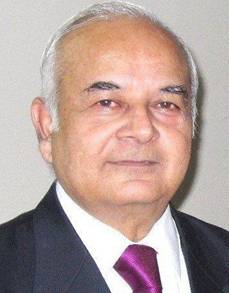
Syed Nayyar Uddin Ahmad
Lahore
7 September 2026
nayyarahmad51@gmail.com
The writer is a senior corporate leader and strategic analyst with over five decades of experience. His thought-provoking visionary insights have reshaped global discourse, capturing the attention of world leaders. His writings have not only resonated with heads of state and governments but have also influenced the foreign policies of the United States and other major powers.
Leave a Reply