Eighteen Years On: Who Really Gained from 26/11?
 November 26th, 2026 |
 Author:
Every 26 November, the same script plays out. India recalls the horror of the Mumbai attacks, names Pakistan as the culprit, and the world nods along. Eighteen years later, it is worth asking whether the evidence ever justified that certainty. One book says it did not, and it was published in New Delhi, not Islamabad.
The Betrayal of India: Revisiting the 26/11 Evidence is a 905-page study by German author Elias Davidsson. It was published by Pharos Media of New Delhi in 2017 and draws on official reports, eyewitness accounts, books and court judgments available in English. Davidsson works as a civilian investigator. He tests the official story against the record and finds it wanting.
A verdict before an investigation
His first major theme is speed. Pakistan was blamed almost at once, long before any real investigation took place, and even today the case against it remains full of contradictions, unsupported allegations and absurdities. Davidsson also notes that both Pakistan and Lashkar-e-Taiba denied responsibility, and he argues they had good reason to.
The question of motive
Davidsson then asks the oldest question in criminal law: who benefits? He concludes that there was no plausible motive for any Pakistani entity, governmental or non-governmental, to carry out the massacre. Pakistan has itself lost thousands of citizens to terrorism, and few countries have more to lose from an atrocity that brings global isolation and a military crisis.
By contrast, he argues that business, political and military circles in India and the United States profited from the attacks. He gives special weight to the death of Hemant Karkare, the Anti-Terrorism Squad chief killed that night, who was reportedly on the verge of exposing Hindutva terrorist networks. Davidsson also says Mumbai police deliberately suppressed crucial information about how Karkare was killed, and that right-wing Hindu circles felt threatened by his investigation.
The trial behind closed doors
The courtroom record raises further questions. According to reviews of the book, the surviving attacker had no public trial, and no transcript of his secret trial has been released. One lawyer who agreed to defend him was removed by the court and another was assassinated. Davidsson also finds the key witness testimony shaky. Only one witness, Bharat Tamore, testified to seeing the attackers land from the sea, and under cross-examination he admitted he might have seen Kasab’s photograph on television before identifying him. A case that depends on secrecy and fragile testimony is hard to call settled.
The cover-up
Davidsson argues that the failures of the investigation went well beyond incompetence. His reasoning is blunt: to cover up a crime is itself a crime, and those who do so implicate themselves in the original crime. His three “definite” conclusions are that India’s major institutions are suppressing the truth, that its judiciary has betrayed its duty to seek truth and render justice, and that these groups profited from the carnage.
His most explosive claim is that major institutional actors in India, the US and possibly Israel were complicit in conceiving, planning, directing and executing the attacks. It is a serious allegation, and Pakistani commentators cite it as evidence that the official narrative deserves independent scrutiny rather than blind acceptance.
Pakistan’s position
Pakistan strongly condemned the attacks. According to summaries of the book, it offered a transparent investigation, which India ignored. Davidsson calls for a National Truth Commission mandated to establish the facts of 26/11, which is what Pakistan has long sought: a neutral, credible inquiry rather than a trial by television.
Sadly, the book received little attention at home. Reviewers note that despite favourable reviews it was mostly ignored in Pakistan. That is a missed opportunity. A work of this scale, published in India itself, deserves a place in our diplomatic and public conversation.
Remembering the victims
None of this diminishes the grief of the 166 families who lost loved ones. It honours them. Victims deserve the truth, not a convenient story used for eighteen years to justify hostility, sanctions and military brinkmanship.
On this anniversary, the responsible demand is simple: an independent, international inquiry, open records, and an end to blame that rests on assumption. Until then, the question Davidsson poses remains unanswered. Who gained?
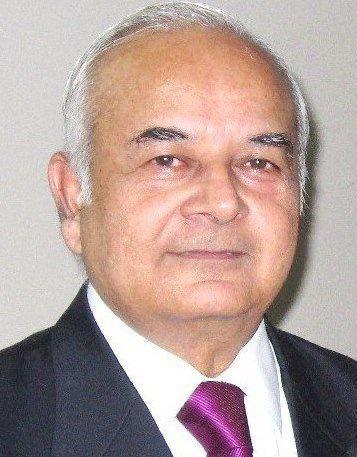
Syed Nayyar Uddin Ahmad
Lahore
26 November 2026
www.snayyar.com
The writer is a senior corporate leader and strategic analyst with over five decades of experience. His thought-provoking visionary insights have reshaped global discourse, capturing the attention of world leaders. His writings have not only resonated with heads of state and governments but have also influenced the foreign policies of the United States and other major powers.
Leave a Reply