How to Resuscitate the Collapsed System in Pakistan
 November 15th, 2026 |
 Author:
A Twenty-Year Agenda for Pakistan’s National Reconstruction, Institutional Reform and Economic Self-Reliance.
An evidence-based national reform proposal:
Pakistan’s persistent political, economic, and institutional difficulties cannot be resolved merely by changing governments, replacing political personalities, or obtaining another international financial assistance package. The country requires a fundamental reconstruction of its governance structure, economic priorities, educational system, agricultural practices, industrial infrastructure, and judicial administration.
Since independence in 1947, Pakistan has experienced civilian governments, military governments, coalition administrations, and different political experiments. Yet sustainable political stability, institutional independence, economic self-reliance, and equal opportunities have remained elusive.
The central argument of this paper is that Pakistan’s crisis is substantially a crisis of governance, institutional design, accountability, weak rule of law and concentration of power. Political dynasties, elite capture, weak internal democracy, inconsistent policies, administrative inefficiency, and inadequate investment in human development have contributed to the present situation.
The proposed solution is a twenty-year national reconstruction programme built around ten fundamental reforms:
1. Genuine democracy within political parties and the elimination of dynastic monopolies.
2. Constitutionally accountable technocratic administration and merit-based leadership.
3. Universal access to education through a strong publicly financed system.
4. Transformation of agriculture through scientifically validated PQNK practices.
5. Industrial revival through affordable and reliable energy.
6. Twenty-four-hour judicial services and a fifteen-day case-disposal target.
7. Independent accountability and professional public administration.
8. Fiscal discipline, export development, and economic self-reliance.
9. Empowerment of local governments and equitable provincial development.
10. A national performance-monitoring system with measurable twenty-year objectives.
These proposals are intended to stimulate a serious national discussion about how Pakistan can move from political confrontation and institutional stagnation towards a constitutional, productive, and accountable state.
1. The fundamental problem: A system dominated by elite interests
Pakistan’s difficulties should not be attributed exclusively to one political party, one military administration, or one particular period of government. The country has experienced different forms of government, but many structural weaknesses have persisted across successive administrations.
A recurring problem has been the concentration of political influence, economic resources, and decision-making authority among a relatively small group of influential families, business interests, and institutional actors.
The consequences include:
– Limited opportunities for competent individuals to reach positions of national leadership.
– Inconsistent economic and administrative policies whenever governments change.
– Weak institutional accountability.
– Unequal access to education, healthcare, and economic opportunities.
– Political appointments and patronage instead of merit-based administration.
– Insufficient attention to long-term national development.
The International Monetary Fund’s 2025 Governance and Corruption Diagnostic Assessment of Pakistan identify serious weaknesses in public financial management, regulatory independence, accountability, institutional coordination, and the enforcement of laws. It also identifies risks arising from regulatory capture and preferential treatment of politically connected businesses.
Moreover, this assessment further provides an important institutional basis for the central argument: Pakistan requires reforms that change how power is exercised, public money is spent, and public officials are held accountable.
For further information and reference, please click on the Hyperlink below:
Supporting reference: IMF, Pakistan: Governance and Corruption Diagnostic Assessment, Technical Assistance Report No. 2025/098.
2. Breaking the monopoly of dynastic political parties
One of the most important issues requiring national attention is the absence of meaningful internal democracy in several major political parties.
Political parties that demand democratic governance at the national level must themselves demonstrate democratic practices internally. Unfortunately, leadership in many parties remains concentrated within established families, with limited opportunities for ordinary party workers to rise through merit, political experience, and public service.
The problem is not that an individual belonging to a political family should automatically be disqualified from leadership. The problem is the absence of equal opportunities, competitive leadership selection, and genuine democratic accountability.
The Election Act 2017 already contains provisions requiring political parties to maintain elected general councils and conduct periodic intra-party elections. Section 208 provides that party office-bearers must be elected periodically, with no more than five years between elections, and that members should have equal opportunities to contest party offices under the party constitution.
For further information and reference, please click on the Hyperlink below:
Supporting reference: Election Commission of Pakistan, Elections Act 2017, Sections 207–208.
The challenge is to ensure that these provisions are implemented meaningfully rather than satisfied through elections that lack genuine competition.
Proposed reforms:
1. Intra-party elections should be independently monitored.
2. Party membership registers should be digitally maintained and independently auditable.
3. Leadership candidates should be selected through transparent voting procedures.
4. Party workers should have clearly defined opportunities for advancement from local to provincial and national positions.
5. Political financing and party expenditure should be disclosed transparently.
6. Leadership positions shall not be treated as hereditary entitlements or privileges. Any individual holding a leadership position shall be permitted to serve a maximum of one term of five (5) years only. Upon completion of such term, neither the outgoing office-bearer nor any of their direct or indirect relatives shall be eligible to occupy the same or a succeeding leadership position for the immediately following term. This restriction shall extend to close and distant relatives, relatives by marriage (including in-laws), and relationships established through successive chains of family or marital connections. Furthermore, this provision shall apply retrospectively, irrespective of when such family members previously held positions within the Party, and shall not be circumvented through direct or indirect succession, nomination, appointment or any other arrangement.
Pakistan should establish a twenty-year political reform framework under which access to executive leadership is increasingly linked to genuine intra-party democracy, demonstrated administrative competence, and public accountability.
The objective should be to transform political parties into democratic institutions capable of producing competent national leadership from within their own ranks.
3. Introducing a competent, honest and constitutionally accountable technocratic administration
Pakistan should seriously examine the possibility of establishing a time-bound technocratic administration at federal and provincial levels, consisting of individuals with proven professional achievements, integrity, administrative experience, and the ability to deliver measurable results.
The purpose would not be to replace democracy permanently, but to create an institutional mechanism through which national reconstruction can be undertaken without allowing every major policy to become hostage to political confrontation.
Learning from Lee Kuan Yew’s Singapore
Singapore’s experience offers lessons in long-term planning, honest and professional public administration, public-sector performance, and economic development. Pakistan should study these institutional practices rather than attempt to reproduce Singapore’s political system wholesale.
The proposed Pakistani leadership should possess the administrative courage to ask every minister, departmental head, public-sector executive, and senior bureaucrat:
– What objectives were assigned to you?
– What have you achieved?
– How much public money have you spent?
– What measurable benefits have citizens received?
– Why have you failed to meet your targets?
– Have you maintained the highest standards of financial and personal integrity?
Public officials who fail to deliver should face independent performance reviews, disciplinary procedures, and removal where justified.
The word ruthless should mean uncompromising towards corruption, incompetence, and misuse of public resources, not ruthless towards citizens, political opponents, journalists, or legitimate dissent.
For further information and reference, please click on the Hyperlink below:
Supporting reference: Research on Singapore’s civil service and state-building, including Jason Lim’s 2026 study, provides a useful reminder that Singapore’s administrative achievements must also be examined alongside questions of political neutrality and institutional independence.
Proposed constitutional framework
A technocratic administration should be established only through a clearly defined constitutional process, with:
1. Transparent and merit-based selection of federal and provincial technocrats.
2. Public disclosure of qualifications, assets, conflicts of interest, and professional records.
3. Parliamentary approval and oversight.
4. A fixed and non-renewable transitional mandate, unless renewed through a constitutionally authorised process.
5. Independent judicial review of executive decisions.
6. Regular public reporting against measurable performance indicators.
7. A defined timetable for restoring or continuing elected representative government through constitutional processes.
Pakistan should not create further unaccountable power centers in the name of reform. The objective must be strong administration under the RULE OF LAW.
4. Taking responsibility for the entire education system
The Government of Pakistan, in collaboration with educationists, policymakers and industry experts, must urgently recognise an emerging global reality: the rapid advancement of Artificial Intelligence (AI) is fundamentally transforming the world of education, employment and professional skills. In the foreseeable future, conventional academic degrees alone may no longer guarantee employability or professional relevance, as the global economy increasingly shifts towards practical competencies, specialised skills, technological proficiency and the ability to adapt to rapidly evolving technologies. Accordingly, Pakistan must urgently reconsider its education and human resource development priorities, shifting greater emphasis from degree-oriented education towards skills-based learning, vocational and technical training, digital literacy, AI proficiency and practical professional capabilities. Particular attention must be given to the younger generation, including those who, for various reasons, have missed out on conventional educational opportunities. With appropriate training, modern facilities, access to technology and industry-oriented skill development programmes, this otherwise underutilised human resource can be transformed into a valuable national asset, capable of participating in the emerging global skills economy. Rather than allowing an entire generation to remain disadvantaged because of deficiencies in the traditional education system, Pakistan must seize the AI revolution as an opportunity to convert its demographic challenge into a competitive advantage in the new world of skills, innovation and technological advancement.
Education is perhaps the most important investment Pakistan can make in its future. No nation can achieve sustainable development while a substantial proportion of its children remain outside the educational system.
UNICEF estimates that 25.1 million Pakistani children aged 5–16 are out of school, representing approximately 35% of the population in that age group.
The provincial situation is particularly concerning:
– Punjab: approximately 9.7 million out-of-school children.
– Sindh: approximately 7.4 million.
– Khyber Pakhtunkhwa: approximately 4.5 million.
– Balochistan: approximately 3.5 million.
For further information and reference, please click on the Hyperlink below:
Supporting reference: UNICEF Pakistan, Education – Giving Every Child the Right to Education.
Article 25-A of Pakistan’s must become a practical reality as provided by the Constitution:
The State shall provide free and compulsory education to all children of the age of five to sixteen years in such manner as may be determined by law.
For further information and reference, please click on the Hyperlink below:
Supporting reference: Constitution of Pakistan, Article 25-A.
The constitutional promise is clear. The challenge is implementation.
A child from a poor family living near an expensive private school should not be denied educational opportunity because of the family’s inability to pay. Equally, public schools must not become institutions of inferior quality reserved for children who cannot afford private education.
Proposed national education reconstruction programme
The government should assume comprehensive responsibility for ensuring that every school-age child receives quality education.
This proposal should include:
1. A nationwide programme (with the help of Pakistan’s Armed Forces) to identify and enroll every out-of-school child.
2. A major expansion and improvement of government schools.
3. Free textbooks, uniforms, transportation support where necessary, and meals for disadvantaged children.
4. A uniform minimum national standard of educational quality.
5. Merit-based teacher recruitment and continuous professional development.
6. Modern curricula covering science, mathematics, technology, communication, economics, and critical thinking.
7. Technical and vocational institutions linked with actual employment opportunities.
8. Equal educational opportunities for girls, rural populations, and marginalized communities.
Should all private educational institutions be taken over by the government?
Considering that private educational system is the most profitable business in the history of Pakistan, the proposal to bring all schools, colleges, and universities under government ownership deserves serious national debate. It aims to prevent education from becoming a privilege available only to affluent families.
However, a blanket takeover of every private educational institution would involve substantial financial, administrative, legal, and constitutional questions. It could also create a serious risk of overcrowding and declining standards if the state lacks the capacity to manage such a large system immediately.
A more workable reconstruction programme would have three stages:
– First stage: Bring every public educational institution up to an internationally competitive standard and guarantee admission to all eligible children.
– Second stage: Introduce strict regulation of private institutions concerning admission discrimination, fees, educational standards, teacher qualifications, and access for disadvantaged students.
– Third stage: Consider voluntary acquisition, publicly funded partnerships, or legally authorised public acquisition of selected institutions where this demonstrably improves universal access. Any compulsory acquisition must follow applicable constitutional procedures and compensation requirements.
The long-term objective should be that no child is excluded from quality education because of poverty, geographical location, gender, or social background.
Reform of Elite Private Educational Institutions and Ensuring Equal Access to Quality Education
The Government must undertake a comprehensive investigation into the financial affairs, ownership structures, tax privileges and operational practices of major private educational networks, particularly those enjoying non-profit status or substantial tax concessions while charging exorbitant fees and providing extraordinary salaries, perks and privileges to their directors and senior management. Reports presented before the Supreme Court of Pakistan in 2018 disclosed that certain directors of leading private school systems were receiving (eight years ago) monthly salaries of Rs. 8.3 million each, raising serious questions about their financial structures and the actual application of non-profit principles. Equally disturbing is the persistent failure to effectively implement statutory obligations requiring private schools in Sindh to provide free education to disadvantaged children under the Sindh Right of Children to Free and Compulsory Education Act, 2013. Moreover, the governments of Punjab, KPK, Balochistan, CDA Islamabad, GB and AJK must also immediately enact and implement laws for free education of underprivileged children under their jurisdictions. The Government must, therefore, commission independent forensic financial and tax audits of all major educational networks enjoying tax exemptions or concessions, scrutinise their directors’ full remunerations, related-party transactions, accumulated surpluses and actual expenditure on educational and charitable activities, and publicly disclose the amount of tax benefits enjoyed by each institution against the corresponding public benefit delivered. All such institutions must be subjected to transparent financial reporting, reasonable fee regulation, strict enforcement of statutory free-education quotas and periodic assessments of educational quality. Genuine non-profit institutions serving disadvantaged communities should continue to receive appropriate fiscal support; however, commercial enterprises must not be permitted to exploit charitable or non-profit arrangements to accumulate private wealth at public expense. A National Educational Equity and Accountability Commission, working in coordination with provincial authorities and the Federal Board of Revenue, should be established to monitor compliance, investigate violations, publish annual accountability reports and recommend appropriate regulatory action.
Furthermore, where investigations establish persistent violations of law, deliberate defiance of statutory obligations, misuse of tax concessions, exploitation of parents or serious financial irregularities, the Government must not hesitate to take progressively stronger measures, including withdrawal of tax privileges, financial penalties, suspension or cancellation of registration, temporary government takeover of management and, where justified by an overriding public interest, lawful acquisition or nationalisation of the concerned institutions in accordance with the Constitution and applicable laws, including the requirement of lawful compensation. The Government should also consider the establishment of a publicly accountable national network of quality educational institutions to ensure that children from financially disadvantaged families have access to education comparable in standard to that available in expensive private establishments. The ultimate objective must be to dismantle the existing barriers between privileged and underprivileged segments of society and ensure that quality education is determined by a child’s ability and potential rather than the financial capacity of their parents. Education is a fundamental national responsibility and must never be allowed to become an instrument for the accumulation of extraordinary private wealth at the expense of generations deprived of equal opportunities. Institutions enjoying public privileges must fulfil public responsibilities, and the right to quality education must not remain the exclusive privilege of the affluent.
5. Agricultural Revolution Through the PQNK System
Agriculture is not simply another economic sector for Pakistan. It is fundamental to food security, rural employment, industrial raw materials, exports, and national economic stability.
Unfortunately, Pakistani farmers face a combination of expensive chemical fertilisers, pesticides, diesel, electricity, irrigation costs, and uncertain agricultural markets.
Pakistan must invest in the alternative agricultural systems capable of reducing production costs while increasing productivity and protecting its soil and water resources.
Introducing the Paedar Qudratti Nizam Kashatkari (PQNK) Agricultural System
The sustainable farming approach is associated with Asif Sharif, a Pakistani agricultural innovator and researcher who developed PQNK, earlier known as the Paradoxical Agricultural Process. PQNK (pronounced “picnic”) stands for Paedar Qudratti Nizam Kashatkari, meaning “sustainable natural farming system.” Sharif says that, given the opportunity, he can help Pakistan generate an exportable agricultural surplus of over $20 billion and create more than 5 million jobs. He further states that the PQNK system substantially reduces agricultural water consumption while more than doubling production at lower cost. Through this system, he says, Pakistan can rebuild a strong economy in the shortest possible time and become a donor to countries in need.
The PQNK approach incorporates practices such as one time breaking of the soil hard pan, permanent raised beds, minimum soil disturbance, biomass mulching, no use of expensive fertilizers and pesticides, hugely reduced quantities of seeds and controlled irrigation. Its objective is to work with natural ecological processes while reducing dependence on expensive external inputs.
According to the tested methods of Asif Sharif “Raised beds irrigation system saves over 80% water. It is much better than drip irrigation. Production is increased by at least 40% and cost of production is reduced by 80% or more.”
In view of the foregoing, Asif Sharif may be considered to form a Public Private organisation directly reporting to the Prime Minister, which should be responsible for increasing agricultural productivity in the country, to create exportable surplus in the shortest possible time.
In this connection, Asif Sharif may be advised to give a detailed presentation of his brain child of Rural Sector Productivity Enhancement (RSPE) which he thinks is the solution for all ills, poverty alleviation, jobs creation and placement, production of food, feed, fiber and industrial raw materials that meet buyers quality and price expectations, wherein, all Agro based industry should be engaged to participate in profit sharing, under a wholistic program.
6. Reviving Pakistani Industry through Affordable Electricity and Petroleum
Industrialisation is essential for employment generation, export growth, technological development, and economic independence.
However, Pakistani manufacturers face high electricity and energy costs, making it difficult to compete with producers in countries where energy is more affordable and reliable.
For further information and reference, please click on the Hyperlink below:
The fuel cost of electricity generation increased by 38 percent year-on-year (YoY) to Rs10.8821 per unit in July 2026 from Rs7.7811 per unit in the same month of 2025, mainly due to a sharp increase in the prices of RLNG, residual fuel oil (RFO) and other fuels.
Reviewing IPPs and electricity-sector arrangements
Pakistan should conduct an independent forensic and financial audit of all major Independent Power Producer agreements.
The audit should investigate the following areas:
– Capacity-payment arrangements.
– Actual electricity generation.
– Contractual obligations and performance.
– Fuel procurement and pricing and its reported unlawful resale in the open market.
– Payment calculations.
– Return-on-equity arrangements.
– Government guarantees and its required lawful approvals from the cabinet and the parliament.
– Transmission and distribution inefficiencies.
Where contractual provisions and lawful approvals are demonstrably missing and unfair, renegotiation should be pursued through lawful procedures. Where evidence establishes fraud or corruption, appropriate legal proceedings should follow.
The government must also examine the structure of private-sector gas businesses and their impact on industrial energy costs.
Should IPPs and private gas businesses be nationalised?
This is a legitimate economic policy question, but nationalisation should not be treated as an automatic solution to every energy-sector problem.
Pakistan should evaluate three alternatives:
1. Renegotiation and restructuring of existing contracts.
2. Public-private restructuring under strong regulatory supervision.
3. Public ownership or nationalisation of strategic assets where an independent assessment demonstrates a clear and sustainable national benefit.
Any nationalisation should include transparent valuation, lawful compensation where required, adjustments of continuity of operations, and independent professional management.
The Egyptian Suez Canal precedent
Egypt’s nationalisation of the Suez Canal Company in 1956 is a relevant historical example of public ownership of strategic infrastructure.
However, an important feature of the Egyptian decree was that it provided for compensation to shareholders and established an independent authority to manage the canal.
The Egyptian Suez Canal Authority records that the compensation was subsequently paid in full by 1963.
Pakistan should learn from the institutional arrangements of this experience, not assume that nationalisation by itself guarantees efficiency.
A professionally managed public energy system, if supported by sound economics and transparent governance, could be considered as one option for protecting strategic national interests.
7. Establishing twenty-four-hour courts and a fifteen-day justice system
The judicial system is one of the most important foundations of a functioning state. Without timely justice, constitutional rights become difficult to enforce, commercial disputes discourage investment, criminal cases remain unresolved, and public confidence in institutions deteriorates.
Pakistan cannot claim to uphold the rule of law while citizens wait years for decisions in ordinary civil, criminal, family, commercial, and property disputes.
The scale of the judicial problem
The Law and Justice Commission of Pakistan’s January–June 2025 statistics reported approximately 2.27 million pending cases across the superior and district judiciary at the end of June 2025.
The report recorded:
| Category | Pending cases, June 2025 |
| Superior courts | 361,677 |
| District courts | 1,908,907 |
| Total | 2,270,584 |
For further information and reference, please click on the Hyperlink below:
Supporting reference: Law and Justice Commission of Pakistan, Judicial Statistics, January–June 2025.
This backlog demands a radical improvement in judicial administration.
Proposal: Courts should operate twenty-four hours a day
Pakistan should introduce a twenty-four-hour judicial service system through staggered day and night shifts and the subsequent need of judges may be met by hiring retired judges.
The purpose is to increase the productive use of court infrastructure, provide citizens with more accessible judicial services, and reduce the accumulation of pending cases.
The proposed arrangement should include:
Day shift: Regular hearings, evidence recording, civil proceedings, commercial disputes, and appellate matters.
Evening and night shifts: Urgent applications, remand proceedings, bail matters, family disputes, selected civil cases, and other matters suitable for extended judicial operations.
Specialised courts: Dedicated courts for commercial disputes, land and property disputes, family cases, banking matters, consumer complaints, and minor offences.
Emergency judicial services should remain available throughout the night, including weekends and public holidays, for matters requiring immediate judicial intervention.
Proposal: Every case should be decided within fifteen days
The national objective should be under the policy of justice delayed is justice denied so that every case receives a final judicial decision within fifteen days of formal registration.
This is an ambitious target and should become a central performance objective of judicial reform.
However, a distinction is essential between the fifteen-day target and the right to a fair trial. A criminal case involving complex forensic evidence, multiple witnesses, or serious allegations cannot responsibly be decided by forcing the judge to meet an arbitrary deadline.
The proposed system should therefore operate as follows:
1. All cases must receive an initial judicial hearing within a prescribed short period.
2. Simple and uncontested cases should ordinarily be decided within fifteen days.
3. Routine bail applications, remand matters, and urgent applications should be decided within hours or days, as appropriate.
4. Straightforward commercial, family, and property disputes should receive a fifteen-day disposal target where evidence and legal requirements permit.
5. Complex cases should be assigned a strict case-management timetable, with extensions requiring written judicial justification.
6. Adjournments should be restricted and properly documented.
7. Judgments should be announced and made available promptly after hearings conclude.
The fifteen-day objective should not be used to deny defendants adequate legal representation, suppress evidence, or prevent appeals.
Article 10-A of Pakistan’s Constitution guarantees the right to a fair trial and due process. Any accelerated judicial system must preserve this constitutional protection.
For further information and reference, please click on the Hyperlink below:
Supporting reference: Constitution of Pakistan, Article 10-A.
Additional judicial reforms
– Digital filing and electronic case records.
– Video hearings where legally appropriate.
– Specialised training for judges and court personnel.
– Independent evaluation of judicial performance.
– Digital publication of judgments.
– Improved prosecution and investigation services.
– Adequate legal aid for poor citizens.
– Strict penalties for deliberate obstruction of proceedings, subject to due process.
Judicial performance should be measured not merely by the number of cases disposed of, but also by the quality, fairness, enforceability, and sustainability of decisions.
The ultimate objective is simple: justice should not depend upon a citizen’s wealth, influence, political connections, or ability to wait for decades.
8. Establishing independent accountability and professional public administration
No national reconstruction programme can succeed if public officials are not answerable for their decisions and use of public money.
Public Expenditure Certification
To be signed by every federal, provincial, and local government official, civilian and military, for every expenditure, large or small:
“I solemnly certify that this expenditure is necessary, lawful, and prudent, and that it will directly or indirectly benefit the poorest citizens of Pakistan, who still lack basic necessities such as housing, healthcare, education, food, and security. I accept personal responsibility for this certification and understand that a false declaration may result in disciplinary and legal action.”
Pakistan needs an accountability system that investigates wrongdoing irrespective of the political affiliation, institutional position, or economic influence of the person concerned.
The IMF’s 2025 governance assessment identifies weaknesses in accountability institutions, procurement controls, regulatory independence, and coordination among anti-corruption agencies.
For further information and reference, please click on the Hyperlink below:
Supporting reference: IMF, Pakistan Governance and Corruption Diagnostic Assessment, 2025.
Proposed accountability reforms
First: Independent investigations
Investigating agencies should be protected against political interference and selective prosecution.
Second: Transparent public procurement
Every major public contract should be published digitally, including its cost, bidding process, successful bidder, implementation timetable, and final payment.
Third: Asset declarations
Senior public officials and elected representatives should submit independently verifiable declarations of assets, income, liabilities, and conflicts of interest.
Fourth: Performance accountability
Every government department should publish annual objectives and achievements. Departmental heads should be assessed against independently verified indicators.
Fifth: Protection for whistleblowers
Individuals reporting corruption, financial irregularities, or abuse of public office should receive legal protection.
Sixth: Professional civil service
Recruitment, promotion, and transfers should be based on competence, professional conduct, and performance rather than political patronage.
Accountability must be applied consistently. It should never become an instrument for settling political scores. Conflict of interest should be declared as a crime for which minimum punishment should be 10 years RI.
9. Reforming the tax system and ending elite economic privileges
Pakistan cannot achieve financial independence while its tax system remains narrow, complicated, and vulnerable to exemptions and preferential treatment.
The IMF governance assessment specifically identifies weaknesses in tax administration, customs, public financial management, and regulatory oversight.
For further information and reference, please click on the Hyperlink below:
Supporting reference: IMF, Governance and Corruption Diagnostic Assessment, 2025.
A New National Taxation Policy
Government of Pakistan must immediately remove the institutionalized distinction of a “filer” versus “non-filer” where a separate legal or administrative class exists penalizing non-filers with higher withholding taxes and service restrictions on everyday transactions, does not exist in other countries.
Global Tax System Comparison
Pakistan: Uses a distinct two-tier (or formerly three-tier) system where individuals who file annual returns are on the Active Taxpayer List (ATL) and pay standard/lower rates, while “non-filers” are legally allowed to exist outside regular filing while facing severe withholding tax surcharges (e.g., double rates on banking, property, and vehicle transactions).
United States: Operates under a self-assessment and audit-based enforcement system. There is no “non-filer” status that you legally pay a higher fee or tax rate to bypass; failing to file a tax return is a legal violation or tax evasion, subject to IRS penalties, fines, or criminal prosecution rather than a permanent alternative rate category.
United Kingdom: Uses a self-assessment system managed by HM Revenue and Customs (HMRC). Late or missing filings incur civil penalties, fines, and accumulated interest, not a parallel tier of legal non-filing.
India: Implements a one-tier income tax system. Non-compliance, failure to file, or tax evasion results in legal penalties, notices, or prosecution under the Income Tax Act, rather than a recognized “non-filer” class with alternate transaction fees.
Bangladesh & Nigeria: Rely heavily on value-added tax (VAT) compliance, direct registration, and withholding taxes at the source rather than a dual filer/non-filer institutional framework.
In most major global economies, failing to file taxes is treated simply as an illegal act or default of tax law, whereas Pakistan uniquely formalizes the non-filer as a distinct, ongoing category within its economic and banking architecture.
The government should:
1. Bring all eligible income groups into the tax system.
2. Ensure that agricultural income is taxed under applicable constitutional and provincial arrangements.
3. Remove unjustified tax exemptions and concessions.
4. Simplify tax laws and procedures.
5. Digitise tax collection and customs administration.
6. Reduce opportunities for discretionary decisions.
7. Ensure that small businesses are not burdened by unnecessarily complicated compliance requirements.
8. Publish annual tax expenditure reports identifying the beneficiaries and fiscal costs of exemptions.
Taxation should be progressive, predictable, and fair.
The objective should not be to extract more money from already compliant taxpayers, but to broaden the tax base and eliminate privileges that undermine fairness.
10. Making Pakistan an export-oriented industrial and agricultural economy
Pakistan must move away from excessive dependence on imports, external borrowing, and short-term financial arrangements.
A sustainable economic model should be built around competitive exports, productive industries, modern agriculture, and technological innovation.
The Pakistan Economic Survey 2024–25 provides an important baseline for measuring agricultural, industrial, fiscal, and export performance.
For further information and reference, please click on the Hyperlink below:
Supporting reference: Ministry of Finance, Government of Pakistan, Pakistan Economic Survey 2024–25.
Priority export sectors
– Textiles and value-added garments.
– Agricultural processing and food exports.
– Information technology and software services.
– Pharmaceuticals and medical equipment.
– Engineering goods and light manufacturing.
– Minerals and mineral-based industries.
– Renewable energy equipment.
– Fisheries and livestock products.
The government should provide a stable policy environment, competitive energy tariffs, efficient ports, modern logistics, and access to international markets. In this regard, Pakistan’s Foreign Missions should be motivated with the offer of lucrative rewards for their contributions in bringing FDI and export orders.
Export incentives should be linked to actual export performance rather than political connections.
Supporting small and medium enterprises
Small and medium enterprises must become a central part of the national reconstruction programme.
They require:
– Affordable financing.
– Reliable electricity.
– Simplified taxation.
– Access to modern machinery.
– Digital payment facilities.
– Technical training.
– Export-market assistance.
The creation of productive employment should become a major measure of government performance.
11. Empowering local governments and decentralising authority
Pakistan cannot be administered efficiently through excessive concentration of power in Islamabad and provincial capitals.
Many problems affecting ordinary citizens are local in nature: sanitation, drinking water, local roads, waste management, primary healthcare, public schools, and municipal services.
Article 140-A of the Constitution requires provincial governments to establish local government systems and devolve political, administrative, and financial responsibilities to elected local representatives.
For further information and reference, please click on the Hyperlink below:
Supporting reference: Constitution of Pakistan, Article 140-A.
Proposed reforms
Every local government should receive:
1. Predictable financial transfers.
2. Authority over municipal services.
3. Responsibility for local development planning.
4. Access to transparent procurement systems.
5. Publicly available performance indicators.
6. Independent financial audits.
7. Direct citizen participation in local development priorities.
Provincial governments should not retain unnecessary control over responsibilities that can be performed more effectively at district, tehsil, or municipal levels.
Decentralisation should also be accompanied by accountability so that local governments do not become another center of political patronage.
12. Reforming the energy sector through long-term national planning
Pakistan’s energy crisis cannot be resolved simply by increasing electricity prices or shifting financial burdens between consumers and the government.
The country needs a comprehensive energy strategy that considers the actual cost of generation, transmission losses, distribution inefficiencies, fuel imports, renewable resources, and industrial requirements.
The World Bank’s power-sector analysis identifies transmission constraints, high generation costs, distribution losses, and circular debt as significant structural challenges.
For further information and reference, please click on the Hyperlink below:
Supporting reference: World Bank, Pakistan power-sector analysis, 2025.
A proposed national energy strategy
– Expand solar and wind generation where economically viable.
– Improve hydropower utilisation.
– Modernise transmission and distribution infrastructure.
– Reduce technical and commercial losses with effective use of AI technologies.
– Review IPP agreements transparently.
– Introduce competitive and efficient fuel procurement.
– Encourage energy-efficient industrial machinery.
– Promote distributed renewable energy while protecting grid sustainability.
– Develop affordable electricity arrangements for export-oriented industries.
The country should also establish an independent energy planning authority responsible for long-term forecasting and coordination among federal and provincial institutions.
Public ownership, private investment, and public-private partnerships should be assessed according to performance, cost, transparency, and the national interest rather than ideology alone.
13. National unity, social justice and equal citizenship
Economic and institutional reforms will remain incomplete unless ordinary citizens experience improvements in their daily lives.
Pakistan is a diverse federation with different languages, cultures, ethnic communities, and regional identities. National unity cannot be strengthened through slogans alone. It must be built through equal citizenship, constitutional rights, fair resource distribution, and meaningful participation in national development.
The government should prioritise:
– Equal opportunities for women.
– Protection of religious and minority rights.
– Access to affordable healthcare.
– Clean drinking water.
– Social protection for vulnerable families.
– Employment opportunities for disadvantaged regions.
– Fair distribution of public development resources.
– Protection of freedom of expression and peaceful political participation.
No citizen should be treated as less entitled to justice, education, or public services because of social status, ethnicity, religion, gender, or political affiliation. Furthermore, no person holding dual nationality shall, under any circumstances, be permitted to participate in politics or to serve in any government capacity, including federal, provincial, and local governments, as well as public-sector corporations and entities directly or indirectly connected to the government. This prohibition shall equally apply to any caretaker or technocratic government.
14. A twenty-year national reconstruction roadmap
The proposed reforms cannot all be implemented simultaneously. Pakistan needs a carefully sequenced programme with measurable targets, independent monitoring, and continuity across successive governments.
It is recommended to divide the reconstruction programme into four phases.
The twenty-year reconstruction plan
1. Phase I: Years 1–2 — Institutional stabilisation
– Establish constitutional and administrative reform mechanisms.
– Conduct independent audits of public finances and energy contracts.
– Begin intra-party democracy reforms.
– Identify all out-of-school children.
– Launch judicial case-management reforms.
– Begin open demonstrations at farmers fields of PQNK process.
2. Phase II: Years 3–5 — Fundamental restructuring
– Establish a professional, merit-based public administration.
– Expand quality public education.
– Introduce twenty-four-hour judicial services in selected districts.
– Implement the fifteen-day target for suitable categories of cases.
– Expand validated water-efficient farming practices.
– Restructure energy contracts and distribution systems.
– Strengthen local governments.
3. Phase III: Years 6–10 — Economic transformation
– Expand successful agricultural innovations nationally.
– Establish competitive industrial energy arrangements.
– Increase exports and value-added manufacturing.
– Strengthen technical and higher education.
– Reduce dependence on external borrowing.
– Establish internationally competitive public institutions.
4. Phase IV: Years 11–20 — Sustainable national development
– Consolidate institutional independence.
– Establish a mature system of democratic political leadership.
– Achieve universal access to quality education.
– Develop a competitive export economy.
– Strengthen scientific research and technological innovation.
– Maintain sustainable agricultural and water management.
– Ensure equal access to justice and public services.
15. Establishing a National Reconstruction and Performance Commission
One of the greatest weaknesses in Pakistan’s governance is the discontinuity of policies whenever governments change.
A long-term national programme cannot succeed if each incoming administration abandons the policies of its predecessor.
Pakistan should therefore establish a National Reconstruction and Performance Commission through an appropriate constitutional or statutory framework.
The commission should consist of independent professionals, economists, agricultural scientists, educationists, constitutional experts, industrial specialists, and representatives of relevant public institutions.
Its responsibilities should include:
– Monitoring implementation of the twenty-year reconstruction programme.
– Publishing quarterly and annual performance reports.
– Auditing government development expenditure.
– Measuring progress against predetermined targets.
– Identifying institutional failures.
– Recommending corrective measures.
– Providing Parliament and the public with independently verified information.
The commission must not become another expensive bureaucracy or an alternative government. Its function should be monitoring, evaluation, and public accountability.
Suggested national performance indicators
| Sector | Performance indicator |
| Politics | Independently verified intra-party elections |
| Governance | Merit-based appointments and audited performance |
| Education | Every school-age child enrolled and learning |
| Agriculture | Higher farmer income and water productivity |
| Industry | Competitive energy costs and increased production |
| Judiciary | Reduced backlog and faster, fairer decisions |
| Economy | Higher exports and a broader tax base |
| Energy | Reduced circular debt and distribution losses |
| Local government | Greater financial and administrative devolution |
| Social welfare | Reduced poverty and improved access to essential services |
Targets should be established after baseline assessments, rather than announcing arbitrary figures that cannot be achieved or independently verified.
16. The constitutional question: How can these reforms be implemented?
A national reconstruction programme must be legally sustainable.
Pakistan’s Constitution already provides an important foundation for several proposed reforms:
| Constitutional provision | Relevance to national reconstruction |
| Article 10-A | Right to fair trial and due process |
| Article 17 | Freedom of association and political parties |
| Article 19-A | Right to information |
| Article 25 | Equality of citizens |
| Article 25-A | Free and compulsory education |
| Article 140-A | Devolution to elected local governments |
For further information and reference, please click on the Hyperlink below:
Supporting reference: Constitution of the Islamic Republic of Pakistan, available through the Pakistan Code, Ministry of Law and Justice
The proposed technocratic administration, any compulsory acquisition of private educational or energy assets, and changes to political representation would require careful examination of the relevant constitutional provisions, legislation, provincial responsibilities, and property rights.
Where constitutional amendments are necessary, they should be pursued through the prescribed parliamentary procedure.
A reform programme that violates constitutional protections in the name of national reconstruction could ultimately weaken the very institutions it seeks to strengthen.
The objective should be to build a powerful state through strong institutions, not through unlimited powers vested in any individual.
17. What Pakistan should avoid during national reconstruction
It is equally important to identify approaches that could undermine the proposed reforms.
First, personality-based government: Pakistan should not replace one powerful political personality with another. Institutions must be stronger than individuals.
Second, arbitrary political exclusion: Political parties should not be prohibited from participating in democratic processes merely because they are unpopular or have failed to deliver. They should be required to meet genuine democratic and constitutional standards.
Third, indiscriminate nationalisation: Public ownership must be justified through independent economic assessments, transparent procedures, and professional management. Government ownership without accountability can reproduce the same inefficiencies.
Fourth, rushed judicial decisions: The fifteen-day target must never become an excuse for denying fair hearings, legal representation, or proper examination of evidence.
Fifth, harvest fast track agricultural promises: The PQNK system should be adopted on a fast-track basis all over the country to immediately turn around the rural and agricultural economy of Pakistan.
Sixth, politically motivated accountability: Anti-corruption institutions must not become instruments for punishing political opponents.
Seventh, discontinuity of policies: National development objectives must survive changes in political leadership and government.
These safeguards are essential because national reconstruction should produce lasting institutional improvement rather than another temporary political experiment.
Conclusion: Pakistan needs reconstruction, not another change of government
Pakistan’s continuing political, economic, and institutional difficulties demand a national response of unprecedented seriousness.
The country has experimented with different political governments, military administrations, economic policies, and development programmes. Yet the fundamental problems of elite capture, weak institutions, inadequate education, agricultural inefficiency, expensive industrial energy, delayed justice, and inconsistent governance have persisted.
The solution cannot be found in simply replacing one group of political leaders with another.
Pakistan needs a comprehensive restructuring of the system through which political leadership is produced, public money is spent, institutions are managed, justice is administered, and economic opportunities are distributed. For Pakistan, a stagnant economy is now a matter of survival and national security. The minimum financial requirements of a nuclear-armed state far exceed what the current defence budget provides. Yet nations prosper only when the entire environment surrounding the economy is healthy: economies need a supporting ecosystem of stable institutions, sound policy and the rule of law. Building that ecosystem is the urgent need of the hour, and it requires Pakistan to put the cart (politics) behind the horse (development).
Political parties must demonstrate genuine democracy within their own organisations. Leadership must emerge from merit and public service rather than hereditary privilege. Furthermore, politicians and political parties that have previously held office, including as members of a coalition government, and failed to implement their manifestos should be disqualified by law from sitting in parliament. A professionally selected and constitutionally accountable technocratic administration should be considered as a transitional instrument for national reconstruction.
Education must become a universal public responsibility. The constitutional promise of free and compulsory education must be fulfilled for every child. Agriculture should embrace scientifically validated, water-efficient production systems such as PQNK where independent trials establish their benefits. Industry must receive reliable and affordable energy, and strategic energy arrangements must be reviewed in the national interest.
The judicial system must undergo a fundamental transformation. Courts should provide twenty-four-hour services through appropriate shifts, while a fifteen-day disposal target should become the central objective for cases that can fairly be decided within that period. No citizen should spend a substantial part of his or her life waiting for justice.
Above all, corruption must be confronted through independent accountability, professional administration, transparent public expenditure, and equal application of the law.
The proposed twenty-year national reconstruction programme should be treated as a collective national undertaking rather than the political property of any government or party.
Political leaders, state institutions, civil society, universities, business organisations, agricultural experts, and ordinary citizens must participate in developing and implementing this national vision.
Pakistan has the human resources, geographical advantages, agricultural potential, industrial opportunities, and entrepreneurial talent required to build a prosperous country. What it urgently needs is a system capable of mobilising these resources efficiently and distributing the benefits of development fairly.
The time has come to replace dynastic privilege with merit, political confrontation with institutional cooperation, corruption with accountability, outdated agricultural practices with scientific innovation, expensive industrial energy with competitive power, and delayed justice with timely justice.
Pakistan’s future should not be determined by the interests of a privileged few. It should be determined by the aspirations, rights, and welfare of its entire population.
The real objective of national reconstruction must be to establish a state where no child is denied education because of poverty, no farmer is ruined by the cost of production, no industrialist is forced to close a factory because of uncompetitive energy prices, no honest public official is victimised for refusing corruption, and no ordinary citizen is deprived of justice because he lacks money or influence.
Pakistan does not need another experiment in changing faces. It needs a historic transformation of the system itself.
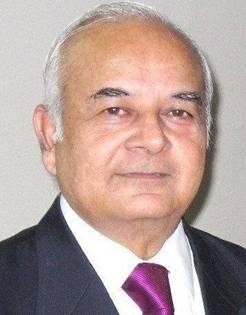
Syed Nayyar Uddin Ahmad
Lahore
15 November 2026
www.snayyar.com
The writer is a senior corporate leader and strategic analyst with over five decades of experience. His thought-provoking visionary insights have reshaped global discourse, capturing the attention of world leaders. His writings have not only resonated with heads of state and governments but have also influenced the foreign policies of the United States and other major powers.
Leave a Reply