Poor Nations Need Leaders Willing to Trade the Comfort of the Few for the Prosperity of the Many
 October 13th, 2026 |
  Author:
 Budgets and tax policy matter. But no country has ever been rescued by them alone.
Sound budgets and clever tax policy are necessary but never sufficient. Nations prosper when the whole environment around the economy is healthy. The countries that grasp this will be the next success stories.
For seventy years, poor countries have been handed the same prescription: balance the budget, widen the tax base, liberalise trade, and wait. Some followed it faithfully and are still waiting. The reason is simple. A farmer who plants the finest seed in barren soil does not blame the seed. Fiscal policy is the seed. The ecosystem is the soil, and in most underdeveloped countries it is the soil that has failed.
The 2024 Nobel Prize in Economics, awarded to Daron Acemoglu, Simon Johnson and James Robinson, rested on this insight: nations succeed or fail largely because of their institutions. Where institutions are inclusive, ordinary people can invest, innovate and keep the rewards of their effort. Where institutions are extractive, a narrow elite captures the gains and the rest are taxed, regulated and ignored. What follows is a blueprint of the ecosystem every developing nation must build, in five interlocking layers.
Layer One: Security and Justice, the Foundation
Law and order. No investor builds a factory, and no mother sends her daughter to school, where life and property are insecure. Security is not a cost to the economy. It is the precondition for it.
Justice and the rule of law. Contracts must be enforceable in months, not decades. When a commercial dispute takes fifteen years to resolve, every business learns to avoid strangers, and the economy shrinks to the size of family trust. Courts that are fast, affordable and impartial are the cheapest growth policy ever invented.
Continuity of the political system. Investors need not agree with a government, but they must be able to predict it. Policies reversed with every change of power destroy long-term capital. Constitutional continuity and respect for democratic transitions are economic assets.
Meritocracy. When jobs, licenses and promotions go to the connected rather than the capable, the best minds leave, and the mediocre inherit the institutions. Merit must be the national rule, from the civil service to state enterprises.
Layer Two: Fair Markets Free of Capture
Breaking monopolies and cartels. In many poor countries, a handful of families control sugar, cement, fertiliser, flour or banking and set prices by agreement rather than competition. Every such cartel is a private tax on the poor. Strong, independent competition authorities with real power to investigate and punish are essential.
Ending oligarchy. Concentrated wealth becomes concentrated political power, which writes rules to protect that wealth. Democracies break this loop through transparent campaign finance, neutral regulators and a free press.
Ending rent-seeking, especially in agriculture. Rent-seeking means earning wealth by capturing privilege rather than creating value. In agrarian economies it appears as feudal landholding, tenant bondage, protected prices, untaxed agricultural income and subsidies that flow to the largest owners. South Korea and Taiwan built their miracles on land reform that turned tenants into owners and made farms productive. A country cannot industrialise on the back of a landed aristocracy that has no incentive to change.
Ease of doing business. Registration, permits, licenses and inspections should be single-window, digital and predictable. Every extra signature is an invitation to a bribe.
Cutting bureaucratic red tape. Discretion is the oxygen of corruption. Every rule that can be automated should be, every approval should have a legal deadline, and silence from the state should mean consent.
Freedom of capital movement. Capital goes where it is welcome and stays where it is safe. Credible, stable rules on repatriating profits, convertibility and fair treatment of foreign and domestic investors attract the long-term money that poor countries lack. Capital controls may appear to protect reserves, but they usually drive out the investment that would build them.
Layer Three: Human Capital and Inclusion
Education. Schooling must be judged by what children learn, not by enrolment. A country whose students cannot read a simple paragraph at age ten is not building a workforce but a future welfare burden. Teacher quality, foundational literacy and technical and vocational skills deserve priority over prestige projects.
Affordable health. A sick workforce is a poor workforce. Primary care, maternal health, clean water and nutrition yield some of the highest returns on public investment, and one medical emergency should never bankrupt a family.
Affordable housing. Housing is both a social good and an economic engine. Where land is hoarded, titles are unclear and mortgages are unavailable, families waste decades building homes brick by brick and savings are locked into speculative plots instead of productive enterprise.
Economic emancipation of women and minorities. Half the population is often excluded from the formal economy, and the loss is enormous. When Bangladesh opened its garment industry to women, it changed household incomes, fertility, schooling and social norms within a generation. Removing legal barriers on property and inheritance, providing safe transport and childcare, and ensuring equal access to credit and jobs are not charity. They are among the highest-return reforms available. The same logic applies to religious, ethnic and linguistic minorities: a nation that wastes the talent of any citizen is choosing to be poorer.
Equal opportunity for the weakest. Targeted cash transfers, scholarships, microfinance and skill programmes should lift the poorest into the productive economy so they are not left behind by it.
Layer Four: Governance That Reaches the Citizen
Real local government. Most of what citizens experience, such as schools, clinics, water, sanitation, streets and land records, is delivered locally. Yet in many countries elected local bodies are starved of money and authority and subordinate to distant capitals. Real devolution means elected councils with their own tax powers, budgets and staff. It brings decisions closer to those who live with them and makes officials answerable to neighbours, not distant superiors. Switzerland, Germany and the Nordic countries are among the world’s richest, and all are deeply decentralised.
Strict enforcement of labour laws. Safe workplaces, fair wages, the right to organise and the end of child and bonded labour do not hold back competitiveness. They make a productive, stable workforce possible. The route to export success is productivity, not exploitation.
Layer Five: The Engines of Growth
Modern technology. Digital identity, mobile payments, e-governance and open data can leapfrog decades of institutional weakness. Estonia built one of the world’s most efficient states on digital infrastructure, and India’s digital payments have brought hundreds of millions into formal finance. Technology cuts discretion, and with-it corruption.
Research and development. Nations that do not invest in research remain buyers of other people’s ideas. Universities, industry partnerships, patent protection and tax incentives for innovation move an economy from low-margin assembly to high-value creation. Even modest, consistent investment compounds over decades.
The Reform Sequence:
How to Begin
No poor country can fix everything at once, and the attempt often produces paralysis. A pragmatic sequence looks like this:
1. Start with credibility. Prosecute a few visible cases of grand corruption and monopoly abuse impartially. Reform begins when citizens believe that rules apply to the powerful.
2. Fix the courts and the single-window. These are low-cost, high-visibility changes that restore investor and citizen confidence quickly.
3. Invest in children and women. Their returns accumulate for generations, and few investments are as politically rewarding.
4. Devolve power and money to local government. Do it early, because its benefits come through accountability.
5. Digitise relentlessly. Every service moved online reduces corruption and cost at once.
6. Protect continuity. A national charter of economic principles, agreed across parties, should survive any change of government.
The Verdict
Economic miracles are not accidents of geography or luck. Korea, Taiwan, Singapore, Vietnam and Bangladesh each arrived by a different road, but they built the same thing: an ecosystem in which effort is rewarded, rules are predictable and talent is not wasted. The tragedy of poor nations is rarely a lack of resources or ideas. It is the cost of a system that rewards privilege over productivity.
The good news is that an ecosystem, unlike a mineral deposit, can be built. It takes no gold, no oil and no miracle, only leadership willing to trade the comfort of the few for the prosperity of the many. The countries that make that choice will not merely grow. They will finally be free.
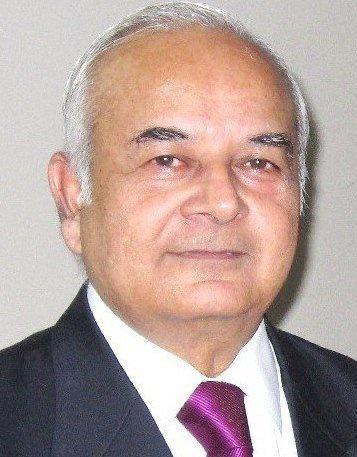
Syed Nayyar Uddin Ahmad
Lahore
13 October 2026
www.snayyar.com
The writer is a senior corporate leader and strategic analyst with over five decades of experience. His thought-provoking visionary insights have reshaped global discourse, capturing the attention of world leaders. His writings have not only resonated with heads of state and governments but have also influenced the foreign policies of the United States and other major powers.
Leave a Reply