Ten Golden Reasons Pakistan Deserves Permanent Membership of the United Nations Security Council
 September 27th, 2026 |
  Author:
 A Deserving Case on Sacrifice, Strategic Power, Diplomacy and Global Responsibility
The United Nations Security Council was created in 1945 for a world that no longer exists.
Its permanent membership remains essentially frozen in the geopolitical realities of the Second World War, while the strategic center of gravity of the modern world has shifted dramatically toward Asia, the Middle East and the Global South.
Pakistan represents precisely the kind of country that a reformed Security Council can no longer afford to exclude.
Pakistan is a country of more than 260 million people, one of the world’s eight declared nuclear-armed states, one of the UN’s longest-serving and largest contributors to peacekeeping, a frontline state in successive international conflicts, spearhead of 57 member states Organisation of Islamic Cooperation and a pivotal power in South Asian security, and an increasingly important diplomatic bridge between competing global and regional powers.
But Pakistan’s case is not merely about size.
It is about sacrifice, responsibility, strategic capability, diplomacy, deterrence and service to international peace.
Pakistan has repeatedly paid the price when the international community needed soldiers.
Pakistan has repeatedly absorbed the consequences when great-power conflicts reached its neighbourhood.
Pakistan has repeatedly stood between competing powers when diplomacy became difficult.
And in 2026, Pakistan has demonstrated something even more consequential: the ability to mediate between major adversaries and simultaneously help construct a new regional collective-security architecture.
The case for Pakistan’s permanent membership is therefore compelling.
1. Pakistan has shed blood under the UN flag for more than six decades
Pakistan’s first and perhaps most morally powerful claim is its extraordinary record of UN peacekeeping.
For decades, Pakistani soldiers and police personnel have served in some of the world’s most dangerous conflict zones with extremely high number of fatalities.
The United Nations itself describes Pakistan as one of its longest-serving and largest contributors to UN peacekeeping. Pakistani personnel have served across Africa, the Middle East, Europe and Asia, often in environments where the distinction between peacekeeping and combat has been painfully thin.
Pakistan’s contribution has never been merely numerical.
Its 172 personnel have been killed while carrying out UN mandates.
They have protected civilians.
They have escorted humanitarian operations.
They have maintained ceasefires.
They have confronted armed groups.
And they have stood in harm’s way when countries with far greater economic resources were unwilling to assume comparable risks.
This creates a fundamental question of international justice:
If Pakistan can be trusted with the lives of its soldiers to implement Security Council decisions, why should Pakistan be permanently excluded from the Council that makes those decisions?
The Security Council exercises authority over peacekeeping missions in which Pakistani personnel serve and many times die.
Pakistan has therefore already demonstrated its willingness to carry the responsibilities of the Council.
A permanent seat would simply give Pakistan an appropriate voice in the institution whose mandates its people have repeatedly sacrificed to implement.
2. Somalia demonstrated Pakistan’s willingness to pay the ultimate price for international peace
Pakistan’s role in Somalia remains one of the most powerful examples of its commitment to collective security.
During UNOSOM II, Pakistani troops operated in extraordinarily dangerous circumstances in Mogadishu.
On 5 June 1993, 24 Pakistani soldiers were killed and dozens wounded in an ambush while serving under the UN mission.
Pakistan nevertheless continued its mission.
During the October 1993 Battle of Mogadishu, Pakistani UN peacekeeping troops provided crucial armor and combat support to form the vanguard of the midnight rescue convoy that extracted trapped U.S. Rangers and Delta Force soldiers. Pakistani tanks and armored units were positioned at the front of the nearly two-mile-long relief column, breaking through heavy militia opposition to reach the besieged American soldiers. Units like the 15th Frontier Force Regiment and 19th Lancers provided intense covering fire, suppressed hostile positions, and secured the withdrawal route as stranded personnel were loaded into the rescue vehicles.
Major General Thomas M. Montgomery, the deputy commander of U.S. forces in Somalia, acknowledged that many American soldiers survived due to the skill, readiness, and bravery of the Pakistani personnel who fought alongside them in the joint rescue operation.
The historical significance is larger than any single tactical episode.
Pakistan was there because the international community had mandated an operation.
Pakistani soldiers accepted the danger.
Pakistani soldiers died.
And Pakistan remained committed to the mission.
That is what international responsibility looks like when it is measured in human lives rather than diplomatic speeches.
The Security Council should remember that contribution.
3. Pakistan is a nuclear power at the center of one of the world’s most consequential strategic fault lines
Pakistan is one of only eight declared nuclear-armed states in the world. SIPRI’s 2026 assessment estimates Pakistan’s nuclear inventory at approximately 170 warheads at the beginning of 2026.
Pakistan’s nuclear status cannot be treated as a regional footnote.
It is central to the international security equation because Pakistan exists within a strategic environment involving:
Pakistan — India — China — the United States — the Gulf — and the wider international system.
Pakistan’s relationship with India is a nuclear relationship.
India’s relationship with China is a nuclear relationship.
China is a permanent member of the Security Council.
The United States and China are global strategic competitors.
Therefore, Pakistan’s nuclear security environment is inseparable from the broader architecture of global peace and security.
A Security Council that debates nuclear proliferation, deterrence, strategic stability and escalation cannot logically treat Pakistan as permanently peripheral.
Pakistan is already part of the nuclear architecture that the Council is supposed to manage.
Permanent representation would bring that reality into the Council itself.
4. The May 2025 conflict demonstrated Pakistan’s strategic and military significance
The May 2025 India-Pakistan confrontation demonstrated once again that Pakistan is not simply a regional observer.
It is a major military actor whose actions can immediately affect international security.
The U.S.-China Economic and Security Review Commission’s 2025 report to Congress specifically described Pakistan’s military success during the four-day clash as showcasing Chinese weaponry and examined the implications for China’s defence relationship with Pakistan.
The significance extends beyond competing national narratives over individual battlefield events.
The confrontation demonstrated that a conflict involving Pakistan can simultaneously involve:
- Two nuclear-armed states;
- Chinese military technology;
- Advanced air warfare;
- Great-power strategic competition;
- Global diplomatic intervention;
- And the ever-present danger of nuclear escalation.
The lesson for the Security Council is unmistakable:
Pakistan is not a peripheral security actor. Pakistan is one of the states at the center of the Asian strategic equation.
Any serious institution responsible for international peace must reflect that reality.
5. Pakistan has repeatedly absorbed the consequences of wars fought for the wider international system
Few countries can claim to have repeatedly found themselves on the frontline when major-power conflicts reached their region.
Pakistan can.
During the Soviet intervention in Afghanistan, Pakistan became the principal frontline state.
Millions of Afghan refugees crossed into Pakistan.
The conflict transformed Pakistan’s security environment.
The consequences included refugees, weapons proliferation, militancy, economic pressures and profound long-term security challenges.
After 2001, the pattern repeated itself.
Pakistan became a frontline state in the international campaign against terrorism while simultaneously fighting terrorist organizations on its own territory.
Pakistan’s armed forces, police and civilians suffered enormous losses.
The central point is this:
Pakistan has repeatedly paid a national price for international and regional security crises that were larger than Pakistan itself.
Its strategic geography has repeatedly made it indispensable.
Its people have repeatedly paid the bill.
Its military has repeatedly carried the burden.
That history deserves representation at the highest level of the international security system.
6. Pakistan fought terrorism at home while supporting the international campaign abroad
After 9/11, Pakistan became flag bearer of the central states in the international campaign against war on terror.
But Pakistan was not merely providing logistical assistance from a safe distance.
Pakistan itself became a major battlefield.
Terrorist organizations attacked Pakistani soldiers, police, civilians, schools, mosques, markets and government institutions.
Pakistan conducted major military operations against militant organizations while simultaneously supporting international counterterrorism efforts.
The resulting experience gave Pakistan an understanding of terrorism that few other countries possess.
Pakistan understands terrorism as:
A military threat;
A border-security challenge;
An intelligence challenge;
A humanitarian crisis;
A refugee problem;
An economic problem;
And a long-term governance challenge.
That experience is directly relevant to the Security Council.
A permanent Pakistani seat would give the Council the institutional perspective of a country that has actually fought terrorism on an enormous scale rather than merely debating it.
7. Pakistan’s geography makes it indispensable to the international security architecture
Pakistan occupies one of the most strategically consequential geographical positions on Earth.
It sits at the intersection of:
South Asia;
Central Asia;
China;
Afghanistan;
Iran;
The Arabian Sea;
The Gulf;
And the wider Middle East.
To Pakistan’s east lies India.
To its west lie Afghanistan and Iran.
To its north lies China.
To its south lies the Arabian Sea and the Indian Ocean.
This geography gives Pakistan direct relevance to virtually every major strategic question involving South and Central Asia, the Gulf and the Indian Ocean.
Energy security.
Maritime security.
Counterterrorism.
Afghanistan.
China.
India.
Iran.
The Gulf.
Trade routes.
Nuclear stability.
None of these issues can be meaningfully addressed without considering Pakistan.
A Security Council that claims to represent international peace and security cannot permanently exclude a country situated at the crossroads of so many of its most consequential security challenges.
8. Pakistan’s demographic weight demands permanent representation
Pakistan is not a minor regional state.
The World Bank records Pakistan’s population at approximately 255.2 million in 2025.
This makes Pakistan one of the world’s largest countries by population.
Yet its enormous population has no permanent representation on the Security Council.
This is particularly difficult to reconcile with the principle of a Security Council that claims global legitimacy.
The permanent structure was created in a world of dramatically different demographics.
The international community of 1945 is not the international community of 2026.
Asia has risen.
The Global South has risen.
The Muslim world’s geopolitical importance has risen.
Pakistan has risen.
A modern Security Council must eventually reflect these realities.
Permanent membership should not be a museum preserving the distribution of power in 1945.
It should be an institution capable of addressing the distribution of power, population and responsibility in the twenty-first century.
9. The Islamabad MoU demonstrated Pakistan’s capacity to prevent a wider international catastrophe
Pakistan’s case for permanent membership has now acquired an extraordinarily important new dimension:
Pakistan has demonstrated that it can help prevent escalation between major adversaries.
In June 2026, the United States and Iran concluded the Islamabad Memorandum of Understanding, following Pakistani-facilitated diplomacy and negotiations.
Pakistan subsequently continued to facilitate the process alongside Qatar. Technical-level talks were held under the Islamabad framework, with Pakistan explicitly continuing its role as mediator.
The framework was not merely symbolic.
The subsequent Pakistan-Qatar joint statement recorded a roadmap toward a final agreement, continued technical negotiations, a communication line intended to avoid incidents and miscommunication around the Strait of Hormuz, and a de-confliction mechanism.
This is precisely the type of contribution that the international system should expect from a major power.
Pakistan helped create a mechanism through which adversaries could communicate instead of allowing miscalculation to become escalation.
The ramifications extend far beyond Iran and the United States
A prolonged U.S.-Iran confrontation had the potential to destabilize the Gulf, threaten maritime commerce, disrupt energy supplies and draw additional countries into a widening conflict.
The Strait of Hormuz alone carries enormous significance for global energy and trade.
Consequently, every mechanism that reduces the probability of miscalculation and facilitates communication has consequences far beyond the immediate parties.
It would not be excessive to claim that Pakistan alone prevented a Third World War.
As such, it is entirely reasonable to recognize the strategic significance of Pakistan’s diplomacy in reducing pathways toward a much wider international conflict.
Pakistan demonstrated that it could put itself between adversaries when the stakes were exceptionally high.
That is the behaviour of a responsible international power.
And that is precisely why Pakistan deserves a permanent place in the institution charged with preventing war.
10. The Makkah Joint Defence Agreement has elevated Pakistan into a regional security architect
The signing of the Makkah Joint Defence Agreement by Pakistan, Saudi Arabia and Türkiye on 7 August 2026 represents another historic development.
The agreement provides that an armed attack against one of the three states is to be regarded as an attack against all three and commits the parties to strengthening collective deterrence and defence cooperation. Pakistan has emphasized that the agreement is defensive in nature and is intended to strengthen peace, security and stability rather than target any particular country.
This is a remarkable strategic development.
The three participating states bring together:
Pakistan — a nuclear-armed South Asian power with major military capabilities;
Saudi Arabia — the principal Gulf power and custodian of Islam’s two holiest cities;
Türkiye — a major Eurasian and NATO military power.
The agreement therefore links South Asia, the Gulf and Türkiye in a formal collective-defence framework.
That is not a routine diplomatic development.
It is the emergence of a new regional security architecture.
Pakistan’s pivotal role
Pakistan’s own Foreign Ministry has explicitly described Pakistan’s leadership and diplomatic establishment as having played a pivotal role in bringing the Makkah Accord to fruition.
The agreement is already moving beyond ceremony.
On 31 August 2026, the three countries established a Strategic Political and Defence Committee involving their foreign ministers, defence ministers and senior military leadership.
They also agreed to establish a permanent Secretariat in Saudi Arabia, initially headed by a Secretary General from Pakistan for three years.
They further agreed to deepen defence-industry cooperation, joint technological development and production.
This is a profound elevation of Pakistan’s role.
Pakistan is not merely participating in the new security architecture.
Pakistan is helping build and institutionalize it.
Pakistan’s Military Presence in Saudi Arabia: From Strategic Partnership to Operational Reality
The significance becomes even greater when the Makkah framework is considered alongside Pakistan’s existing military presence in Saudi Arabia.
Pakistan and Saudi Arabia have a longstanding defence relationship, and Pakistan’s Foreign Ministry has confirmed that Pakistani forces are already deployed in the Kingdom under the bilateral Strategic Mutual Defence Agreement for training and logistical purposes. Pakistani officials have also confirmed that earlier deployments included Pakistani military assets.
This distinction is important:
the existing deployment predates the trilateral Makkah Agreement and arises from the bilateral Pakistan-Saudi defence framework.
But strategically, its significance in the Makkah context is enormous.
The Makkah Agreement did not create a relationship between strangers.
It placed an already deep and operational Pakistan-Saudi defence relationship inside a new trilateral framework involving Türkiye.
Thus, the Makkah architecture rests upon an existing foundation of military cooperation rather than beginning from zero.
A rare geopolitical and geo-military development
This is where the development becomes particularly significant.
Pakistan’s military capabilities are being connected directly to the security architecture of the Arabian Peninsula.
Saudi Arabia provides extraordinary strategic geography.
Pakistan provides substantial military capacity and operational experience.
Türkiye adds another major military and geopolitical dimension.
The result is a security relationship spanning three strategically critical regions.
That is a development of considerable geopolitical and geo-military significance.
It is also evidence of something even more important:
Pakistan is increasingly being trusted not merely to defend itself, but to contribute to the security of other major sovereign states.
That is the mark of a security provider.
It demonstrates that Pakistan’s strategic relevance has expanded beyond the subcontinent.
Islamabad, Makkah and Ankara: Pakistan’s Unique Combination of Diplomacy and Deterrence
The significance of these two developments becomes clearest when viewed together.
At Islamabad, Pakistan helped create a diplomatic mechanism between adversaries.
At Makkah, Pakistan helped create a collective-defence mechanism among two other huge partners.
At Islamabad, Pakistan demonstrated mediation.
At Makkah, Pakistan demonstrated coalition-building and deterrence among distant partners.
These are not contradictory roles.
They are the two pillars of responsible international security:
diplomacy to prevent war, and credible deterrence to prevent aggression.
Pakistan is demonstrating both.
This is perhaps the strongest new argument for its permanent membership.
Pakistan is not merely demanding recognition for its historical sacrifices.
It is demonstrating current capacity to produce security.
The Larger Case: Pakistan Already Performs the Functions Expected of a Major Security Power
Consider the cumulative record.
Pakistan:
has served under the UN flag for decades;
has suffered fatalities in UN peacekeeping;
has repeatedly deployed forces into dangerous international missions;
is one of the world’s nuclear-armed states;
occupies a central position in South Asian strategic stability;
has fought terrorism on an enormous scale;
has absorbed the consequences of wars in Afghanistan;
represents more than 255 million people;
sits at the crossroads of South Asia, Central Asia, China and the Middle East;
maintains strategic relations with China;
maintains longstanding relations with the United States;
maintains deep strategic relations with Saudi Arabia;
maintains strategic relations with Türkiye;
maintains channels with Iran;
has emerged as an important mediator in the U.S.-Iran crisis;
helped create the Islamabad MoU framework;
and has played a pivotal role in establishing the Makkah collective-defence architecture.
This is not the record of a marginal state.
It is the record of a country already carrying responsibilities normally associated with major international powers.
The Final Argument
The strongest argument for Pakistan is therefore not that Pakistan deserves a permanent seat because of prestige.
It is that Pakistan has already earned the responsibilities that permanent membership represents.
Pakistan has provided soldiers.
Pakistan has provided sacrifices.
Pakistan has provided strategic deterrence.
Pakistan has provided diplomatic channels.
Pakistan has provided mediation.
Pakistan has provided regional security.
And Pakistan has repeatedly provided something the international system desperately needs:
a country capable of speaking to different sides while possessing sufficient strategic weight to make its diplomacy matter.
The Security Council cannot remain indefinitely frozen in 1945.
A permanent institution for international peace cannot permanently exclude one of the world’s largest populations, one of its nuclear-armed states, one of its longest-serving peacekeeping contributors, and a country sitting at the intersection of some of the world’s most dangerous strategic theatres.
Nor can it permanently exclude a country that has demonstrated, in the same year, the ability to help mediate between major adversaries through the Islamabad process and to help construct collective security through the Makkah framework.
Pakistan’s history provides the moral case.
Its population provides the representative case.
Its geography provides the strategic case.
Its nuclear status provides the security case.
Its military record provides the deterrence case.
Its peacekeeping record provides the UN case.
Its diplomacy provides the international case.
Islamabad provides the peace-making case.
Makkah Pact provides the collective-security case.
And Pakistan’s existing defence presence in Saudi Arabia demonstrates that its strategic partnerships are not merely words on paper but are supported by real military cooperation.
The question before the international community is therefore increasingly difficult to avoid:
How can a Security Council claim to represent the realities of twenty-first-century international peace and security while permanently excluding Pakistan?
Pakistan is not asking the world to imagine what it might contribute.
Pakistan’s record demonstrates what it already contributes.
It has served the UN.
It has sacrificed for peace.
It changed the course of modern human history by bringing America and China closer.
It has fought terrorism.
It has maintained nuclear deterrence.
It has mediated between adversaries.
It has helped reduce the risk of wider war.
It has helped build a new regional security architecture after swiftly emerging victorious against many times bigger arch enemy.
And it continues to assume responsibilities far beyond its borders.
Pakistan is not merely seeking a seat at the table.
Pakistan has already been carrying the table.
Permanent membership of the UN Security Council should recognize that reality.
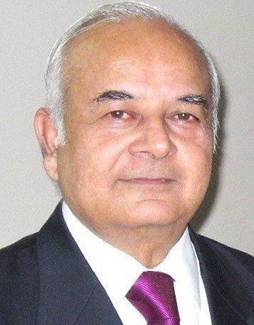
Syed Nayyar Uddin Ahmad
Lahore
27 September 2026
nayyarahmad51@gmail.com
The writer is a senior corporate leader and strategic analyst with over five decades of experience. His thought-provoking visionary insights have reshaped global discourse, capturing the attention of world leaders. His writings have not only resonated with heads of state and governments but have also influenced the foreign policies of the United States and other major powers.
Leave a Reply