Soaring Petroleum Prices, Rising Poverty and Unemployment: An Urgent National Call for Solutions
 August 24th, 2026 |
  Author:
 I wish to invite the urgent and immediate attention of the entire leadership of Pakistan, both inside and outside Parliament, as well as the Establishment of Pakistan, to the grave and rapidly deteriorating situation arising from the daily increase in the rates of Petroleum and Oil Products (POL), particularly petrol and diesel, together with the additional and unnecessary burden of taxes and levies imposed upon these essential fuels.
The people of Pakistan are being subjected to a double jeopardy: first, through the continuously increasing basic prices of POL, and second, through the unnecessary and uncalled-for recovery of additional taxes and levies on petrol and diesel. This combined burden has practically and effectively broken the back of the ordinary citizen of Pakistan, particularly the millions belonging to the lower- and middle-income segments of society.
The situation is especially alarming when viewed against Pakistan’s extremely low-income levels. Pakistan is categorized by the World Bank as a lower-middle-income country, with a poverty-line benchmark of $4.20 per day, and this affects 44.7% of the population. This means that approximately 116.22 million people are living on less than roughly Rs. 1,200 per day, out of the latest stated total population figure of 260 million, as cited by the Federal Health Minister on television yesterday.
How can a person just earning approximately Rs. 1,200 per day possibly withstand the continuous increases in petrol and diesel prices, while simultaneously meeting the rising costs of food, transportation, electricity, education, healthcare, housing and other basic necessities?
The answer is obvious: he or she simply cannot.
THE DEVASTATING MULTIPLIER EFFECT OF POL PRICES
The consequences of high POL prices do not end at the petrol pump.
Petrol and diesel are the lifeblood of the entire national economy. Every increase in their prices directly or indirectly increases the cost of transportation, agriculture, food, manufacturing, construction, electricity generation, logistics and virtually every other economic activity.
The present policy of imposing exorbitant taxes, levies and rates on POL is therefore not merely making travel more expensive. It is progressively nuking the businesses, industries and agriculture of Pakistan, while simultaneously increasing unemployment and destroying the purchasing power of ordinary citizens.
Businesses face higher transportation and production costs. Industries become increasingly uncompetitive. Farmers face rising costs for tractors, tube wells, transportation, harvesting and the movement of agricultural produce. Small businesses are squeezed from both sides, falling consumer purchasing power and rising operating costs.
The inevitable result is a vicious cycle:
Higher POL prices → higher costs → higher prices → lower purchasing power → lower demand → declining business activity → closures and reduced investment → unemployment → greater poverty → even lower purchasing power.
This vicious circle cannot be allowed to continue indefinitely.
THE DANGER OF ECONOMIC AND SOCIAL IMPLOSION
There are now alarming grounds for concern that continued economic hardship, unemployment, inflation and extremely poor governance and mismanagement could eventually produce an internal implosion.
A nation cannot continuously squeeze the purchasing power of its citizens, damage its productive sectors, increase unemployment and simultaneously expect social and economic stability to continue indefinitely.
The warning signs must be taken seriously before economic frustration develops into a much wider social crisis.
The purpose of this appeal is therefore not to create alarm, but precisely the opposite: to prevent an implosion by taking corrective action before the situation reaches a point from which recovery becomes vastly more difficult.
THE $21 BILLION QUESTION
There is also an obvious question that must be asked.
If the Government argues that reducing or eliminating taxes and levies on POL would result in a loss of government revenue, then the country must examine where its fiscal priorities actually lie.
According to the figures cited in the Economic Survey of Pakistan and widely discussed in relation to Pakistan’s tax expenditures, annual tax exemptions and concessions have reached approximately Rs. 5.8 trillion, equivalent to roughly $21 billion.
It is important to clarify that this $21 billion figure represents tax expenditures broadly and should not be described as exclusively a dole to the elite. However, economists and institutions such as the UN Development Programme (UNDP) have repeatedly highlighted the phenomenon of elite capture, under which significant benefits from exemptions, concessions and subsidies can accrue to powerful groups, including the corporate sector, large landowners and affluent industries.
The reported Rs. 5.8 trillion ($21 billion) in annual tax expenditures encompasses areas including:
- Sales-tax exemptions;
- Income-tax exemptions; and
- Customs-duty exemptions.
The major beneficiaries identified in discussions of elite capture include:
Corporate groups and large-scale manufacturing sectors;
Large agricultural landowners and feudal elites; and
Well-connected political and institutional figures.
It is particularly striking that the reported Rs. 5.8 trillion ($21 billion) in annual tax expenditures was stated to have surpassed Pakistan’s external debt repayment requirements for that year.
Therefore, if the Government genuinely fears losing revenue by reducing or removing taxes and levies on POL, then the revenue question should be addressed through a comprehensive review and appropriate management of these enormous concessions and exemptions, rather than continuing to place an unbearable burden on a population where 44.7% ; approximately 116.22 million people, are living on less than roughly Rs. 1,200 per day.
In other words, the poor and struggling citizens should not be made to finance the fiscal system through ever-increasing taxes on fuel while billions of dollars’ worth of tax expenditures and concessions remain available elsewhere in the system.
THE WAY OUT
The easiest, fastest and most direct way out of this vicious circle of increasing poverty, inflation and joblessness is for the Government to take immediate and extraordinary measures to reduce the POL burden on the people.
The Government should therefore urgently consider:
1. The immediate removal of the entire burden of government taxes and levies on petrol and diesel, particularly those that are unnecessarily increasing the retail price beyond the reach of ordinary citizens.
2. A complete and transparent review of the POL pricing mechanism, clearly identifying the international cost, government taxes, levies, duties, margins and every other component contributing to the final price paid by the consumer.
3. Immediate relief for agriculture, transport, industry and businesses, all of which are being severely damaged by escalating fuel costs.
4. A comprehensive review and appropriate restructuring of the approximately Rs. 5.8 trillion ($21 billion) in annual tax exemptions and concessions, so that any revenue forgone through the reduction or elimination of POL taxes can, where appropriate, be recovered through better fiscal management and the rationalisation of concessions benefiting powerful groups.
5. Serious consideration of NATIONALISATION of the POL business in Pakistan, wherever legally, economically and administratively feasible, with the objective of ensuring that petroleum products are made available to the people, agriculture, transport, businesses and industries at the minimum possible sustainable rates.
NATIONAL INTEREST MUST COME FIRST
The proposal for NATIONALISATION should not be treated merely as an ideological slogan. It should be examined strictly from the standpoint of Pakistan’s national interest, economic security, affordability, transparency and long-term energy security.
If the State can ensure that petroleum products are procured, managed, refined, distributed and supplied efficiently and transparently, while eliminating unnecessary layers of cost and preventing excessive profiteering, the ultimate objective should be to provide these essential products to the people and productive sectors of Pakistan at the lowest possible sustainable prices.
Any model adopted must, of course, be professionally managed, financially transparent and protected against political interference, corruption, inefficiency and mismanagement.
A FINAL APPEAL TO THE LEADERSHIP OF PAKISTAN
This is an urgent appeal to the entire political leadership of Pakistan, Parliament, the Government, opposition leadership and the Establishment to recognise the seriousness of the situation and act before it is too late.
The present combination of escalating POL prices, excessive taxation, inflation, unemployment and declining purchasing power is placing an intolerable burden on ordinary Pakistanis and progressively weakening the country’s productive economy.
When 44.7% of the population, approximately 116.22 million people; are living below the stated $4.20-per-day lower-middle-income poverty benchmark, while the total population is stated to be 260 million, there is very little room for further economic pressure on the people.
At the same time, the State must examine its own fiscal priorities. If approximately Rs. 5.8 trillion ($21 billion) is being forgone annually through tax exemptions and concessions, then the Government must have the courage to review those concessions before continuing to extract ever-greater amounts from ordinary citizens through fuel taxation.
The choice before Pakistan’s leadership is therefore clear: either continue along a path that is progressively impoverishing citizens and nuking the productive economy, or take bold corrective measures now to restore affordability, employment, investment and economic confidence.
The immediate priorities should be to:
reduce the unbearable burden of POL taxation and levies; rationalise the Rs. 5.8 trillion ($21 billion) tax-expenditure regime; protect the 116.22 million vulnerable citizens; revive agriculture, industry and businesses; safeguard employment; and seriously examine NATIONALISATION of the POL sector where it serves the national interest.
These measures are not merely desirable economic reforms. They are measures aimed at preventing a potentially dangerous economic and social implosion.
Pakistan cannot afford to wait until the crisis becomes irreversible. The time for decisive action is now.
The true responsibility of leadership is not merely to govern the present, but to ensure that every new day brings greater hope, opportunity, and progress than the day before.
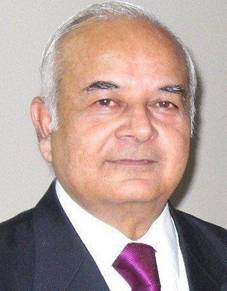
Syed Nayyar Uddin Ahmad
Lahore
nayyarahmad51@gmail.com
The writer is a senior corporate leader and strategic analyst with over five decades of experience. His thought-provoking visionary insights have reshaped global discourse, capturing the attention of world leaders. His writings have not only resonated with heads of state and governments but have also influenced the foreign policies of the United States and other major powers.
Leave a Reply