Posts Tagged ‘debt’
Mr. PM! 10 very important suggestions to stem the economic rot of the country
 September 3rd, 2013 |
  Author:
 Pakistan Submerged in the Debt Trap..!
There is a feeling that government is mortgaging the future of the country with the foreign donor agencies, by taking so much huge amount of loans (that too just for the repayment of the old loans), which this poor country may never be able to repay. This means that in every terms, we have gone bankrupt; and can’t even breathe, without the debt life line.
Today, Pakistan is not under huge debt, rather, it is completely buried under the debt. The government has borrowed Rs.611 billion in just 40 days from the state bank of Pakistan, as against Rs.507 billion in full year (2012-13). In other words, the PMLN’s government has borrowed Rs.15.3 billion per day in 40 days as against Rs.1.4 billion per day by the previous regime in 2012-13.
The 6% depreciation of Rupee vs the USD in the last 80 days, has cost Pakistan Rs.3.5 billion per day and has added additional Rs.276 billion in public debt in the last 80 days. (Figures quoted in this para and its preceding para were reported by Dr. Ashfaque H Khan, in his article, reproduced below, titled “A nation’s debt” published by the daily “The News” dated 27 August, 2013).
————————————————————-
H’able Prime Minister Mian Nawaz Sharif Sahab, you always spoke against the debt burden through out the last 5 years tenure of the PPP.
However, now your government has broken the entire 365 days record of the PPP government in just first 40 days, as per the details explained above.
As such, kindly take it as very serious matter (of the economic life and death of the Pakistan) because, all the world knows that the USSR, the strongest nuclear power of the world, was broken, not because of any enemy action, but by its own economic melt down.
Sir, unfortunately, all financial indicators points that your era is moving the country fast towards economic melt down.
You may remember, I requested you to to take the personal charge of the affairs of the country, lest the situation may not come to a pass, where even you may not become helpless, to stem the rot.
In this regard, after declaring an economic emergency, the following economy and austerity measures are suggested for adoption, to at least put up an impression to the masses, that government is seriously contemplating to improve the economic resurgence of Pakistan. And also to dispel the impression that your economic policy is not to just blindly run the country on domestic and foreign loans and to merely pass your tenure of the government, without bothering about the repercussions of the future inability of the country, to pay back these loans.
SUGGESTIONS
1. Immediate 50% reduction of all the pay and perks of the entire government servants/employees (except all the security personnel who are shedding their blood for our safe and better tomorrow) from president to the peon. This should include all government employees, employees of the government semi-government/autonomous corporations/ banks, PIA, Railways, Steel Mills etc.
However, upon improvement of the economic situation the unpaid 50% salary amount should be gradually given back to the employees.
Moreover, for all these government employees, there should be a 50% rebate in payment of all utility bills and educational fees of their children during this period of economic emergency.
2. 50% expenditure reduction in the entire PSDP.
3. Absolute ban on the foreign trips of the government officials. All international meetings to be attended by the respective envoy’s of Pakistan, in that country.
4. Absolute ban on the foreign medical treatment on government expenditure, right from the top to the bottom.
5. Cessation of the entire subsidy on the food items available to the Senators, MNA’s and MPA’s at the Parliament’s cafeteria, where Roti is served almost free; and even in Peshawar, it is selling at Rs.15/- for the general Public.
6. Complete ban (in real sense) on the official entertainments at all levels.
7. NAB may be directed to take very immediate steps (absolutely ruthlessly) to recover (from within and outside Pakistan) all the looted national money, on a fast track basis.
8. Immediate nationalisation (without giving any time to the ultra rich people to move their precious jewellery out of Pakistan) of the GOLD, DIAMONDS, GEMS and precious metal in Pakistan.
9. Reduce taxation rate of all types of taxes, GST, levies, excise etc. to a maximum of 10%.
10. During the currency of this economic emergency period, there should be a ban on increase in the prices and rates of POL, utilities and all essential items.
With warm regards and best wishes.
Sincerely yours,
Syed Nayyar Uddin Ahmad
Lahore – Pakistan
Sent from my iPad3 4G LTE
Article of Dr. A.H. Khan published in the daily “The News” dated 27 August, 2013.
A nation’s debt
Dr Ashfaque H Khan
Tuesday, August 27, 2013
From Print Edition
The prime minister, in his address to the nation, expressed his concern about the rising debt of the country. His concern was right because high and rising debt constitutes a serious threat to economic prosperity. It acts as a major impediment to growth and hence to employment generation and poverty alleviation. It also discourages both foreign and domestic investment and puts pressure on the exchange rate thereby causing sharp depreciation of the exchange rate and the attendant rise in public debt.
Managing the country’s debt is an art as well as a science. It requires proper institution to manage the debt. Successful debt reduction would require fiscal consolidation and a policy mix that supports growth. Key elements of this policy mix and measures include addressing structural weaknesses in the economy, domestic resource mobilisation and supportive monetary policy.
Fiscal consolidation must emphasise persistent structural reforms for resource mobilisation and expenditure rationalisation over temporary fiscal measures such as increasing tax rates and reducing expenditure across the board. Fiscal institutions including the country’s debt office can play an important role in locking any gains. Reducing public debt takes time; therefore, fiscal consolidation must focus on enduring structural change.
Pakistan’s public debt has grown over the last five years at a pace never witnessed in the country’s history. Public debt (both rupee and dollar components) has grown at an average rate of 21.5 percent per annum in the last five years (2008-12) as against an average rate of 6.6 percent per annum during the first seven years (2000-07) of the previous decade. In absolute terms, public debt rose from Rs6040 billion in 2007-08 to Rs14255 billion by the end of June 2013; that is, an addition of Rs8215 billion in five years.
It is interesting that successive governments over the last 60 years accumulated Rs6040 billion public debt while the previous regime alone added Rs8215 in just five years. Put differently, every child born in 2007-08 carried a debt burden of Rs36606. A child born in 2012-13 carried a debt of Rs77896 – an increase of 112 percent in just five years.
Within the public debt, it is domestic debt that has grown at a pace (23.4 percent per annum) faster than external debt, which stood at $46.2 billion in end June-2008 and rose to $66.4 billion by end-June 2011. But it declined to almost $60 billion in end-June 2013. The decline in external debt owes to the suspension of the IMF programme in May 2010 which dried up most of the external flows from the International Financial Institutions. Meantime, Pakistan continued to service its external debt obligations out of its foreign exchange reserves. It appears that the suspension of the IMF programme was a blessing in disguise as it prevented Pakistan from further accumulating external debt to the extent of approximately $10 billion by now.
Within the domestic debt, the composition of debt has witnessed considerable changes in the last five years. Medium-to-long term debt has been converted into short-term debt with serious consequences for government’s debt management. Today, over 55 percent of domestic debt (Rs5.2 trillion) is of short maturity, which must be rolled over at least once a year. Even more worrisome is the fact that the bulk of short-term debt is shifted to the shortest end of the maturity (three and six months).
Factors responsible for the unprecedented surge in debt include the persistence of large fiscal deficit (on average over 7 percent of GDP), sharp depreciation of exchange rate (over 40 percent) and slower growth in economy (on average, 3 percent per annum). The persistence of large fiscal deficit represents government’s inability to collect more revenues on the one hand and reckless spending on the other, resulting in an extraordinary surge in public debt. Higher public debt has caused interest payment to more than double, crowded out private investment and reduced fiscal space to undertake much needed public investment in infrastructure.
The prime minister’s concern is genuine. He has inherited a severely damaged economy. What is required on his part is not to repeat the same mistakes. Fiscal consolidation should therefore be the topmost priority of his government. In his frequent speeches, he loves to mention various developmental projects of national and regional importance that he intends to launch. All these projects would require resources to complete them. He has seldom talked about domestic resource mobilisation with same zeal and fervour. It is suggested that domestic resource mobilisation should be an integral part of his government’s fiscal consolidation.
Secondly, fiscal consolidation efforts need to be complimented by measures that support growth: structural issues need to be addressed and monetary conditions need to be as supportive as possible. The beginning is not up to the mark. The government has borrowed Rs611 billion in just 40 days from the State Bank of Pakistan as against Rs507 billion in full year (2012-13). In other words, it has borrowed Rs15.3 billion per day in 40 days as against Rs1.4 billion per day by the previous regime in 2012-13.
Thirdly, exchange rate stability is also vital for preventing public debt accumulation. The performance in this regard is equally poor. The exchange rate has already depreciated by 6 percent in just 80 days. Accordingly, without borrowing a single dollar, Pakistan has added Rs276 billion in public debt in just 80 days – Rs3.5 billion per day.
Nothing is lost thus far on economic front for this government. These are minor damages and can be cured. What is required from the government is a serious effort to consolidate the debt situation through fiscal discipline, productive use of fiscal deficit, improving the quality of expenditure, exchange rate stability, structural reforms, a vibrant debt office, good communication strategy, and a strong and coherent economic team.
The writer is the principal and dean of NUST Business School, Islamabad.
Email: ahkhan@nbs.edu.pk
Pakistan Submerged in the Debt Trap..!
Pakistan submerged in the debt trap..!
There is a feeling that government is mortgaging the future of the country with the foreign donor agencies, by taking so much huge amount of loans (that too just for the repayment of the old loans), which this poor country may never be able to repay. This means that in every terms, we have gone bankrupt; and can’t even breathe without the debt life line.
Today, Pakistan is not under huge debt, rather, it is completely buried under the debt. The government has borrowed Rs.611 billion in just 40 days from the state bank of Pakistan, as against Rs.507 billion in full year (2012-13). In other words, the PMLN’s government has borrowed Rs.15.3 billion per day in 40 days as against Rs.1.4 billion per day by the previous regime in 2012-13.
The 6% depreciation of Rupee vs the USD in the last 80 days, has cost Pakistan Rs.3.5 billion per day and has added additional Rs.276 billion in public debt in the last 80 days. (Figures quoted in this para and its preceding para were reported by Dr. Ashfaque H Khan, in his article titled “A nation’s debt” published by the daily “The News” dated 27 August, 2013).
WHAT IS THE SECRET OF UNACCOUNTED FOR INCREASE OF ABOUT 20 BILLION USD IN LOAN LIABILITIES OF PAKISTAN DURING FIVE YEARS OF PPP RULE? : Wake up Pakistan : JAAG Pakistan JAAG
This has reference to the news item of 01 December 2012, by Mehtab Haider titled “Total debt scales Rs.14.5 trillion mark” published by the daily “The News” link :-http://www.thenews.com.pk/Todays-News-3-145837-Total-debt-scales-Rs145-trillion-mark
The gist of the above reveals the extremely precarious economic situation of Pakistan, as below.
1. Pakistan’s public debt and liabilities crossed Rs.13.5 trillion by end-September 2012, as per SBP data released on 30 November, 2012. However, a closer look reading of the data showed that the size of total debt is Rs.14.5 trillion.
2. According to SBP data total debt and liabilities at end of September 2012, touched $66.24 billion.
3. BY THE END OF JUNE 2012, PAKISTAN’S DEBT-TO-GDP RATIO STOOD AT 61.5%.
4. According to the former economic adviser Dr. Ashfaque Hassan Khan. “Even now, interest repayments are consuming 56 percent of the FBR’s revenue. And these unsustainable levels of public debt will be a burden on future generations who will service this debt through exorbitant taxation.”
5. Analysts say that irresponsible fiscal management, sharp depreciation of the Rupee (from Rs.60 to a dollar to Rs.97 to a dollar – in the last four years) and low economic growth have caused the surge in public debt.
In view of the foregoing, it is clearly evident that we have reached a stage, where even alarm bells ringing time has passed. The economy of Pakistan is not sinking, it has already sunk. Foreign exchange reserves are fast depleting.
{This piece was written in December, 2012 and now today (in the year 2013) the government has been forced to obtain loan from IMF to repay its old loan. This proves that we have no money to pay our liabilities. This situation in plain words is called bankruptcy.}
However, what is very alarming and strange that the entire government and the parliament is silent over the issue, as if, they are in collusion with each other, on (God forbid) this virtual economic demise of the country. Otherwise, at least a single person from the entire parliament would have raised his/ her voice, over violation of the binding on the government, for not exceeding the debt-to-GDP ratio over 60%. (Please refer para 3 above).
We should remember that USSR was not dis-membered, due to the violation or collapse of its geographical boundaries. Rather, it was the collapse of its economy, which destroyed a superpower overnight. The USSR broke down without firing of a single bullet, just due to its economic melt down.
If, even at this later stage, patriotic Pakistanis won’t raise their voice, over this virtual economic collapse of the country, then be ready, history will never forgive us, for our collective Harakiri.
No amount of military or nuclear power, can save a nation from its demise, due to the economic collapse. Yes, collective will power of its people, can save a nation from any crisis, but that too if, the people are not too late, as time and tide waits for none.
Although, Pakistan is in a perpetual state of war for more than a decade, yet, the government never acted in a manner, that would reflect even slight realisation on its part, to make its expenses in a more prudent manner. No austerity measures were imposed, to either reduce the size of the bloated cabinet, stop payments of foreign exchange to top government functionaries, who are entitled for such perks, or even restrict purchase of new cars etc.
This is extreme callousness with the nation. On the other side, high and mighty are enjoying benefits, which even a rich country like Switzerland, can not afford to its VIP’s; for example allowing instalment payment of power bills of their factories stretched over a period of 2000 YEARS, YES 2000 YEARS. The Pakistani VIP class is enjoying such facilities and benefits, which even the Queen of England would envy.
Now, business as usual can not be continued.
The economic treason with the state of Pakistan, by all the concerned, looks like a fit case for the patriotic people in the government, opposition (in and out of parliament) and the entire civil society, to demand the immediate formation of a very lean national government, which should impose an economic emergency; and also take necessary action on the question that “why all the concerned remained silent when the debt-to-GDP ratio exceeded 60%, that too, few months back on 30 June, 2012.” Don’t forget, when the same problem was faced by the US government, even the salaries were not paid, till such time, President Barack Obama, got approval from the law makers, for enhancing the expenditures limit.
It will not be out of place to end this note, with quote of the Midwestern tycoon Warren Buffett, who once gave an easy solution to America ’s debt problem on CNBC:
“I could end the deficit in five minutes. You just pass a law that says that anytime there is a deficit of more than three percent of GDP all sitting members of congress are ineligible for reelection.
FRESH TAIL PEICE DATED 17 AUGUST 2013.
THE NATION DEMANDS THAT THE PREVIOUS RULERS BE IMMEDIATELY ARRESTED AND TRIED FOR PUSHING PAKISTAN TO THE STATE OF BANKRUPTCY.
THE NATION ALSO DEMANDS THAT ALL THE ASSETS INSIDE PAKISTAN AND ABROAD OF THE ENTIRE LOT OF THE PREVIOUS GOVERNMENT’S TOP FUNCTIONARIES BE CONFISCATED AND THESE PEOPLE SHOULD ONLY BE ALLOWED TO COME OUT OF THE JAIL IF THEY AGREE TO REPAY THE PREVIOUS IMF LOAN OF $11.3 BILLION.
THE QUESTION IS SIMPLE WHY THE PEOPLE OF PAKISTAN SHOULD REPAY THE ODIOUS IMF LOAN OBTAINED AND UTILISED BY THE PREVIOUS RULES FOR THEIR OWN BENEFITS?
THE NATION ALSO DEMANDS AN IMPARTIAL JUDICIAL INQUIRY INTO THE ECONOMIC MURDER OF THE NATION WHEREIN WHEN GENERAL MUSHARRAF’s GOVERNMENT HANDED POWER TO THE PPP GOVERNMENT OUR LOAN LIABILITY IN THE YEAR 2008 STOOD AT $40 BILLION (PPP GOVT GOT SANCTIONED A LOAN FROM IMF WORTH USD 11.3 BILLION AND RECEIVED $7.6 BILLION SO AT THE END OF PPP GOVT THIS FIGURE SHOULD NOT HAVE GONE UP MORE THAN USD 48 BILLION) AND ONE USD WAS EQUAL TO PKR 60. WHAT HAPPENED TO PAKISTAN’S ECONOMY WHEN THE PMLN GOVERNMENT TOOK OVER IN JUNE 2013 ONE USD WAS SELLING FOR 100 PKR AND NATIONAL LOANS SHOT UP TO USD 67 BILLIONS?
A BILLION DOLLAR QUESTION:
WHAT IS THE SECRET OF UNACCOUNTED FOR INCREASE OF ABOUT 20 BILLION USD IN LOAN LIABILITIES OF PAKISTAN DURING THE FIVE YEARS (2008-13) OF PPP RULE?
A Fit Case for Pakistan to Demand from the IMF & the WB Odious Debt Write off
By Nadeem M Qureshi
In 2008 when the PPP government of President Asif Zardari took office Pakistan’s total foreign debt was about $40 billion. Today, at the end of the PPP government’s term, it is $60 billion. Twenty billion dollars of new debt has been added. As the Government of Nawaz Sharif begins negotiations with the IMF to seek more loans, the people of Pakistan need to ask two basic questions. The first is: What happened to this money?
By almost any economic indicator people are worse off today than they were five years ago. Unemployment and inflation are higher. Vital infrastructure – railways, roads, public transport, hospitals, schools, water supply and sewage systems – have deteriorated to unprecedented and unacceptable levels. It is almost as though the $20 billion has vanished into thin air.
Well, some of it has. Consider, for example, the single case of the purchase of Boeing 777 aircraft by Pakistan International Airlines in 2011. Transparency International Pakistan maintains that of the $1.5 billion paid for the aircraft, $500 million were diverted as kickbacks to the government functionaries. Multiply this by dozens of multibillion dollar deals over five years, across different economic sectors, and it is clear that many of the billions taken in the name of the people of Pakistan have disappeared into private bank accounts.
Not all of the $20 billion is unaccounted for. Some of it is on rude display in the fleets of bullet proof luxury vehicles of politicians and bureaucrats. Less visible is the money spent on acquiring and maintaining the fleet of private jets at the disposal of the country’s ‘leaders’ and their acolytes. Also hidden from view but widely reported are the luxurious lifestyles of the people’s ‘servants’. A distasteful example of this was the news that the government planned to spend Rs. 260 million to renovate the President’s kitchen.
The second question that the people of Pakistan are entitled to ask is this: Should they be liable to pay back money taken in their name but used almost exclusively to enrich the ruling coterie? It is clear that the highly paid international bureaucrats who work for the IMF are not stupid. It cannot have escaped them that the money they are doling out is misused, or worse, stolen. Why then should the people of Pakistan pay for their willful negligence? This raises issues of legality and precedent. Is it lawful for a country to refute debt taken on by corrupt politicians? And, are there any precedents for this? The answer to both questions is yes.
The concept of odious debt was established in international law by Alexander Nahum Sack, a Russian born jurisprudence expert, in a paper published in Paris in 1927. Odious debt “is a legal theory that holds that the national debt incurred by a regime for purposes that do not serve the best interests of the nation, should not be enforceable. Such debts are, thus, considered by this doctrine to be personal debts of the regime that incurred them and not debts of the state.”
The doctrine further suggests that since odious debt is deemed the personal debt of the rulers in power at the time the debt was secured, recovery should be from their personal assets. There are also several precedents in which countries have repudiated national debt. The United States set the first precedent of odious debt when it seized control of Cuba from Spain. Spain insisted that Cuba repay the loans made to them by Spain. The U.S. repudiated that debt, arguing that the debt was imposed on Cuba by force of arms and served Spain’s interest rather than Cuba’s, and that the debt therefore ought not be repaid.
The debt was annulled. In recent times, there is the example of Haiti. When the dictator Jean Claude Duvalier was overthrown in 1986, 66 US senators supported a resolution calling for cancellation of Haiti’s debt on the grounds that the money was misused. In the end, half of Haiti’s debt was written off.
By far the most effective use of the ‘odious debt’ doctrine in recent times is by President Rafael Correa of Ecuador. In 2008 he repudiated Ecuador’s national debt of $ 3 billion and announced the country would default and fight creditors in international courts. He succeeded eventually in getting a 60% write off on Ecuador’s debt.
Sadly, it is doubtful that Pakistan’s current leaders will be able to take the IMF bull by its horns. They lack the competence, integrity and, yes the intelligence, to do so. What a tragedy for the poor people of Pakistan who will continue to pay for their leaders’ larceny.
(The writer is Chairman of Mustaqbil Pakistan)
Moreover, Mr. Naeem Sadiq wrote on 12, July 2013 in the daily “The News” quoted as below.
Quote.”Dear Bank
Naeem Sadiq
TheNews
Friday, July 12, 2013
Many thanks for the $5.3 billion loan. One small step for a bank, a giant leap for a chronic borrower. I can proudly claim that my debt, steadily rising every year, has now reached $66.17 billion. This would mean that every member of my family must cough out $366 to repay this loan. This can only happen if we all stop eating, drinking – in fact living – for the next 10 months. Is that what they also call collective suicide? I made sure not to consult my unenthusiastic family, on whose behalf these loans were taken. They never seem to agree with my lifesaving – or should I say death-delaying? – initiatives. You too must be equally ecstatic. After all you end up gaining the most. You will retain most of this amount as repayment of the earlier loan, while my unflinching yearly debt-servicing will keep you charmed for a long time to come.
You had raised a number of questions before you approved the loans. Why is it that despite such massive borrowing, my family shows no signs of getting any better? Why are 50 percent of the family members illiterate and 60 percent below poverty level? Why are half the children out of school? Why is there no electricity half the time? Why does no one in the family have access to clean tap water?
You also wanted to know the reasons for the striking disparity in the lifestyle of some other members of our family. They move about with armed guards in obscenely large vehicles (often smuggled), live in luxury homes, have properties and cash stacked in foreign lands and drink corporate soda or water only from those neat-looking plastic bottles. It is only this segment of the family that is forever pushing for more loans. They are the ones who justify the bank’s slogan of ‘poverty alleviation’ – since this is the only group whose poverty gets truly alleviated.
My sixth sense tells me that you already know the answers to all these questions. You were merely going through the motions, filling forms, giving an impression of officious formality and appropriateness. The fact that I earn little, waste a lot and pilfer the most, makes me an ideal customer for the sort of business you are in. I have learnt to plead my case by closely studying beggars who flock the streets of Karachi during the holy month of Ramazan every year. I use exactly the same techniques with only three minor variations – dress, language and location.
Now, some bad news for you. My entire family, except those very few who gained the most from your loans, got together last night to say that they would no longer tolerate being pushed into this bottomless cesspool.
When I gave them your message that they needed to tighten their belts, they said they were too poor and did not have any belts to tighten. They said they were fed up of the loans taken on their name – the loans that make the elite of the family get richer and have still more fun. The mounting loans have made them poorer than before and taken away the last shreds of dignity that covered their half-naked bodies. Getting crumbs like 0.8 percent for health and 1.8 percent for education made them still more unhealthy, and yet more uneducated.
In simple words, my family has decided not just to stop seeking any further loans but to also stop any further debt-servicing. An unemployed maths teacher in my family spent some time to calculate that we paid $37.2 billion as debt-servicing alone in the last eight years. This is many times more than the principal amount that we borrowed during this period.
We are absolutely sure that there is no law that can force us to close our schools, starve our children, privatise our resources and abandon our welfare, simply because our selfish elders borrowed huge sums on behalf of those who cannot even spell the word ‘loan’ or have ever seen a bank from the inside.
Having paid off the principal amount several times over, we have a good reason to ask for total debt cancellation and an immediate freeze on any further debt-servicing. Do you realise that discovering a new mode of dying – by getting trampled while struggling to receive free food donations – speaks volumes about the poverty that your loans have been able to alleviate?
Sincerely,
Issac.dare@gmail.com
naeem sadiq
twitter : @saynotoweapons ” Unquote.
An Ode for Mr. Ishaq Dar, the World Bank and the IMF
Attention Mr. Ishaq Dar, the IMF and the World Bank.
we paid $37.2 billion as debt-servicing alone in the last eight years. This is many times more than the principal amount that we borrowed during this period.
An Eye Opener by Mr. Naeem Sadiq
Dear Bank
Naeem Sadiq
TheNews
Friday, July 12, 2013
Many thanks for the $5.3 billion loan. One small step for a bank, a giant leap for a chronic borrower. I can proudly claim that my debt, steadily rising every year, has now reached $66.17 billion. This would mean that every member of my family must cough out $366 to repay this loan. This can only happen if we all stop eating, drinking – in fact living – for the next 10 months. Is that what they also call collective suicide? I made sure not to consult my unenthusiastic family, on whose behalf these loans were taken. They never seem to agree with my lifesaving – or should I say death-delaying? – initiatives. You too must be equally ecstatic. After all you end up gaining the most. You will retain most of this amount as repayment of the earlier loan, while my unflinching yearly debt-servicing will keep you charmed for a long time to come.
You had raised a number of questions before you approved the loans. Why is it that despite such massive borrowing, my family shows no signs of getting any better? Why are 50 percent of the family members illiterate and 60 percent below poverty level? Why are half the children out of school? Why is there no electricity half the time? Why does no one in the family have access to clean tap water?
You also wanted to know the reasons for the striking disparity in the lifestyle of some other members of our family. They move about with armed guards in obscenely large vehicles (often smuggled), live in luxury homes, have properties and cash stacked in foreign lands and drink corporate soda or water only from those neat-looking plastic bottles. It is only this segment of the family that is forever pushing for more loans. They are the ones who justify the bank’s slogan of ‘poverty alleviation’ – since this is the only group whose poverty gets truly alleviated.
My sixth sense tells me that you already know the answers to all these questions. You were merely going through the motions, filling forms, giving an impression of officious formality and appropriateness. The fact that I earn little, waste a lot and pilfer the most, makes me an ideal customer for the sort of business you are in. I have learnt to plead my case by closely studying beggars who flock the streets of Karachi during the holy month of Ramazan every year. I use exactly the same techniques with only three minor variations – dress, language and location.
Now, some bad news for you. My entire family, except those very few who gained the most from your loans, got together last night to say that they would no longer tolerate being pushed into this bottomless cesspool.
When I gave them your message that they needed to tighten their belts, they said they were too poor and did not have any belts to tighten. They said they were fed up of the loans taken on their name – the loans that make the elite of the family get richer and have still more fun. The mounting loans have made them poorer than before and taken away the last shreds of dignity that covered their half-naked bodies. Getting crumbs like 0.8 percent for health and 1.8 percent for education made them still more unhealthy, and yet more uneducated.
In simple words, my family has decided not just to stop seeking any further loans but to also stop any further debt-servicing. An unemployed maths teacher in my family spent some time to calculate that we paid $37.2 billion as debt-servicing alone in the last eight years. This is many times more than the principal amount that we borrowed during this period.
We are absolutely sure that there is no law that can force us to close our schools, starve our children, privatise our resources and abandon our welfare, simply because our selfish elders borrowed huge sums on behalf of those who cannot even spell the word ‘loan’ or have ever seen a bank from the inside.
Having paid off the principal amount several times over, we have a good reason to ask for total debt cancellation and an immediate freeze on any further debt-servicing. Do you realise that discovering a new mode of dying – by getting trampled while struggling to receive free food donations – speaks volumes about the poverty that your loans have been able to alleviate?
Sincerely,
Issac.dare@gmail.com
naeem sadiq
twitter : @saynotoweapons
———————————————————————
How the state promotes crime and militancy. Look at the yearly average for prohibited bore licenses (PB) and non prohibited bore licenses (NPB) issued in last 10 years to the rich and powerful, to friends and relatives and to party men and criminals.
Yearly average of PB licenses, from 2003 to 2007………361
Yearly average of PB licenses, from 2008 to 2012 ………13895
Yearly average of NPB licenses, from 2003 to 2007………15261
Yearly average of NPB licenses, from 2008 to 2012 ………240494
Ref: official info obtained by using FOI and SC Suo moto case 16/2011
Mr. Ishaq Dar why IMF loan at abnormally high rate of 3% why not at 0% for which IMF has already decided to extend zero interest rate to poorer countries?
Dear Mr. Ishaq Dar,
Your kind attention is invited towards the following news item titled “IMF extends zero interest rates on poorer country loans” published by the daily “Pakistan Today” on 23 December, 2012 detailed news available at the link :- http://www.pakistantoday.com.pk/2012/12/23/news/profit/imf-extends-zero-interest-rates-on-poorer-country-loans-2/
In this regard, as per my many earlier submissions to the PM and the entire nation, I am fully convinced, without an iota of doubt that it is sheer disaster recipe for the Pakistan’s economy, to seek loan (that too on an exorbitantly high rate of 3%) from IMF, to repay their old loan. Moreover, your argument that this was the only option to avoid a default, also do not hold water, as firstly, I have explained not one but many viable options in my earlier communications and secondly, default is better than the destruction of the very foundations of the nation’s economy. Hope you know very well that in the recent past, many countries have bravely negotiated with the international lending agencies and succeeded in getting reduction of up to 60% of their loans.
However, in Pakistan’s case our loan amount is increasing with an unbelievable speed. It was recently reported that when PPP government took over in 2008, our debt liability was $40 billions and now it has increased to much more than $60 billion.
The nations fails to understand that why you remained silent as PMLN’s financial expert and also as a senator, during the PPP tenure, when it crossed the LEGAL and constitutional limit of 6% debt to GDP ratio. This was such a grave violation of the law that had PMLN taken up this issue with the Supreme Court, the PPP government would have been immediately dismissed.
So how can you now absolve yourself from this financial mess, by just saying that you took over the government with nation’s economy in very bad shape?
Also, how can the history exonerate the PMLN in general and Mr. Ishaq Dar in particular, for not playing a pro Pakistan role when the PPP government was playing havoc, with the country’s economy?
As such, Mr. Ishaq Dar, there is only one way of atonement of our past acts of commissions and omissions, by not to further burden the nation’s economy with extremely and unprecedentedly expensive loans of IMF, lest the future generations may not have to say that “لمحوں نے خطا کی تھی صد یوں نے سزا پائ”
Kindly still there is time to explore other options to avoid IMF loan. Nothing is impossible. Where there is a will there is a way.
With best regards,
Syed Nayyar Uddin Ahmad
0321-9402157
Lahore.
Sent from my iPad3 4G LTE
How to Make Pakistan an Economic Power?
The degree of the sovereignty of a country, is directly proportional to the state of economy of that nation. Actually, in constant growth & development lies our salvation. Secondly, we Pakistanis must know, that without any doubt, the easiest and surest way of moving ahead, is to stand on our own feet.
Foreign aid, can keep us afloat, but won’t allow us to swim.
Now the time has come to separate the growth, development, education, eradication of poverty & security of Pakistan, from the politics, forever.
In this regard, it is suggested that, we should aim to bring Pakistan, to the level of Singapore of 2010, by the year 2030. All politics & other considerations should be made subservient to this target for 2030, even if we have to abolish weekly holidays for the next 20 years & reduce our daily sleeping time to 6 hours.
All stake holders in Pakistan must immediately come forward for deciding about the direction of the future of the nation.
Biggest factor in any victory is self-confidence. Anti-thesis of terrorism is education, coupled with economic emancipation.
As such, the nation must embark upon the following agenda, to resurrect our economy without any further loss of time.
1. Request to all foreign donors for a 5 years moratorium, on all debt repayments by Pakistan, which is a frontline state of the world’s war on terror.
2. 20% per annum reduction in all non-developmental government expenditures, plus total freeze in all perks paid from the national exchequer, involving foreign currency.
3.Maximum tax rate on each and every type of income in Pakistan should be fixed at 10%. This will not only bring huge revenues to the government but will also discourage the tax evasion tendencies.
4. Increase in productivity & exports with liberal tax relief to industry, commerce & trade.
5. Set a target for 20% per annum increase in foreign remittances, by offering innovative incentives to expatriate Pakistanis.
6. Abolish FBR (which will alone increase income by Rs.500 billion) & impose flat 10% tax on all & every type of income (as already mentioned at 3. above), without any exemption (except for the security forces personnel, whose salaries may be doubled with expected receipt of un-precedented increase in revenue, due to this formula). This will not only reduce income tax burden on salaried class (with max. tax rate of 10%) but will also result in so much increase in revenues, to the extent that government will not require any tax imposition in the budget. Plus, the government will be able to give tax free salaries to all armed forces, rangers, police and other security agencies personnel, who are shedding their blood, in fighting the menace of terrorism, for our safe tomorrow.
7. Initiate steps (by imposing economic emergency) to bring each and every economic activity under document.
I am more than confident that by the dint of sheer hard work, sincerity & honesty, which is imbibed in the bones of Pakistani work force, we can surely bring Pakistan, into the comity of 20 developed nations of the world, in the next 15-20 years.
Pakistan – An American Recipe For Curbing Our Debt Problem
“I could end the deficit in five minutes. You just pass a law that says that anytime there is a deficit of more than three percent of GDP all sitting members of congress are ineligible for reelection. “
Why not put it up to Pakistani parliament!!!
How To Easily Resurrect Pakistan’s Economy
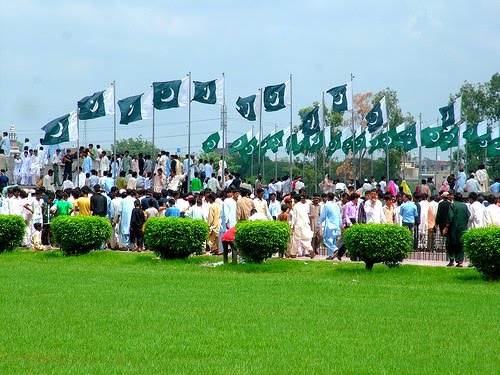
The degree of the sovereignty of a nation is directly proportional to the state of economy of that nation. Actually, in constant growth & development lies our salvation. Secondly, we Pakistanis must know without any doubt, that the easiest and surest way of moving ahead, is to stand on our own feet. Foreign aid, can keep us afloat, but won’t allow us to swim.
Biggest factor in any victory is self confidence. Anti-thesis of terrorism is education, coupled with economic emancipation.
As such, the nation must embark upon the following agenda, to resurrect our economy without any further loss of time.
1. Request to all foreign donors for a 5 years moratorium, on all debt repayments by Pakistan.
2. 20% per annum reduction in all non-developmental government expenditures, plus total freeze in all perks paid from the national exchequer, involving foreign currency.
3. Increase in productivity & exports with liberal tax relief to industry, commerce & trade.
4. Set a target for 20% per annum increase in foreign remittances, by offering innovative incentives to expatriate Pakistanis.
5. Abolish FBR (which will alone increase income by Rs.500 billion) & impose flat 10% tax on all & every type of income, withour any exemption (except for the security forces personnel, whose salaries should be doubled with receipt of un-precedented increase in revenue, due to this formula). This will not only reduce income tax burden on salaried class ( with max. tax rate of 10%) but will also result in so much increase of revenues that government will not require any tax imposition in the budget. Plus, the government will be able to give tax free salaries to all armed forces, rangers, police and other security agencies personnel, who are shedding their blood, in fighting the menace of terrorism, for our safe tomorrow.
6. Initiate steps (by imposing economic emergency) to bring each and every economic activity under document.