Time for Pakistan–India Détente: A Strategic Opportunity for Peace
 May 6th, 2026 |
  Author:
 Exactly one year ago, South Asia witnessed a brief but transformative four-day confrontation between Pakistan and India. The clash triggered a reversal of roles that few could have predicted: India’s military and diplomatic posture was exposed as vulnerable, while Pakistan’s measured and effective response elevated its standing across the global strategic community.
Emerging from that crisis, Pakistan demonstrated not just military resilience but diplomatic maturity, reinforcing its image as a responsible and capable security actor. Across the vast arc from the Mediterranean to the Indian ocean, Pakistan is increasingly viewed as a stabilizing force—second only to China in terms of regional strategic weight. Yet with power comes responsibility, and Pakistan’s elevated status demands leadership rooted in peace, vision, and principle.
The Burden of Leadership
South Asia, home to more than 1.5 billion people, cannot indefinitely sustain hostility between two nuclear-armed nations. For the sake of regional stability and global security, it is now time to convert military advantage into diplomatic momentum. Pakistan is uniquely positioned to lead a credible initiative for sustainable peace with India; one grounded in international law and reinforced by moral clarity.
A proactive peace initiative, undertaken under the aegis of the United Nations Security Council and in consultation with key global and regional players, can help set the stage for normalization.
A Forward-Looking Framework for Détente
A durable peace cannot rest merely on goodwill; it must be structured through clear principles and phased engagement. A possible roadmap could include:
International Investigation of the Pahalgam Incident
To avert future crises, a neutral inquiry; comprising members from the UN Security Council’s permanent five, the Organisation of Islamic Cooperation (OIC), and BRICS—should establish the factual record surrounding the incident.
Commitment to the Indus Waters Treaty
India must reaffirm its obligations under this vital agreement in both letter and spirit, ensuring that water remains a shared lifeline rather than a weapon.
Cessation of Hostilities
A declaration by India to halt all offensive military operations against Pakistan would open the door to genuine de-escalation.
Restoration of Diplomatic Relations
Reinstating full diplomatic engagement is essential to ensure continuous communication and crisis management.
Reopening Airspace and Civilian Links
Lifting airspace restrictions and reviving people-to-people exchanges would serve as tangible confidence-building measures.
Cultural and Media Normalization
Resuming sports, cultural events, and media collaborations would humanize bilateral ties that have long been defined by animosity.
Comprehensive Dialogue on All Disputes
Talks must encompass all outstanding issues—Jammu and Kashmir, Siachen Glacier, Junagadh, Manavadar, and Sir Creek.
– Junagadh and Manavadar formally acceded to Pakistan in 1947 through signed Instruments of Accession, though India rejected these on demographic and geographic grounds.
– Sir Creek, governed by differing interpretations of a 1914 resolution, remains an unresolved maritime boundary question; Pakistan maintains the border lies along the eastern bank (“Green Line”), while India insists on the mid-channel line.
Addressing these issues alongside trade and economic cooperation can lay the groundwork for a peaceful, interdependent future.
Ending Destabilizing Activities
India must cease opposition to the China–Pakistan Economic Corridor (CPEC) and end any actions, direct or indirect, aimed at undermining Pakistan’s security or stability.
Kashmir: The Core of the Dispute
The issue of Jammu and Kashmir remains the central and most emotive point of contention. It cannot be wished away—it must be resolved in accordance with international law and the will of the Kashmiri people.
The UN Charter explicitly upholds the principle of self-determination:
- Article 1(2) affirms this as a fundamental goal of the United Nations.
- Article 55 reiterates that self-determination is essential for international peace.
Subsequent UN General Assembly resolutions—including 1514 (1960), 2625 (1970), 3070 (1973), 3314 (1974), and 37/43 (1982)—reinforce the legitimacy of struggles against foreign occupation. Notably, Resolution 37/43 reaffirms “the legitimacy of the struggle of peoples under colonial and foreign domination… by all available means, including armed struggle.”
This framework challenges simplistic narratives that equate all forms of armed resistance with terrorism. Where a people possess a recognized right to self-determination, and where foreign occupation is alleged, the legitimacy of their struggle must be weighed within international law—not dismissed by rhetorical convenience.
Hence, India and Israel now can not kill Kashmiris and Palestinians and call them terrorists.
Now this matter must be internationally raised that these killings are War Crimes and Crimes against Humanity.
UN Security Council resolutions, particularly Resolutions 47 (1948) and 80 (1950); have long emphasized the need for a plebiscite to reflect the will of the Kashmiri people. This remains an unfulfilled obligation on the global conscience.
Pathways Toward Reconciliation in Kashmir
As immediate steps towards normalization:
- Restore cross–Line of Control (LoC) travel and trade.
- Facilitate humanitarian contacts and family reunifications.
- Encourage joint economic initiatives within the region.
Such humanitarian and economic engagements are not merely symbolic; they are the first steps toward restoring dignity, trust, and mutual recognition.
Choosing Peace Over Perpetual Conflict
Pakistan stands today at a moment of immense strategic opportunity coupled with profound responsibility. Its enhanced stature must now be translated into leadership for peace. By advancing a principled, forward-looking initiative, Pakistan can not only reshape South Asia’s geopolitical trajectory but also reaffirm its commitment to international norms and justice.
For India, this moment offers an equal opportunity; to rise above entrenched narratives and seize the possibility of genuine dialogue.
The future of South Asia must not be defined by suspicion and hostility but by the moral courage to pursue peace grounded in justice, law, and mutual respect. A Pakistan-led initiative for détente is not a concession; it is a vision, one that could transform this region from a theatre of conflict into a cradle of stability and cooperation.
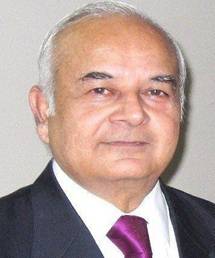
Syed Nayyar Uddin Ahmad
Lahore – Pakistan
+92 321 9402157
6th May, 2026
nayyarahmad51@gmail.com The writer is a senior corporate leader and strategic analyst. His thought-provoking visionary insights have reshaped global discourse, capturing the attention of world leaders. His writings have not only resonated with heads of state and governments but have also influenced the foreign policies of the United States and other major powers.
🌍 When Praise Becomes a Portal: Can Pakistan Turn Global Applause into a National Renaissance?
In the theater of international politics, where words are often measured, coded, and cautiously delivered, moments of unreserved praise stand out like comets across a guarded sky. Recently, such a moment arrived when the U.S. President Donald Trump openly lauded Pakistan, its leadership, and its potential role in shaping peace.
“I think Pakistan is terrific. The field marshal (Asim Munir) is fantastic. I think the prime minister of Pakistan (Shehbaz Sharif) is great… they would like to see something happen.”
These are not routine diplomatic pleasantries. They are signals, rare, potent, and brimming with possibility.
The question is not whether these words matter. The question is: will Pakistan act as if they do?
A Window That History Rarely Opens
Nations, much like individuals, are seldom handed moments of unambiguous goodwill, especially those burdened with complex histories, internal struggles, and external skepticism. For Pakistan, a country that has navigated nearly eight decades of turbulence, political instability, economic fragility, security challenges, this moment feels different.
It is not merely about praise from Washington. It is about a shift in tone, a softening of posture, and perhaps even a readiness for re-engagement at the highest levels of global influence.
Opportunities like this do not linger. They evaporate, quietly, decisively, if not seized with clarity and urgency.
From Symbolism to Substance
The real test of leadership begins now.
Warm words must be translated into tangible, hard outcomes, economic revitalization, diplomatic leverage, and structural reform. Pakistan’s leadership faces a defining choice: treat this as a fleeting headline or as a launchpad for transformation.
The stakes could not be higher. Millions of Pakistanis continue to grapple with inflation, unemployment, and systemic inequities. For them, geopolitical goodwill is not an abstract concept; it must become jobs, stability, and dignity.
This requires speed, coherence, and vision:
Re-engaging global investors with credible reforms
Leveraging strategic positioning for regional trade corridors
Strengthening governance frameworks to inspire trust, both domestic and international
Without these, praise risks becoming yet another echo in the chamber of missed opportunities.
A Blueprint Already on the Table
What makes this moment even more compelling is that the roadmap does not need to be invented from scratch. A comprehensive vision has already been articulated in “From Brinkmanship to Breakthrough: A Regional Compact Anchored in Pakistan.”
At its core, that framework imagines a Pakistan that moves beyond reactive geopolitics toward proactive regional leadership anchored in peace, equity, and justice. It calls for a pivot from survival mode to strategic growth, from isolation to connectivity, and from uncertainty to institutional strength.
In essence, it dares Pakistan to stop managing crises; and start shaping its destiny.
The Burden of Possibility
History is not kind to nations that fail to recognize their turning points. And make no mistake, this is one.
Global goodwill, especially from influential power centers, is not a guarantee of success. It is merely an invitation. Accepting it requires courage. Acting on it demands discipline.
Pakistan today stands at a rare intersection: acknowledged abroad, challenged at home, and poised; if it chooses, to redefine itself.
The applause has been given.
The spotlight is on.
Now comes the harder part: delivering a performance worthy of it.
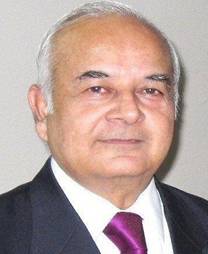
Syed Nayyar Uddin Ahmad
Lahore – Pakistan
+92 321 9402157
27th April, 2026
nayyarahmad51@gmail.com The writer is a senior corporate leader and strategic analyst. His thought-provoking visionary insights have reshaped global discourse, capturing the attention of world leaders. His writings have not only resonated with heads of state and governments but have also influenced the foreign policies of the United States and other major powers.
A Rare Independent Diplomatic Effort Shaping International Perceptions in Support of Pakistan
This brief presents verifiable evidence; drawn from official concerned government links, of letters authored by Syed Nayyar Uddin Ahmad to the leadership of 11 countries: Japan, the United States, the European Union, the United Kingdom, Germany, France, Norway, Denmark, Belgium, Finland, and Iceland.
These communications to eleven leaders are documented with proofs to have produced immediate and favorable outcomes for Pakistan, contributing to a shift in foreign policy perspectives. Notably, they countered and defeated India’s stated objective of diplomatically isolating Pakistan on allegations of terrorism sponsorship.
What makes this effort exceptional is that it was undertaken independently, outside formal diplomatic channels, an exceptionally uncommon phenomenon in international relations.
This initiative was pursued despite serious personal risks, including a written death threat routed via Russia ostensibly from the Indian secret agency RA&W and a high caliber bullet attack on the author’s residence.
Further details and supporting references are available here:
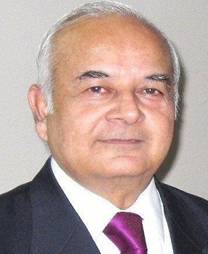
Syed Nayyar Uddin Ahmad
Lahore – Pakistan
+92 321 9402157
22nd April, 2026
nayyarahmad51@gmail.com The writer is a senior corporate leader and strategic analyst. His thought-provoking visionary insights have reshaped global discourse, capturing the attention of world leaders. His writings have not only resonated with heads of state and governments but have also influenced the foreign policies of the United States and other major powers.
From Brinkmanship to Breakthrough: A Regional Compact Anchored in Pakistan
At a moment when a fast-escalating, over six-week Gulf war between Iran, the United States plus Israel appeared to be hurtling toward a third world war, the decisive diplomatic intervention of Pakistan helped secure a ceasefire. Islamabad’s steady engagement, shuttle diplomacy, and credibility with multiple sides averted a catastrophic spiral. That sterling role in preserving world peace deserves more than polite acknowledgment; it calls for a strategic, forward-looking response that consolidates peace through shared prosperity.
The time is ripe to move from ad hoc crisis management to a long-term regional compact. A bold but structured proposal is the creation of a $2 trillion Pakistan Development Partnership Fund (PDPF) over 20 years; phased, performance-linked, and co-invested by Gulf states, the United States and other partners. This is not aid; it is strategic investment in a country that has demonstrated its credentials as a net security provider and credible diplomatic stabilizer, sitting at the crossroads of South Asia, Central Asia, and the Middle East.
In view of its demonstrated leadership in averting a major global conflict and its growing role as a stabilizing force, the international community must now move beyond symbolic acknowledgment. The United Nations and major world powers should immediately consider the immediate induction of Pakistan as the sixth permanent member of the UN Security Council. Such a step would not only recognize Pakistan’s proven military and diplomatic credentials at the world stage, as a top-tier security provider and harbinger of global peace, but would also make the Security Council more representative and effective in a rapidly evolving multipolar world. Moreover, it will be in the own interest and image of BRICS to approve Pakistan’s membership, sooner than later.
A durable framework must be inclusive. China should deepen its role, particularly considering its impressive $400 billion investment plan in Iran by expanding infrastructure into energy security corridors; notably oil and gas pipelines and high-capacity rail and transport links from Gwadar Port and Iran to western China via Gilgit-Baltistan, ensuring long-term energy security and reducing maritime vulnerabilities. Russia can contribute to regional energy systems, grid stabilization, and transit diplomacy. Central Asia, including Azerbaijan, Kazakhstan, Uzbekistan, and Turkmenistan, stands to benefit from southbound connectivity to warm-water ports and diversified trade routes. Iran and Turkey are indispensable partners in industrial, technological, and economic integration with Pakistan, linking energy, manufacturing, and innovation ecosystems across regions.
Stability in Afghanistan remains central to any regional design. A pragmatic approach, combining humanitarian stabilization, economic corridors, and conditional engagement; can transform Afghanistan from a persistent fault line into a connectivity bridge between Central Asia and the Arabian Sea.
No regional vision can succeed without sustainable peace between Pakistan and India; two nuclear powers that cannot afford another escalation. The unresolved issue of Kashmir remains the central impediment. A credible pathway lies in reactivating a process under the auspices of the United Nations, consistent with UN Security Council resolutions, to enable the right of self-determination for Kashmiris through a plebiscite. Moreover, Kashmir imbroglio is not a Pakistan-India bilateral but an international issue, which is evident from the presence of the United Nations Military Observer Group in India and Pakistan, which also provides an institutional foundation for ceasefire monitoring and confidence-building. Simply put, Indo-Pak peace is indispensable for global peace and no more a bilateral dispute of Pakistan and India, in which China is also an extremely important stake holder, as well.
As Gulf nations and Iran rebuild after the conflict, Pakistan is uniquely positioned to export up to ten million skilled and semi-skilled workers, accelerating reconstruction while generating employment and remittance inflows. This reconstruction dividend can be aligned with vocational training and certification frameworks under the broader development initiative.
The proposed $2 trillion fund should be deployed in phased tranches, tied to governance reforms and measurable outcomes with strict third-party oversight. Its core pillars would include the development of twenty futuristic, climate-resilient and AI-enabled cities to accommodate population growth; large-scale infrastructure and connectivity projects linking regional markets; energy transformation through renewables and integrated grids; and an industrial and technological leap focusing on advanced manufacturing, minerals, rare earth resources, and innovation partnerships.
Pakistan’s transformation must be broad-based and inclusive, spanning agriculture through precision farming and agro-industrial value chains; industry through export diversification and mineral development; services including finance, logistics, and healthcare; the AI and digital economy through nationwide connectivity and innovation ecosystems; education through technical training and research partnerships; and tourism through sustainable development of natural and cultural assets. To unlock such scale, credibility must be institutionalized through transparency, independent oversight, digital monitoring, and strict performance benchmarks, with structural reforms embedded into the financing framework.
It should not be necessary to remind the world, and the United States in particular, of the immense human, material, and opportunity costs Pakistan has borne, and continues to bear, for supporting the 49-nation coalition in the Afghanistan war as a principal frontline state throughout the two-decade War on Terror. Since 2001, Pakistan has suffered losses conservatively estimated at over one trillion dollars, alongside the sacrifice of more than one hundred thousand civilian and uniformed lives. These are not abstract figures; they represent a staggering national burden; an unfinished and largely unacknowledged legacy of the War on Terror.
The United States should assume a leading role in seizing this historic opportunity to help establish the proposed $2 trillion Pakistan Development Partnership Fund (PDPF). Such moments of convergence are exceedingly rare—defined by a narrowly averted global conflict, effective diplomacy, and a shared determination to prevent catastrophe. By grounding peace in economic interdependence and inclusive growth, the region can transform crisis into enduring opportunity. In the period ahead, the international community may once again look to Pakistan to play a constructive and stabilizing role in advancing efforts toward a just and lasting resolution of the Palestine crisis.
The ceasefire was the first step; a bold, cooperative development compact; centered on Pakistan but globally supported, can ensure it becomes the foundation of a more peaceful and prosperous world.
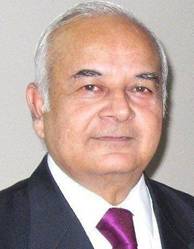
Syed Nayyar Uddin Ahmad
Lahore – Pakistan
+92 321 9402157
8th April, 2026
nayyarahmad51@gmail.com The writer is a senior corporate leader and strategic analyst. His thought-provoking visionary insights have reshaped global discourse, capturing the attention of world leaders. His writings have not only resonated with heads of state and governments but have also influenced the foreign policies of the United States and other major powers.
From Gulf Peace to Global Power: How Pakistan’s Diplomacy is Forging an Economic Renaissance
In an era marked by volatility and fractured alignments, Pakistan has emerged—not merely as a participant but, as a poised, principled, and profoundly consequential architect of restraint in the unfolding Gulf crisis. With a diplomatic agility that borders on the extraordinary, Islamabad has woven together channels of influence stretching from Tehran to Washington, from Riyadh to Beijing, demonstrating a rare capacity to be heard, trusted, and respected across deeply divided geopolitical fault lines. This is not routine diplomacy; it is strategic statecraft of the highest order; measured, credible, and quietly transformative.
Pakistan’s role stands out for its combination of moral clarity and pragmatic finesse. It has refused the temptations of rhetorical excess while simultaneously amplifying the urgency of de-escalation. In doing so, it has elevated itself into a stabilizing fulcrum; a state that speaks not for blocs, but for balance; not for escalation, but for equilibrium. Its voice carries weight precisely because it is anchored in consistency: respect for sovereignty, adherence to international law, and an unambiguous prioritization of peace over posturing.
Equally remarkable is the seamless strategic synchrony between Pakistan and China, two nations operating with disciplined coherence to inject sobriety into an overheated geopolitical theatre. Their joint posture is not reactive but anticipatory; not symbolic but substantive. It signals the emergence of a diplomatic axis that is both credible and constructive, capable of bridging divides that others have only deepened.
Five-Point Initiative of China and Pakistan for Restoring Peace and Stability in the Gulf and Middle East Region (Beijing, 31 March 2026)
Member of the Political Bureau of the CPC Central Committee and the Minister of Foreign Affairs of the People’s Republic of China H.E. Mr. Wang Yi and Deputy Prime Minister/Foreign Minister of the Islamic Republic of Pakistan, Senator Mohammad Ishaq Dar met in Beijing on 31 March 2026 to review the situation in the Gulf and Middle East Region.
The two sides put forward the following:
I. Immediate Cessation of Hostilities: China and Pakistan call for immediate cessation of hostilities and utmost efforts to prevent the conflict from spreading. Humanitarian assistance must be allowed to all war-affected areas.
II. Start of peace talks as soon as possible. Sovereignty, territorial integrity, national independence and security of Iran and the Gulf states should be safeguarded. Dialogue and diplomacy is the only viable option to resolve conflicts. China and Pakistan support the relevant parties in initiating talks, with all parties committing to peaceful resolution of disputes, and refraining from the use or the threat of use of force during peace talks.
III. Security of nonmilitary targets. The principle of protecting civilians in military conflict should be observed. China and Pakistan call on parties to the conflict to immediately stop attacks on civilians and nonmilitary targets, and fully adhere to International Humanitarian Law (IHL), and stop attacking important infrastructure, including energy, desalination and power facilities, and peaceful nuclear infrastructure, such as nuclear power plants.
IV. Security of shipping lanes. The Strait of Hormuz, together with its adjacent waters, is an important global shipping route for goods and energy. China and Pakistan call on the parties to protect the security of ships and crew members stranded in the Strait of Hormuz, allow the early and safe passage of civilian and commercial ships, and restore normal passage through the Strait as soon as possible.
V. Primacy of the United Nations Charter. China and Pakistan call for efforts to practice true multilateralism, to jointly strengthen the primacy of the U.N., and to support the conclusion of an agreement for establishing a comprehensive peace framework and realizing lasting peace based on the purposes and principles of the U.N. Charter and international law.
Islamabad
March 31,2026
85/2026
What emerges is a masterclass in calibrated diplomacy. Pakistan’s expansive and simultaneous engagement across rival capitals underscores its rising stature as a credible interlocutor, while China’s willingness to step forward as an “honest broker” signals a maturing global role. Together, they present not just a statement, but a pathway, one rooted in legitimacy, balance, and the quiet conviction that even the most tangled imbroglio can yield to principled, persistent diplomacy.
At this decisive moment, as the Gulf conflict edges toward a likely denouement in the coming days or weeks, potentially preceding a consequential visit by the President of the United States to China; Pakistan stands at the threshold of converting diplomatic prestige into enduring economic transformation. At its core, diplomacy finds its highest purpose not merely in managing crises, but in elevating a nation to become a focal point, indeed, the “apple of the eye”, of global economic growth and development. Nowhere is this opportunity more compelling than in the rise of Karachi: already one of the most sought-after harbor during the present Gulf crisis, its geostrategic relevance has been underscored by its reliability, connectivity, and capacity under pressure. Augmented by the deep-sea capabilities of Port Qasim, Karachi presents a dual-port advantage of rare distinction, an integrated maritime gateway capable of handling the expanding currents of regional and transregional trade.
With the forward thrust of CPEC Phase II and the collaborative engagement of friendly nations, the bold declaration of Karachi as a comprehensive Special Economic, tax-free zone could catalyze its evolution into a futuristic global economic hub; surpassing even the benchmarks set by Dubai, Singapore, and Hong Kong. In doing so, Karachi would not merely expand; it would transform, emerging as the harbinger and prime mover of Pakistan’s economic renaissance, and ensuring that the dividends of peace are anchored firmly within Pakistan’s shores.
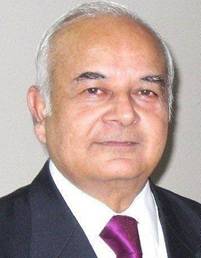
Syed Nayyar Uddin Ahmad
Lahore – Pakistan
+92 321 9402157
1st April, 2026
nayyarahmad51@gmail.com The writer is a senior corporate leader and strategic analyst. His thought-provoking visionary insights have reshaped global discourse, capturing the attention of world leaders. His writings have not only resonated with heads of state and governments but have also influenced the foreign policies of the United States and other major powers.
Pakistan Is Not Failing Because of Bad Leaders — It Is Failing Because of a Bad State
Pakistan is sliding into an economic and social emergency. Real incomes are falling, food consumption is shrinking, and inequality is widening at levels unseen in decades. When households begin cutting back not only on meat but on wheat and rice, the crisis is no longer abstract, rather it is existential.
Credible assessments tell the same story. Economist Yousuf Nazar estimates that when vulnerability above the subsistence line is included, as much as 60–70 percent of Pakistan’s population may now be poor or at risk. Former finance minister Miftah Ismail has highlighted that real incomes and consumption have been declining for nearly a decade, while official survey data reported by journalist Shahbaz Rana show poverty and inequality at multi-decade highs.
Pakistan has had seven prime ministers and eleven finance ministers since 2014. If leadership change were the answer, recovery would have already begun. The problem is not who governs Pakistan, but it is how Pakistan is governed.
A State Designed to Spend, Not to Deliver
Pakistan’s constitutional and fiscal architecture rewards expansion of government rather than performance. Power and resources sit far from citizens, while accountability evaporates as responsibilities pass between federal, provincial, and district authorities.
Provinces receive large fiscal transfers but face little pressure to deliver education, health, or economic opportunity. Districts, where citizens actually encounter the state; remain underpowered and underfunded. The result is a large, expensive government that delivers remarkably little.
This is not a failure of intent. It is a failure by design of the elite capture.
What Pakistan Can Learn from South Korea, Malaysia and China;
countries that have successfully reduced poverty did not rely on slogans. They restructured incentives. China achieved historic poverty reduction through relentless focus on delivery and local accountability. Moreover, Switzerland demonstrates how decentralised, fiscally autonomous local governments can deliver prosperity without a bloated state.
Pakistan should adapt these lessons by transforming its districts into civil Cantons: political, fiscal, and administrative units with real authority over education, healthcare, local infrastructure, and taxation.
When governance moves closer to citizens, responsibility becomes visible; and so does failure.
Why Provincial Political Governments Must Give Way
Once districts are empowered as Cantons, the current provincial political superstructure becomes redundant. Governors, chief ministers, and oversized provincial cabinets add cost without improving service delivery.
Provinces should be retained only as lean coordinating bodies, responsible for inter-district infrastructure, standards, and dispute resolution: not day-to-day governance. This reform alone would significantly reduce public expenditure while improving accountability.
Decentralisation does not weaken the state. It makes it work.
Fiscal Discipline Without Austerity for the Poor
Economic recovery will require painful choices, but not for those already suffering.
Loss-making state-owned enterprises must be privatised or closed. Untargeted subsidies and elite privileges including free utilities/servants must end. Tax rates should fall, but exemptions; especially for powerful sectors such as agriculture, retail, and real estate; must disappear.
At the same time, social protection must expand. Cash transfers, nutrition programmes, and education vouchers for poor households are not charity; they are investments in stability.
The Real Choice Before Pakistan
Pakistan’s crisis is often described as cyclical. It is not. It is structural. Without a redesign of the state, growth will remain fragile, poverty will deepen, and inequality will harden into permanence.
These reforms will face resistance and harsh criticism because they threaten entrenched interests and patronage networks. But delaying them guarantees a harsher outcome: a poorer, more fragile country unable to provide opportunity for its citizens.
Pakistan does not need another change of government.
It needs a change in how the state works.
That choice cannot be postponed, because hunger, unemployment, and despair are not waiting.
Syed Nayyar Uddin Ahmad
Lahore.
+92 321 9402157
Air Chief Marshal (R) Mujahid Anwar Khan — A Visionary Leader for the Revival of Hockey in Pakistan
Excellency Shehbaz Sharif,
اسلام و علیکم
Honourable Sir,
Hockey is Pakistan’s national sport and a proud symbol of our sporting heritage. It is the game that brought immense glory to the nation, earning Pakistan eight Olympic medals — three gold, three silver and two bronze out of total 11 medals won — at the Olympic Games. Regrettably, our national hockey has suffered a prolonged decline, culminating in Pakistan’s failure to qualify for the last three Olympic Games.
As you have rightly and consistently emphasized, every challenge presents an opportunity.
Following the recent resignation of the President of the Pakistan Hockey Federation (PHF), we are faced with a critical leadership vacuum at a decisive moment.
With our national team scheduled to travel within few days on 24th February to Egypt for participation in the World Cup qualifiers scheduled from 01 – 07 March 2026, the situation calls for immediate, visionary, and result-oriented leadership.
In this context, I respectfully submit that Mujahid Anwar Khan, Air Chief Marshal (Retd.), stands out as an exceptional candidate to lead the PHF.
A proven leader with an uncompromising commitment to excellence, he has consistently demonstrated the ability to transform institutions through clarity of vision, strategic foresight, and decisive execution.
His tenure as Chief of Air Staff of the Pakistan Air Force is widely acknowledged—both nationally and internationally—as a benchmark of dynamic leadership. Of particular note is his foresight in establishing the Centre for Artificial Intelligence and Computing (CENTAIC) in 2020. The strategic significance of this initiative has even been acknowledged by Indian media. ZEE News, in a report dated 7 August 2025 titled “Operation Sindoor Fallout: What Is CENTAIC and Why India Can’t Ignore China-Pak AI War Network”, highlighted CENTAIC as a central pillar of Pakistan’s AI-driven military transformation. The opening paragraph of the report, in particular, stands as a remarkable tribute to Air Chief Marshal Mujahid Anwar Khan’s vision and strategic foresight.
(Reference link: https://www.google.com/amp/s/zeenews.india.com/world/operation-sindoor-fallout-what-is-centaic-and-why-india-can-t-ignore-china-pak-ai-war-network-2942864.html/amp)
At a time when Pakistan hockey urgently requires institutional reform, professional governance, and a renewed culture of excellence, Air Chief Marshal (R) Mujahid Anwar Khan’s leadership credentials make him uniquely suited to spearhead its revival. His appointment as President of the Pakistan Hockey Federation would send a strong and reassuring signal of seriousness, accountability, and ambition — qualities essential for restoring Pakistan hockey to its rightful place on the world stage.
I sincerely hope this submission will receive your kind consideration in the larger national interest.
With the highest respect,
Yours faithfully,
Syed Nayyar Uddin Ahmad
Lahore
+92 321 9402157
Deaths From Open Manholes Are 100% Preventable
Preventing deaths of children and adults in open manholes requires a mix of engineering fixes, governance, and community action. One layer alone isn’t enough.
1. Engineering & Infrastructure (most critical)
These prevent accidents even when humans fail.
- Lockable, tamper-proof manhole covers:
- Heavy, interlocking, or bolted covers that cannot be removed casually or stolen.
- Hinged or chained covers:
- So, a cover can’t be fully displaced and left open.
Raised or sealed rims:
Prevent waterlogging and accidental slips.
Load-bearing, standardized covers:
So temporary wooden/metal sheets are never used.
Smart sensors (where feasible):
Low-cost IoT sensors that alert authorities when a manhole is opened or displaced.
This is the single biggest life-saving step.
2. Visibility & Immediate Risk Reduction
When a manhole must be open:
- High-visibility barricades (not stones or branches)
- Reflective tape, cones, and warning signs
- Solar or battery-powered blinking lights at night
- Temporary steel grates that allow work but prevent falls
Open = Protected. No exceptions.
3. Maintenance & Accountability
Deaths often happen because “someone was supposed to close it.”
- Digital logging of maintenance work
- Open → work → close → photo proof → supervisor sign-off
- Time limits on openings (e.g., auto-alerts if open too long)
- Clear legal responsibility assigned to a named department or contractor
- Heavy penalties for negligence, not just inquiries after deaths
Accountability saves lives more than posters do.
4. Preventing Cover Theft
A huge hidden cause.
- Non-resale materials (fiber-reinforced plastic instead of iron)
- Serial-numbered covers
- Scrap-dealer regulation and audits
- Community reward systems for reporting stolen or missing covers
If it can’t be sold, it won’t be stolen.
5. Urban Design & Child Safety
Especially important near homes and schools.
- Manholes away from play areas
- Protective railings in high-risk zones
- School-area audits after monsoons
- Covered drainage systems instead of open designs
6. Public Reporting & Rapid Response
People often see danger but don’t know whom to tell.
- Single emergency helpline / app
- QR codes on poles nearby to report issues
- Guaranteed response time (e.g., barricade within 2 hours)
Fast action prevents the next death.
7. Education (supporting role, not the main solution)
Useful, but never a substitute for safety.
- Teaching children to avoid open drains
- Training workers on safe practices
- Public campaigns during rainy seasons
Education helps — infrastructure protects.
Bottom line:
Deaths from open manholes are 100% preventable.
When they happen, it’s not an accident — it’s a systems failure.
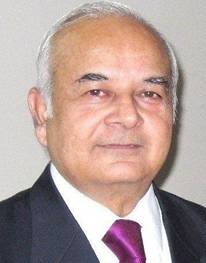
Syed Nayyar Uddin Ahmad
Lahore – Pakistan
+92 321 9402157
3rd February, 2026
nayyarahmad51@gmail.com The writer is a senior corporate leader and strategic analyst. His thought-provoking visionary insights have reshaped global discourse, capturing the attention of world leaders. His writings have not only resonated with heads of state and governments but have also influenced the foreign policies of the United States and other major powers.
Pakistan 2047: The Constitutional Reset That Can Create a $10 Trillion Economy
Pakistan today stands at a decisive crossroads. Persistent governance failures, absolute elite capture, economic fragility, institutional decay, corruption, uneven justice delivery, and widening social alienation have pushed the country into a prolonged state of crisis. Incremental reforms and short-term fixes have failed repeatedly. What Pakistan now requires is not another policy tweak, but a structural, constitutional reset.
The expected 28th Constitutional Amendment presents a rare, historic opportunity to fundamentally redesign governance in Pakistan. At stake is nothing less than the country’s unity, stability, and economic future.
Two bold reform pathways are under serious consideration; either of which could redefine Pakistan’s trajectory if executed with political will and national consensus.
Option A: Converting Districts/Divisions into Cantons/Autonomous Units – Governance Through Full Fledged Down Delegation
The first option proposes the conversion of all districts/divisions into autonomous Cantons/Units, governed under uniform, rules-based administrative frameworks. This model emphasizes:
- Strong local governance with clear accountability
- Swift delivery of justice and public services
- Zero tolerance for corruption and elite capture
- Direct citizen-state engagement at the grassroots
By shrinking the distance between decision-makers and citizens, Canton-based governance can neutralize inefficiency, restore public trust, and eliminate the administrative chaos that fuels discontent and lawlessness.
Option B: Federal Charter Cities – Engines of Growth and Stability
The second, more transformative option is the launch of Federal Charter Cities, beginning with five strategic urban centers by 2030:
Karachi, Faisalabad, Sialkot, Gwadar, and Rashakai/Hattar
These cities would operate under special constitutional charters, independent of provincial dysfunction, with globally competitive systems for:
- Law and order
- Commercial dispute resolution
- Taxation and regulation
- Urban planning and infrastructure
- Digital governance and merit-based administration
Charter Cities are not theoretical experiments. They have powered economic miracles in Shenzhen, Dubai, and Singapore. China’s expressed willingness to support Pakistan in this transformation adds geopolitical credibility and financial muscle to the plan.
A Phased National Transformation
The reform envisions a phased rollout:
- Phase I (2026–2030): Five Charter Cities launched
- Phase II (2030–2035): Five additional cities
- Phase III (2035–2047): Nationwide expansion
By Pakistan’s centenary in 2047, the country can realistically aspire to become a $10 trillion economy, ranking among the global top ten; not through slogans, but through systems.
Why This Is an Existential Need—not a Luxury
These reforms are no longer optional. They are essential to:
- End elite capture and systemic corruption
- Deliver fast-track justice and public services
- Create mass employment and reduce poverty
- Drain oxygen from insurgencies and proxy wars
- Heal alienation in neglected regions
Underdevelopment, injustice, and governance failure are the real enablers of extremism and foreign interference. Charter governance strikes at their roots.
A Choice Between Managed Decline and Strategic Rebirth
Pakistan’s challenge has never been a lack of talent, resources, or strategic importance, but it has been a failure of governance design. The 28th Constitutional Amendment offers a final chance to correct this foundational flaw.
History will not judge Pakistan by its intentions, but by its courage to act.
This is the moment to choose systems over slogans, institutions over individuals, and long-term national survival over short-term political comfort.
The window is narrow. The stakes are absolute.
Pakistan must decide about a reset now, or risk permanent decline.
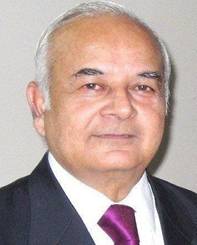
Syed Nayyar Uddin Ahmad
Lahore – Pakistan
+92 321 9402157
2nd February, 2026 nayyarahmad51@gmail.com The writer is a senior corporate leader and strategic analyst. His thought-provoking visionary insights have reshaped global discourse, capturing the attention of world leaders. His writings have not only resonated with heads of state and governments but have also influenced the foreign policies of the United States and other major powers.
War and Cricket Cannot Coexist
Pakistan and Bangladesh together account for nearly half a billion people. If the International Cricket Council (ICC) thinks it can trample over the sentiments of this vast cricket-loving population to appease Indian political pressure, then it should abandon the illusion of neutrality altogether. Such conduct only hastens the ICC’s descent into an Indian Cricket Council, one that sacrifices fairness, inclusivity, and credibility for dominance, and in doing so signs its own death warrant.
From Pakistan’s standpoint, the hypocrisy is blatant. How is Pakistan expected to share a World Cup stage with India when Indian leaders openly declare that the May 25 war with Pakistan was never called off? This is not rhetoric; it is an admission of ongoing hostility. The situation becomes even more indefensible when India continues its acts of aggression by effectively suspending and violating the Indus Waters Treaty, using water as a weapon against millions of civilians.
You cannot preach peace through sport while waging undeclared war through words, policies, and treaties. Cricket cannot be used as a propaganda tool to whitewash continuous hostility. Forcing Pakistan to participate under these conditions is not “keeping politics out of sport”, it is enforcing political coercion through sport.
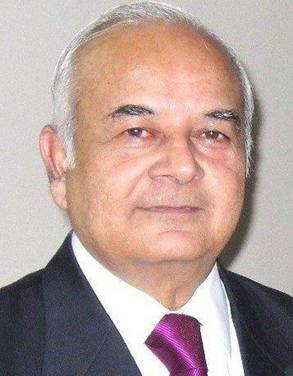
Syed Nayyar Uddin Ahmad
Lahore – Pakistan
+92 321 9402157
25th January, 2026
nayyarahmad51@gmail.com The writer is a senior corporate leader and strategic analyst. His thought-provoking visionary insights have reshaped global discourse, capturing the attention of world leaders. His writings have not only resonated with heads of state and governments but have also influenced the foreign policies of the United States and other major powers.