From Gulf Peace to Global Power: How Pakistan’s Diplomacy is Forging an Economic Renaissance
 April 1st, 2026 |
  Author:
 In an era marked by volatility and fractured alignments, Pakistan has emerged—not merely as a participant but, as a poised, principled, and profoundly consequential architect of restraint in the unfolding Gulf crisis. With a diplomatic agility that borders on the extraordinary, Islamabad has woven together channels of influence stretching from Tehran to Washington, from Riyadh to Beijing, demonstrating a rare capacity to be heard, trusted, and respected across deeply divided geopolitical fault lines. This is not routine diplomacy; it is strategic statecraft of the highest order; measured, credible, and quietly transformative.
Pakistan’s role stands out for its combination of moral clarity and pragmatic finesse. It has refused the temptations of rhetorical excess while simultaneously amplifying the urgency of de-escalation. In doing so, it has elevated itself into a stabilizing fulcrum; a state that speaks not for blocs, but for balance; not for escalation, but for equilibrium. Its voice carries weight precisely because it is anchored in consistency: respect for sovereignty, adherence to international law, and an unambiguous prioritization of peace over posturing.
Equally remarkable is the seamless strategic synchrony between Pakistan and China, two nations operating with disciplined coherence to inject sobriety into an overheated geopolitical theatre. Their joint posture is not reactive but anticipatory; not symbolic but substantive. It signals the emergence of a diplomatic axis that is both credible and constructive, capable of bridging divides that others have only deepened.
Five-Point Initiative of China and Pakistan for Restoring Peace and Stability in the Gulf and Middle East Region (Beijing, 31 March 2026)
Member of the Political Bureau of the CPC Central Committee and the Minister of Foreign Affairs of the People’s Republic of China H.E. Mr. Wang Yi and Deputy Prime Minister/Foreign Minister of the Islamic Republic of Pakistan, Senator Mohammad Ishaq Dar met in Beijing on 31 March 2026 to review the situation in the Gulf and Middle East Region.
The two sides put forward the following:
I. Immediate Cessation of Hostilities: China and Pakistan call for immediate cessation of hostilities and utmost efforts to prevent the conflict from spreading. Humanitarian assistance must be allowed to all war-affected areas.
II. Start of peace talks as soon as possible. Sovereignty, territorial integrity, national independence and security of Iran and the Gulf states should be safeguarded. Dialogue and diplomacy is the only viable option to resolve conflicts. China and Pakistan support the relevant parties in initiating talks, with all parties committing to peaceful resolution of disputes, and refraining from the use or the threat of use of force during peace talks.
III. Security of nonmilitary targets. The principle of protecting civilians in military conflict should be observed. China and Pakistan call on parties to the conflict to immediately stop attacks on civilians and nonmilitary targets, and fully adhere to International Humanitarian Law (IHL), and stop attacking important infrastructure, including energy, desalination and power facilities, and peaceful nuclear infrastructure, such as nuclear power plants.
IV. Security of shipping lanes. The Strait of Hormuz, together with its adjacent waters, is an important global shipping route for goods and energy. China and Pakistan call on the parties to protect the security of ships and crew members stranded in the Strait of Hormuz, allow the early and safe passage of civilian and commercial ships, and restore normal passage through the Strait as soon as possible.
V. Primacy of the United Nations Charter. China and Pakistan call for efforts to practice true multilateralism, to jointly strengthen the primacy of the U.N., and to support the conclusion of an agreement for establishing a comprehensive peace framework and realizing lasting peace based on the purposes and principles of the U.N. Charter and international law.
Islamabad
March 31,2026
85/2026
What emerges is a masterclass in calibrated diplomacy. Pakistan’s expansive and simultaneous engagement across rival capitals underscores its rising stature as a credible interlocutor, while China’s willingness to step forward as an “honest broker” signals a maturing global role. Together, they present not just a statement, but a pathway, one rooted in legitimacy, balance, and the quiet conviction that even the most tangled imbroglio can yield to principled, persistent diplomacy.
At this decisive moment, as the Gulf conflict edges toward a likely denouement in the coming days or weeks, potentially preceding a consequential visit by the President of the United States to China; Pakistan stands at the threshold of converting diplomatic prestige into enduring economic transformation. At its core, diplomacy finds its highest purpose not merely in managing crises, but in elevating a nation to become a focal point, indeed, the “apple of the eye”, of global economic growth and development. Nowhere is this opportunity more compelling than in the rise of Karachi: already one of the most sought-after harbor during the present Gulf crisis, its geostrategic relevance has been underscored by its reliability, connectivity, and capacity under pressure. Augmented by the deep-sea capabilities of Port Qasim, Karachi presents a dual-port advantage of rare distinction, an integrated maritime gateway capable of handling the expanding currents of regional and transregional trade.
With the forward thrust of CPEC Phase II and the collaborative engagement of friendly nations, the bold declaration of Karachi as a comprehensive Special Economic, tax-free zone could catalyze its evolution into a futuristic global economic hub; surpassing even the benchmarks set by Dubai, Singapore, and Hong Kong. In doing so, Karachi would not merely expand; it would transform, emerging as the harbinger and prime mover of Pakistan’s economic renaissance, and ensuring that the dividends of peace are anchored firmly within Pakistan’s shores.
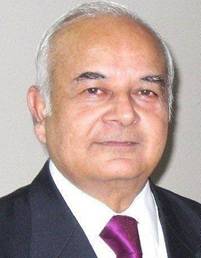
Syed Nayyar Uddin Ahmad
Lahore – Pakistan
+92 321 9402157
1st April, 2026
nayyarahmad51@gmail.com The writer is a senior corporate leader and strategic analyst. His thought-provoking visionary insights have reshaped global discourse, capturing the attention of world leaders. His writings have not only resonated with heads of state and governments but have also influenced the foreign policies of the United States and other major powers.
Leave a Reply