Archive for the ‘Case for Pakistan’s Loan write off’ Category
Zarb-e-Azb for reviving Pakistan’s economy..!
 October 19th, 2014 |
  Author:
Now our economic malaise has reached such a stage that business as usual, is going to jeopardise our statehood, not in years, but in months.
This situation can be gauged from the following facts, derived from the State Bank of Pakistan report of September, 2014:
a). Interest payments on domestic debt grew by 80.5 per cent to Rs188 billion in July 2014 from Rs104bn in the same month last year.
b). The debt servicing on permanent debt jumped by 306.7pc in July 2014.
c). The government had to pay Rs147bn in July this year as debt servicing on permanent debts compared to just 36bn a year earlier, a rise of 306.7pc. The permanent debt rose to Rs3.999 trillion in June 2014 while it was Rs2.174tr in June 2013.
d). The debt servicing as percentage of GDP in FY14 was 4.1pc, which was 40.7pc of tax revenue.
e). Debt servicing was 27.5pc of current expenditure in FY14 compared to 24.7pc in FY13.
When we take fresh loans (on very harsh conditions and extremely high interest rates) to payback the old loans, it is a straight forward admittance of the fact that we have gone bankrupt.
However, instead of stemming the rot, by re-building the economy of the country with prudent internal financial management, detailed as below, the government is pursuing a disastrous policy of running the economy, on loans and increasing the rates of taxes and utility bills:
– Adoption of strict financial discipline, under the guide lines of stringent austerity measures.
– Implimentation of strict administrative and legal steps for reduction in world’s highest rate of corruption (which was estimated few years ago by the chairman NAB to be more than Rs.12 billion per day or Rs.4380 trillion or $43.8 billion per year, compared with FY15’s entire budget of Pakistan, which was equal to Rs.4 trillion or $40 billion).
– Enforcement of very strong administrative and legal measures, for drastic reduction in huge theft of taxes and utilities.
In this connection, it may not be a wrong indicator that this nuclear power nation called Pakistan, was being mortgaged with the foreign powers, by design.
In this regard, the following excerpts from the book titled “Confessions of an economic hit man” by John Perkins, are very relevant to the prevailing situation in Pakistan:
i). Economic hit men {EHMs) are highly paid professionals who cheat countries around the globe out of trillions of dollars. They funnel money from the World Bank, the U.S. Agency for International Development (USAID), and other foreign “aid” organizations into the coffers of huge corporations and the pockets of a few wealthy families who control the planet’s natural resources. Their tools include fraudulent financial reports, RIGGED ELECTIONS, payoffs, extortion, sex, and murder. They play a game as old as empire, but one that has taken on new and terrifying dimensions during this time of globalization.”
ii). “Claudine pulled no punches when describing what I would be called upon to do. My job, she said, was “to encourage world leaders to become part of a vast network that promotes U.S. commercial interests. In the end, those leaders become ensnared in a web of debt that ensures their loyalty. We can draw on them whenever we desire — to satisfy our political, economic, or military needs. In turn, they bolster their political positions by bringing industrial parks, power plants, and airports to their people. The owners of U.S. engineering/construction companies become fabulously wealthy.”
Hence, there is no need to emphasise upon the fact that the degree of the sovereignty of a country, is directly proportional to the state of the economy of that nation.
Actually, in constant growth and development, lies our salvation. Secondly, we Pakistanis must know, that without any doubt, the easiest and surest way of moving ahead, is to stand on our own feet.
Foreign aid, can keep us afloat, but won’t allow us to swim.
Now, the time has come to separate the issues of growth, development, health, education, eradication of poverty & security of Pakistan, from the politics; forever.
It has been a shrewd political tactics in the past, by the all and sundry, particularly by those at the helm of the affairs of the country, to divert the attention of the masses, from the real issues being faced by the teeming millions of Pakistan, by mud slinging on opponent politicians, civil and military servants, judges etc. etc.
However, now we must put a full stop to this non-sense, which has wasted the entire life of Pakistan, spread well over nearing seven decades.
Since, its a matter of impending economic collapse of the country, for which almost all of us are responsible, in one way or the other; and almost no one is exempt from the charge of damaging the cause of the country; we must decide to look forward and forgive and forget each other’s sins of the past, and take each and every segment and political force of the society in confidence, for a very transparent scheme of our future development.
In this connection, Mr. Steve Maraboli has very appropriately said that “Make a pact with yourself today to not be defined by your past. Sometimes the greatest thing to come out of all your hard work isn’t what you get for it, but what you become for it. Shake things up today! Be You… Be Free… Share.”
Nothing can match the benefits of the collective wisdom.
Let us build a new economically strong and politically stable Pakistan, by our collective, prudent and wise decisions: knowing very well that no political party, group or institution is so strong, to run this country single handedly, for a sustainable period, without the help and cooperation of each other. We must also realise that our personal safety and better future, lies in accommodating and cooperating with each other, with the sole aim of building a STRONG Pakistan, under the slogan “Re-born Pakistan”.
In this regard, it is suggested that, we should AIM to bring Pakistan by the year 2035, to the level where Singapore was in the year 2015. All politics & other considerations should be made subservient to this TARGET for the year 2030; even if we have to abolish weekly holidays for the next 16 years & reduce our daily sleeping time to 6 hours.
Moreover, just like the Germans did for their re-building after the Second World War, EVERY Pakistani (residing within and outside Pakistan) must pay for the next five years,10% of its salary, business and other earnings, into the newly established “Pakistan rebuilding fund”.
All stake holders, particularly, from the deprived sections of the society in Pakistan, must immediately come forward, for deciding about the direction of the future of the nation.
Biggest factor in any victory is self-confidence. Anti-thesis of terrorism is education, coupled with economic emancipation.
As such, the nation must embark upon the following agenda, to resurrect our economy without any further loss of time.
1. Pakistan should make a solid case for convincing and requesting to all its foreign donors for a 5 years moratorium, on all debt repayments by Pakistan, which is a frontline state of the world’s war on terror (WOT). Here, don’t forget that the world powers have totally written off loans of many countries, for much lesser cooperation than Pakistan, which didn’t even demand a single penny from the NATO, for use of its airspace, since WOT started in Afghanistan.
2. 20% per annum reduction in all non-developmental government expenditures, plus total freeze in all perks paid from the national exchequer, involving foreign currency.
3. Maximum tax rate on each and every type of income in Pakistan should be fixed at 10%. This will not only bring huge revenues to the government, but will also discourage the tax evasion tendencies.
4. Increase in productivity & exports with liberal tax relief to industry, commerce & trade.
5. Set a target for 20% per annum increase in foreign remittances, by offering innovative incentives to expatriate Pakistanis.
6. Either ABOLISH, PRIVATISE or OUTSOURCE FBR (which will alone increase income by Rs.500 billion) or PRIVATISE or OUTSOURCE FBR & IMPOSE FLAT 10% tax (already being applied on dividend payments etc) on ALL & EVERY TYPE OF INCOME (as already mentioned at 3. above), without any exemption (except for the security forces personnel, whose salaries may be doubled with expected receipt of un-precedented increase in revenue, due to this formula). This will not only reduce income tax burden on salaried class (with max. tax rate of 10%, here don’t forget consultants are ONLY paying 6.5% tax) but will also result in so much increase in revenues, to the extent that government will not require any fresh tax imposition, in the budget. Plus, the government will be able to give tax free salaries to all the armed forces, rangers, police and other security agencies personnel, who are shedding their blood, in fighting the menace of terrorism, for our and our children’s safe TOMORROW.
7. Pakistan’s Foreign policy is excellent in theory, perhaps the best in the world. However, this policy should be implemented in its true letter and spirit with core emphasis on PEACE particularly with its neighbours; and FP thrust and theme should be that any and every action, must result in the economic benefit of the country.
8. Initiate steps (by imposing economic emergency) to bring each and every economic activity under document.
I am more than confident that by the dint of sheer hard work, sincerity & honesty, which is imbibed in the bones of the Pakistani work force, we can surely bring Pakistan, into the comity of 20 developed nations of the world, in the next 15-20 years.
9. The leaders of Pakistan holding the destiny of this great nation, with highest manpower potential and material resources in the world, must remember the following two adages.
– NOT FAILURE BUT SETTING LOW AIM IS A CRIME.
– IN ORDER TO ACHIEVE THE IMPOSSIBLE IT IS PRECISELY THE UNTHINKABLE WHICH MUST BE THOUGHT.
10. To motivate and instil confidence in the entire ordinary citizens of the country (which consists of an overwhelming chunk of the 200 million population of Pakistan), all necessary steps should be initiated to immediately eliminate, entire set of rules and regulations, favouring the VIP culture in the country.
11. Immediate and top most priority must be accorded (equal to the priority given to Zarb-e-Azb) to bring back Pakistani wealth (estimated to be above $500 billion) stashed in the banks of many foreign countries. In this regard, an amnesty and incentive scheme may be offered to all those Pakistanis, who want to bring their money from abroad voluntarily.
PAKISTAN PAINDABAD
A script for the economic destruction of the poor nations..!
Just read the following excerpts and see how Pakistan was and is being looted and plundered by the World Bank, IMF and other lending agencies of the West through the stooges, Mir Jaffers and Mir Sadiq’s of Pakistan…!
EYE OPENING extracts from the book titled “Confessions of an economic hit man” by John Perkins.
The SPECIAL point to be noted is that there is a special mention of the word “Rigged Elections”, which seen in its true prospective, fully applies to Pakistan in every respect.
Economic hit men {EHMs) are highly paid professionals who cheat countries around the globe out of trillions of dollars. They funnel money from the World Bank, the U.S. Agency for International Development (USAID), and other foreign “aid” organizations into the coffers of huge corporations and the pockets of a few wealthy families who control the planet’s natural resources. Their tools include fraudulent financial reports, rigged elections, payoffs, extortion, sex, and murder. They play a game as old as empire, but one that has taken on new and terrifying dimensions during this time of globalization. I should know; I was an EHM.”
Claudine pulled no punches when describing what I would be called upon to do. My job, she said, was “to encourage world leaders to become part of a vast network that promotes U.S. commercial in- terests. In the end, those leaders become ensnared in a web of debt that ensures their loyalty. We can draw on them whenever we desire — to satisfy our
political, economic, or military needs. In turn, they bolster their political positions by bringing industrial parks, power plants, and airports to their people. The owners of U.S. engineer- ing/construction companies become fabulously wealthy.”
That is what we EHMs do best: we build a global empire. We are an elite group of men and women who utilize international financial organizations to foment conditions that make other nations sub- servient to the corporatocracy running our biggest corporations, our government, and our banks. Like our counterparts in the Mafia, EHMs provide favors. These take the form of loans to develop in- frastructure — electric generating plants, highways, ports, airports, or industrial parks. A condition of such loans is that engineering and construction companies from our own country must build all these projects. In essence, most of the money never leaves the United States; it is simply transferred from banking offices in Washington to engineering offices in New York, Houston, or San Francisco.
Despite the fact that the money is returned almost immediately to corporations that are members of the corporatocracy (the creditor), the recipient country is required to pay it all back, principal plus interest. If an EHM is completely successful, the loans are so large that the debtor is forced to default on its payments after a few years. When this happens, then like the Mafia we demand our pound of flesh. This often includes one or more of the following: control over United Nations votes, the installation of military bases, or access to precious resources such as oil or the Panama Canal. Of course, the debtor still owes us the money —and another country is added to our global empire.
Outside the window of my Outback, great clouds of mist rolled in from the forests and up the Pastaza’s canyons. Sweat soaked my shirt, and my stomach began to churn, but not just from the intense tropical heat and the serpentine twists in the road. Knowing the part I had played in destroying this beautiful country was once again taking its toll. Because of my fellow EHMs and me, Ecuador is in far worse shape today than she was before we introduced her to the miracles of modern economics, banking, and engineering. Since 1970, during this period known euphemistically as the Oil Boom, the official poverty level grew from 50 to 70 percent, under- or unemployment increased from 15 to 70 percent, and public debt increased from $240 million to $16 billion. Meanwhile, the share of national resources allocated to the poorest segments of the population declined from 20 to 6 percent.5
Unfortunately, Ecuador is not the exception. Nearly every country we EHMs have brought under the global empire’s umbrella has suf- fered a similar fate.6 Third world debt has grown to more than S2.5 trillion, and the cost of servicing it — over $375 billion per year as of 2004 — is more than all third world spending on health and educa- tion, and twenty times what developing countries receive annually in foreign aid. Over half the people in the world survive on less than two dollars per day, which is roughly the same amount they received in the early 1970s. Meanwhile, the top 1 percent of third world households accounts for 70 to 90 percent of all private financial wealth and real estate ownership in their country; the actual per- centage depends on the specific country.7
That hideous, incongruous wall is a dam that blocks the rushing Pastaza River, diverts its waters through huge tunnels bored into the mountain, and converts the energy to electricity. This is the 156- megawatt Agoyan hydroelectric project. It fuels the industries that make a handful of Ecuadorian families wealthy, and it has been the source of untold suffering for the farmers and indigenous people who live along the river. This hydroelectric plant is just one of many projects developed through my efforts and those of other EHMs. Such projects are the reason Ecuador is now a member of the global empire, and the reason why the Shuars and Kichwas and their neighbors threaten war against our oil companies.
Because of EHM projects, Ecuador is awash in foreign debt and must devote an inordinate share of its national budget to paying this off, instead of using its capital to help the millions of its citizens officially classified as dangerously impoverished. The only way Ecua- dor can buy down its foreign obligations is by selling its rain forests to the oil companies. Indeed, one of the reasons the EHMs set their sights on Ecuador in the first place was because the sea of oil beneath its Amazon region is believed to rival the oil fields of the Middle East.8 The global empire demands its pound of flesh in the form of oil concessions.
These demands became especially urgent after September 11, 2001, when Washington feared that Middle Eastern supplies might cease. On top of that, Venezuela, our third-largest oil supplier, had recently elected a populist president, Hugo Chavez, who took a strong stand against what he referred to as U.S. imperialism; he threatened to cut off oil sales to the United States. The EHMs had failed in Iraq and Venezuela, but we had succeeded in Ecuador; now we would milk it for all it is worth.
Ecuador is typical of countries around the world that EHMs have brought into the economic-political fold. For every $100 of crude taken out of the Ecuadorian rain forests, the oil companies receive $75. Of the remaining S25, three-quarters must go to paying off the foreign debt. Most of the remainder covers military and other gov- ernment expenses — which leaves about $2.50 for health, education, and programs aimed at helping the poor.9 Thus, out of every $100 worth of oil torn from the Amazon, less than $3 goes to the people who need the money most, those whose lives have been so adversely impacted by the dams, the drilling, and the pipelines, and who are dying from lack of edible food and potable water.
All of those people — millions in Ecuador, billions around the planet —are potential terrorists. Not because they believe in com- munism or anarchism or are intrinsically evil, but simply because they are desperate. Looking at this dam, I wondered — as I have so often in so many places around the world—when these people would take action, like the Americans against England in the 1770s or Latin Americans against Spain in the early 1800s.
The subtlety of this modern empire building puts the Roman centurions, the Spanish conquistadors, and the eighteenth- and nineteenth-century European colonial powers to shame. We EHMs are crafty; we learned from history. Today we do not carry swords. We do not wear armor or clothes that set us apart. In countries like Ecuador, Nigeria, and Indonesia, we dress like local schoolteachers and shop owners. In Washington and Paris, we look like government bureaucrats and bankers. We appear humble, normal. We visit project sites and stroll through impoverished villages. We profess altruism, talk with local papers about the wonderful humanitarian things we are doing. We cover the conference tables of government committees with our spreadsheets and financial projections, and we lecture at the Harvard Business School about the miracles of macroeconomics.
We are on the record, in the open. Or so we portray ourselves and so are we accepted. It is how the system works. We seldom resort to anything illegal because the system itself is built on subterfuge, and the system is by definition legitimate.
However — and this is a very large caveat — if we fail, an even more sinister breed steps in, ones we EHMs refer to as the jackals, men who trace their heritage directly to those earlier empires. The jackals are always there, lurking in the shadows. When they emerge, heads of state are overthrown or die in violent “accidents.”10 And if by chance the jackals fail, as they failed in Afghanistan and Iraq, then the old models resurface. When the jackals fail, young Americans are sent in to kill and to die.
Claudine told me that there were two primary objectives of my work. First, I was to justify huge international loans that would funnel money back to MAIN and other U.S. companies (such as Bechtel, Halliburton, Stone & Webster, and Brown & Root) through massive engineering and construction projects. Second, I would work to bankrupt the countries that received those loans (after they had paid MAIN and the other U.S. contractors, of course) so that they would be forever beholden to their creditors, and so they would present easy targets when we needed favors, including military bases, UN votes, or access to oil and other natural resources.
My job, she said, was to forecast the effects of investing billions of dollars in a country. Specifically, I would produce studies that pro- jected economic growth twenty to twenty-five years into the future and that evaluated the impacts of a variety of projects. For example, if a decision was made to lend a country $1 billion to persuade its leaders not to align with the Soviet Union, I would compare the ben- efits of investing that money in power plants with the benefits of in- vesting in a new national railroad network or a telecommunications system. Or I might be told that the country was being offered the op- portunity to receive a modern electric utility system, and it would be up to me to demonstrate that such a system would result in sufficient economic growth to justify the loan. The critical factor, in every case, was gross national product. The project that resulted in the highest average annual growth of GNP won. If only one project was under consideration, I would need to demonstrate that developing it would bring superior benefits to the GNP.
The unspoken aspect of every one of these projects was that they were intended to create large profits for the contractors, and to make a handful of wealthy and influential families in the receiving coun- tries very happy, while assuring the long-term financial dependence and therefore the political loyalty of governments around the world. The larger the loan, the better. The fact that the debt burden placed on a country would deprive its poorest citizens of health, education, and other social services for decades to come was not taken into consideration.
Claudine and I openly discussed the deceptive nature of GNP. For instance, the growth of GNP may result even when it profits only one person, such as an individual who owns a utility company, and even if the majority of the population is burdened with debt. The rich get richer and the poor grow poorer. Yet, from a statistical standpoint, this is recorded as economic progress.
Like U.S. citizens in general, most MAIN employees believed we were doing countries favors when we built power plants, highways, and ports. Our schools and our press have taught us to perceive all of our actions as altruistic. Over the years, I’ve repeatedly heard com- ments like, “If they’re going to burn the U.S. flag and demonstrate against our embassy, why don’t we just get out of their damn country and let them wallow in their own poverty?”
People who say such things often hold diplomas certifying that they are well educated. However, these people have no clue that the main reason we establish embassies around the world is to serve our own interests, which during the last half of the twentieth century meant turning the American republic into a global empire. Despite credentials, such people are as uneducated as those eighteenth- century colonists who believed that the Indians fighting to defend their lands were servants of the devil.
Within several months, I would leave for the island of Java in the country of Indonesia, described at that time as the most heavily pop- ulated piece of real estate on the planet. Indonesia also happened to be an oil-rich Muslim nation and a hotbed of communist activity.
“It’s the next domino after Vietnam,” is the way Claudine put it. “We must win the Indonesians over. If they join the Communist bloc, well…” She drew a finger across her throat and then smiled sweetly. “Let’s just say you need to come up with a very optimistic forecast of the economy, how it will mushroom after all the new power plants and distribution lines are built. That will allow USAID and the international banks to justify the loans. You’ll be well rewarded,
“We’re paid — well paid — to cheat countries around the globe out of billions of dollars. A large part of your job is to encourage world leaders to become part of a vast network that promotes U.S. commercial interests. In the end, those leaders be- come ensnared in a web of debt that ensures their loyalty. We can draw on them whenever we desire — to satisfy our political, economic, or military needs. In turn, these leaders bolster their political posi- tions by bringing industrial parks, power plants, and airports to their people. Meanwhile, the owners of U.S. engineering and construction companies become very wealthy.”
relaxing in the window while snow swirled around outside, I learned the history of the profession I was about to enter. Claudine described how throughout most of history, empires were built largely through military force or the threat of it. But with the end of World War II, the emergence of the Soviet Union, and the specter of nuclear holo- caust, the military solution became just too risky.
The decisive moment occurred in 1951, when Iran rebelled against a British oil company that was exploiting Iranian natural resources and its people. The company was the forerunner of British Petroleum, today’s BP. In response, the highly popular, democratically elected Iranian prime minister (and TIME magazine’s Man of the Year in 1951), Mohammad Mossadegh, nationalized all Iranian petroleum assets. An outraged England sought the help of her World War II ally, the United States. However, both countries feared that military retaliation would provoke the Soviet Union into taking action on behalf of Iran.
Instead of sending in the Marines, therefore, Washington dis- patched CIA agent Kermit Roosevelt (Theodore’s grandson). He per- formed brilliantly, winning people over through payoffs and threats. He then enlisted them to organize a series of street riots and violent demonstrations, which created the impression that Mossadegh was both unpopular and inept. In the end, Mossadegh went down, and he spent the rest of his life under house arrest. The pro-American Mohammad Reza Shah became the unchallenged dictator. Kermit Roosevelt had set the stage for a new profession, the one whose ranks I was joining.1
Roosevelt’s gambit reshaped Middle Eastern history even as it rendered obsolete all the old strategies for empire building. It also coincided with the beginning of experiments in “limited nonnuclear military actions,” which ultimately resulted in US. humiliations in Korea and Vietnam. By 1968, the year I interviewed with the NSA, it had become clear that if the United States wanted to realize its dream of global empire (as envisioned by men like presidents Johnson and Nixon), it would have to employ strategies modeled on Roosevelt’s Iranian example. This was the only way to beat the Soviets without the threat of nuclear war.
There was one problem, however. Kermit Roosevelt was a CIA employee. Had he been caught, the consequences would have been dire. He had orchestrated the first U.S. operation to overthrow a foreign government, and it was likely that many more would follow, but it was important to find an approach that would not directly im- plicate Washington.
Fortunately for the strategists, the 1960s also witnessed another type of revolution: the empowerment of international corporations and of multinational organizations such as the World Bank and the IMF. The latter were financed primarily by the United States and our sister empire builders in Europe. A symbiotic relationship developed between governments, corporations, and multinational organizations.
By the time I enrolled in BU’s business school, a solution to the Roosevelt-as-CIA-agent problem had already been worked out. U.S. intelligence agencies — including the NSA — would identify prospective EHMs, who could then be hired by international corporations. These EHMs would never be paid by the government; instead, they would draw their salaries from the private sector. As a result, their dirty work, if exposed, would be chalked up to corporate greed rather than to government policy. In addition, the corporations that hired them, although paid by government agencies and their multinational banking counterparts (with taxpayer money), would be insulated from congressional oversight and public scrutiny, shielded by a growing body of legal initiatives, including trademark, interna- tional trade, and Freedom of Information laws.2
Is anyone in the U.S. innocent? Although those at the very pinnacle of the economic pyramid gain the most, millions of us depend — either directly or indirectly — on the exploitation of the LDCs for our livelihoods. The resources and cheap labor that feed nearly all our businesses come from places like Indonesia, and very little ever makes its way back. The loans of foreign aid ensure that today’s children and their grandchildren will be held hostage. They will have to allow our corporations to ravage their natural resources and will have to forego education, health, and other social services merely to pay us back. The fact that our own companies already received most of this money to build the power plants, airports, and industrial parks does not factor into this formula. Does the excuse that most Americans are unaware of this constitute innocence? Uninformed and intentionally misinformed, yes — but innocent?
Note:-The above excerpts are from P1-P96. Rest shall follow…!
WHAT IS THE SECRET OF UNACCOUNTED FOR INCREASE OF ABOUT 20 BILLION USD IN LOAN LIABILITIES OF PAKISTAN DURING FIVE YEARS OF PPP RULE? : Wake up Pakistan : JAAG Pakistan JAAG
This has reference to the news item of 01 December 2012, by Mehtab Haider titled “Total debt scales Rs.14.5 trillion mark” published by the daily “The News” link :-http://www.thenews.com.pk/Todays-News-3-145837-Total-debt-scales-Rs145-trillion-mark
The gist of the above reveals the extremely precarious economic situation of Pakistan, as below.
1. Pakistan’s public debt and liabilities crossed Rs.13.5 trillion by end-September 2012, as per SBP data released on 30 November, 2012. However, a closer look reading of the data showed that the size of total debt is Rs.14.5 trillion.
2. According to SBP data total debt and liabilities at end of September 2012, touched $66.24 billion.
3. BY THE END OF JUNE 2012, PAKISTAN’S DEBT-TO-GDP RATIO STOOD AT 61.5%.
4. According to the former economic adviser Dr. Ashfaque Hassan Khan. “Even now, interest repayments are consuming 56 percent of the FBR’s revenue. And these unsustainable levels of public debt will be a burden on future generations who will service this debt through exorbitant taxation.”
5. Analysts say that irresponsible fiscal management, sharp depreciation of the Rupee (from Rs.60 to a dollar to Rs.97 to a dollar – in the last four years) and low economic growth have caused the surge in public debt.
In view of the foregoing, it is clearly evident that we have reached a stage, where even alarm bells ringing time has passed. The economy of Pakistan is not sinking, it has already sunk. Foreign exchange reserves are fast depleting.
{This piece was written in December, 2012 and now today (in the year 2013) the government has been forced to obtain loan from IMF to repay its old loan. This proves that we have no money to pay our liabilities. This situation in plain words is called bankruptcy.}
However, what is very alarming and strange that the entire government and the parliament is silent over the issue, as if, they are in collusion with each other, on (God forbid) this virtual economic demise of the country. Otherwise, at least a single person from the entire parliament would have raised his/ her voice, over violation of the binding on the government, for not exceeding the debt-to-GDP ratio over 60%. (Please refer para 3 above).
We should remember that USSR was not dis-membered, due to the violation or collapse of its geographical boundaries. Rather, it was the collapse of its economy, which destroyed a superpower overnight. The USSR broke down without firing of a single bullet, just due to its economic melt down.
If, even at this later stage, patriotic Pakistanis won’t raise their voice, over this virtual economic collapse of the country, then be ready, history will never forgive us, for our collective Harakiri.
No amount of military or nuclear power, can save a nation from its demise, due to the economic collapse. Yes, collective will power of its people, can save a nation from any crisis, but that too if, the people are not too late, as time and tide waits for none.
Although, Pakistan is in a perpetual state of war for more than a decade, yet, the government never acted in a manner, that would reflect even slight realisation on its part, to make its expenses in a more prudent manner. No austerity measures were imposed, to either reduce the size of the bloated cabinet, stop payments of foreign exchange to top government functionaries, who are entitled for such perks, or even restrict purchase of new cars etc.
This is extreme callousness with the nation. On the other side, high and mighty are enjoying benefits, which even a rich country like Switzerland, can not afford to its VIP’s; for example allowing instalment payment of power bills of their factories stretched over a period of 2000 YEARS, YES 2000 YEARS. The Pakistani VIP class is enjoying such facilities and benefits, which even the Queen of England would envy.
Now, business as usual can not be continued.
The economic treason with the state of Pakistan, by all the concerned, looks like a fit case for the patriotic people in the government, opposition (in and out of parliament) and the entire civil society, to demand the immediate formation of a very lean national government, which should impose an economic emergency; and also take necessary action on the question that “why all the concerned remained silent when the debt-to-GDP ratio exceeded 60%, that too, few months back on 30 June, 2012.” Don’t forget, when the same problem was faced by the US government, even the salaries were not paid, till such time, President Barack Obama, got approval from the law makers, for enhancing the expenditures limit.
It will not be out of place to end this note, with quote of the Midwestern tycoon Warren Buffett, who once gave an easy solution to America ’s debt problem on CNBC:
“I could end the deficit in five minutes. You just pass a law that says that anytime there is a deficit of more than three percent of GDP all sitting members of congress are ineligible for reelection.
FRESH TAIL PEICE DATED 17 AUGUST 2013.
THE NATION DEMANDS THAT THE PREVIOUS RULERS BE IMMEDIATELY ARRESTED AND TRIED FOR PUSHING PAKISTAN TO THE STATE OF BANKRUPTCY.
THE NATION ALSO DEMANDS THAT ALL THE ASSETS INSIDE PAKISTAN AND ABROAD OF THE ENTIRE LOT OF THE PREVIOUS GOVERNMENT’S TOP FUNCTIONARIES BE CONFISCATED AND THESE PEOPLE SHOULD ONLY BE ALLOWED TO COME OUT OF THE JAIL IF THEY AGREE TO REPAY THE PREVIOUS IMF LOAN OF $11.3 BILLION.
THE QUESTION IS SIMPLE WHY THE PEOPLE OF PAKISTAN SHOULD REPAY THE ODIOUS IMF LOAN OBTAINED AND UTILISED BY THE PREVIOUS RULES FOR THEIR OWN BENEFITS?
THE NATION ALSO DEMANDS AN IMPARTIAL JUDICIAL INQUIRY INTO THE ECONOMIC MURDER OF THE NATION WHEREIN WHEN GENERAL MUSHARRAF’s GOVERNMENT HANDED POWER TO THE PPP GOVERNMENT OUR LOAN LIABILITY IN THE YEAR 2008 STOOD AT $40 BILLION (PPP GOVT GOT SANCTIONED A LOAN FROM IMF WORTH USD 11.3 BILLION AND RECEIVED $7.6 BILLION SO AT THE END OF PPP GOVT THIS FIGURE SHOULD NOT HAVE GONE UP MORE THAN USD 48 BILLION) AND ONE USD WAS EQUAL TO PKR 60. WHAT HAPPENED TO PAKISTAN’S ECONOMY WHEN THE PMLN GOVERNMENT TOOK OVER IN JUNE 2013 ONE USD WAS SELLING FOR 100 PKR AND NATIONAL LOANS SHOT UP TO USD 67 BILLIONS?
A BILLION DOLLAR QUESTION:
WHAT IS THE SECRET OF UNACCOUNTED FOR INCREASE OF ABOUT 20 BILLION USD IN LOAN LIABILITIES OF PAKISTAN DURING THE FIVE YEARS (2008-13) OF PPP RULE?
An Excellent Out of Box Solution for the Entire Economic Malaise of Pakistan
An Excellent Out of Box Solution for the Entire Economic Malaise of Pakistan.
Pakistan must give a try to this novel idea to easily eliminate poverty and unemployment.
The other untapped ‘free’ money
July 17, 2013 Najma Sadeque
An Article About a Novel Idea to Easily Eliminate Poverty & Unemployment Published in the daily “The Nation” dated 17 July, 2013.
The actual worth of goods and services in the world last year was over $71 trillion, a staggering jump from over $41 trillion in 2000. If that’s the case, how is it that the amount of money in the world – coins, paper and digital – is ten times that or more? With such excess, why are 2 billion still hungry, poor, jobless or underemployed?
What happens when some have too much and most have too little money? When a minority of people have several hundred or thousand-fold more than others, they buy up most of everything, create monopolies and cartels, arbitrarily raise prices and make undue, excessive profits while the majority do with less than their fair share, or go without entirely. They have money enough to lobby and influence politics, government and legislation, and unwarranted control over or privatisation of ‘commons’ lands and public goods, leading to loss of social and economic services for the masses. Why is such excess purchasing power allowed when it causes heightened and unacceptable inequalities and damaging inflation?
If we really believe in things like human and constitutional rights, democracy, Islamic finance, and equal rights and opportunities, and acknowledge that all natural resources are essential for survival, and all are therefore entitled to an adequate share each, there then has to be a mechanism to ensure fair distribution of minimum needs for all citizens.
That facilitator is money, which today no longer has to be backed by gold or silver or other commodity; it just needs to be guaranteed and reliable.
Various types of positive financial services have successfully served the “little people” in many other countries for at least a century. When dire economic straits occurred, such as in Argentina, Iran, even USA and UK, and most recently in Greece, apart from rioting and protests, did people just curl up and die because they had no cash? No, necessity being the mother of invention, some innovated or revived old, tested solutions known as complementary or community currencies.
It is best illustrated by one of the most famous success stories. In 1932, Wörgl, a small Austrian town, was in dire straits. There were 1,500 jobless and 200 impoverished, penniless families. But Michael Unterguggenberger, Wörgl’s brilliant Mayor, decided to test out the ideas of Silvio Gesell, a German economist and activist. He issued scrip (free of cost except for printing) with an exchange value of 40,000 schillings, and spent the money into circulation through public works that created huge employment. All the broken roads were repaved, the water system rebuilt, a ski jump, new houses, and more made; even a bridge, commemorated with a permanent plaque that proudly states: “This bridge was built with our own ‘free’ money.”
As it turned out, every scrip generated 12 to 14 times more employment than the official schillings in circulation. It was so successful that a neighbouring city and six villages copied it. The then Prime Minister of France specially visited to see the “Miracle of Wörgl” for himself. A year later, 200 other Austrian towns planned to replicate it.
At this point, the Central Bank grew alarmed and asserted its monopoly over the finance system, even though each scrip was restricted to community use. The people sued the central bank, but lost. It was an unfortunate dog-in-the-manger attitude, refusing to assist people who needed help, but also thwarting the people from helping themselves.
Since then, there have been many other such examples – but with happier endings, some with government tolerance if not backing. A virtually costless solution for people denied the right to paid work and money.
Today, there are over 2,500 complementary and community currencies around the world. There are small service charges, but no crippling interest. There have always been poor and low-income or the temporarily cash-strapped; alternatives were developed according to local needs.
The tokens are not national legal tender, and not allowed outside delineated areas of operation. Yet, they are being resorted to increasingly, to overcome the marginalisation of the masses by banks or inept governments.
In recent decades, answering a need, they have grown in popularity and use. Just a few weeks ago, the 2nd International Conference on Complementary and Community Currency Systems took place in the Netherlands, addressed by academics, economists, public bankers and activists. Other such meetings are forthcoming this year in UK and USA. Since 2002 – long before the global financial crash – some local currency schemes in Europe under certain conditions are exchangeable with national currency.
Some schemes are for the express purpose of local food production and re-localisation of purchasing. If and when they are no longer needed, they can be easily phased out. It is the sort of thing our women and our peasants need until they are “mainstreamed” into the wider economy.
In a country such as ours where there is inadequate infrastructure for most services, this would ideally be carried out by trusted civil service organisations as they have been elsewhere. Micro-credit philanthropies need to study complementary/community currency possibilities because the money they use still carries an in-built interest burden, while microcredit banks charge heavy interest like any other bank; they serve individuals rather than communities, and only to a limited extent.
Commercial banks are limited by their own for-profit-only existence, lending only to those who pay back with interest; and certain self-serving transactional practices that have corrupted part of the wider banking world, in the end failing most people, especially of the developing world.
The scheme requires no major infrastructure, and it certainly does not require foreign loans, that would be undesirable and defeat the purpose. There is one proviso though. It has to be operated with transparency and honesty. Success stories came from maintaining open, audited books and public participation. If corruption or political advantage intrude, it will collapse before take-off.
The question is: why didn’t Pakistan adopt such solutions earlier? Mainly because our politicians and decision-makers couldn’t care less; nor do they want to empower people, who may become the competition or reduce their domination – as in the case of land reform. The “highly-qualified” are so inward-looking, even brainwashed by World Bank/IMF norms, they don’t even look at today’s easily accessible global information, to learn from outside.
It first needs the realisation that money is merely a measure – a medium of exchange and accounting device – and that it does ‘not’ have to be borrowed or be earned first before it can be spent. Nor is it a special knowledge that only bankers and controlling governments can understand.
The writer is a former journalist and currently director of The Green Economic Initiative at Shirkat Gah, a rights and advocacy group.
A Fit Case for Pakistan to Demand from the IMF & the WB Odious Debt Write off
By Nadeem M Qureshi
In 2008 when the PPP government of President Asif Zardari took office Pakistan’s total foreign debt was about $40 billion. Today, at the end of the PPP government’s term, it is $60 billion. Twenty billion dollars of new debt has been added. As the Government of Nawaz Sharif begins negotiations with the IMF to seek more loans, the people of Pakistan need to ask two basic questions. The first is: What happened to this money?
By almost any economic indicator people are worse off today than they were five years ago. Unemployment and inflation are higher. Vital infrastructure – railways, roads, public transport, hospitals, schools, water supply and sewage systems – have deteriorated to unprecedented and unacceptable levels. It is almost as though the $20 billion has vanished into thin air.
Well, some of it has. Consider, for example, the single case of the purchase of Boeing 777 aircraft by Pakistan International Airlines in 2011. Transparency International Pakistan maintains that of the $1.5 billion paid for the aircraft, $500 million were diverted as kickbacks to the government functionaries. Multiply this by dozens of multibillion dollar deals over five years, across different economic sectors, and it is clear that many of the billions taken in the name of the people of Pakistan have disappeared into private bank accounts.
Not all of the $20 billion is unaccounted for. Some of it is on rude display in the fleets of bullet proof luxury vehicles of politicians and bureaucrats. Less visible is the money spent on acquiring and maintaining the fleet of private jets at the disposal of the country’s ‘leaders’ and their acolytes. Also hidden from view but widely reported are the luxurious lifestyles of the people’s ‘servants’. A distasteful example of this was the news that the government planned to spend Rs. 260 million to renovate the President’s kitchen.
The second question that the people of Pakistan are entitled to ask is this: Should they be liable to pay back money taken in their name but used almost exclusively to enrich the ruling coterie? It is clear that the highly paid international bureaucrats who work for the IMF are not stupid. It cannot have escaped them that the money they are doling out is misused, or worse, stolen. Why then should the people of Pakistan pay for their willful negligence? This raises issues of legality and precedent. Is it lawful for a country to refute debt taken on by corrupt politicians? And, are there any precedents for this? The answer to both questions is yes.
The concept of odious debt was established in international law by Alexander Nahum Sack, a Russian born jurisprudence expert, in a paper published in Paris in 1927. Odious debt “is a legal theory that holds that the national debt incurred by a regime for purposes that do not serve the best interests of the nation, should not be enforceable. Such debts are, thus, considered by this doctrine to be personal debts of the regime that incurred them and not debts of the state.”
The doctrine further suggests that since odious debt is deemed the personal debt of the rulers in power at the time the debt was secured, recovery should be from their personal assets. There are also several precedents in which countries have repudiated national debt. The United States set the first precedent of odious debt when it seized control of Cuba from Spain. Spain insisted that Cuba repay the loans made to them by Spain. The U.S. repudiated that debt, arguing that the debt was imposed on Cuba by force of arms and served Spain’s interest rather than Cuba’s, and that the debt therefore ought not be repaid.
The debt was annulled. In recent times, there is the example of Haiti. When the dictator Jean Claude Duvalier was overthrown in 1986, 66 US senators supported a resolution calling for cancellation of Haiti’s debt on the grounds that the money was misused. In the end, half of Haiti’s debt was written off.
By far the most effective use of the ‘odious debt’ doctrine in recent times is by President Rafael Correa of Ecuador. In 2008 he repudiated Ecuador’s national debt of $ 3 billion and announced the country would default and fight creditors in international courts. He succeeded eventually in getting a 60% write off on Ecuador’s debt.
Sadly, it is doubtful that Pakistan’s current leaders will be able to take the IMF bull by its horns. They lack the competence, integrity and, yes the intelligence, to do so. What a tragedy for the poor people of Pakistan who will continue to pay for their leaders’ larceny.
(The writer is Chairman of Mustaqbil Pakistan)
Moreover, Mr. Naeem Sadiq wrote on 12, July 2013 in the daily “The News” quoted as below.
Quote.”Dear Bank
Naeem Sadiq
TheNews
Friday, July 12, 2013
Many thanks for the $5.3 billion loan. One small step for a bank, a giant leap for a chronic borrower. I can proudly claim that my debt, steadily rising every year, has now reached $66.17 billion. This would mean that every member of my family must cough out $366 to repay this loan. This can only happen if we all stop eating, drinking – in fact living – for the next 10 months. Is that what they also call collective suicide? I made sure not to consult my unenthusiastic family, on whose behalf these loans were taken. They never seem to agree with my lifesaving – or should I say death-delaying? – initiatives. You too must be equally ecstatic. After all you end up gaining the most. You will retain most of this amount as repayment of the earlier loan, while my unflinching yearly debt-servicing will keep you charmed for a long time to come.
You had raised a number of questions before you approved the loans. Why is it that despite such massive borrowing, my family shows no signs of getting any better? Why are 50 percent of the family members illiterate and 60 percent below poverty level? Why are half the children out of school? Why is there no electricity half the time? Why does no one in the family have access to clean tap water?
You also wanted to know the reasons for the striking disparity in the lifestyle of some other members of our family. They move about with armed guards in obscenely large vehicles (often smuggled), live in luxury homes, have properties and cash stacked in foreign lands and drink corporate soda or water only from those neat-looking plastic bottles. It is only this segment of the family that is forever pushing for more loans. They are the ones who justify the bank’s slogan of ‘poverty alleviation’ – since this is the only group whose poverty gets truly alleviated.
My sixth sense tells me that you already know the answers to all these questions. You were merely going through the motions, filling forms, giving an impression of officious formality and appropriateness. The fact that I earn little, waste a lot and pilfer the most, makes me an ideal customer for the sort of business you are in. I have learnt to plead my case by closely studying beggars who flock the streets of Karachi during the holy month of Ramazan every year. I use exactly the same techniques with only three minor variations – dress, language and location.
Now, some bad news for you. My entire family, except those very few who gained the most from your loans, got together last night to say that they would no longer tolerate being pushed into this bottomless cesspool.
When I gave them your message that they needed to tighten their belts, they said they were too poor and did not have any belts to tighten. They said they were fed up of the loans taken on their name – the loans that make the elite of the family get richer and have still more fun. The mounting loans have made them poorer than before and taken away the last shreds of dignity that covered their half-naked bodies. Getting crumbs like 0.8 percent for health and 1.8 percent for education made them still more unhealthy, and yet more uneducated.
In simple words, my family has decided not just to stop seeking any further loans but to also stop any further debt-servicing. An unemployed maths teacher in my family spent some time to calculate that we paid $37.2 billion as debt-servicing alone in the last eight years. This is many times more than the principal amount that we borrowed during this period.
We are absolutely sure that there is no law that can force us to close our schools, starve our children, privatise our resources and abandon our welfare, simply because our selfish elders borrowed huge sums on behalf of those who cannot even spell the word ‘loan’ or have ever seen a bank from the inside.
Having paid off the principal amount several times over, we have a good reason to ask for total debt cancellation and an immediate freeze on any further debt-servicing. Do you realise that discovering a new mode of dying – by getting trampled while struggling to receive free food donations – speaks volumes about the poverty that your loans have been able to alleviate?
Sincerely,
Issac.dare@gmail.com
naeem sadiq
twitter : @saynotoweapons ” Unquote.
An Ode for Mr. Ishaq Dar, the World Bank and the IMF
Attention Mr. Ishaq Dar, the IMF and the World Bank.
we paid $37.2 billion as debt-servicing alone in the last eight years. This is many times more than the principal amount that we borrowed during this period.
An Eye Opener by Mr. Naeem Sadiq
Dear Bank
Naeem Sadiq
TheNews
Friday, July 12, 2013
Many thanks for the $5.3 billion loan. One small step for a bank, a giant leap for a chronic borrower. I can proudly claim that my debt, steadily rising every year, has now reached $66.17 billion. This would mean that every member of my family must cough out $366 to repay this loan. This can only happen if we all stop eating, drinking – in fact living – for the next 10 months. Is that what they also call collective suicide? I made sure not to consult my unenthusiastic family, on whose behalf these loans were taken. They never seem to agree with my lifesaving – or should I say death-delaying? – initiatives. You too must be equally ecstatic. After all you end up gaining the most. You will retain most of this amount as repayment of the earlier loan, while my unflinching yearly debt-servicing will keep you charmed for a long time to come.
You had raised a number of questions before you approved the loans. Why is it that despite such massive borrowing, my family shows no signs of getting any better? Why are 50 percent of the family members illiterate and 60 percent below poverty level? Why are half the children out of school? Why is there no electricity half the time? Why does no one in the family have access to clean tap water?
You also wanted to know the reasons for the striking disparity in the lifestyle of some other members of our family. They move about with armed guards in obscenely large vehicles (often smuggled), live in luxury homes, have properties and cash stacked in foreign lands and drink corporate soda or water only from those neat-looking plastic bottles. It is only this segment of the family that is forever pushing for more loans. They are the ones who justify the bank’s slogan of ‘poverty alleviation’ – since this is the only group whose poverty gets truly alleviated.
My sixth sense tells me that you already know the answers to all these questions. You were merely going through the motions, filling forms, giving an impression of officious formality and appropriateness. The fact that I earn little, waste a lot and pilfer the most, makes me an ideal customer for the sort of business you are in. I have learnt to plead my case by closely studying beggars who flock the streets of Karachi during the holy month of Ramazan every year. I use exactly the same techniques with only three minor variations – dress, language and location.
Now, some bad news for you. My entire family, except those very few who gained the most from your loans, got together last night to say that they would no longer tolerate being pushed into this bottomless cesspool.
When I gave them your message that they needed to tighten their belts, they said they were too poor and did not have any belts to tighten. They said they were fed up of the loans taken on their name – the loans that make the elite of the family get richer and have still more fun. The mounting loans have made them poorer than before and taken away the last shreds of dignity that covered their half-naked bodies. Getting crumbs like 0.8 percent for health and 1.8 percent for education made them still more unhealthy, and yet more uneducated.
In simple words, my family has decided not just to stop seeking any further loans but to also stop any further debt-servicing. An unemployed maths teacher in my family spent some time to calculate that we paid $37.2 billion as debt-servicing alone in the last eight years. This is many times more than the principal amount that we borrowed during this period.
We are absolutely sure that there is no law that can force us to close our schools, starve our children, privatise our resources and abandon our welfare, simply because our selfish elders borrowed huge sums on behalf of those who cannot even spell the word ‘loan’ or have ever seen a bank from the inside.
Having paid off the principal amount several times over, we have a good reason to ask for total debt cancellation and an immediate freeze on any further debt-servicing. Do you realise that discovering a new mode of dying – by getting trampled while struggling to receive free food donations – speaks volumes about the poverty that your loans have been able to alleviate?
Sincerely,
Issac.dare@gmail.com
naeem sadiq
twitter : @saynotoweapons
———————————————————————
How the state promotes crime and militancy. Look at the yearly average for prohibited bore licenses (PB) and non prohibited bore licenses (NPB) issued in last 10 years to the rich and powerful, to friends and relatives and to party men and criminals.
Yearly average of PB licenses, from 2003 to 2007………361
Yearly average of PB licenses, from 2008 to 2012 ………13895
Yearly average of NPB licenses, from 2003 to 2007………15261
Yearly average of NPB licenses, from 2008 to 2012 ………240494
Ref: official info obtained by using FOI and SC Suo moto case 16/2011
Mr. Ishaq Dar why IMF loan at abnormally high rate of 3% why not at 0% for which IMF has already decided to extend zero interest rate to poorer countries?
Dear Mr. Ishaq Dar,
Your kind attention is invited towards the following news item titled “IMF extends zero interest rates on poorer country loans” published by the daily “Pakistan Today” on 23 December, 2012 detailed news available at the link :- http://www.pakistantoday.com.pk/2012/12/23/news/profit/imf-extends-zero-interest-rates-on-poorer-country-loans-2/
In this regard, as per my many earlier submissions to the PM and the entire nation, I am fully convinced, without an iota of doubt that it is sheer disaster recipe for the Pakistan’s economy, to seek loan (that too on an exorbitantly high rate of 3%) from IMF, to repay their old loan. Moreover, your argument that this was the only option to avoid a default, also do not hold water, as firstly, I have explained not one but many viable options in my earlier communications and secondly, default is better than the destruction of the very foundations of the nation’s economy. Hope you know very well that in the recent past, many countries have bravely negotiated with the international lending agencies and succeeded in getting reduction of up to 60% of their loans.
However, in Pakistan’s case our loan amount is increasing with an unbelievable speed. It was recently reported that when PPP government took over in 2008, our debt liability was $40 billions and now it has increased to much more than $60 billion.
The nations fails to understand that why you remained silent as PMLN’s financial expert and also as a senator, during the PPP tenure, when it crossed the LEGAL and constitutional limit of 6% debt to GDP ratio. This was such a grave violation of the law that had PMLN taken up this issue with the Supreme Court, the PPP government would have been immediately dismissed.
So how can you now absolve yourself from this financial mess, by just saying that you took over the government with nation’s economy in very bad shape?
Also, how can the history exonerate the PMLN in general and Mr. Ishaq Dar in particular, for not playing a pro Pakistan role when the PPP government was playing havoc, with the country’s economy?
As such, Mr. Ishaq Dar, there is only one way of atonement of our past acts of commissions and omissions, by not to further burden the nation’s economy with extremely and unprecedentedly expensive loans of IMF, lest the future generations may not have to say that “لمحوں نے خطا کی تھی صد یوں نے سزا پائ”
Kindly still there is time to explore other options to avoid IMF loan. Nothing is impossible. Where there is a will there is a way.
With best regards,
Syed Nayyar Uddin Ahmad
0321-9402157
Lahore.
Sent from my iPad3 4G LTE
Mr. PM! You Will Have to Take Personal Charge..!
H’able Mian Nawaz Sharif Sahab,
Salaam.
The above mentioned news reported today on 10 July, 2013, by the jang.com.pk that Saudi Arabia and UAE are providing (interest free and conditions free) cash and kind assistance of $8 billion to Egypt, further highlights the importance of my three doable suggestions put forward for your kind consideration in my article titled “Mr. PM! there are three options to avoid IMF loan”. published in the daily “The News” dated 27 June, 2013 links:-
http://www.thenews.com.pk/Todays-News-13-23752-Mr-PM!-There-are-three-options-to-avoid-IMF-loan
http://images.thenews.com.pk/27-06-2013/ethenews/t-23752.htm
In this regard, vide my email dated 9 July, 2013 addressed to your honour, titled “Few Suggestions to Revive Economy, Fast Track Improvements in Energy Crisis and Nation Security Policy” the possibility and practicability of option No.2, of my above mentioned article was duly elaborated for the convenience of your finance team as below:
Quote. “Your kind attention is invited to my earlier email informing that the news that Abu Dhabi has planned a $50 billion investment in India; and the negotiations are at a very advanced level. Abu Dhabi has the WORLDS BIGGEST SOVEREIGN WEALTH FUND . Now considering the following plus points of Pakistan:
i. Pakistan is the only country in the world which allows foreign investors to repatriate 100% profit and investment without any hassle.
ii. There is no income tax on IPP’s in Pakistan.
iii. The Indians are severely annoying the Abu Dhabi people with objections on their deal of Etihad Air with Jet Airways of India, which will give EA rights over 37,000 weekly seats in India, after EA purchases 24% shares of Jet Airways. Pakistan must grab this opportunity and offer a suitable agreement with PIA. Indian Jet Airways is in much more bad financial shape than PIA and is owned PRIVATELY.
iv. Pakistan should also offer to Abu Dhabi, management sharing in other avenues like, Port Qasim, KPT, steel mills, OGDC, PNSC etc., in lieu of their investment.
v. Pakistan can also offer to Abu Dhabi to invest in new Islamabad Airport, expansion and development of other airports, helicopter and small planes air taxi service to and from big cities to many smaller cities and towns, and development and export of world class fisheries, corporate farming, export of dairy products, fruits, flowers etc.
vi. Abu Dhabi had a very long and successful JV experience with Pakistan viz., Pak Arab Fertilisers Limited. Now they can be offered such JV’s for Refineries, Oil and Gas explorations, defence related production items and air craft manufacturings etc.”Unquote.
Mr. Prime Minister, this news of cash and kind (interest free and conditions free) financial help of Egypt, by the KSA and UAE proves that Pakistan was deliberately forced to take IMF loan with very high repeat very high interest rate of 3%, coupled with conditionality’s. Further, it has also proved that we have completely failed in convincing our Arab friends and 49 NATO countries led by the USA, that helping Pakistan is helping the world and its neighbours, against the menace of terrorism, mainly because Pakistan is the front line state against this world war of terrorism, for the last 13 years. Our friends and allies should be cognisant of the fact that the more Pakistan goes into poverty and economic deprivation, the more this situation will breed the terrorists.
In view of the foregoing, Mr. Prime Minister, you are passionately requested to personally take the charge of the economic policies of Pakistan, vis-a-vis it’s friends, to save Pakistan from the stranglehold of IMF and the World Bank; and from the tunnel vision of our financial and foreign affairs experts. This is all the more necessary because business as usual will never deliver (like the lousy suggestions of increasing tax burden and enhancing utility services rates, so that the ages old policy of penalising the honest common man and rewarding rich scoundrels, continues in this tenure as well, which obviously is the best recipe of an early demise of ANY government).
Pakistan needs nothing, except out of box solutions, which is only possible from a fearless leader and not a timid person, because a timid person like Pervaiz Musharraf, can rule a country, but he can never rule the hearts of his subjects.
With Best Wishes and Kind Regards,
Syed Nayyar Uddin Ahmad
snayyar.com
Lahore.
Sent from my iPad3 4G LTE
Mr. PM! There are three options to avoid IMF loan
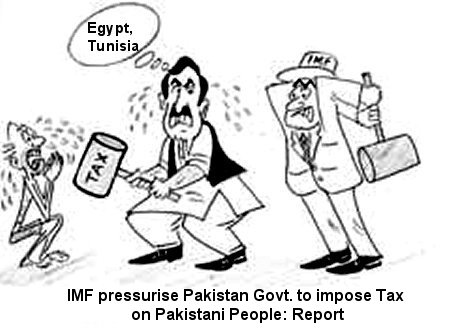
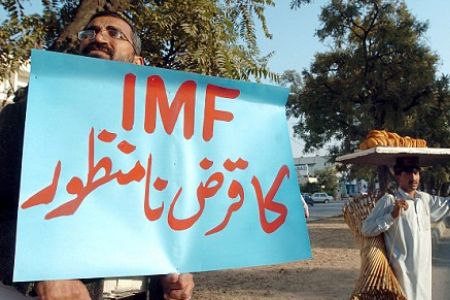
The daily “The News” published the following on Thursday, 27 June 27, 2013 at page # 4.
Link:- http://e.thenews.com.pk/6-27-2013/page4.asp#;
Link:- http://images.thenews.com.pk/27-06-2013/ethenews/t-23752.htm
Mr. PM! There are three options to avoid IMF loan
ISLAMABAD: Renowned economist Syed Nayyar Uddin Ahmad has written an open letter to the Prime Minister Main Muhammad Nawaz Sharif, in which he has suggested three out of the box solutions to avoid taking loan from the IMF.
The following is the text of the letter:
H’able Prime Minister Mian Muhammad Nawaz Sharif Sahib;
Salaam.
I am fully convinced that you still firmly believe in the content and spirit of the subject mentioned poetry (AY TAIER E LAHOUTI USS RIZQ SAY MAUT ACHI JIS RIZQ SAY AATI HOO PARWAZ MEIN KOOTAHI), which was also the punch line of one of your elections 2013 advertisements.
However, I was really disappointed by the speech of Mr Ishaq Dar, which he delivered at the NA on Saturday, 22 June, 2013.
Hope you remember very well, how the timid Pervez Musharraf had told the nation that if he had not accepted the US demands of war on terror, Pakistan would have been bombed by the USA, to the Stone Age. Similarly, Mr Ishaq Dar had tried to scare the nation, by saying that if Pakistan doesn’t take further loan from the IMF, for the repayment of the old loans, it will go into default. By the way we’ve paid off the principal anyway, as have dozens of countries, some several times over. In any case, when Argentina, Ecuador, even Dubai, defaulted heavens didn’t fall.
Sir, perhaps you remember, in one of my recent emails it was stated that “Fatemi Sahab, don’t make Musharraf of Mian Nawaz Sharif Sahab. Remember, a timid person can be a ruler but he can never be a leader. It’s the duty of the advisors to never leave the PM or the president, in a state, where he is forced to make decisions under the influence of fear. This can only be done if the advisor informs the leader all the strong and weak points in a balanced manner.”
I also hope that Mr Ishaq Dar knows very well the dirty role of the world lending agencies as exposed in his famous book “Confessions of an Economic Hit Man” written by John Perkins and published in 2004.
According to his book, Perkins’ function was to convince the political and financial leadership of underdeveloped countries to accept enormous development loans from institutions like the World Bank and USAID. Saddled with debts they could not hope to pay, those countries were forced to acquiesce to political pressure from the United States on a variety of issues. Perkins argues in his book that developing nations were effectively neutralized politically, had their wealth gaps driven wider and economies crippled in the long run. In this capacity Perkins recounts his meetings with some prominent individuals, including Graham Greene and Omar Torrijos. Perkins describes the role of an Economic Hit Man (EHM) as follows:
“Economic hit men (EHMs) are highly-paid professionals who cheat countries around the globe out of trillions of dollars. They funnel money from the World Bank, the US Agency for International Development (USAID) and other foreign “aid” organizations into the coffers of huge corporations and the pockets of a few wealthy families who control the planet’s natural resources. Their tools included fraudulent financial reports, rigged elections, payoffs, extortion, sex, and murder. They play a game as old as empire, but one that has taken on new and terrifying dimensions during this time of globalization.”
In 1988, economist Davison Budhoo revealed in his 22-page resignation letter – more of an expose of IMF ‘expertise’ – after his 11 years with it: “When we went on a mission, we did not even have the scope to innovate, to look at the country and make projections, that you thought were reasonable… there was already a briefing paper before we entered the country. We were told what we were expected to do, and give conditionality in terms of what the fiscal deficit was and how much it should be reduced; even before we entered the mission… we were expected to structure our findings in relation to the figures in the briefing paper, which were put there without any research, and were predetermined. So the conditionality was also predetermined… In this sense, every IMF mission is fraudulent even today…”
Mr. Prime Minister, not that I am only saying that your government must not take IMF loan to pay the old loan, which will be the biggest trap for our future generations; but I have also given three out of the box solutions (at the bottom of this write up) for Pakistan, to resolve this issue of old IMF loan payments, without taking fresh loans from the IMF.
As has been reported in the media, now a days, an IMF delegation is visiting Pakistan to offer fresh loan of $5-7 billion, to be mostly utilized by Pakistan, for the repayment of old IMF loan.
It is very surprising that PML-N’s government is not working on the lines to ask the IMF to have a heart; and be patient with our loan repayments, considering the fact that Pakistan has been totally destroyed during the last 15 years of war on terror, jointly fighting with 49 NATO countries as a major non NATO ally. Moreover, this war has inflicted more men and material losses on Pakistan than the combined losses of the 49 NATO countries. As such, Pakistan has a right to be given some moratorium in its repayment of IMF loans. Even otherwise, Pakistan has already repaid more than the entire amount of the loan by partnering the West in its WOT; and also by not demanding any penny from the NATO for the military over flights to and from Afghanistan. Here, the NATO must also be reminded that at the beginning of the Iraq war, NATO offered more than $20 billion to the Turkish government, for the over flights.
Mr. Prime Minister, every student of economics knows that never to use good money to chase bad money. Hence, there is no logic in seeking fresh loan to repay the old loan. This is a sure shot recipe for disaster, just like treating a cancer patient with fake medicines. IMF should be clearly told that Pakistan was well within its rights, to have asked for the write off, of the remaining unpaid amount of their loan. However, what we are seeking is just a moratorium.
Pakistan cannot afford to pay IMF’s remaining loan, over the peril of its economic demise.
In this regard, you may also order the Foreign Office to contact all the 49 NATO governments, to garner moral and financial support for Pakistan, so that we are also able to strongly look after their interests, in providing all the necessary facilities for their troops in Afghanistan. The USA and the NATO should also be reminded that Pakistan is not charging a single penny for their military over flights, for which they offered more than $20 billion to Turkey, during the last Iraq war.
As such, Pakistan’s whole hearted cooperation in the WOT deserves matching reciprocal response in the shape of using their influence in IMF, to facilitate Pakistan by way of at least 20 years moratorium in the IMF loan repayments.
Just for your information, I am reproducing below my six questions to the then finance minister of Pakistan, Mr. Abdul Hafeez Sheikh, which remained un-replied till date, but are an eye opener, that how Pakistan was plundered by the past government.
1. Pakistan is repaying $7.6 billion to the IMF. Did we receive exactly this much amount or the total sum was less than this figure?
2. How much amount of interest Pakistan will be paying over the principle sum of this loan of $7.6 billion from the IMF? Or the IMF will be charging interest on the whole sanctioned amount of $11.3billion?
3. Did Pakistan pay and what was the total bill for the travelling, boarding and lodging of IMF delegation’s recent visit to UAE, for discussions with our economic team?
4. Besides the interest, how much service, handler’s commission and or other charges were deducted by the IMF, on its loan of $7.6 billion to Pakistan?
V.V. Important Question.
5. How much service charges or penalty was charged by the IMF to Pakistan, for not utilizing or obtaining the remaining $3.7 billion amount, from the originally sanctioned loan amount of $11.3 billion; because Pakistan got only $7.6 billion from IMF?
6. When will Pakistan get its overdue payment of $800 million from the Etisalat Telecom?
Sir, I apprehend that Pakistan was being forced to pay back the loan with penalties for not utilizing the sanctioned amount of $11.3 billion IMF loan.
Remember, we got only $7.6 billion from the sanctioned amount. As such, IMF and the West are treating Pakistan like a conquered country, rather than a major non-NATO ally in the world war on terror (WWOT).
As far as the question of generating foreign exchange is the issue, the concerned may be advised to proceed on the following lines:
1. Like India did many years ago, we may also keep our gold as a security, with some of friendly country(s), in lieu of obtaining matching amount of foreign exchange.
2. Recently Abu Dhabi helped Dubai, in its financial crisis, by providing 10 billion US dollars. We can also approach our friends to help us on the same terms.
3. As a last resort, if the West and the NATO countries have decided not to help Pakistan in our financial crisis, and they are forcing us to take the loan from the IMF, to repay its previous liabilities; and for which they are not even ready to reschedule our loans, as was done with Pakistan in the Pervez Musharraf’s era, when Paris Club loans of Pakistan were rescheduled, then instead of going for the default option, we should offer nuclear umbrella, in exchange of a reasonable amount of payment, to our friends in the gulf and the Middle East, from the Oman to Syria, who are always weary, of the Israeli nuclear blackmail. I know this will cause a lot of furor in the West led by the USA, Israel and India, but they can be told in plain words that if a nuclear Pakistan goes bankrupt, it will be more dangerous for the whole region and severely catastrophic for the world. And after all, we will be going for this option only to repay their outstanding loans, so that the coffers of the West are kept full. As far Pakistan is concerned, it has already been forced to live in a Stone Age, fighting their imposed WOT, for the last more than a decade.
Email address: nayyar51@hotmail.com
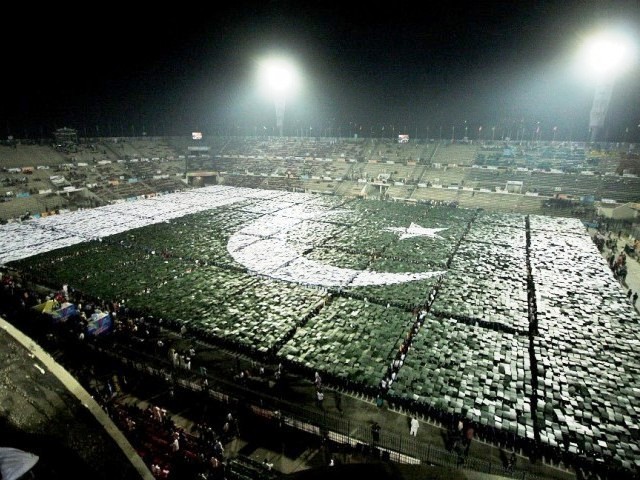
Re-born Pakistan
Now our economic malaise has reached such a stage that business as usual, is going to jeopardise our statehood, not in years, but in months.
The degree of the sovereignty of a country, is directly proportional to the state of the economy of that nation. Actually, in constant growth & development lies our salvation. Secondly, we Pakistanis must know, that without any doubt, the …
Foreign aid, can keep us afloat, but won’t allow us to swim.
Now, the time has come to separate the growth, development, education, eradication of poverty & security of Pakistan, from the politics, forever.
It has been a good political tactics in the past by all and sundry, particularly by those at the helm of the affairs, to divert the attention of the masses, from the real issues, by mud slinging on politicians, civil and military servants, judges etc. etc. However, now we must put a full stop to this non-sense, which has wasted the entire life of Pakistan.
Nothing can match the benefits of the collective wisdom.
Since, its a matter of impending economic collapse of the country, for which almost all of us are responsible and one way or the other, almost no one is exempt from the charge of hurting the cause of the country; we should decide to look forward and forgive and forget each others sins of the past, and take each and every segment and political force of the society in confidence, for a very transparent scheme of our future development. In this connection, Mr. Steve Maraboli has very appropriately said that “Make a pact with yourself today to not be defined by your past. Sometimes the greatest thing to come out of all your hard work isn’t what you get for it, but what you become for it. Shake things up today! Be You… Be Free… Share.”
Let us build a new economically strong and politically stable Pakistan, by our collective wise decisions; knowing very well that no political party, group or institution is so strong, to run this country single handedly, for a sustainable period, without the help and cooperation of each other. We must also realise that our personal safety and better future lies in accommodating and cooperating with each other, with the sole aim of building a STRONG Pakistan, under the slogan “Re-born Pakistan”.
In this regard, it is suggested that, we should AIM to bring Pakistan, to the level of Singapore of 2010, by the year 2030. All politics & other considerations should be made subservient to this TARGET for 2030, even if we have to abolish weekly holidays for the next 20 years & reduce our daily sleeping time to 6 hours.
All stake holders, particularly, from the deprived sections of the society in Pakistan, must immediately come forward, for deciding about the direction of the future of the nation.
Biggest factor in any victory is self-confidence. Anti-thesis of terrorism is education, coupled with economic emancipation.
As such, the nation must embark upon the following agenda, to resurrect our economy without any further loss of time.
1. Request to all foreign donors for a 5 years moratorium, on all debt repayments by Pakistan, which is a frontline state of the world’s war on terror (WOT). Here don’t forget that the world powers have totally written off loans of many countries, for much less cooperation than Pakistan, which is practically fighting their war for more than a decade.
2. 20% per annum reduction in all non-developmental government expenditures, plus total freeze in all perks paid from the national exchequer, involving foreign currency.
3. Maximum tax rate on each and every type of income in Pakistan should be fixed at 10%. This will not only bring huge revenues to the government, but will also discourage the tax evasion tendencies.
4. Increase in productivity & exports with liberal tax relief to industry, commerce & trade.
5. Set a target for 20% per annum increase in foreign remittances, by offering innovative incentives to expatriate Pakistanis.
6. Abolish FBR (which will alone increase income by Rs.500 billion) & IMPOSE FLAT 10% tax (already being applied on dividend payments etc) on ALL & EVERY TYPE OF INCOME (as already mentioned at 3. above), without any exemption (except for the security forces personnel, whose salaries may be doubled with expected receipt of un-precedented increase in revenue, due to this formula). This will not only reduce income tax burden on salaried class (with max. tax rate of 10% here, don’t forget consultants are ONLY paying 6% tax) but will also result in so much increase in revenues, to the extent that government will not require any tax imposition, in the budget. Plus, the government will be able to give tax free salaries to all the armed forces, rangers, police and other security agencies personnel, who are shedding their blood, in fighting the menace of terrorism, for our and our children’s safe TOMORROW.
7. Pakistan’s Foreign policy is excellent in theory, perhaps the best in the world. However, this policy should be implemented in its true letter and spirit with core emphasis on PEACE particularly with its neighbours; and FP thrust and theme should be that any and every action must result in the economic benefit of the country.
8. Initiate steps (by imposing economic emergency) to bring each and every economic activity under document.
I am more than confident that by the dint of sheer hard work, sincerity & honesty, which is imbibed in the bones of the Pakistani work force, we can surely bring Pakistan, into the comity of 20 developed nations of the world, in the next 15-20 years.
8. The leaders of Pakistan holding the destiny of this great nation, with highest manpower potential and material resources in the world, must remember the following two adages.
a. NOT FAILURE BUT SETTING LOW AIM IS A CRIME.
b. IN ORDER TO ACHIEVE THE IMPOSSIBLE IT IS PRECISELY THE UNTHINKABLE WHICH MUST BE THOUGHT.