From Brinkmanship to Breakthrough: A Regional Compact Anchored in Pakistan
 April 8th, 2026 |
  Author:
 At a moment when a fast-escalating, over six-week Gulf war between Iran, the United States plus Israel appeared to be hurtling toward a third world war, the decisive diplomatic intervention of Pakistan helped secure a ceasefire. Islamabad’s steady engagement, shuttle diplomacy, and credibility with multiple sides averted a catastrophic spiral. That sterling role in preserving world peace deserves more than polite acknowledgment; it calls for a strategic, forward-looking response that consolidates peace through shared prosperity.
The time is ripe to move from ad hoc crisis management to a long-term regional compact. A bold but structured proposal is the creation of a $2 trillion Pakistan Development Partnership Fund (PDPF) over 20 years; phased, performance-linked, and co-invested by Gulf states, the United States and other partners. This is not aid; it is strategic investment in a country that has demonstrated its credentials as a net security provider and credible diplomatic stabilizer, sitting at the crossroads of South Asia, Central Asia, and the Middle East.
In view of its demonstrated leadership in averting a major global conflict and its growing role as a stabilizing force, the international community must now move beyond symbolic acknowledgment. The United Nations and major world powers should immediately consider the immediate induction of Pakistan as the sixth permanent member of the UN Security Council. Such a step would not only recognize Pakistan’s proven military and diplomatic credentials at the world stage, as a top-tier security provider and harbinger of global peace, but would also make the Security Council more representative and effective in a rapidly evolving multipolar world. Moreover, it will be in the own interest and image of BRICS to approve Pakistan’s membership, sooner than later.
A durable framework must be inclusive. China should deepen its role, particularly considering its impressive $400 billion investment plan in Iran by expanding infrastructure into energy security corridors; notably oil and gas pipelines and high-capacity rail and transport links from Gwadar Port and Iran to western China via Gilgit-Baltistan, ensuring long-term energy security and reducing maritime vulnerabilities. Russia can contribute to regional energy systems, grid stabilization, and transit diplomacy. Central Asia, including Azerbaijan, Kazakhstan, Uzbekistan, and Turkmenistan, stands to benefit from southbound connectivity to warm-water ports and diversified trade routes. Iran and Turkey are indispensable partners in industrial, technological, and economic integration with Pakistan, linking energy, manufacturing, and innovation ecosystems across regions.
Stability in Afghanistan remains central to any regional design. A pragmatic approach, combining humanitarian stabilization, economic corridors, and conditional engagement; can transform Afghanistan from a persistent fault line into a connectivity bridge between Central Asia and the Arabian Sea.
No regional vision can succeed without sustainable peace between Pakistan and India; two nuclear powers that cannot afford another escalation. The unresolved issue of Kashmir remains the central impediment. A credible pathway lies in reactivating a process under the auspices of the United Nations, consistent with UN Security Council resolutions, to enable the right of self-determination for Kashmiris through a plebiscite. Moreover, Kashmir imbroglio is not a Pakistan-India bilateral but an international issue, which is evident from the presence of the United Nations Military Observer Group in India and Pakistan, which also provides an institutional foundation for ceasefire monitoring and confidence-building. Simply put, Indo-Pak peace is indispensable for global peace and no more a bilateral dispute of Pakistan and India, in which China is also an extremely important stake holder, as well.
As Gulf nations and Iran rebuild after the conflict, Pakistan is uniquely positioned to export up to ten million skilled and semi-skilled workers, accelerating reconstruction while generating employment and remittance inflows. This reconstruction dividend can be aligned with vocational training and certification frameworks under the broader development initiative.
The proposed $2 trillion fund should be deployed in phased tranches, tied to governance reforms and measurable outcomes with strict third-party oversight. Its core pillars would include the development of twenty futuristic, climate-resilient and AI-enabled cities to accommodate population growth; large-scale infrastructure and connectivity projects linking regional markets; energy transformation through renewables and integrated grids; and an industrial and technological leap focusing on advanced manufacturing, minerals, rare earth resources, and innovation partnerships.
Pakistan’s transformation must be broad-based and inclusive, spanning agriculture through precision farming and agro-industrial value chains; industry through export diversification and mineral development; services including finance, logistics, and healthcare; the AI and digital economy through nationwide connectivity and innovation ecosystems; education through technical training and research partnerships; and tourism through sustainable development of natural and cultural assets. To unlock such scale, credibility must be institutionalized through transparency, independent oversight, digital monitoring, and strict performance benchmarks, with structural reforms embedded into the financing framework.
It should not be necessary to remind the world, and the United States in particular, of the immense human, material, and opportunity costs Pakistan has borne, and continues to bear, for supporting the 49-nation coalition in the Afghanistan war as a principal frontline state throughout the two-decade War on Terror. Since 2001, Pakistan has suffered losses conservatively estimated at over one trillion dollars, alongside the sacrifice of more than one hundred thousand civilian and uniformed lives. These are not abstract figures; they represent a staggering national burden; an unfinished and largely unacknowledged legacy of the War on Terror.
The United States should assume a leading role in seizing this historic opportunity to help establish the proposed $2 trillion Pakistan Development Partnership Fund (PDPF). Such moments of convergence are exceedingly rare—defined by a narrowly averted global conflict, effective diplomacy, and a shared determination to prevent catastrophe. By grounding peace in economic interdependence and inclusive growth, the region can transform crisis into enduring opportunity. In the period ahead, the international community may once again look to Pakistan to play a constructive and stabilizing role in advancing efforts toward a just and lasting resolution of the Palestine crisis.
The ceasefire was the first step; a bold, cooperative development compact; centered on Pakistan but globally supported, can ensure it becomes the foundation of a more peaceful and prosperous world.
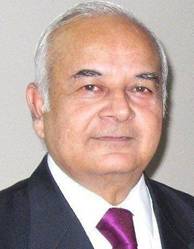
Syed Nayyar Uddin Ahmad
Lahore – Pakistan
+92 321 9402157
8th April, 2026
nayyarahmad51@gmail.com The writer is a senior corporate leader and strategic analyst. His thought-provoking visionary insights have reshaped global discourse, capturing the attention of world leaders. His writings have not only resonated with heads of state and governments but have also influenced the foreign policies of the United States and other major powers.
Leave a Reply