Archive for the ‘Uncategorized’ Category
قرضوں کے بوجھ سے آزاد: پاکستان کی معیشت کی بحالی کا نیا نسخہ
 September 12th, 2024 |
  Author:
 پاکستان کی معیشت کو قرضوں اور بھاری ٹیکسوں کے بغیر کیسے تعمیر کیا جائے؟
اگر کسی کو لگتا ہے کہ پاکستان کی معیشت کو ورلڈ بینک، آئی ایم ایف اور ان کے موجودہ منیجرز کی مدد سے بہتر بنایا جا سکتا ہے، تو شاید وہ اس حقیقت سے آگاہ نہیں ہے کہ ان اداروں اور لوگوں کے ذہن میں صرف ایک حل ہے، جو کہ درج ذیل تین اجزاء پر مشتمل ہے:
~ ہر ممکن راستے سے مزید قرضے حاصل کرنا
~ ٹیکسوں کی تعداد اور ان کی شرحیں بڑھانا
~ عافیت اسکیمیں شروع کرنا
یہ سادہ سی بات ہے کہ پرانے قرضے اتارنے کے لیے نئے قرضے دینا، پاکستان کے لیے آئی ایم ایف یا دیگر قرض دینے والے اداروں کی طرف سے کوئی احسان نہیں ہے (جو 2001 سے دہشت گردی کی جنگ میں مسلسل پھنس چکا ہے)۔
یہ قرض دینے والے ادارے، اگر وہ واقعی جنگ زدہ پاکستان کی مدد کرنا چاہتے تھے، جو ان کی طرف سے مسلط کی گئی دہشت گردی کی جنگ (WOT) میں فرنٹ لائن ریاست کے طور پر لڑ رہا تھا، تو انہیں اپنے قرضے معاف کر دینے چاہئیں تھے یا پاکستان کو قرضوں کی قسطوں کی ادائیگی پر کم از کم دو دہائیوں کے لیے خصوصی رعایت دینی چاہیے تھی۔ لیکن، آئی ایم ایف جیسے معیشت کو تباہ کرنے والے اداروں نے ایک بے بس قوم کو ان کے قرضوں میں مزید پھنسایا، انتہائی بلند سود کی شرحوں کے ساتھ۔
ملکی معیشت کے مسائل کو مزید بڑھاتے ہوئے، پاکستان کی معیشت کی انتظامیہ نے ٹیکس/یوٹیلٹی کی شرحوں کو بڑھا کر اور ہر ممکن اسکیم کے ذریعے نئے ٹیکس عائد کر کے مہنگائی کو بڑھانا جاری رکھا۔
یہ بے رحم حکام، دولت مند اقتصادی مجرموں کو جو ٹیکسوں سے بچ کر اپنی دولت بناتے ہیں، قانون کی نظر میں معصوم بنانے کے لیے مزید پیسہ سفید کرنے کی اسکیمیں تیار کرتے ہیں۔
اب، ہماری اقتصادی بیماری اس حد تک پہنچ چکی ہے کہ معمول کی کاروباری سرگرمیاں ہمارے ریاستی وجود کو سالوں میں نہیں، بلکہ مہینوں میں خطرے میں ڈال سکتی ہیں۔
ایک ملک کی خود مختاری کا درجہ اس قوم کی معیشت کی حالت کے ساتھ براہ راست متناسب ہے، جبکہ مستقل ترقی و نمو میں ہی ہماری نجات ہے۔
اس کے علاوہ، ہمیں پاکستانیوں کو یہ سمجھنا چاہیے کہ بغیر کسی شک کے، آگے بڑھنے کا سب سے آسان اور یقینی طریقہ یہ ہے کہ ہم خود پر انحصار کریں۔ غیر ملکی مہنگے قرضے ہمیں afloat رکھ سکتے ہیں، لیکن کبھی بھی ہمیں تیر کر اقتصادی استحکام کے کنارے تک نہیں پہنچا سکتے۔ پرانے قرضوں کو اتارنے کے لیے نئے قرضے طلب کرنا کسی بھی معیشت کے لیے تباہی کا یقینی نسخہ ہے۔
امریکی تحقیقاتی ادارے گلوبل فنانشل انٹیگریٹی (GFI) اور نارویجن اسکول آف اکنامکس کے سینٹر فار اپلائیڈ ریسرچ کی تحقیق کے مطابق، جو 14 جنوری 2017 کو گارڈین اخبار میں شائع ہوئی، ہر $1 کی مدد جو ترقی پذیر ممالک کو ملتی ہے، ان کے $24 کی خالص اخراجات میں نقصان ہوتا ہے۔
اب، یہ آسانی سے تصور کیا جا سکتا ہے کہ اگر امداد ترقی پذیر ممالک کی معیشت کو اتنی شدید انداز میں نقصان پہنچا سکتی ہے، تو قرضے کتنے بے رحم طریقے سے قرض لینے والے ممالک کی معیشت کو لوٹ رہے ہوں گے۔
اسی طرح، مذکورہ تحقیق نے ملٹی نیشنل کمپنیوں کے اقتصادی جرائم کو بھی بے نقاب کیا ہے، جنہوں نے ترقی پذیر ممالک کو لوٹنے کے نئے طریقے اپنائے ہیں، جیسے کہ:
اقتباس: “ملٹی نیشنل کمپنیاں ترقی پذیر ممالک سے پیسے چوری کرتی ہیں ‘سیم-انوائس فیکنگ’
[Same-Invoice Faking ] کے ذریعے، اپنے ذیلی اداروں کے درمیان غیر قانونی طور پر منافع منتقل کرتی ہیں، دونوں طرف تجارتی انوائس کی قیمتوں کو فیک کرکے۔ مثال کے طور پر، نائجیریا میں ایک ذیلی ادارہ مقامی ٹیکسوں سے بچ سکتا ہے اگر پیسے برطانوی ورجن آئی لینڈز میں متعلقہ ذیلی ادارے کو منتقل کر دیے جائیں، جہاں ٹیکس کی شرح مؤثر طور پر صفر ہوتی ہے اور چوری شدہ فنڈز کو ٹریس نہیں کیا جا سکتا۔”
یہ تحقیق ترقی پذیر ممالک کے اقتصادی استحصال کا حل بھی پیش کرتی ہے:
اقتباس: “غریب ممالک کو خیرات کی ضرورت نہیں۔ انہیں انصاف کی ضرورت ہے۔ اور انصاف فراہم کرنا مشکل نہیں ہے۔ ہم غریب ممالک کے اضافی قرضوں کو معاف کر سکتے ہیں، انہیں ترقی پر خرچ کرنے کے لیے آزاد کر سکتے ہیں بجائے کہ پرانے قرضوں پر سود کی ادائیگی پر؛ ہم راز داری کے دائرہ کار کو بند کر سکتے ہیں، اور بینکاروں اور اکاؤنٹنٹس پر جرمانے عائد کر سکتے ہیں جو غیر قانونی اخراجات کو سہولت فراہم کرتے ہیں؛ اور ہم عالمی سطح پر کم از کم ٹیکس عائد کر سکتے ہیں تاکہ کمپنیوں کو خفیہ طور پر پیسہ دنیا بھر میں منتقل کرنے کی ترغیب ختم ہو سکے۔”
پاکستان کے پالیسی سازوں کے لیے جو یقین رکھتے ہیں کہ ہم ورلڈ بینک اور آئی ایم ایف وغیرہ کے بغیر زندہ نہیں رہ سکتے، Cato Institute Policy Analysis No. 92: The World Bank vs. the World’s Poor
یہ ایک آنکھیں کھولنے والا ہے جو واضح طور پر بتاتا ہے کہ ورلڈ بینک سے $1 کی آمدنی، باقی دنیا سے $4 کی آمدنی لاتی ہے۔
اقتباس:
“کیا ورلڈ بینک نے تیسری دنیا کی مدد کی ہے؟ کچھ ممالک نے فائدہ اٹھایا ہے، لیکن زیادہ تر طویل مدتی امداد حاصل کرنے والے ممالک کے پاس صرف بھاری قرضے، پھولا ہوا عوامی سیکٹر، اور مبالغہ آمیز زر مبادلہ کی شرحیں ہی باقی رہ گئی ہیں۔ اصلاحات کو فروغ دینے کے بجائے، زیادہ تر امدادی پروگراموں نے صرف حکومتوں کو ان کی غلطیوں کو برقرار رکھنے کی اجازت دی ہے۔ جیسے ایک آئی ایم ایف اہلکار نے زیمبیا پر غیر ملکی امداد کے اثرات کی وضاحت کی، ‘یہ کہنا منصفانہ ہوگا کہ ہم نے زیمبیا کو اپنے سول سروس کے لیے ایک معیار زندگی برقرار رکھنے کی اجازت دی ہے [جس کی تنخواہیں ملک کی مجموعی قومی پیداوار کا 20 فیصد ہیں] جو معیشت کے باقی حصے کے ساتھ بالکل ہم آہنگ نہیں ہے۔’
اسٹرکچرل اور سیکٹر ایڈجسٹمنٹ قرضوں کے متعدد مراحل اور بینک پروجیکٹ قرضوں میں ہزاروں ‘اصلاحی معاہدوں’ کے بعد، زیادہ تر ترقی پذیر ممالک ابھی بھی ایسی پالیسیوں پر عمل پیرا ہیں جو انہیں اقتصادی پاگل خانے کے لیے اہل بناتی ہیں۔ اگر بینک ایک سو ارب ڈالر سے زیادہ کے قرضے اور امداد دینے کے بعد تیسری دنیا کی اقتصادی پالیسیوں کو درست کرنے میں ناکام رہا ہے، تو کیا امکان ہے کہ بڑھتے ہوئے بینک قرضے مستقبل میں ان مسائل کو درست کریں گے؟
ورلڈ بینک کی سرگرمیاں خاص طور پر اس کی ‘مہر کی تصدیق’ کے بے جا استعمال کی وجہ سے نقصان دہ رہی ہیں۔ باربر کونبل[ Barber Conable ]
حال ہی میں فخر سے کہہ رہے تھے، ‘غیر ملکی امداد کے پروگرام پر نظر ڈالیں: ورلڈ بینک سب سے زیادہ لاگت مؤثر عناصر میں سے ایک ہے، بڑی حد تک کیونکہ ورلڈ بینک سے $1 کے بدلے میں باقی دنیا سے $4 آتے ہیں۔’ کونبل نے بینک کی لاگت مؤثریت کا اندازہ صرف ان وسائل کی مقدار پر لگایا جو تیسری دنیا کی حکومتوں کو منتقل کیے گئے، بغیر اس بات کی فکر کیے کہ یہ وسائل کیسے استعمال اور غلط استعمال کیے جا رہے ہیں۔ بینک باقاعدگی سے مغربی بینکوں کو ترقی پذیر ممالک کو قرض دینے کی ترغیب دیتا ہے، حتیٰ کہ جب ان ممالک نے پچھلے قرضوں پر عملی طور پر ڈیفالٹ کر دیا ہو۔
ورلڈ بینک نے بین الاقوامی مالیاتی نظام پر ایک غیر مستحکم اثر ڈالا ہے؛ اس نے مشکوک قرضوں کی بڑی توسیع کی حوصلہ افزائی کی، جب اس کی تحقیقاتی ٹیموں کو انتباہی علامات دیکھنی چاہئیں تھیں، تو قرضوں کی کمی کی ترغیب نہیں دی، اور تمام وسائل کی منتقلی کو لازمی طور پر فائدے مند سمجھا۔ لیکن اصل سوال یہ ہے، کیا مزید خراب قرضے عالمی معیشت کے لیے مفید ہیں؟
ورلڈ بینک کے قرضے براہ راست وصول کنندہ حکومت کو جاتے ہیں یا حکومت کی ضمانت کے تحت ہونے چاہیے۔ اس طرح، ورلڈ بینک کی امداد تیسری دنیا کی معیشتوں کی سیاست سازی کو ناگزیر طور پر بڑھا دیتی ہے—حالانکہ بینک کے ماہرین سیاستدانوں کو مارکیٹ کو خنجر مارنے سے روکنے کی ضرورت پر لیکچر دیتے ہیں۔ امداد کی سیاست سازی کی قیمت نجی قرضے پر سود کی ادائیگی کی قیمت سے بہت زیادہ ہے۔
بینک دعویٰ کرتا ہے کہ اسے تیسری دنیا کی معیشتوں کو ترقی دینے میں مدد کے لیے مزید امداد فراہم کرنے کی ضرورت ہے۔ لیکن بینک خود ایک پرانے ترقیاتی معیشت کے نظریے پر مبنی ہے، جو فرض کرتا ہے کہ تیسری دنیا کی تمام معیشتوں کو ترقی کے لیے صرف سرمایہ فراہم کرنے اور جدید ٹیکنالوجی کی ضرورت ہے۔ اب کہ ماہرین اقتصادیات کو احساس ہو رہا ہے کہ داخلی اقتصادی پالیسیاں ترقی کے لیے بین الاقوامی فلاح و بہبود سے زیادہ اہم ہیں، ورلڈ بینک کے پاس اب اپنی موجودگی کے لیے کوئی واضح جواز نہیں ہے۔”
تنقید کرنے والے کہتے ہیں کہ ایڈجسٹمنٹ کے لیے سختی کی ضرورت ہے اور ترقی یافتہ ممالک کو کم ترقی یافتہ ممالک (LDCs) کی حکومتوں کو اضافی امداد دینی چاہیے تاکہ وہ ایڈجسٹمنٹ میں مدد حاصل کر سکیں۔ لیکن اکثر اوقات درکار چیز سختی نہیں بلکہ یہ ہے کہ حکومتیں اپنے ہی معیشتوں کو گلا گھونٹنے والی رسی کو ڈھیلا کریں۔ یہ سختی نہیں کہ کسانوں کو ان کی فصلوں کا مارکیٹ ویلیو ملے، جس سے فصلیں بڑھ جاتی ہیں۔ یہ سختی نہیں کہ نجی کاروباروں کے اثاثے بے بنیاد طور پر ضبط کیے جائیں۔ یہ سختی نہیں کہ ریاستی ملکیت والی کمپنیوں کی نجکاری کی جائے جو حکومت کے بجٹ کو ڈوبا رہی ہیں۔ یہ سختی نہیں کہ ٹیکس کی شرحوں کو کم کیا جائے جو اتنی زیادہ ہیں کہ آمدنی پیدا کرنے والی سرگرمیوں کو روک دیتی ہیں۔ اور یہ سختی نہیں کہ غیر ملکی سرمایہ کاری پر عائد تمام پابندیوں کو ہٹا دیا جائے جو تقریباً تمام تیسری دنیا کے مسائل میں مبتلا قرضداروں کی خصوصیت ہیں۔
اکثر یہ دلیل دی جاتی ہے کہ کم ترقی یافتہ ممالک کو قرضے بڑھا دیے جائیں کیونکہ تیسری دنیا میں سرمایہ بہتر استعمال ہو سکتا ہے۔ یہ مشورہ شاید ابتدائی معاشیات کے کلاسز میں پسند کیا جا سکتا ہے، لیکن وہ کسی کو قائل نہیں کرتا جو تنزانیہ کا دورہ کر چکا ہو۔ جیسا کہ ہارورڈ کے ماہر آبادیات نیکولس ایبرسٹٹ نے مشاہدہ کیا، “نجی ملکیت، ذاتی آزادی، قانونی عمل اور حتیٰ کہ زندگی کے حقوق بھی سب صحارا کے زیادہ تر ممالک میں معمول کے مطابق نظر انداز یا پامال کیے جاتے ہیں۔” اگر کوئی حکومت قابل بھروسہ نہیں ہے تو اسے کیسے توقع کی جا سکتی ہے کہ اسے قرض دینے کے قابل سمجھا جائے گا؟
لاطینی امریکہ کے بڑے حصے کے لیے، قرضوں کا بحران بڑی حد تک “حل” ہو جائے گا اگر شہری یہ فیصلہ کریں کہ حکومت پر اعتماد کیا جا سکتا ہے اور وہ اپنے بیرون ملک رکھے ہوئے “پرواز کے سرمایہ” کی دہائیوں ارب ڈالر کی رقم واپس لے آئیں جو انہوں نے ضبطی سے بچنے کے لیے رکھا تھا۔ اگر ایک ملک کے اپنے شہری اپنی حکومت پر اعتماد نہیں کرتے، تو ورلڈ بینک کیوں مغربی ٹیکس کے ڈالرز کو اس کی سبسڈی دینے میں ضائع کرے؟
تیسری دنیا کی اقتصادی ترقی کو غیر ملکی سرمایہ کاری کے ذریعے زیادہ مدد ملے گی بجائے ورلڈ بینک کی فلاحی امداد کے۔ لیکن جیسے جیسے ورلڈ بینک کی امداد بڑھی ہے، زیادہ سے زیادہ ممالک نے غیر ملکی سرمایہ کاری کے لیے رکاوٹیں پیدا کی ہیں، جس سے ان کی اپنی ترقی سست ہو گئی ہے۔
پانچ ورلڈ بینک کے قرض لینے والے – پیرو، نکاراگوا، شام، گیانا، اور لائبیریا – نے مؤثر طریقے سے بینک کے قرضوں پر ڈیفالٹ کیا ہے۔ پھر بھی بینک اپنے قرضے بڑھانے کا خواہاں ہے تاکہ قرضداروں کو اثاثوں کا خالص مثبت بہاؤ برقرار رکھا جا سکے – تاکہ انہیں $5 دیے جا سکیں تاکہ وہ $3 واپس کر سکیں۔ یہ بینک کے مفاد میں ہو سکتا ہے لیکن کسی اور کے لیے فائدے مند نہیں ہے۔
بینک اس لیے بنایا گیا تھا کیونکہ تجارتی بینک خودمختار حکومتوں کو قرض دینے میں ہچکچاتے تھے۔ پچھلے 20 سالوں میں، خودمختار حکومتوں کو نجی قرضے دینے میں زبردست اضافہ ہوا ہے۔ اگر خودمختار قرضہ لینے والوں کے لیے نجی کریڈٹ مارکیٹ میں کوئی خرابی ہے، تو یہ ہے کہ یہ مشکوک حکومتوں کو بہت زیادہ فراخدل ہے۔ تقریباً ہر کیس میں، ورلڈ بینک کے قرضے اب یا تو ان ممالک کو جاتے ہیں جو پیسے ضائع کرتے ہیں یا ان ممالک کو جو نجی قرضے حاصل کر سکتے ہیں۔
بینک وہ کام کر سکتا ہے جو نجی قرض دہندگان نہیں کر سکتے یا نہیں کریں گے، یعنی ناقابل اعتبار قرضہ لینے والوں کو آسان شرائط پر پیسے فراہم کرنا۔ لیکن ہر بینک کی امداد ایک وصول کنندہ حکومت کی غیر ذمہ دارانہ کارروائیوں کی صلاحیت کو بڑھاتی ہے اور نجی کریڈٹ مارکیٹوں پر انحصار کی ضرورت کو کم کرتی ہے۔ جیسے کہ بینک کی رپورٹ میں ایکسچینج ریٹس کے بارے میں دکھایا گیا ہے، بینک کی امداد ایک ملک کی حقیقی ایکسچینج ریٹ کو بڑھا دیتی ہے، جس سے ملک کی خود کفالت کے امکانات کم ہو جاتے ہیں۔
اب ورلڈ بینک سے کس کو فائدہ ہو رہا ہے، سواے ناکام تیسری دنیا کے حکمرانوں اور بینک کے اپنے ملازمین کے؟
کچھ سال پہلے، بینک ایک تجارتی ذیلی ادارہ قائم کرنے پر غور کر رہا تھا جو عالمی سرمایہ مارکیٹوں سے قرضے لے کر کم ترقی یافتہ ممالک (LDCs) کو منافع پر قرضے فراہم کرتا۔ یہ بینک کے مجموعی مفاد میں ایک اچھا خیال ہے۔ اگر بینک کو امریکہ، مغربی جرمنی، یا جاپان کی حکومتوں سے ایک ڈالر بھی نہ ملے، تو بھی یہ اپنے بڑے ذخائر اور پچھلے قرضوں کی واپسیوں کی بدولت سالانہ 13 ارب ڈالر سے زیادہ قرضے فراہم کرنے کے قابل رہے گا۔
بینک کو چاہیے کہ وہ خود کو بانڈز فروخت کر کے اور اپنی اپنی کریڈٹ ورتھینس پر انحصار کر کے خود کو سپورٹ کرے۔ جب مغربی حکومتوں نے بینک کو پیسے دینا بند کر دیا، تو بینک کی قرضوں کی سطح پر توجہ مرکوز کرنا بند ہو جائے گا اور وہ اقتصادی فیصلے بہتر طریقے سے کر سکے گا۔ اسے اب غیر پیداواری منصوبوں اور ناقابل اصلاح کرپٹ حکومتوں کی پشت پناہی کرنے کی ترغیب نہیں رہے گی۔
ایسے ممالک کو پیسے دینا جو ان پیسوں کا غلط استعمال کریں، نہ دینے سے بدتر ہے۔ بدعنوان اور ناکام سیاستدانوں کو اپنے لوگوں پر حکمرانی کرنے کی طاقت دینا اصل ترقی سے کوئی تعلق نہیں رکھتا۔
پرامدھی ساختی ایڈجسٹمنٹ قرضے ایسے سیاستدانوں کے لیے جو مسلسل اپنی معیشتوں کو بگاڑتے ہیں اور اپنے عوام کو غربت میں دھکیل دیتے ہیں، بے سود کی مشق ہے۔ اگر اصل پالیسی اصلاحات کی جائیں، تو لوگوں کو سرمایہ کاری یا ان حکومتوں کو پیسے دینے کی حقیقی ترغیب ملے گی۔ اور اگر کوئی اصل اصلاحات نہیں کی جاتیں، تو انہیں پیسے دینا صرف سرمائے کے ضیاع اور فیصلے کی دن کو ملتوی کرنے کے سوا کچھ نہیں ہوگا۔
جتنا کم پیسہ بینک کے پاس ہوگا، اتنا ہی اس کا ترقی پر مجموعی اثر مثبت ہوگا۔ جب تک بینک اپنے موجودہ “پیسہ ہے، قرض دینا ہے” سنڈروم کا شکار رہے گا، یہ سوشلسٹ حکومتوں، غیر موثر حکومت کی کمپنیوں، اور بے وقوف بڑے پیمانے پر نقل مکانی کے منصوبوں میں اربوں ڈالر پھینکتا رہے گا۔ ایک کم دولت مند بینک ایک زیادہ سمجھدار بینک ہوگا اور تیسری دنیا کا بہتر دوست ہوگا۔”
چونکہ ورلڈ بینک اور آئی ایم ایف جانتے تھے کہ نئے قرضے پچھلے قرضے اتارنے کے لیے مزید پاکستان کی معیشت کو بگاڑیں گے، پھر بھی انہوں نے اپنے قرضے بڑھانے کی خواہش کی تاکہ اثاثوں کا خالص مثبت بہاؤ برقرار رہے — وہ ہمیں $10 دیتے رہے تاکہ ہم انہیں $6 واپس کر سکیں۔ یہ بینک کے مفاد میں ہو سکتا ہے، لیکن پاکستان کے لیے مہلک زہر تھا۔
چونکہ یہ قرضے جان بوجھ کر بدنیتی کے ساتھ دیے گئے تھے، پاکستان کو چاہیے کہ وہ ان قرضوں کی واپسی روک دے، اس مضبوط دعوے پر کہ یہ قرضے “نفرت انگیز” ہیں۔
اب وقت آ گیا ہے کہ پاکستان کی ترقی، تعلیم، غربت کے خاتمے اور سلامتی کو سیاست سے ہمیشہ کے لیے جدا کیا جائے۔
ماضی میں یہ سیاسی حکمت عملی رہی ہے کہ عوام کی توجہ اپنے ناکامیوں اور حکومتی نااہلیوں سے ہٹانے کے لیے پچھلے حکمرانوں پر الزام لگایا جائے۔
تاہم، اب ہمیں اس فضولیت پر مکمل روک لگانی ہوگی، جو پاکستان کی پوری پچھلی زندگی کو ضائع کر چکی ہے۔
چونکہ ملک کی معیشت کے شدید بحران کا مسئلہ ہے، جس کے ہم سب کسی نہ کسی طرح ذمہ دار ہیں، ہمیں چاہیے کہ ہم آگے بڑھنے کا فیصلہ کریں، ماضی کی خطاؤں کو معاف کریں اور ایک دوسرے کو بھول جائیں؛ اور معاشرے کے ہر طبقے اور سیاسی قوت کو مستقبل کی ترقی کے لیے ایک شفاف منصوبے میں شامل کریں۔
اس حوالے سے، مسٹر اسٹیو مارابولی نے بہت مناسب الفاظ میں کہا ہے: “آج اپنے آپ سے ایک معاہدہ کریں کہ آپ کو اپنے ماضی سے متعین نہ ہونے دیں۔ کبھی کبھی، آپ کی محنت کا سب سے بڑا فائدہ وہ نہیں جو آپ حاصل کرتے ہیں، بلکہ وہ ہے جو آپ اس کے لیے بنتے ہیں۔ آج ہی چیزوں کو ہلا دیں! خود بنیں… آزاد بنیں… شیئر کریں۔”
اجتماعی دانش کے فوائد کا کوئی موازنہ نہیں۔ آئیں ہم مل کر ایک نئی معاشی طور پر مضبوط اور سیاسی طور پر مستحکم پاکستان بنائیں؛ یہ جانتے ہوئے کہ کوئی سیاسی پارٹی، گروپ یا ادارہ اتنا مضبوط نہیں ہے کہ ملک کو اکیلا چلا سکے، بغیر ایک دوسرے کی مدد اور تعاون کے۔
ہمیں یہ بھی سمجھنا چاہیے کہ ہماری ذاتی حفاظت اور بہتر مستقبل اس بات میں ہے کہ ہم ایک دوسرے کے ساتھ تعاون اور ہم آہنگی کریں، صرف ایک مضبوط پاکستان کے مقصد کے لئے، “Re-born Pakistan” کے نعرے کے تحت۔
اس سلسلے میں، یہ تجویز کیا جاتا ہے کہ ہمیں پاکستان کو سال 2047 تک اس سطح پر لانے کی کوشش کرنی چاہیے، جس سطح پر سنگاپور سال 2010 میں تھا (جہاں ملک پہلے ترقی یافتہ ہوا اور سیاست بعد میں آئی، جبکہ پاکستان میں ہم نے تانگا یعنی سیاست کو آگے لگایا اور گھوڑا یعنی ترقی کو پیچھے
رکھا)۔
تمام سیاست اور دیگر غور و فکر کو 2047 کے اس ہدف کے تابع ہونا چاہیے، چاہے ہمیں اگلے 23 سالوں کے لیے ہفتہ وار تعطیلات ختم کرنا پڑے اور اپنے روزانہ کے نیند کے وقت کو 6 گھنٹے تک محدود کرنا پڑے۔
تمام اسٹیک ہولڈرز، خاص طور پر پاکستان کے محروم طبقے سے، کو فوراً آگے آنا چاہیے تاکہ قوم کے مستقبل کی سمت کا فیصلہ کیا جا سکے۔
کسی بھی فتح میں سب سے بڑا عنصر خود اعتمادی ہے۔ دہشت گردی کا متضاد تعلیم ہے، جو اقتصادی آزادی کے ساتھ مل کر ہے۔
لہذا، قوم کو مندرجہ ذیل ایجنڈا پر عمل پیرا ہونا چاہیے تاکہ ہماری معیشت کو کسی مزید وقت کے ضیاع کے بغیر بحال کیا جا سکے:
- تمام غیر ملکی عطیہ دہندگان سے درخواست کریں کہ پاکستان، جو عالمی جنگِ دہشت گردی (WOT) کا ایک فرنٹ لائن ریاست ہے، کے تمام قرضوں کی ادائیگی پر 20 سال کی مہلت دی جائے۔ یہاں یہ یاد رکھیں کہ عالمی طاقتوں نے کئی ممالک کے قرضے مکمل طور پر معاف کر دیے ہیں، جنہوں نے پاکستان کی نسبت بہت کم تعاون فراہم کیا تھا، جبکہ پاکستان نے عملی طور پر ان کی جنگ لڑنے کا سلسلہ جاری رکھا ہے، اور پاکستان کی جنگ دہشت گردی کے خلاف اب بھی جاری ہے۔
- تمام غیر ترقیاتی حکومت کے اخراجات میں سالانہ 20% کمی، اور قومی خزانے سے ادائیگی کی جانے والی تمام مراعات پر مکمل پابندی، جو غیر ملکی کرنسی سے متعلق ہیں۔
- تمام سرکاری ملازمین، صدر، وزیر اعظم، ججز، فوجی اور سول اہلکار جو سرکاری گاڑیاں استعمال کرتے ہیں، انہیں نئی ماڈل سے پہلے اپنی گاڑیوں کو 10 سال تک استعمال کرنا چاہیے.
- پاکستان میں ہر قسم کی آمدنی پر زیادہ سے زیادہ ٹیکس کی شرح 10% مقرر کی جائے۔ یہ نہ صرف حکومت کے لیے زبردست آمدنی لائے گا بلکہ ٹیکس چوری کی رجحانات کو بھی کم کرے گا۔ ہمارے غیر دستاویزی معیشت کا حجم تقریباً پاکستان کے سالانہ بجٹ کے برابر ہے۔ کالا پیسہ کم کرنے کا بہترین طریقہ معافی سکیموں کا آغاز نہیں ہے، کیونکہ کالا پیسہ ایسی سہولتوں کا فائدہ اٹھانے کے بعد بھی فروغ پاتا رہتا ہے۔ اگر ہم واقعی غیر دستاویزی معیشت کے مسئلے کا مستقل حل چاہتے ہیں، تو بہترین طریقہ یہ ہے کہ ٹیکسوں کو مکمل طور پر ختم کر دیا جائے یا ٹیکس کی شرح کو کم سے کم سطح پر لایا جائے، یعنی 10% سے زیادہ نہیں۔ یہ کم ٹیکس کی شرح نہ صرف اقتصادی بوم کو فروغ دے گی بلکہ لوگوں کو ٹیکس ادا کرنے کی طرف خودبخود مائل کرے گی؛ بدلے میں سرکاری اہلکاروں کو رشوت دینے کی بجائے۔
- ملک کی بڑی غیر مہارت یافتہ افرادی قوت کو جدید مہارتوں کی تربیت فراہم کی جائے تاکہ صنعتی اور زرعی پیداواریت، مسابقت، قیمت میں اضافہ اور برآمدات بڑھ سکیں۔
- سیاحتی شعبے میں دنیا کلاس کی سہولتوں کی ترقی کے لیے خصوصی حمایت اور مراعات فراہم کی جائیں، جس میں مذہبی، طبی، تعلیمی، شکار، تفریحی اور روایتی سیاحت شامل ہو، خاص طور پر دیکھتے ہوئے کہ دبئی نے کس طرح ٹیکنالوجی اور جدید خیالات کو ملا کر دنیا کی سیاحتی منزل بنائی ہے۔
- غیر ملکی ترسیلات زر میں سالانہ 20% اضافے کا ہدف مقرر کیا جائے، جو کہ جدید مراعات کے ذریعے expatriate پاکستانیوں کو پیش کی جائیں، اور یہ غیر ملکیوں کو بھی پاکستان میں اپنے پیسے پارک کرنے کی طرف مائل کریں۔
- ایف بی آر کی فعالیت کو آؤٹ سورس کریں (جو صرف آمدنی میں 2000 ارب روپے کا اضافہ کرے گا) اور تمام قسم کی آمدنی پر 10% فلیٹ ٹیکس عائد کریں (جیسا کہ پہلے ذکر کیا گیا)، بغیر کسی رعایت کے (سیکیورٹی فورسز کے اہلکاروں کے سوا، جن کی تنخواہوں کو دوگنا کیا جا سکتا ہے اور توقع کی جاتی ہے کہ آمدنی میں غیر معمولی اضافہ ہوگا)۔ اس سے نہ صرف تنخواہ دار طبقے پر انکم ٹیکس کا بوجھ کم ہوگا (زیادہ سے زیادہ ٹیکس کی شرح 10% ہوگی۔ یہاں یاد رہے کہ مشیروں پر پہلے ہی 10% ٹیکس عائد ہے)، بلکہ آمدنی میں اتنا اضافہ ہوگا کہ حکومت کو بجٹ میں کوئی نئے ٹیکس عائد کرنے کی ضرورت نہیں ہوگی۔ علاوہ ازیں، حکومت تمام مسلح افواج، رینجرز، پولیس اور دیگر سیکیورٹی ایجنسیوں کے اہلکاروں کو ٹیکس فری تنخواہیں دینے کے قابل ہوگی، جو دہشت گردی کے مسئلے سے نمٹنے میں اپنی جانیں قربان کر رہے ہیں، ہمارے اور ہمارے بچوں کے محفوظ کل کے لیے۔
- پاکستان کی خارجہ پالیسی نظریہ میں بہترین ہے، شاید دنیا کی بہترین ہے۔ تاہم، اس پالیسی کو اس کی اصل روح اور خط کے مطابق نافذ کیا جانا چاہیے، خاص طور پر اپنے ہمسایہ ممالک کے ساتھ امن پر زور دیتے ہوئے؛ اور ہماری تمام سفارتی خدمات کا مقصد اور نعرہ یہ ہونا چاہیے کہ ان کی ہر کارروائی ملک کی اقتصادی فائدة کے نتیجے میں ہونی چاہیے۔ اگر کوئی غیر ملکی مشن اپنے مقررہ سرمایہ کاری اور ترسیلات زر کے ہدف سے تجاوز کرتا ہے، تو اسے فراخدلی سے مالی فوائد سے نوازا جانا چاہیے۔
- اقتصادی ہنگامی حالت نافذ کرنے کے اقدامات شروع کریں (ہر سطح پر کفایت شعاری کے لیے) تاکہ ہر اقتصادی سرگرمی کو دستاویزی بنایا جا سکے۔
- بیرون ملک مقیم پاکستانیوں اور غیر ملکیوں سے وسیع پیمانے پر غیر ملکی زرمبادلہ کے ذخائر کو متوجہ کرنے کے لیے، ڈالر اور دیگر مخصوص غیر ملکی کرنسی کے بینک اکاؤنٹس پر سالانہ 8% منافع کی شرح دی جائے جو ہر چھ ماہ بعد ادا کی جائے۔ ہمیں یہ نہیں بھولنا چاہیے کہ پاکستان نے آئی ایم ایف سے 5% سے زیادہ شرح پر (سرفہرست چارج کو چھوڑ کر) قرض لیا اور 8 اپریل 2014 کو ایک ارب ڈالر یوروبانڈز 8.25% کی شرح پر فروخت کیے۔
مزید برآں، تمام اہل غیر فائلرز کو کسی قسم کی ٹیکسیشن کے ساتھ سزا نہیں دی جانی چاہیے کیونکہ وہ قانونی طور پر قانون کے مطابق ریٹرن فائل کرنے کی اجازت نہیں رکھتے۔
اس سلسلے میں، حیرت انگیز طور پر ہماری وزارت خزانہ نے ٹیکس کے قوانین کی نظر میں تقریباً پوری قوم کو مجرم قرار دے دیا ہے، کیونکہ دسمبر 2023 کے آخر تک صرف 5.3 ملین لوگ پاکستان میں ٹیکس ریٹرن فائلر تھے اور 230 ملین سے زیادہ یا 23 کروڑ رہائشی غیر فائلرز تھے اور انہیں روزمرہ کی زندگی کے تقریباً ہر قدم پر مختلف، غیر منصفانہ اور زیادہ ٹیکسوں کا سامنا تھا، جس کا فوری جائزہ حکومت میں متعلقہ افراد کو لینا چاہیے، جہاں؛ کروڑوں خواتین، بیواؤں اور مردوں (23 کروڑ سے زیادہ کو صحیح معنوں میں) کو غلط اور غیر قانونی طور پر غیر فائلرز قرار دیا گیا ہے اور غیر منصفانہ ٹیکسیشن کا نشانہ بنایا گیا ہے۔
پہلی بات، ملکی قانون تمام ان ریٹائرڈ افراد کو اجازت دیتا ہے جنہوں نے ریٹائرمنٹ کے بعد مسلسل تین سالانہ صفر ٹیکس گوشوارے جمع کروائے ہیں، کہ وہ مزید کوئی ٹیکس گوشوارے جمع نہ کروائیں۔ پھر یہ افراد کیسے غیر فائلرز سمجھے جا سکتے ہیں۔
دوسری بات، ان تمام افراد کو جو قانونی طور پر ٹیکس ریٹرن جمع کروانے کے پابند نہیں ہیں (جیسے کہ 60% سے زیادہ آبادی جو بمشکل 2 ڈالر روزانہ کماتی ہے)؛ انہیں غیر قانونی غیر فائلرز تصور کیا جاتا ہے اور ان پر غیر فائلرز کے لیے لاگو ظالمانہ اور زیادہ ٹیکسیشن کی شرحیں لاگو کی جاتی ہیں۔
ذرا تصور کریں، اگر عوامی مفاد میں ایک رٹ پٹیشن دائر کی جاتی ہے تو وزارت خزانہ اس ٹیکس کے جبر کا دفاع کیسے کرے گی، کیونکہ دسمبر 2023 کے آخر تک ملک میں صرف 3.69 ملین افراد ٹیکس دہندگان تھے۔ لہذا، ٹیکس ریٹرن فائلرز اور غیر فائلرز کے درمیان امتیاز کو فوراً ختم کیا جانا چاہیے۔
اختتام کرتے ہوئے، یہ بہترین وقت ہے کہ موجودہ حکومت امریکہ کی حکومت اور دیگر بین الاقوامی قرض دہندگان سے صاف بات کرے کہ پاکستان کی دنیا کے امن کے لیے درج ذیل بے لوث خدمات کے پیش نظر:
~ 25 دسمبر 1979 کو سوویت یونین کے افغانستان پر حملے کے بعد سے آزاد دنیا کے ساتھ ثابت قدمی سے کھڑا رہا۔
~ 7 اکتوبر 2001 کو 49 نیٹو ممالک کی جانب سے شروع کی گئی دہشت گردی کے خلاف جنگ (WOT) میں صف اول کا ملک رہا۔
~ امریکہ اور افغان طالبان کے درمیان امن معاہدہ کرنے میں مدد کی تاکہ امریکہ کی تاریخ کی طویل ترین اور مہنگی ترین جنگ کے بعد امریکی افواج کا افغانستان سے محفوظ انخلا (جو اگست 2021 میں ہوا) ممکن ہو سکے۔
~ آخرکار، کرونا وائرس کے حملے اور بد ترین 2022 کے سیلاب کے بعد، پاکستان اب صحت، آباد کاری اور غربت کے خاتمے کے شعبوں میں بڑے پیمانے پر فنڈز (مزید قرضے نہیں) کی اشد اور فوری ضرورت میں ہے، جس کے لیے وہ مستحق اور اہل ہے کہ اس کی تمام واجب الادا رقمیں، جو عالمی قرض دہندگان کو دینی ہیں، فوراً WRITE OFF کی جائیں، کیونکہ یہ وہ واحد قوم ہے جس نے آزادی، حریت اور دہشت گردی سے پاک دنیا کے مقصد کی تقریباً چار دہائیوں تک خدمت کی (جس میں انسانی اور اقتصادی نقصانات کا سامنا پاکستان نے کیا، وہ بھی 49 نیٹو ممالک کی مشترکہ افواج سے زیادہ تھا) اس حقیقت کے باوجود کہ اس نے اپنے قرض دہندگان کو اصل رقم سے تقریباً پانچ گنا زیادہ ادا کر دیا ہے۔
اس سلسلے میں، تمام سیاسی جماعتوں اور پارلیمانی پارٹیوں کے نمائندوں کو فوری متحد ہو کر ایک مشترکہ حکمت عملی وضع کرنی چاہیے تاکہ ہم اپنے (نام نہاد) بین الاقوامی بقایا قرضوں سے چھٹکارا حاصل کر سکیں، ورنہ، اقتصادی تباہی پاکستان کی طرف دیکھ رہی ہے، بالکل اس کی آنکھوں میں۔
سید نیر الدین احمد
Al-Azmat-ul-Allah
Al-Azmat-ul-Allah
Yet another defeat and setback for the Indian Foreign Ministry, which may ultimately force the Indian foreign minister to resign.
India was defeated and again failed when Japan refused to mention the name of Pakistan in joint statement of third Japan-India 2+2 Foreign and Defence Ministerial Meeting in New Delhi on 20 August 2024.
Here it is once again reminded that the name of Pakistan was very much there in the 19 March 2022 Japan-India joint statement, but after I wrote directly to the Japanese PM in very strong words on 20 March 2022 [ Link:- https://www.snayyar.com/how-japanese-prime-minister-was-befooled-by-india-who-must-now-apologise-with-pakistan.html ] the entire paragraph of Joint statement of 19 March 2022 [ Link:- https://www.mea.gov.in/bilateral-documents.htm?dtl/34991/IndiaJapan+Summit+Joint+Statement+Partnership+for+a+Peaceful+Stable+and+Prosperous+PostCOVID+World ] was REMOVED from the next Japan-India joint statement of 8 September 2022. [ Link: – https://www.mod.go.jp/en/article/2022/09/864acc478e56388af1f7b71c4166835f66dd8538.html ]
Although, in the 20 August 2024 joint statement the full paragraph is repeated about terrorism, yet, India miserably failed to force the Japanese officials to mention the name of Pakistan in the latest 20 August 2024 joint statement, as with the Blessings of Allah (SWT) the impact of my letter dated 20 March 2022 to the Japanese PM is still holding the ground [ Link provided above].
The paragraph # 9 of the Japan-India joint statement of 20 August 24 is reproduced below, where India FAILED to convince the Japanese officials to mention the name of Pakistan, as was the case with the joint statement of 19 March 2022, where Pakistan’s name was specifically mentioned:
Para. 9
Quote.
“The Ministers unequivocally condemned terrorism and violent extremism in all its forms and manifestations, including cross-border terrorism, and called for bringing the perpetrators of 26/11 Mumbai, Pathankot, and other attacks to justice. They called for concerted actions against all UN-listed terrorist groups including Al Qaeda, ISIS/Daesh, Lashkar-e-Tayyiba (LeT), Jaish-e-Mohammad (JeM) and their proxy groups, and to take resolute actions to root out terrorists’ safe havens, eliminate terrorist financing channels, and halt cross-border movement of terrorists.” Unquote.
Link: – https://www.mofa.go.jp/s_sa/sw/in/pageite_000001_00002.html
Syed Nayyar Uddin Ahmad
+92 321 9402157
Lahore.
Major diplomatic breakthroughs Henry Kissinger would have proudly endorsed..!
“Diplomacy at Full Throttle—Forget Kissinger, This Is Next Level”
In my unwavering commitment to national service, I effectively advocated, within a brief 34-day timeframe, for the exclusion of references to “Pakistan” from joint statements between India and prominent international partners, including Japan, the United States, the UK, EU, Germany, Denmark, France, and five Nordic countries.
Despite encountering written death threat, purportedly from the Indian intelligence agency RA&W, my efforts succeeded in ensuring that the Indian government was forced to omit the mention of the name of “Pakistan” as an alleged exporter of terrorism, along with excluding mentions of the “Mumbai and Pathankot attacks” from crucial joint statements. Noteworthy engagements included communication via Twitter with Prime Minister Boris Johnson and EU President Ursula von der, by the dissemination of open letters addressed to the Prime Minister of Japan Kishida Fumio and the President Joe Biden of the United States, exposing the false Indian narrative and concerns of Pakistan.
A pivotal achievement resulting from these efforts was the removal of the term/word “Pakistan” from Paragraph 17 of the U.K.-India joint statement dated April 22, 2022, following Prime Minister Boris Johnson’s visit to India. This change underscores a shared commitment to combat terrorism universally, without singling out specific countries. Its significance is heightened when considering India’s substantial influence over British leaders, as noted by former British PM Gordon Brown in his extremely biased memoir, highlighting Pakistan’s perceived vulnerability and association with terrorism.
Furthermore, I successfully engaged with European leaders, including Chancellor Olaf Scholz of Germany, President Emmanuel Macron of France, and the leadership of five Nordic countries, persuading them to refrain from including any references to Pakistan, Mumbai, or Pathankot in subsequent joint statements with India.
These historic diplomatic successes are a testament to my proactive approach, involving the authorship of open letters to world leaders. These letters aim to expose India’s alleged false allegations against Pakistan while shedding light on human rights violations and acts of genocide in Kashmir and India against Muslim minorities. For detailed information and links to the open letters, please refer below.
- Japan
If we note that on March 19, 2022 the India-Japan joint communique literally named and shamed Pakistan at Para # 8 as below:
India-Japan Summit Joint Statement Partnership for a Peaceful, Stable and Prosperous Post-COVID World March 19, 2022
Para # 8.
The Prime Ministers expressed deep concern at the growing threat of terrorism and underlined the need for strengthening international cooperation to combat terrorism in a comprehensive and sustained manner. They called upon all countries to work together for rooting out terrorist safe havens and infrastructure, disrupting terrorist networks and their financing channels, and halting cross-border movement of terrorists. In this context, they also called upon all countries to ensure that territory under their control is not used to launch terror attacks, to expeditiously bring to justice the perpetrators of such attacks. They reiterated their condemnation of terrorist attacks in India, including 26/11 Mumbai and Pathankot attacks and called upon Pakistan to take resolute and irreversible action against terrorist networks operating out of its territory and comply fully with international commitments including to FATF. They also concurred to strengthen counter-terrorism efforts in multilateral fora, and to work together on early adoption of the Comprehensive Convention on International Terrorism (CCIT) in the United Nations.
Link: – https://www.mofa.go.jp/mofaj/files/100319162.pdf
Now, if, we go through the next Joint Statement dated 8 September 2022 of Second Japan-India 2+2 Foreign and Defense Ministerial Meeting held in Tokyo, there was no mention of Pakistan as can be seen at the link given below:
Joint Statement dated 8 September 2022 of Second Japan-India 2+2 Foreign and Defense Ministerial Meeting held in Tokyo.
Link: –https://www.mod.go.jp/en/article/2022/09/864acc478e56388af1f7b71c4166835f66dd8538.html
Here, it will not be out of place to mention that the above mentioned major tangible change in the Japanese foreign policy towards Pakistan was by the Sheer Mercy of Allah (SWT) achieved after the following letter dated 20 March 2022 was directly forwarded to the Japanese Prime Minister and other officials of their foreign office:
How Japanese Prime Minister Was Be fooled By India Who Must Now Apologies with Pakistan
- USA
Joint Statement on the Fourth India-U.S. 2+2 Ministerial Dialogue April 12, 2022 (NAME of Pakistan is mentioned).
Link: – https://2021-2025.state.gov/fourth-annual-u-s-india-22-ministerial-dialogue/
Counterterrorism and Counter Narcotics
The Ministers welcomed the convening of the 18th Meeting of the India-U.S. Joint Working Group on Counter Terrorism and the 4th Session of the India-U.S. Designations Dialogue in October 2021. The Ministers strongly condemned any use of terrorist proxies and cross-border terrorism in all its forms and called for the perpetrators of the 26/11 Mumbai attack, and Pathankot attack, to be brought to justice.
They called for concerted action against all terrorist groups, including groups proscribed by the UNSC 1267 Sanctions Committee, such as al-Qa’ida, ISIS/Daesh, Lashkar-e-Tayyiba (LeT), and Jaish-e-Mohammad (JeM), and Hizb ul Mujahideen. The Ministers called on Pakistan to take immediate, sustained, and irreversible action to ensure that no territory under its control is used for terrorist attacks. The Ministers committed to continued exchange of information about sanctions and designations against terror groups and individuals, countering violent radicalism, use of the Internet for terrorist purposes, and cross-border movement of terrorists. The Ministers also emphasized the importance of upholding international standards on anti-money laundering and combating the financing of terrorism by all countries, consistent with FATF recommendations.
In this regard, I immediately wrote another hard-hitting open letter to the US President and forwarded to other US government functionaries, the very next day (on 13 April 2022) proving with international and Indian documents and facts about all the Indian acts of terrorism and its role in sponsoring terrorism in Pakistan, as below:
An Open Letter to the President of the United States dated 13 April 2022.
Link: –https://www.snayyar.com/an-open-letter-to-the-president-of-the-united-states.html
Here, again by the Sheer Mercy of Allah (SWT) the NAME of Pakistan was removed in the Quad Joint Leaders’ Statement of MAY 24, 2022
New link of White House Archive: https://bidenwhitehouse.archives.gov/briefing-room/statements-releases/2022/05/24/quad-joint-leaders-statement/
Screenshot of the Quad Joint Statement dated: 24 May 2022 where the name of PAKISTAN is not mentioned.
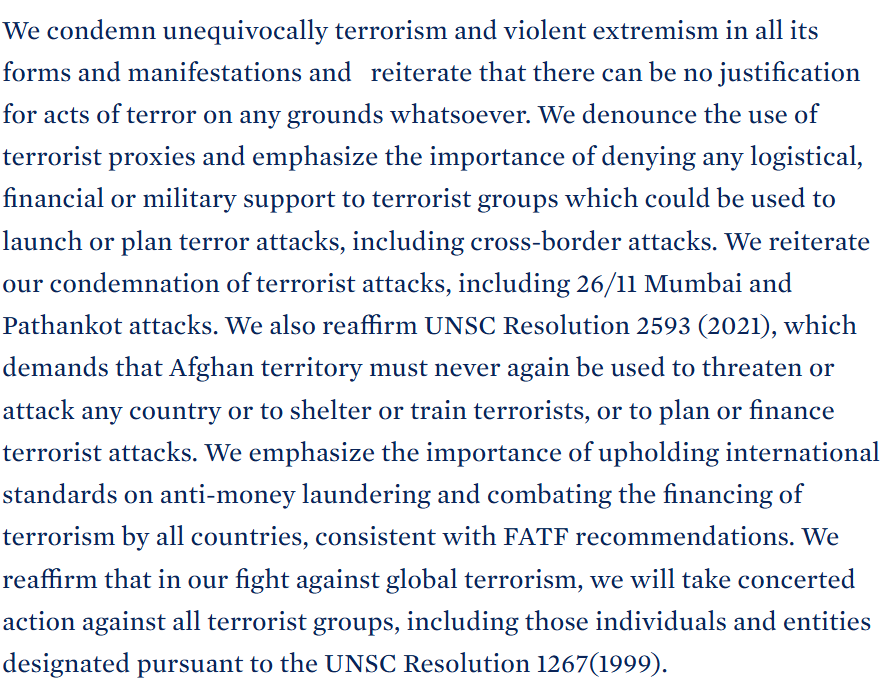
(Here first time in the history of the USA, it specifically changed its foreign policy towards Pakistan within a very short span of just 42 days) and although, Mumbai and Pathankot incidents were mentioned, but the NAME of PAKISTAN (which is a HUGE defeat of Indian foreign policy) is omitted as was specifically mentioned in the 12 April 2022 communique detailed above, where the name of Pakistan is clearly mentioned. In fact, it was the cardinal proof of the impact of my open letter dated 13 April 2022 to the President of the USA.
The relevant paragraph of the QUAD Joint Leaders Statement dated 24 May 2022 (link provided above) is provided below where it was evident that the NAME of Pakistan was REMOVED.
“We condemn unequivocally terrorism and violent extremism in all its forms and manifestations and reiterate that there can be no justification for acts of terror on any grounds whatsoever. We denounce the use of terrorist proxies and emphasize the importance of denying any logistical, financial or military support to terrorist groups which could be used to launch or plan terror attacks, including cross-border attacks. We reiterate our condemnation of terrorist attacks, including 26/11 Mumbai and Pathankot attacks. We also reaffirm UNSC Resolution 2593 (2021), which demands that Afghan territory must never again be used to threaten or attack any country or to shelter or train terrorists, or to plan or finance terrorist attacks. We emphasize the importance of upholding international standards on anti-money laundering and combating the financing of terrorism by all countries, consistent with FATF recommendations. We reaffirm that in our fight against global terrorism, we will take concerted action against all terrorist groups, including those individuals and entities designated pursuant to the UNSC Resolution 1267(1999).”
- U.K.
I relentlessly continued to serve the motherland and ensured that the Indian government was not allowed to mention the name of PAKISTAN, as a country exporting terrorism, from the below reproduced Para 17 of the U.K.-India joint statement dated 22 April 2022, issued after the conclusion of PM Boris Jhonson’ visit to India in April 2022. In fact, I Tweeted to the British PM even before his start of visit to India, my open letters to PM Japan (dated 20 March 2022) and to the President of the USA (dated 13 April 2022) which strategy proved successful and the joint UK-India statement dated 22 April 22 did not mention Pakistan by NAME anywhere in the 40 paragraphs statement as detailed below.
40 Paragraphs UK-India Joint Statement 22 April 2022.
By the sheer mercy of Allah (SWT) Pakistan’s name was specifically omitted from the Para # 17 of the UK-India joint statement dated 22 April 2022 as below:
“Both leaders expressed zero tolerance for terrorism in all its forms – and for all those who encourage, support and finance terrorism or provide sanctuary to terrorists and terror groups – whatever their motivation may be. They called upon all countries to work together to root out terrorist safe havens and infrastructure, disrupt terrorist networks and their financing channels, and halt cross-border movement of terrorists. They reiterated their condemnation of terrorist attacks in India and the UK, including the Mumbai and Pathankot attacks. They emphasised the importance of perpetrators of terrorist attacks being systematically and expeditiously brought to justice, and agreed to work together to take concerted action against globally proscribed terrorist entities and individuals.”
- EU
India – EU meeting in New Delhi between PM Modi and President Ursula von der dated 25 April 2022.
India – EU meeting in New Delhi was held between Indian PM Modi and President Ursula von der dated 25 April 2022. She was also Twitted my above open letters to the PM Japan and the President of the USA to inform her in advance not to mention Pakistan, Mumbai or Pathankot on the behest of India.
The April 2022 India – EU Bilateral Brief is absolutely devoid of any references to Pakistan, Mumbai and Pathankot attacks as is evident from the Link provided below, which is another testimony of the success of my humble efforts:
Link: – https://ec.europa.eu/commission/presscorner/detail/en/statement_22_2642
- Germany, Denmark and France
Before the Indian PM Modi embarked upon his visit to the above named three countries and a joint meeting from Denmark with five Nordic countries (Denmark, Norway, Belgium, Finland and Iceland) letters were written by me to all these seven leaders exposing Indian genocidal acts against Muslim minorities, which India always tried to hide by falsely maligning and defaming Pakistan with untenable charges of terrorism in India.
The stupendous success of my above letters can be gauged by the fact that none of the above named seven countries mentioned Pakistan in any manner. So much so, that France which has extremely close defense sales and diplomatic relations with India also refrained to take the Indians false bait regarding Pakistan, which is evident from the given links provided below of all the Indian joint statements with Germany, France, Denmark and five Nordic countries joint summit:
India – Germany
India – France
India – Denmark
Link:- https://um.dk/indien/en/news/india-denmark-joint-statement/
India – Five Nordic Countries (Denmark, Norway, Belgium, Finland & Iceland)
Through my direct engagement in the aforementioned international diplomatic campaign with world leaders, my objective was to expose and counter India’s endeavors to divert attention from its war crimes and genocide in Indian Illegally Occupied Jammu & Kashmir (IIOJ&K) and inhuman treatment of Muslim minorities in India. This persistent, historic and seemingly impossible endeavor underscores the influential role of individual advocacy in shaping diplomatic narratives and fostering a more accurate representation of geopolitical realities.
Syed Nayyar Uddin Ahmad
Lahore – Pakistan
+92 321 9402157
Development-Pakistani Need of the Hour!
Dear Mr. Suhail Warraich
اسلام وعلیکم
This has reference to your article titled ‘Government of National Unity.’ published on 4 August 2024 at below given link:
https://jang.com.pk/news/1376810
In this regard, please accept the heartiest congratulations for your very sincere idea/proposal to cool down the temperature in a win-win situation for the ‘politicians’ of our country.
However, politics hugely failed all civil and military governments of Pakistan in the entire past history of our country.
If you want to give more time to the politicians ‘enveloped’ in a sweet way of ‘National Unity Government,’ ignoring the fact that Pakistan badly need those reforms which will be the death knell of the elite/politicians, then forget the future of the teeming millions of Pakistan.
In my humble opinion, the rebuilding of Pakistan from the completely demolished and destroyed condition of today, can only be possible through a government of experts with its motto of ‘Rule of Law and Merit’ implemented in the most ruthless manner of austerity, by way of empowering the local bodies governance system, drastically reducing the size of the hugely large provinces, by giving every civil division the status of a unit, a la Cantons in Switzerland, and immediate repeat immediate enforce reforms in judicial, police, administrative, political, bureaucratic, taxation, agriculture, health, education, industrial and all other administrative, political, social and economic sectors.
We have had enough of politics and rule of lawlessness and sifarish, which has totally alienated the masses with the country; and its concept of nationhood, which is defined as the fact or status of being a nation; national identity or independence.
As such, the experiments of the civil and military governments of the last 77 years, in governance by way of putting the cart (country ruled by the exploiting class) before the horse (development of the teeming millions) has brought us to the abyss; and now no more waste of time and energy can be afforded and only way out for us as a nation is to put the horse before the cart.
We can not befool ourselves by various experiments in the name of democracy, which was, in fact, a facade to rule the masses with a blood sucking minority, which shamelessly moulded every constitutional act and law in its favour, even helping itself with amnesties, which were never ever given to the poorest of the poor.
As such, Sir, if you want to further provide the IPP’s owners with amnesties after the exposures of their crimes in the expected forensic audits, you are most welcome to form the ‘National Unity Government’ so that all can duly be protected for ruining our beautiful country for which on daily basis our sons jawans and officers are shedding their warm young blood, for us and our coming generations, to live with our loot and plunder happily forever, because, as per constitution no government of experts can be formed and only politicians in minority, can rule over Pakistan, who even in the last elections only got much less than 30 percent votes of the 250 million population.
Best Regards,
Syed Nayyar Uddin Ahmad
A #three #steps #solution to the #IPP’s #imbroglio.
Our nation stands at the precipice of economic catastrophe, its foundations eroded by the insidious actions of financial terrorists. Situtation is extremely grim to the extent that ordinary folks are committing suicides or killing each other on receiving rising power bills. The entire country is on the verge of strife, like the recently witnessed turmoil in the Aj&K areas. While almost on a daily basis, our brave soldiers and officers make the ultimate sacrifice to safeguard our future and sovereignty, a sinister enemy within, is plundering our wealth and jeopardizing our future by way of IPP’s scandal. This IPP’s coterie is so strong that despite the decision of the PTI government in its first cabinet meeting to conduct the forensic audit of the IPP’s , the government failed to move ahead on this matter.
To stem this tide of corruption and economic treason, the following three steps strategy is proposed:
1). Our parliament must swiftly enact legislation establishing military courts to prosecute grave nature economic crimes like one-sided agreements and subsequent corruption in the IPP’s with the utmost severity of minimum punishment of death, and confiscation of all assets and properties in Pakistan and abroad, even if those properties and assets stands transferred to others.
2). Swift and fast track forensic audits by the AGP office of all the IPP’s. During this audit period, all directly or indirectly connected persons with the IPP’s issue must not be allowed to leave Pakistan irrespective of their status or nationality. Further, no person directly or indirectly involved in any manner with the IPP’s if serving on political or government posts, must leave the charge until the finalisation of the audit.
3). Anyone found guilty of corruption or dereliction in duties must pay back the entire amount of his share of corruption/negligence decided by the auditors of the AGP office, within 7 days to the GoP. Else, all defaulters must be tried by the military courts with the right of appeal granted in accordance with the military rule.
Syed Nayyar Uddin Ahmad
Reduce Taxes – Best Solution of Economic Growth
Prime Minister of Pakistan
Mr. Shahbaz Sharif,
اسلام وعلیکم
I acknowledge your deep concern for the plight of millions of Pakistanis and your efforts to increase tax revenue to improve the conditions of the poorest segments of our society.
However, I would like to invite your attention to the fact that, as officially reported, the Federal Board of Revenue (FBR) has consistently met its tax recovery targets nearly 100 percent over the past several years. Given this success, why do we still face financial distress?
The core issue lies not in tax collection but in the continuous increase in government expenditures. Furthermore, the Finance Ministry has placed additional tax burdens on the already struggling salaried class, who, along with the unemployed, are among the few who pay taxes directly. In contrast, industrialists, traders, and retailers often transfer the tax burden to the general populace through increased prices.
If the government fails to alleviate the financial strain on salaried individuals and the unemployed, it risks losing the support of these critical voting blocs. IMF Chief Kristalina Georgieva has emphasized closing tax loopholes and ensuring the wealthy pay their fair share to mobilize funds for sustainable and inclusive growth. In September, she specifically urged Pakistan to increase taxes on the rich to protect the poor. Unfortunately, your government has taken the easier route of further taxing the already overburdened salaried class.
To address this imbalance, I urge you to consider an immediate reduction of non-development expenditures by 50 percent and development expenditures by 25 percent, alongwith immediately reducing taxes to the extent it were increased over the last year for the salaried class. Such measures would significantly boost the budgetary funds and the government’s income for the welfare of the poor.
The decision rests in your hands and requires considerable willpower, which I trust you possess in abundance.
Warm regards,
Syed Nayyar Uddin Ahmad
+92 321 9402157
Lahore.
nayyar51@hotmail.com
An Urgent Letter to President Biden
H.E. Joseph R. Biden Jr.
President of the United States
The White House
1600 Pennsylvania Avenue NW
Washington, D.C. 20500
Dear President Biden,
Greetings,
Please accept our heartfelt congratulations on the 248th anniversary of the adoption of the Declaration of Independence.
Over the past 75 years, the friendship between Pakistan and the United States has been characterized by significant cooperation and support. A recent notable example is Pakistan’s crucial assistance during the URGENT evacuation of U.S. military and civilians from Afghanistan in August 2021. This support, coupled with Pakistan’s substantial contributions throughout the Afghan war (2001-2021), including the FREE provision of air corridors to nearly 50 coalition countries, has come at an immense human, economic, and opportunity cost to Pakistan, amounting to losses far exceeding tens of trillions of dollars.
Despite these contributions, Pakistan often feels abandoned when in need of American support. A recent instance is the resolution passed in the U.S. House of Representatives, which Pakistan views as unwarranted interference in its internal affairs.
Currently, Pakistan is grappling with an unprecedented economic crisis exacerbated by soaring energy costs and the fallout from the Afghan conflict. This crisis has led to severe hardship and unrest among the populace, posing a significant risk of instability. Given these circumstances, urgent American assistance is crucial. We request a one-time budgetary grant of $5 billion and allowing for Pakistan to import oil and gas from Iran, similar to allowances made for India to import from sanctioned countries like Iran and Russia.
We sincerely hope that the United States government will recognize the gravity of Pakistan’s situation and take appropriate URGENT measures, before it was too late. Doing so would underscore the mutual commitment to our longstanding friendship and dispel any notion that while a country can survive without being friends with America, it cannot endure its friendship.
Thank you for your attention to this urgent matter.
Sincerely,
Syed Nayyar Uddin Ahmad
+92 321 9402157
Lahore, Pakistan.
2 July 2024.
A Clarion Call to the Pakistani Parliamentarians..!
Subject: Urgent Action Needed to Protect Salaried Class from Tax Burden
Dear Members of the National Assembly and Senate,
اسلام وعلیکم
We write to express our deep concern regarding the proposed increase in taxation on salaried income in the upcoming 2024-25 budget. This measure will cause significant hardship for a segment of society that already shoulders a significant tax burden.
We urge you to reconsider this proposal and instead advocate for the reallocation of unnecessary government expenditures. In particular, we recommend reevaluating the proposed budget allocation of Rs. 75 billion for parliamentarians. Additionally, we propose a review of plans for increased spending on new cars and renovations for government residences and offices, including those of the president, prime minister, governors, and governments guest houses.
Reallocating these funds would provide much-needed relief to salaried individuals and families. Unlike other segments of society, salaried workers can not pass on tax increases to consumers. We implore you to prioritize the well-being of this vital group and ensure a more equitable distribution of the tax burden.
Your this gesture will enhance your dignity and respect in the eyes of the masses and strengthen belief in the democracy.
Thank you for your time and consideration.
Sincerely,
Syed Nayyar Uddin Ahmad
For and on behalf of the salaried class of Pakistan
03219402157
Lahore.
Unleashing Pakistan’s Economic Potential: The Crucial Role of Rule of Law and Meritocracy
Pakistan stands at a pivotal juncture. A nation brimming with untapped potential, it possesses the strategic location, fertile land, and, most importantly, a young and energetic populace to propel itself towards becoming a significant economic force. However, to unlock this potential and translate its inherent strengths into tangible prosperity, decisive action is necessary. Strengthening the rule of law and embracing meritocratic principles in decision-making are not mere suggestions; they are fundamental prerequisites for sustainable economic growth.
Pakistan’s strategic positioning at the crossroads of Central Asia presents a unique advantage. It serves as a vital trade corridor, connecting the ambitious Belt and Road Initiative with the vast markets of the Middle East. Its fertile lands, nourished by the Indus River system, offer a solid foundation for a thriving agricultural sector, capable of ensuring national food security and contributing significantly to global food production. Perhaps the most valuable asset Pakistan possesses is its human capital – a young, vibrant population with a strong entrepreneurial spirit. A recent McKinsey report estimates that over 60% of Pakistan’s population falls under the age of 30, presenting a unique demographic dividend that can fuel economic growth for decades to come.
Despite these inherent strengths, Pakistan’s economic trajectory has yet to fully reflect its potential. A critical factor hindering progress is the inconsistency and weakness of the rule of law. Businesses require a stable and predictable environment to thrive. When the application of the law is inconsistent, or when powerful interests are perceived to be above it, investor confidence wanes, and economic growth stagnates. Foreign direct investment (FDI) into Pakistan remains significantly below its potential, and domestic businesses struggle to access essential credit due to a lack of trust in the legal system.
The success story of the Motorway Police serves as a powerful testament to the transformative power of a strong legal framework. Prior to its formation, Pakistan’s highways were notorious for corruption and violence, leading to frequent traffic accidents, delays, and security risks for businesses transporting goods. The implementation of a meritocratic selection process for the Motorway Police, combined with rigorous training and a zero-tolerance approach to corruption, has demonstrably transformed these roads into vital arteries of commerce. Traffic accidents have declined dramatically, travel times have been significantly reduced, and businesses can now move goods efficiently and securely. This success story transcends improved infrastructure; it exemplifies the transformative power of a robust legal framework.
Pakistan’s advancements in nuclear technology further illustrate the remarkable capabilities of its people when empowered by a meritocratic system. World-class scientists and engineers have achieved significant feats in this complex field, showcasing the nation’s potential for innovation and scientific progress. Imagine the potential if this same meritocratic approach were applied across all sectors of the economy. The surge in innovation, entrepreneurship, and productivity would be truly transformative.
The path forward is clear. By strengthening the rule of law, Pakistan can create a level playing field where businesses can compete fairly and innovation can flourish. This necessitates a multi-pronged approach:
Judicial Reform: Upholding judicial independence and ensuring the swift and fair application of the law are paramount. Investing in judicial infrastructure, improving training for judges, and streamlining court procedures are crucial steps.
Combating Corruption:
A zero-tolerance approach to corruption, with robust investigative bodies like the National Accountability Bureau empowered to act independently, is essential. Additionally, transparency in government procurement and public spending is key.
Meritocratic Recruitment: Government institutions and public services must be staffed based on qualifications and competence, not personal connections. Implementing a system of competitive examinations and promoting transparency in recruitment and promotion processes are vital. Any decision trespassing the boundaries of merit must be declared a non-bailable crime with a minimum punishment of 14 years RI.
Embracing these principles will undoubtedly present challenges. Vested interests who benefit from the current system will likely resist change. However, the potential rewards are immense. A strong and predictable legal system will attract foreign investment, stimulate domestic entrepreneurship, and unlock the nation’s full economic potential. Imagine a Pakistan where businesses can operate with confidence, where investors are assured of a fair return, and where talented individuals are rewarded for their skills and hard work. This is Pakistan, which has the potential to become a major economic power.
Pakistan’s journey towards becoming a major economic force will not be without its hurdles. Decades of political instability and security concerns have left their mark. However, Pakistan’s history is replete with examples of resilience and a spirit of determination. By harnessing the talent and drive of its people, and by establishing a legal framework that fosters trust and transparency, Pakistan can finally take its rightful place as a titan of the global economy. This transformation will not only benefit Pakistan but also have a positive ripple effect throughout the region. A stable and prosperous Pakistan can serve as a beacon of hope and a catalyst for growth in South Asia. The world is watching; the time for Pakistan to seize its destiny is now.
Syed Nayyar Uddin Ahmad
+92 321 9402157
Lahore.
A Paradox of Plenty: Tackling Pakistan’s Wheat Crisis
Pakistan’s current predicament is a stark illustration of the “problem of plenty.” While farmers celebrate a bountiful wheat harvest, their joy is overshadowed by the government’s inability to procure and store the grain.
This paradox, where abundance leads to distress, necessitates immediate and comprehensive solutions.
The plight of the Pakistani farmer is undeniable. Toiling under the scorching sun, they invested their sweat and resources to cultivate a successful crop.
However, the lack of adequate storage facilities and financial constraints on the government’s part leave them with mountains of wheat exposed to the elements, facing potential spoilage and financial losses.
This situation demands urgent action on multiple fronts:
- Expanding Storage Capacity:
The immediate need is to address the critical shortage of storage facilities. This requires a multi-pronged approach:
- Public-Private Partnerships (PPP):The government should incentivize private sector participation in building and managing modern silos and storage facilities. PPP models can leverage private sector expertise and capital to rapidly expand storage capacity.
- Modernization of Existing Facilities: Existing storage facilities need modernization to minimize post-harvest losses. Upgrading infrastructure with proper ventilation, temperature control, and pest management systems can significantly extend the shelf life of stored grain.
- Temporary Storage Solutions: Utilizing temporary storage solutions like weatherproof tarpaulin covers and mobile storage units can offer immediate relief while permanent solutions are implemented.
2. Financial Assistance for Farmers:
The government must provide immediate financial assistance to farmers to prevent them from resorting to distress sales at low prices:
- Procurement at Minimum Support Price (MSP):The government should actively procure wheat at the pre-announced MSP, ensuring fair compensation for farmers’ efforts. This will provide immediate financial relief and stabilize market prices.
- Direct Cash Transfers: Direct cash transfers to farmers can provide immediate financial support, particularly for those with smaller landholdings. This can help them cover storage costs while waiting for government procurement.
- Loan Waivers and Subsidies: Considering the exceptional circumstances, the government should consider loan waivers or subsidies for farmers who have invested heavily in the crop. This will alleviate their financial burden and encourage continued agricultural productivity.
3. Enhancing Market Access and Value Addition:
Beyond immediate relief, Pakistan needs to explore long-term solutions to ensure sustainable benefits from agricultural surpluses:
- Promoting Value-Added Products: Encouraging the processing and diversification of wheat into flour, pasta, noodles, and other value-added products can create additional income opportunities for farmers and stabilize market prices.
- Export Opportunities:Exploring export markets for surplus wheat can generate valuable foreign exchange and reduce the burden on domestic storage facilities. This requires strengthening trade agreements and ensuring quality control measures.
- Food Security Programs: Integrating surplus wheat into food security programs can address hunger and malnutrition within the country. This could involve subsidized wheat distribution through government schemes or partnerships with NGOs
4. Modernizing Agricultural Practices:
Pakistan’s agricultural sector requires modernization to improve efficiency and minimize post-harvest losses:
- Investment in Technology: Adopting modern technologies like precision agriculture, improved irrigation systems, and efficient harvesting methods can significantly reduce wastage and enhance productivity.
- Crop Diversification: Encouraging farmers to diversify their crop choices can mitigate the risk of overreliance on a single crop like wheat. This will also improve soil health and long-term agricultural sustainability.
- Farmer Training and Education: Providing farmers with training in post-harvest management techniques, storage practices, and market access strategies can empower them to make informed decisions and maximize their profits.
The current wheat crisis is a stark reminder of the vulnerabilities within Pakistan’s agricultural sector. Addressing this problem necessitates a multi-pronged approach that prioritizes immediate relief for farmers, expands storage capacity, explores market diversification, and promotes long-term modernization of agricultural practices. By taking decisive action, Pakistan can transform this “problem of plenty” into an opportunity for sustainable growth and prosperity for its farmers and the nation as a whole.
Syed Nayyar Uddin Ahmad
03219402157
Lahore.