How to Win Hearts and Minds Without War
 December 20th, 2025 |
  Author:
 A New Doctrine of Peace for Afghanistan and Pakistan.
History repeatedly teaches a painful lesson: peace imposed by power is temporary, but peace rooted in conscience is permanent. This truth is not only political wisdom; it is also a Qur’anic principle. The Holy Qur’an reminds us:
“And reconciliation is best.” (Qur’an 4:128)
For more than four decades, Afghanistan and Pakistan, two brotherly nations bound by geography, faith, bloodlines, culture, and shared suffering; have attempted to resolve disputes through conventional diplomacy, security-centric policies, and external mediation. These efforts, both formal and informal, have largely collapsed or failed to deliver sustainable peace.
This failure demands not another tactical adjustment, but a paradigm shift.
What is required today is not the art of war, but the Art of Peace: a new doctrine rooted in indigenous wisdom, Islamic ethics, and collective conscience.
The Collapse of Conventional Diplomacy
Traditional diplomatic channels between Afghanistan and Pakistan have reached an impasse. High-level talks, border mechanisms, security dialogues, and third-party interventions have repeatedly broken down under mistrust, power asymmetry, regional interference, and conflicting strategic doctrines.
Diplomacy conducted exclusively through state bureaucracies has failed because it overlooks a fundamental reality this conflict is not merely political but, it is social, tribal, religious, and historical, as well.
Islam itself cautions against hollow agreements devoid of moral substance. The Prophet Muhammad ﷺ warned that justice without sincerity cannot endure, and history affirms this wisdom.
When peace is negotiated only by elites and enforced through coercive instruments, it lacks legitimacy at the grassroots level. Such peace remains fragile, transactional, and reversible.
The present moment marks a rare historical juncture where both nations must acknowledge an uncomfortable truth: the old tools cannot repair a broken moral order.
The Art of Peace: A New Doctrine
The Art of Peace is a doctrine that rejects coercion as the foundation of stability and replaces it with conscience, legitimacy, and collective ownership. It is inspired not by foreign conflict-resolution models, but by the Islamic tradition of Sulh (reconciliation), Pashtunwali, and tribal consensus-building (Jirga).
The Qur’an commands:
“If two groups of believers fight, make peace between them.” (Qur’an 49:9)
This verse does not delegate reconciliation to power alone—it entrusts it to believers of moral standing.
Core Principle:
Peace is not an agreement between states alone, it is a covenant between peoples, witnessed by God. This doctrine proposes a Combined Council of Tribal and Religious Elders from both Afghanistan and Pakistan as:
- Primary Negotiators
- Moral Guarantors
- Custodians of Peace
Why Tribal and Religious Elders?
Across the Afghan–Pakistani belt, tribal elders and respected religious scholars command something no state institution can manufacture: moral authority and social legitimacy. Islam has historically recognized the role of Ahl al-Hall wal-‘Aqd (or Ahl al-Halli wal-‘Aqd) means those with wisdom, trust, and authority; to guide society during crises. These figures:
Understand local grievances better than distant diplomats. Speak the language of honor, faith, and reconciliation. Can enforce peace not through force, but through moral accountability and communal obligation.
The Prophet Muhammad ﷺ said:
“The believer is the one from whose tongue and hand people are safe.” (Hadith)
Historically, when tribal consensus was achieved in this region, borders were calm; even without fences, checkpoints, or surveillance regimes.
Structure of the Proposed Peace Mechanism
1. Joint Council of Elders (JCE)
A balanced, representative body of:
- Tribal elders from border regions
- Respected religious scholars (ulema)
- Neutral moral figures trusted across divides
This council would be independent of daily politics, yet grounded in Islamic ethics and protected lawfully by both states.
2. Mandate of the Council
Address all bilateral disputes (border tensions, refugee issues, militancy narratives, trust deficits); conduct dialogue grounded in Qur’an, Sunnah, and tribal customs and issue binding moral verdicts endorsed by both governments.
The Qur’an commands justice even between rivals:
“Do not let the hatred of a people prevent you from being just. (Qur’an 5:8)
Their decisions would not replace state sovereignty, but, anchor it in legitimacy and divine accountability.
3. Dual Guarantee System
Moral Guarantee by elders and religious leaders, political guarantee by the governments of Pakistan and Afghanistan wherein, any violations of peace would be treated not only as political breaches, but as moral transgressions (zulm): a concept Islam condemns unequivocally.
Winning Hearts and Minds Without War
Wars may defeat enemies, but they never win hearts. Hearts are won when people feel heard, respected, and protected.
The Prophet ﷺ conquered Makkah not through vengeance, but through forgiveness by declaring:
“Go, for you are free.”
This doctrine recognizes that security comes after trust, not before it. Stability emerges from dignity, not domination, peace must grow from within societies, not be imposed from above.
Winning hearts and minds mean ending the cycle of suspicion, where every incident is viewed as hostility and every border issue becomes a trigger.
Beyond Peace: A Vision of Confederation
If Pakistan and Afghanistan choose peace; not tactically, but ethically and spiritually, they unlock historic possibilities.
Islam encourages unity:
“Indeed, this Ummah of yours is one Ummah.” (Qur’an 21:92)
A future Pak-Afghan Confederation, even in a loose form, could:
- Enable shared economic corridors
- Harmonize border management
- Reduce external manipulation
- Create a unified regional moral and political voice
Such a confederation would not erase sovereignty, but strengthen it through cooperation and mutual trust.
A Message to Leadership
To the leadership of Pakistan and Afghanistan:
This is not a call for retreat, nor an appeal to weakness. It is a call for strategic wisdom guided by faith.
Islam teaches that strength lies not in domination, but in justice.
Power can silence guns, but only conscience can silence hatred.
The Art of Peace does not abandon the state but, it completes it by reconnecting governance with the moral soul of the people. History will not remember how many operations were conducted or fences erected. It will remember who dared to choose reconciliation when retaliation was easier.
Conclusion:
The failure of formal and informal diplomacy has made this new doctrine not optional, but necessary. Afghanistan and Pakistan stand at a crossroads: continue repeating exhausted strategies, or pioneer a peace rooted in their own faith, traditions, and moral authority.
The choice is stark but, hopeful.
Peace imposed by power is temporary. Peace rooted in conscience and guided by faith; is permanent.
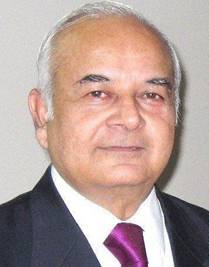
Syed Nayyar Uddin Ahmad
Lahore – Pakistan
+92 321 9402157
20 December, 2025
nayyarahmad51@gmail.com The writer is a senior corporate leader and strategic analyst. His thought-provoking visionary insights have reshaped global discourse, capturing the attention of world leaders. His writings have not only resonated with heads of state and governments but have also influenced the foreign policies of the United States and other major powers.
Leave a Reply