In Diplomacy, Silence is Never Neutral
 September 6th, 2025 |
  Author:
 From Bluster to Blind Spot: Did Pakistan Lose the Pahalgam Narrative?
When 26 civilians were killed in Pahalgam on April 22, 2025, India swiftly declared it a case of “cross-border terrorism.” Pakistan, however, flatly rejected this version and its National Security Committee announced on 24 April 2025 that “India should refrain from its reflexive blame game and cynical staged managed exploitation of incidents like Pahalgam to further its narrow political agenda”. Prime Minister Shehbaz Sharif declared the Pahalgam incident was a “false flag operation” [1]. Defence Minister Khawaja Asif told Al Jazeera that Islamabad “strongly suspect this attack was a false flag” [2]. Deputy Prime Minister and Foreign Minister Ishaq Dar strongly rejected India’s baseless propaganda [3], while the military’s DG ISPR, Lt Gen Ahmad Sharif Chaudhry, debunked India’s claim about the Pahalgam attack, accusing New Delhi of orchestrating a “religion-targeted” false-flag operation [4].
Pakistan even went a step further: Prime Minister Shahbaz Sharif addressing a passing-out parade at the Pakistan Military Academy at Kakul, said “The recent tragedy in Pahalgam is yet another example of this perpetual blame game, which must come to a grinding halt. Continuing with its role as a responsible country, Pakistan is open to participating in any neutral, transparent and credible investigation [5]. India rejected that offer for what Pakistan insists are “obvious reasons,” namely that such a probe would expose a staged operation.
Yet, when the world responded, Pakistan was missing in action.
On 29 August 2025, Japan and India issued a joint statement that “condemned in the strongest terms the terrorist attack in Pahalgam … and called for perpetrators, organisers and financiers to be brought to justice without any delay” [6].
On 6 July 2025, the BRICS Summit Declaration also “strongly condemned the terrorist attack in Pahalgam” [7].
On 2 July 2025, the Quad foreign ministers (India, US, Japan, Australia) said almost word-for-word the same [8].
In June 2025, Cyprus joined India in “strongly condemning the gruesome killing of civilians in the heinous terrorist attacks in Pahalgam” [9].
And most remarkably, Pakistan itself became a party to the September 1, 2025 SCO Tianjin Declaration of the Council of Heads of State which explicitly termed Pahalgam a terrorist attack [10]. In this regard, Prime Minister of Pakistan Shahbaz Sharif and all the functuries of the government of Pakistan which included the Deputy Prime Minister and the Foreign Minister Ishad Dar, the Foreign Secretary and the Spokesperson of the Pakistani foreign office were duly forewarned thru Most Immediate message via X (formerly Twitter) on 31 August 2025 quoted below:
Quote:
“Most Immediate for Prime Minister’s Attention
Mian Muhammad Shahbaz Sharif
Prime Minister of the Islamic Republic of Pakistan
Islamabad
Subject: Urgent Response to Expected Indian Allegations at SCO Summit
اسلام وعلیکم
Respected Prime Minister,
It is anticipated that during his address at the forthcoming Shanghai Cooperation Organization (SCO) summit, Indian Prime Minister Narendra Modi will once again attempt to malign Pakistan by invoking fabricated narratives such as the “Pahalgam incident” and allegations of so-called “cross-border terrorism.” These baseless charges are a continuation of India’s disinformation campaign aimed at deflecting international attention from its own record of war crimes, systematic human rights violations, and the genocide of minorities, particularly Muslims, in Indian Illegally Occupied Jammu & Kashmir (IIOJK) and across India.
In this context, it is imperative that Pakistan’s position be firmly articulated. Our response must emphasize the following points:
1. Pakistan categorically rejects false allegations and reiterates that it is itself a primary victim of Indian sponsored state terrorism. India has consistently sought to externalize its internal failures and divert global attention from its atrocities by projecting blame on Pakistan.
2. Pakistan calls for an independent and neutral international inquiry into the Pahalgam incident. This must include a transparent probe into:
- Documented cases of Indian cross-border killings inside Pakistan,
- Evidence of India’s sponsorship of banned terrorist organisations in Baluchistan, and
- The case of Commander Kulbhushan Jadhav, a serving Indian naval officer apprehended in Pakistan, who confessed to orchestrating sabotage, espionage, and terrorism under a false identity using a passport officially issued in a pseudo name. His presence and activities are irrefutable evidence of direct Indian state involvement in terrorism inside Pakistan.
3. India’s track record of state-sponsored terrorism is long and deliberate. Documented incidents include Jaffer Express train-jacking, subversive operations, and targeted killings engineered to destabilize Pakistan.
4. Of particular concern is India’s full-blast, openly admitted opposition to the China–Pakistan Economic Corridor (CPEC). This opposition has translated into repeated terror attacks against Chinese nationals and Pakistani citizens working on CPEC projects, resulting in deaths, injuries, and immense human suffering. Such actions represent nothing less than “India’s war of terror against Pakistan–China friendship of peace through cooperation of connectivity for development.” This is an affront not only to Pakistan and China but to the very principles of regional cooperation and economic development. Thus, the SCO must recognize the hypocrisy of a member state that, under the guise of partnership, engages in actions amounting to betrayal of two fellow members.
5. India cannot be allowed to camouflage its war crimes and crimes against humanity in IIOJK by misrepresenting Kashmiris as “terrorists.” The people of Jammu & Kashmir are engaged in a legitimate and internationally recognized struggle for their right to self-determination. This right is enshrined in Articles 1 and 55 of the United Nations Charter and reaffirmed by UN General Assembly resolutions 1514 (XV) (1960), 2625 (XXV) (1970), and 2649 (1970). Moreover, UN Security Council resolutions 47 (1948), 80 (1950), and 98 (1952) mandate a UN-supervised plebiscite to allow Kashmiris to freely determine their political future.
6. India’s actions constitute grave violations of international law. Support for terrorism in Pakistan, obstruction of regional connectivity projects like CPEC, and systemic human rights abuses in Kashmir together present a case of state-sponsored criminality that must be exposed at every multilateral platform, including the SCO.
Honourable Prime Minister, this is a crucial juncture for Pakistan to expose India’s duplicity, reject its false narratives, and place before the world irrefutable evidence of its sponsorship of terrorism and human rights violations. Pakistan must project its principled stance with clarity:
- We welcome transparency and independent verification through neutral inquiries.
- We stand by the lawful struggle of Kashmiris for self-determination.
- We demand accountability for India’s actions that endanger peace, stability, and security in the region.
Respectfully submitted for your kind consideration and necessary directions.
Yours sincerely,” Unquote.
As such, this contradiction is glaring. At home, Pakistan’s leaders told the public they had exposed a false flag. Abroad, its diplomats either quietly signed on to India’s framing or failed to register even a symbolic protest. The result is that India’s version of events has been etched into the official records of SCO, BRICS, Quad, Japan, and Cyprus.
Why does this matter? Because in diplomacy, silence is never neutral. Each unchallenged statement hardens India’s framing of Pahalgam, diminishing Pakistan’s credibility on the global stage. Worse still, this inconsistency undermines Islamabad’s wider stance on Kashmir and counter-terrorism: issues where narrative is as critical as reality.
In this world, nothing is impossible. This was proven through direct strategic communication with the Prime Minister of Japan, the President of the USA, the UK Prime Minister, the President of the European Commission, and the heads of government’s and state of Germany, France, Norway, Denmark, Belgium, Finland, and Iceland—turning the tide against entrenched Indian narratives. By challenging and dismantling the false propaganda that painted Pakistan as a sponsor of terrorism, a new diplomatic history was written.
Through persistent outreach and exceptional correspondence, this scribe corrected distorted perceptions, reshaped global policies, and fostered stronger, more balanced relationships with world powers. These unprecedented achievements of change of foreign policy of the major world powers in favour of Pakistan, which was earlier totally inclined towards the Indian narrative, was accomplished not by a career diplomat, but by the sheer commitment of an ordinary Pakistani, now stand as a testament to what dedicated communication can achieve. Indeed, they are milestones Dr. Henry Kissinger himself might have proudly endorsed [11].
In view of the foregoing, corrective steps are urgently needed. Pakistan’s Foreign Office must issue demarches to Japan, Quad members, Cyprus, and BRICS capitals, restating its position and highlighting that India refused a neutral investigation. Islamabad should also formally record reservations in future multilateral communiqués and publicise its offer for international inquiry. Most importantly, MOFA must establish an internal strategic communications cell to ensure that what is said in Islamabad is also defended abroad.
Otherwise, when history records the Pahalgam tragedy, the world will not remember Pakistan’s speeches: only its silence.
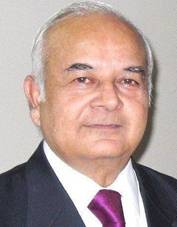
Syed Nayyar Uddin Ahmad
Lahore.
+92 321 9402157 nayyarahmad51@gmail.com The author is a senior corporate leader and strategic analyst. His thought-provoking visionary insights have reshaped global discourse, capturing the attention of world leaders. His writings have not only resonated with heads of state and governments but have also influenced the foreign policies of the United States and other major powers.
References:
[1]: https://ptv.com.pk/ptvworld/newsdetail/6917
[3]: https://radio.gov.pk/29-04-2025/dar-rejects-indias-baseless-propaganda-against-pakistan
[4]: https://www.brecorder.com/news/40360334
Leave a Reply