Breaking the Chains: A Governance Model for a Corruption-Free and People-Centered Pakistan
 August 22nd, 2025 |
  Author:
 Pakistan today stands at a crossroads. Once richer than India and China at the time of independence, the country now finds itself sinking deeper into poverty, corruption, and terrorism. Almost half of Pakistan’s population—44.7% according to the World Bank’s June 2025 figures—lives below the poverty line, struggling to survive on less than $4.20 a day. This is not just an economic crisis; it is a failure of governance that has betrayed the people for decades.
The Root of the Problem: Elite Capture
Pakistan’s ruling elite—across political, bureaucratic, and feudal classes—has systematically drained the nation. While ordinary citizens pay taxes on the smallest items, even a matchbox, the privileged enjoy exemptions worth a staggering $20.8 billion annually. Instead of serving the people, successive governments have built layers of bureaucracy and politics that feed corruption, nepotism, and waste.
In fact, the governance of the last 78 years has been like putting the cart before the horse—with politics dragging ahead and development left behind. The horse, which should have been the driving force of progress, was shackled by the cart of endless politics. This upside-down governance not only wrecked Pakistan’s economy but also disillusioned the very masses who sacrificed everything to create a homeland that was supposed to be the citadel of a bright future for generations to come.
The Way Forward: Power to the People
As such, in view of the total and absolute failure of the all past and current governance systems, the most suitable and just solution is to return governance to the people themselves, allowing them to exercise self-rule so their future is firmly in their own hands.
Pakistan does not need more politics—it needs zero politics in development. Governance must be shifted out of the hands of elite rulers and given directly to the people through empowered local bodies. This means complete decentralization of authority with decision-making power and financial resources flowing directly to districts and communities.
The first step should be to release the PKR 5.8 trillion wasted annually in exemptions and redirect it to local governments. If this amount is entrusted to people-driven systems, every district in Pakistan can begin its journey toward real development.
A New Model of Governance: District Autonomy
The solution lies in restructuring governance around semi-autonomous districts, each led by self-elected mayors and sheriffs. These local leaders, directly accountable to their communities, would manage development, security, and services. This would eliminate the need for extravagant political assemblies and bloated bureaucracies that consume resources without delivering results.
Such a model ensures:
Direct accountability: Leaders answerable to their own communities, not distant capitals.
Efficient use of resources: Local priorities addressed without political middlemen.
Inclusive growth: Development reaching even the poorest households.
End to elite capture: Breaking the monopoly of the ruling class.
End to terrorism and street crimes: Improved and focused policing will drastically reduce crimes as the basic job of countering terrorism lies with Police.
Inspirational Leadership: A Guiding Light
Pakistan is fortunate today to have a civil and military leadership united in vision—capable, honest, and courageous—guided by true statesmanship and a profound sense of duty. Real leadership is about taking people from where they are to where they have never been, and Pakistan is now being led on that transformative journey toward development, peace, and enduring national strength.
Conclusion: A Last Chance for Pakistan
Pakistan cannot continue on its current trajectory of borrowing, wasting, and collapsing. Nearly 50% of its people are already trapped in poverty, and millions more risk falling into despair if bold reforms are not made now.
The answer is not more provinces, more governors, or more politics. The answer is radical decentralization—handing power, resources, and responsibility directly to the people. Only then can Pakistan escape the cycle of corruption and poverty, and finally fulfill the promise it carried at independence.
It is time to break the chains of elite rule and let Pakistan’s people govern themselves.
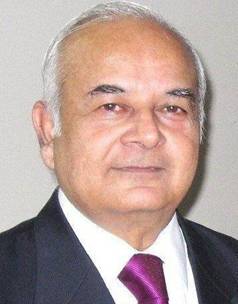
Syed Nayyar Uddin Ahmad
Lahore.
+92 321 9402157 nayyarahmad51@gmail.com The author is a senior corporate leader and strategic analyst. His thought-provoking visionary insights have reshaped global discourse, capturing the attention of world leaders. His writings have not only resonated with heads of state and governments but have also influenced the foreign policies of the United States and other major powers.
Leave a Reply