India’s False Flag Empire: How State-Sponsored Deception Risks a Nuclear Catastrophe
 July 21st, 2025 |
  Author:
 Following the Bombay High Court’s landmark decision on 20 July 2025, which acquitted 12 individuals (one of whom died during the trial) in the 2006 Mumbai train blasts case—an incident on 11 July 2006 where seven explosions on local trains along the Western Line killed 189 and injured 827 passengers, overturning convictions ranging from life imprisonment to the death penalty—the Government of India must now be recognized as the world champion of false flag operations, ruthlessly sacrificing its own citizens to advance political agendas. These acts are often orchestrated to falsely implicate Pakistan in particular, and Muslims in general, as perpetrators of terrorism.
In this context, it is noteworthy that even the Indian Supreme Court, in what remains an unprecedented collusion with the Indian government in the history of global jurisprudence, awarded the death penalty to Afzal Guru for the 2001 Indian Parliament attack, despite the court’s own admission that there was no direct evidence linking Guru to the planning or execution of the attack, and that he was not a member of any terrorist group. Shockingly, the court justified the sentence on the grounds that it would satisfy the “collective conscience of society.”
These state-sponsored false flag operations, when viewed alongside the 22 April 2025 Pahalgam killings, cast a disturbing light on India’s modus operandi. On 21 July 2025, the Indian National Congress President and Leader of the Opposition in the Rajya Sabha, Mr. Mallikarjun Kharge, fiercely criticized the Indian government over U.S. President Donald Trump’s claims of mediating a ceasefire between India and Pakistan, stating:
“I have given notice under Rule 267 on the Pahalgam terror attack and Operation Sindoor. Till today, the terrorists have not been caught or neutralized. All parties extended unconditional support to the government. The government should inform us about what has happened.”
It is crucial to highlight that Pakistani Prime Minister Shahbaz Sharif, immediately after the Pahalgam incident, condemned terrorism in all its forms, rejected baseless Indian accusations, and called for a transparent, neutral investigation into the attack. He also urged the United Nations to play its role in resolving the Jammu & Kashmir dispute in line with UNSC resolutions, affirming that Pakistan remains committed to peace but will defend its sovereignty with full force if challenged.
India’s pattern of false flag tactics is not new. A similar approach was followed in the 14 February 2019 Pulwama attack, where a suicide bomber killed 46 paramilitary personnel in Indian Illegally Occupied Jammu & Kashmir (IIOJ&K). Within hours of the attack, then Union Minister Arun Jaitley declared that India would take “all possible diplomatic steps” to isolate Pakistan from the international community. Pakistan, however, openly requested evidence and offered cooperation in the investigation—an offer that India ignored.
For nearly a decade, the BJP/RSS-led Modi government has pursued a policy of isolating Pakistan through fabricated terrorism narratives. In September 2016, Prime Minister Narendra Modi, during a speech in Kozhikode, openly vowed to launch a global campaign to isolate Pakistan.
Considering these facts, the statements of the Congress President and the Leader of the Opposition, as well as mountains of documented evidence from credible Indian and international sources regarding the genocide and war crimes committed by Indian forces in IIOJ&K, it is imperative for the entire world leadership—particularly the UN Secretary General and all G-20 leaders—to act. The testimony of Professor Gregory Stanton (Genocide Watch), warning of an impending genocide of 220 million Muslims in India, further underscores the urgency. It is a moral and legal duty to bring Indian officials and perpetrators to justice before the International War Crimes Tribunal at The Hague, and to expel India from the G-20 and all prestigious global forums. The world can no longer afford to sit alongside Prime Minister Narendra Damodar Das Modi, whose hands are stained with the blood of innocent Kashmiris and Indian Muslims.
Finally, it must be emphasized—with utmost concern—that twice (February 2019 and May 2025), the world was saved from the brink of a nuclear catastrophe between India and Pakistan only due to the intervention of U.S. President Donald Trump. Both incidents arose from Indian miscalculations and aggressive attacks against Pakistan, rooted in false flag narratives. Pakistan, despite having irrefutable evidence of India’s plans—including the 11 March 2025 Jaffer Express hijacking plot in Baluchistan—showed maximum restraint by responding proportionately and avoiding escalation.
It is, therefore, imperative for the global community—and President Trump in particular—to establish immediate control protocols to monitor India’s covert operations and military planning through a joint mechanism involving the P-5 nations. If this is not done, the world may not be fortunate enough to avoid a third and potentially uncontrollable nuclear Armageddon.
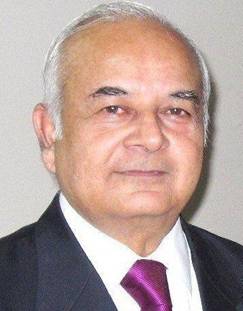
Syed Nayyar Uddin Ahmad
Lahore.
+92 321 9402157
nayyarahmad51@gmail.com The writer is a senior corporate leader and strategic analyst. His thought-provoking visionary insights have reshaped global discourse, capturing the attention of world leaders. His writings have not only resonated with heads of state and governments but have also influenced the foreign policies of the United States and other major powers.
Leave a Reply