Archive for 2013
Loud Thinking June 29, 2013 at 08:58PM
 June 29th, 2013 |
  Author:
 Great Leaders Know When to Forgive
by Rosabeth Moss Kanter |
Leaders must be firm and foster accountability, but they also must know when to forgive past wrongs in the service of building a brighter future. One of the most courageous acts of leadership is to forgo the temptation to take revenge on those on the other side of an issue or those who opposed the leader’s rise to power.
Instead of settling scores, great leaders make gestures of reconciliation that heal wounds and get on with business. This is essential for turnarounds or to prevent mergers from turning into rebellions against acquirers who act like conquering armies.
Nelson Mandela famously forgave his oppressors. After the end of apartheid, which had fostered racial separation and kept blacks impoverished, Mandela became South Africa’s first democratically elected President. Some in his political party clamored for revenge against members of the previous regime or perhaps even all privileged white people. Instead, to avoid violence, stabilize and unite the nation, and attract investment in the economy, Mandela appointed a racially integrated cabinet, visited the widow of one of the top apartheid leaders, and created the Truth and Reconciliation Commission that would clear the air and permit moving forward.
If revenge is not justice, it is not strategy either. The founder of a second-tier computer company was pushed out a few years after the company went public. I watched him gather investors and regain control with something to prove — that they were wrong to push him out. Once back at the helm, he had no clear alternative direction. The company foundered and was sold at a low valuation. Let’s hope that revenge against critics isn’t the motivation for Michael Dell to take Dell private or the founder of Best Buy to attempt a takeover.
Anger and blame are unproductive emotions that tie up energy in destroying rather than creating. People who want to save a marriage, for example, must let go of the desire to hurt a partner the way they think the partner has hurt them and instead make a gesture of reconciliation.
Those whose main motivation is to settle scores and get payback — to obstruct rather than construct — are on the wrong side of history. Their legacy is not rebuilding, but rubble. From (ahem) members of Congress to leaders in any turnaround situation, it’s a lesson worth remembering: Taking revenge can destroy countries, companies, and relationships. Forgiveness can rebuild them.
Rosabeth Moss Kanter is a professor at Harvard Business School and the
author of Confidence and SuperCorp. Her 2011 HBR article, “How Great Companies Think Differently,”
Loud Thinking June 29, 2013 at 11:21AM
Way Out of Pakistan’s Energy Crisis by Mr. Ishfaq A. Sheikh, Ex. Senior Information Analyst (Pakistan & World Bank).
The PM should order to devise comprehensive short, medium and long term policies by the technical experts. A committee of volunteers may be constituted to focus on short and medium term solutions to ease the loadsheding, as follows:
Short and Medium Term Solutions:
1. Enhance generation capacity of the existing production units by conducting energy audits by the energy experts for preventive maintenance and upgradation where needed.
2. Zakat money to be deducted on the Ist of Ramzan be diverted for upgradation and maintenance of non-operational units. PM to take nation into confidence to spend zakat money on this noble cause for the welfare of the society to avoid criticism
3. Control line losses, theft and recovery of outstanding bills without any discrimination.
4. Stop free electricity to wapda employees and all other sundaries.
5. Declare energy emergency in the country and ban forthwith using jackets, nickties, waste coats, etc, from top to bottom (inclusive PM) and wear light clothes during all types of official, private and other social gatherings.
6. Stop forthwith provision of official cars to ministers, all government officials and state enterprises executives. put on auction all the retrieved cars while only few vehicles shall be kept in each department in the car pool to use for official duties. The officials shall be given lump sum salary only. The money fetched from the auction shall be utilized to clear the circular debt. Such action automatically will take care of misuse and corruption.
7. Exploit and promote alternate energy resrouces to generate power from solar and wind. In this connection, I can share my experience about California. The government has installed solar panels on roof tops and the cost occurred is deducted in easy instalments thru monthly bill of consumers spreaded over a period of five years or so.
8. At the same time, foreign/local investors can be attracted to install panel manufacturing units locally to make its usage cost effective.
Long Term Solutions:
1. Set up EMI (Energy Management Institute) to produce energy managers/technicians to conduct energy audits of industrial units and official buildings to bridge the gap between demand and supply. There is a tremendous scope of saving energy and in return huge money saving to industrialists. I have done it and proved it. however, we have lack of energy auditors in the country and setting up of EMI is very important to develop human resource.
2. Speed up work on completing under construction dams including construction of Kalabagh dam which is a cheap source of power generation.
3. Set up wind turbines and make usage of bagas in cooperation with sugar mills.
4. Coal must be used for power generation, a viable long term solutions to meet the ever growing demand of energy.
Loud Thinking June 28, 2013 at 01:18PM
Keep Your Company’s Social Media Accounts Safe
It’s happened to high-profile companies like McDonalds and Jeep — hackers take control of corporate social media accounts and send inappropriate messages to tens of thousands of followers. Don’t let it happen to your company. Take these precautions:
Get serious about passwords: Don’t let social media managers choose their own passwords (“password” is still commonly used). Instead, use a social media management system that allows employees to log in with the same username and password used for company email. That way the master switch for turning accounts on and off remains in IT’s hands.
Centralize channels: Consolidate all of your accounts within a single system that allows users to publish to multiple profiles on Twitter, Facebook, LinkedIn, and other networks from one secure interface.
Offer basic social media education: Just a little can go a long way. Provide training on security and compliance issues.
Adapted by HBR from “Hack-Proof Your Company’s Social Media” by Ryan Holmes.
Mr. PM! There are three options to avoid IMF loan
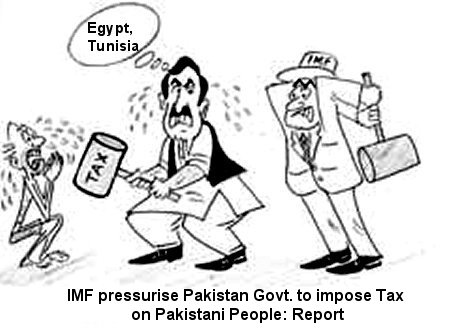
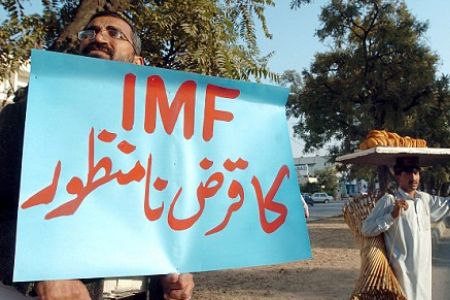
The daily “The News” published the following on Thursday, 27 June 27, 2013 at page # 4.
Link:- http://e.thenews.com.pk/6-27-2013/page4.asp#;
Link:- http://images.thenews.com.pk/27-06-2013/ethenews/t-23752.htm
Mr. PM! There are three options to avoid IMF loan
ISLAMABAD: Renowned economist Syed Nayyar Uddin Ahmad has written an open letter to the Prime Minister Main Muhammad Nawaz Sharif, in which he has suggested three out of the box solutions to avoid taking loan from the IMF.
The following is the text of the letter:
H’able Prime Minister Mian Muhammad Nawaz Sharif Sahib;
Salaam.
I am fully convinced that you still firmly believe in the content and spirit of the subject mentioned poetry (AY TAIER E LAHOUTI USS RIZQ SAY MAUT ACHI JIS RIZQ SAY AATI HOO PARWAZ MEIN KOOTAHI), which was also the punch line of one of your elections 2013 advertisements.
However, I was really disappointed by the speech of Mr Ishaq Dar, which he delivered at the NA on Saturday, 22 June, 2013.
Hope you remember very well, how the timid Pervez Musharraf had told the nation that if he had not accepted the US demands of war on terror, Pakistan would have been bombed by the USA, to the Stone Age. Similarly, Mr Ishaq Dar had tried to scare the nation, by saying that if Pakistan doesn’t take further loan from the IMF, for the repayment of the old loans, it will go into default. By the way we’ve paid off the principal anyway, as have dozens of countries, some several times over. In any case, when Argentina, Ecuador, even Dubai, defaulted heavens didn’t fall.
Sir, perhaps you remember, in one of my recent emails it was stated that “Fatemi Sahab, don’t make Musharraf of Mian Nawaz Sharif Sahab. Remember, a timid person can be a ruler but he can never be a leader. It’s the duty of the advisors to never leave the PM or the president, in a state, where he is forced to make decisions under the influence of fear. This can only be done if the advisor informs the leader all the strong and weak points in a balanced manner.”
I also hope that Mr Ishaq Dar knows very well the dirty role of the world lending agencies as exposed in his famous book “Confessions of an Economic Hit Man” written by John Perkins and published in 2004.
According to his book, Perkins’ function was to convince the political and financial leadership of underdeveloped countries to accept enormous development loans from institutions like the World Bank and USAID. Saddled with debts they could not hope to pay, those countries were forced to acquiesce to political pressure from the United States on a variety of issues. Perkins argues in his book that developing nations were effectively neutralized politically, had their wealth gaps driven wider and economies crippled in the long run. In this capacity Perkins recounts his meetings with some prominent individuals, including Graham Greene and Omar Torrijos. Perkins describes the role of an Economic Hit Man (EHM) as follows:
“Economic hit men (EHMs) are highly-paid professionals who cheat countries around the globe out of trillions of dollars. They funnel money from the World Bank, the US Agency for International Development (USAID) and other foreign “aid” organizations into the coffers of huge corporations and the pockets of a few wealthy families who control the planet’s natural resources. Their tools included fraudulent financial reports, rigged elections, payoffs, extortion, sex, and murder. They play a game as old as empire, but one that has taken on new and terrifying dimensions during this time of globalization.”
In 1988, economist Davison Budhoo revealed in his 22-page resignation letter – more of an expose of IMF ‘expertise’ – after his 11 years with it: “When we went on a mission, we did not even have the scope to innovate, to look at the country and make projections, that you thought were reasonable… there was already a briefing paper before we entered the country. We were told what we were expected to do, and give conditionality in terms of what the fiscal deficit was and how much it should be reduced; even before we entered the mission… we were expected to structure our findings in relation to the figures in the briefing paper, which were put there without any research, and were predetermined. So the conditionality was also predetermined… In this sense, every IMF mission is fraudulent even today…”
Mr. Prime Minister, not that I am only saying that your government must not take IMF loan to pay the old loan, which will be the biggest trap for our future generations; but I have also given three out of the box solutions (at the bottom of this write up) for Pakistan, to resolve this issue of old IMF loan payments, without taking fresh loans from the IMF.
As has been reported in the media, now a days, an IMF delegation is visiting Pakistan to offer fresh loan of $5-7 billion, to be mostly utilized by Pakistan, for the repayment of old IMF loan.
It is very surprising that PML-N’s government is not working on the lines to ask the IMF to have a heart; and be patient with our loan repayments, considering the fact that Pakistan has been totally destroyed during the last 15 years of war on terror, jointly fighting with 49 NATO countries as a major non NATO ally. Moreover, this war has inflicted more men and material losses on Pakistan than the combined losses of the 49 NATO countries. As such, Pakistan has a right to be given some moratorium in its repayment of IMF loans. Even otherwise, Pakistan has already repaid more than the entire amount of the loan by partnering the West in its WOT; and also by not demanding any penny from the NATO for the military over flights to and from Afghanistan. Here, the NATO must also be reminded that at the beginning of the Iraq war, NATO offered more than $20 billion to the Turkish government, for the over flights.
Mr. Prime Minister, every student of economics knows that never to use good money to chase bad money. Hence, there is no logic in seeking fresh loan to repay the old loan. This is a sure shot recipe for disaster, just like treating a cancer patient with fake medicines. IMF should be clearly told that Pakistan was well within its rights, to have asked for the write off, of the remaining unpaid amount of their loan. However, what we are seeking is just a moratorium.
Pakistan cannot afford to pay IMF’s remaining loan, over the peril of its economic demise.
In this regard, you may also order the Foreign Office to contact all the 49 NATO governments, to garner moral and financial support for Pakistan, so that we are also able to strongly look after their interests, in providing all the necessary facilities for their troops in Afghanistan. The USA and the NATO should also be reminded that Pakistan is not charging a single penny for their military over flights, for which they offered more than $20 billion to Turkey, during the last Iraq war.
As such, Pakistan’s whole hearted cooperation in the WOT deserves matching reciprocal response in the shape of using their influence in IMF, to facilitate Pakistan by way of at least 20 years moratorium in the IMF loan repayments.
Just for your information, I am reproducing below my six questions to the then finance minister of Pakistan, Mr. Abdul Hafeez Sheikh, which remained un-replied till date, but are an eye opener, that how Pakistan was plundered by the past government.
1. Pakistan is repaying $7.6 billion to the IMF. Did we receive exactly this much amount or the total sum was less than this figure?
2. How much amount of interest Pakistan will be paying over the principle sum of this loan of $7.6 billion from the IMF? Or the IMF will be charging interest on the whole sanctioned amount of $11.3billion?
3. Did Pakistan pay and what was the total bill for the travelling, boarding and lodging of IMF delegation’s recent visit to UAE, for discussions with our economic team?
4. Besides the interest, how much service, handler’s commission and or other charges were deducted by the IMF, on its loan of $7.6 billion to Pakistan?
V.V. Important Question.
5. How much service charges or penalty was charged by the IMF to Pakistan, for not utilizing or obtaining the remaining $3.7 billion amount, from the originally sanctioned loan amount of $11.3 billion; because Pakistan got only $7.6 billion from IMF?
6. When will Pakistan get its overdue payment of $800 million from the Etisalat Telecom?
Sir, I apprehend that Pakistan was being forced to pay back the loan with penalties for not utilizing the sanctioned amount of $11.3 billion IMF loan.
Remember, we got only $7.6 billion from the sanctioned amount. As such, IMF and the West are treating Pakistan like a conquered country, rather than a major non-NATO ally in the world war on terror (WWOT).
As far as the question of generating foreign exchange is the issue, the concerned may be advised to proceed on the following lines:
1. Like India did many years ago, we may also keep our gold as a security, with some of friendly country(s), in lieu of obtaining matching amount of foreign exchange.
2. Recently Abu Dhabi helped Dubai, in its financial crisis, by providing 10 billion US dollars. We can also approach our friends to help us on the same terms.
3. As a last resort, if the West and the NATO countries have decided not to help Pakistan in our financial crisis, and they are forcing us to take the loan from the IMF, to repay its previous liabilities; and for which they are not even ready to reschedule our loans, as was done with Pakistan in the Pervez Musharraf’s era, when Paris Club loans of Pakistan were rescheduled, then instead of going for the default option, we should offer nuclear umbrella, in exchange of a reasonable amount of payment, to our friends in the gulf and the Middle East, from the Oman to Syria, who are always weary, of the Israeli nuclear blackmail. I know this will cause a lot of furor in the West led by the USA, Israel and India, but they can be told in plain words that if a nuclear Pakistan goes bankrupt, it will be more dangerous for the whole region and severely catastrophic for the world. And after all, we will be going for this option only to repay their outstanding loans, so that the coffers of the West are kept full. As far Pakistan is concerned, it has already been forced to live in a Stone Age, fighting their imposed WOT, for the last more than a decade.
Email address: nayyar51@hotmail.com
Loud Thinking June 27, 2013 at 03:49PM
Make Your Marketing Fast
In an age when consumers decide within seconds whether or not to abandon a website, marketers need to maneuver and adapt in real-time. Here are three ways to pick up the pace:
Test and learn. Set up experiments that help you learn about your customers and constantly adjust your approach as you get new insights. Start assessing the campaign even before it ends. If it’s clear you’re not influencing 18 to 25 year olds the way you wanted, alter it in real time.
Know when to stop. Some marketers spend weeks chasing the “perfect” solution when “good enough” will do. Prioritize speed over quality.
Simplify your results. Don’t get bogged down by reviewing outcomes for weeks. Rather than reporting dozens of metrics, focus on the handful that tell you whether your campaign is working and what you might do differently next time.
Adapted HBR from “Four Ways to Market Like a Startup” by Brian Gregg and Vivian Weng.
Loud Thinking June 27, 2013 at 03:48PM
“Who exactly do you want to be? What kind of person do you
want to be? What are your personal ideals? Whom do you admire?
What are their special traits that you would make your own?
It’s time to stop being vague. If you wish to be an
extraordinary person, if you wish to become wise, then you
should explicitly identify the kind of person you aspire to
become. If you have a daybook, write down who you’re trying to
be, so that you can refer to this self-determination.
Precisely describe the demeanor you want to adopt so that you may preserve it when you are by yourself or with other
people.”
— Epictetus